Primary Industrial Motor Starters & Power Regulation Gear
Engineered for high-inrush inductive loads, seamless automatic switching, and rigorous electrical system protection in mission-critical applications.
Why Global EPCs Choose China for Motor Starter Manufacturing
The convergence of vertically integrated metallurgical supply chains, advanced automated assembly, and stringent IEC compliance makes China the premier sourcing hub for industrial motor control solutions.
Full Supply Chain Localization
Situated in the heart of Yueqing, Zhejiang—the undisputed electrical manufacturing capital of China—our fabrication lines benefit from immediate access to ultra-pure electrolytic copper, silver-nickel alloy contacts, and custom thermoset molding compounds. This density slashes procurement lead times by up to 60% compared to Western counterparts.
- In-house vacuum brazing of arc chutes
- Automated stamping of silicon steel laminations
- Zero third-party dependency for enclosure fabrication
Automated Quality & Precision
Modern Chinese motor starter production integrates high-speed robotic coil winding, laser micrometer verification of contact gaps, and 100% automated optical inspection (AOI) for electronic release assemblies. Every circuit breaker and contactor is dynamically tested under real inrush conditions before departing the facility.
- Computerized dielectric withstand verification
- Thermal imaging inspection under 1.2x rated current
- Full traceability via laser-etched DataMatrix QR codes
Modular Customization (OEM/ODM)
We provide rapid engineering turnarounds for custom Motor Control Center (MCC) panels, integrating specialized starting transformers, bypass contactors, and digital solid-state controllers into bespoke enclosures conforming to IP54, IP55, or NEMA 4X industrial standards for worldwide climatic conditions.
- Tailored busbar configurations (Cu or Al-clad)
- Dual-voltage coil windings (110V, 230V, 400V)
- Pre-wired telemetry (Modbus-RTU / PROFINET)
Engineering Motor Starting Methods: Comparing Electromechanical & Solid-State Topologies
Selecting the optimal motor starter requires balancing starting torque requirements, line voltage drop limits, thermal stress on windings, and capital expenditure constraints.
| Starting Technology | Starting Current (% of FLA) | Starting Torque (% of Full) | Mechanical Stress | Recommended Industrial Applications |
|---|---|---|---|---|
| Direct-On-Line (DOL) | 600% – 800% | 150% – 200% | High (Shock loading on gears) | Small conveyors, centrifugal pumps <15 kW, simple workshop tools |
| Star-Delta (Wye-Delta) | 200% – 250% | 33% – 50% | Moderate (Transient spike on transition) | Centrifugal blowers, compressors starting without counter-pressure |
| Autotransformer Step-Down (e.g., MCX01) | 150% – 450% (Tapped) | 42%, 64%, 80% (Adjustable) | Low to Moderate (Smooth stepping) | Heavy ball mills, high-inertia crushing plants, large submersible pumps |
| Solid-State Soft Starter | 150% – 400% (Continuous ramp) | Smooth linear ramp | Very Low (Eliminates water hammer) | Municipal wastewater, bulk handling conveyor systems, cooling towers |
| Variable Frequency Drive (VFD) | 100% – 120% | 100% – 200% at zero speed | Negligible | Extruders, hoists, precise process metering, dynamic speed modulation |
The Engineering Behind the MCX01 Autotransformer Step-Down Cabinet
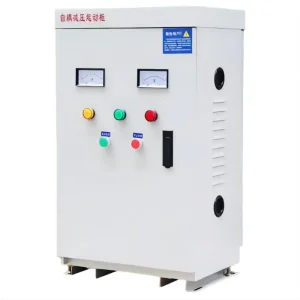
For industrial induction motors rated from 15 kW to 315 kW where the supply network cannot withstand extreme inrush currents, our MCX01 Series Autotransformer Starting Cabinets represent the pinnacle of cost-effective reliability. By tapping the autotransformer at 65% or 80% of line voltage, the initial line current is drastically cut to only 42% or 64% of standard locked-rotor current (LRA).
Integrated time relays switch the circuit from reduced voltage to full line voltage via a heavy-duty bypass contactor once the rotor approaches 85%–90% of rated synchronous speed. This minimizes thermal stress on the stator windings while providing sufficient torque to overcome heavy static friction.
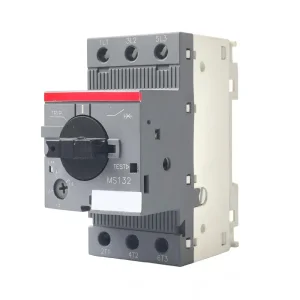
Compact Protection with the MS132 Motor Protection Circuit Breaker
The MS132 Series Low Voltage MPCB combines the functionality of an isolator, thermal overload relay, and instantaneous magnetic short-circuit protection into a compact 45 mm DIN-rail footprint. It delivers breaking capacities (Icu) up to 100 kA at 400 V without requiring back-up fuses.
Engineered to comply with IEC 60947-2 and IEC 60947-4-1 standards, the MS132 provides Phase-Loss Sensitivity according to IEC 60947-4-1 7.2.1.5.2, instantly disconnecting the motor within seconds if a single-phase drop occurs, thereby preventing cataclysmic rotor burnout.
IEC 60947-4-1 Type 2 Coordination: Preventing Plant Downtime
In high-availability manufacturing facilities, standard Type 1 coordination is insufficient. Discover how our coordinated motor starter combinations prevent contactor welding and restore production in seconds.
Coordination Type 1 vs Type 2
Under short-circuit fault conditions, Type 1 allows severe damage to contactors and relays, mandating equipment replacement before restarting. In contrast, Type 2 Coordination guarantees that under short-circuit conditions, neither the contactor nor the overload relay suffers damage, allowing immediate resumption of operations after the fault clears.
Optimized CJX1 (3TF) Contact Dynamics
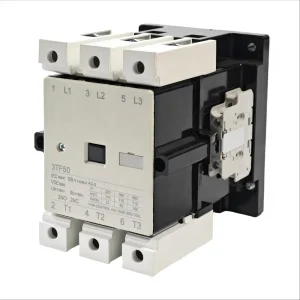
Our CJX1 (3TF) Series AC Contactors feature high-silver-content anti-weld contact tips engineered to withstand high transient fault energy without sustained tack welding. Coupled with heavy return springs and optimized arc chute deion plates, arcs are extinguished in under 8 milliseconds, preserving contact integrity.
Earth Fault & Residual Protection
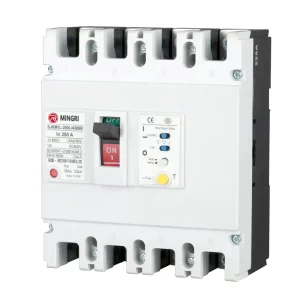
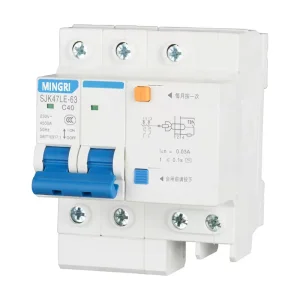
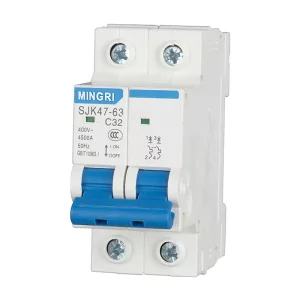
Incorporating our SJKM1L and SJK47LE-63 Earth Leakage Circuit Breakers into the motor distribution panel protects equipment against insulation degradation, stator-to-ground tracking, and catastrophic winding flashovers. Adjustable leakage trip thresholds (30 mA to 500 mA) provide flexibility for damp environments.
Global Heavy-Duty Industrial Deployments
From extreme desert heat to humid coastal mining and sub-zero pumping stations, our motor starters and integrated compact substations power continuous critical processes worldwide.
Municipal Water & Wastewater
Multi-pump booster stations and sewage treatment facilities require controlled deceleration to eliminate devastating hydraulic water hammer shocks. Our soft starting solutions and autotransformer cabinets protect check valves, reduce pipeline bursts, and extend impeller lifespan across continuous duty cycles.
Mining, Quarrying & Ball Mills
Crushers and grinding mills demand immense initial breakaway torque under full charge. Our autotransformer starting cabinets paired with heavy-duty CJX1 contactors deliver steady high-torque acceleration without tripping sensitive upstream medium-voltage protection relays.
HVAC & District Cooling Plants
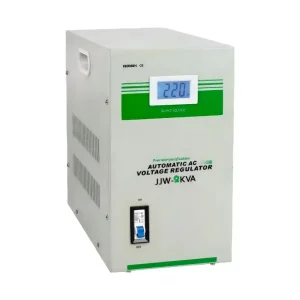
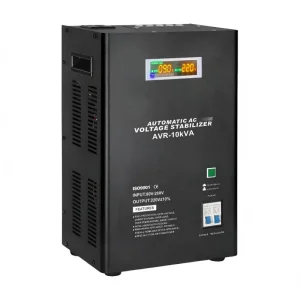
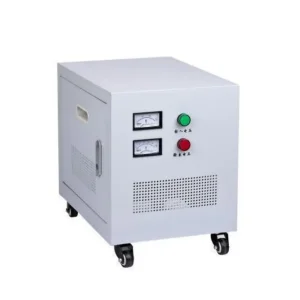
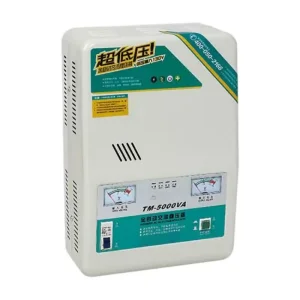
Large centrifugal and screw chillers create massive electrical dips in commercial electrical networks. By deploying our reduced-voltage starting systems and high-precision JJW/AVR series voltage regulators, chiller rooms prevent harmonic pollution and preserve sensitive building automation hardware.
Solar Parks & Hybrid Microgrids
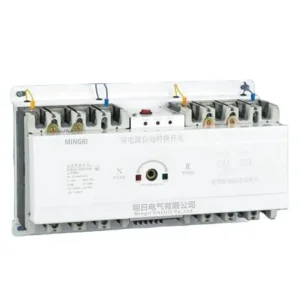
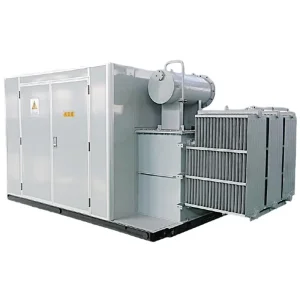
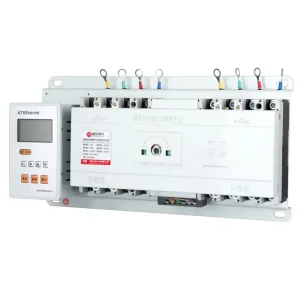
Utility-scale photovoltaic farms require robust step-up transformer substations like our ZGS11-Z.T Integrated Substation to connect tracker drive motors, cooling fans, and inverter stations to the grid. Dual-power automatic transfer switches (SJKQ2) guarantee unshakeable auxiliary power.
Global Enterprise Sourcing Standards: Quality Control & Testing Rigor
Purchasing motor control equipment from overseas manufacturers requires verified quality gates. Here is how our factory eliminates logistical and engineering risks for international clients.
CNAS-Accredited In-House Lab
Every motor starter design undergoes exhaustive testing in our state-of-the-art laboratory. From temperature-rise tests at nominal current to short-time withstand current testing (Icw) and 100,000-cycle mechanical endurance tests, we ensure components withstand real-world operational stress without degradation.
Pre-Shipment Digital FAT
For international buyers unable to travel to Yueqing for physical Factory Acceptance Testing, we offer live multi-camera digital FAT sessions. Witness primary current injection, insulation resistance (megger) checks, trip-time calibration, and functional control circuit logic in real time via secure video conference.
Complete Engineering Submittals
We provide full documentation packages to expedite consultant approval, including AutoCAD Single-Line Diagrams (SLD), schematic wiring diagrams, terminal layout drawings, bill of materials (BOM), Type Test certificates (KEMA / CE / CCC), and comprehensive English installation/maintenance manuals.
Integrated Automation, Power Conversion & Starting Infrastructure
Heavy-duty contactors, autotransformer starting cabinets, isolation switches, and backup ATS solutions to complete your electrical balance-of-plant.
Frequently Asked Questions: Industrial Motor Starters & Systems
Direct technical answers to common queries raised by electrical consultants, plant engineers, and international procurement managers.
How does an autotransformer starter like the MCX01 reduce grid voltage dips?
The autotransformer applies reduced voltage (typically 65% or 80%) to the motor stator terminals during the initial acceleration phase. Since motor current is directly proportional to voltage, and line current drawn from the mains is reduced by the square of the transformation ratio (I_line = (V_tap / V_line)^2 * I_direct), selecting the 65% tap reduces the line inrush current to approximately 42% of direct-on-line locked-rotor current. This prevents unacceptable voltage drops on shared factory distribution transformers.
What is the difference between Trip Class 10 and Class 20 motor protection?
Trip classes define the maximum operating time of thermal overload protection under a locked-rotor condition (600% of full-load amp rating, FLA) according to IEC 60947-4-1. Class 10 relays trip within 10 seconds, which is suitable for standard, fast-accelerating loads such as fans and centrifugal pumps. Class 20 relays allow up to 20 seconds of locked-rotor condition before tripping, specifically designed for high-inertia loads like heavy industrial centrifuges, crushers, and ball mills that have extended starting cycles.
Can the MS132 MPCB replace a conventional molded case circuit breaker (MCCB)?
Yes, within its rated current range (up to 32 A, and MS165 up to 65 A). Unlike standard distribution MCCBs, the MS132 is uniquely tailored for motor protection: it provides adjustable thermal release matched to the exact motor FLA, phase-loss differential trip mechanisms, and instantaneous magnetic release calibrated to 12-14 times rated current to avoid nuisance tripping during high-inrush start-up spikes.
Why is internal bypass required on electronic soft starters?
Solid-state soft starters regulate starting current by firing thyristor (SCR) gates with varying phase angles. During continuous steady-state operation, the forward voltage drop across conducting thyristors generates heat (approx. 3 Watts per Ampere). An electromechanical bypass contactor (such as our CJX1 series) shunts current around the SCRs once the motor reaches synchronous speed, eliminating heat build-up, cutting energy losses, and greatly extending component life.
How do you de-rate motor starters for high-altitude installation (>1000m)?
At elevations exceeding 1,000 meters above sea level, thinner atmospheric density reduces both convective cooling efficacy and dielectric air breakdown voltage. For installations between 1,000 m and 3,000 m, we apply a thermal de-rating factor of 0.9% to 1.1% per 100 meters on operational current (Ie), and reduce maximum operational voltage (Ue) ratings or specify larger air clearance distances inside the motor control cabinet according to IEC 60947-1 Annex A guidelines.
What is the typical manufacturing lead time for custom starting cabinets?
Standard components (CJX1 contactors, MS132 MPCBs, SJKM1L ELCBs) ship from inventory within 48 to 72 hours. Engineered starting cabinets such as the MCX01 autotransformer panels or customized dual-power ATS (SJKQ2) systems have a typical manufacturing lead time of 10 to 18 working days, inclusive of CAD drawing sign-off, sheet-metal enclosure assembly, wiring, and routine factory dielectric/functional testing.