Primary Power & Distribution Transformers
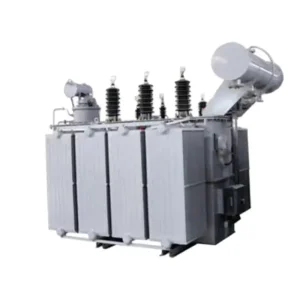
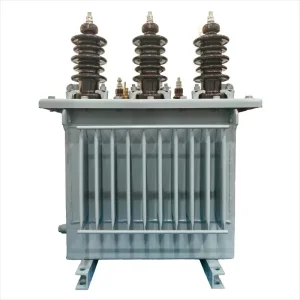
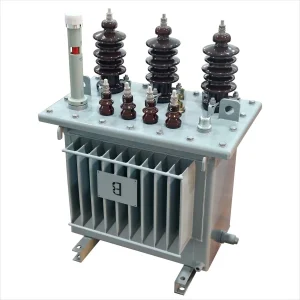
Engineered to international standards (IEC 60076, IEEE C57), our distribution units provide low no-load losses, hermetic sealing, and high mechanical impulse withstand strength.
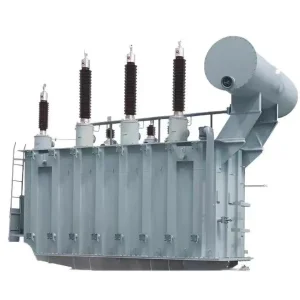
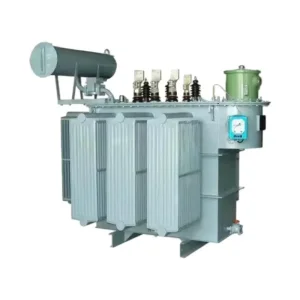
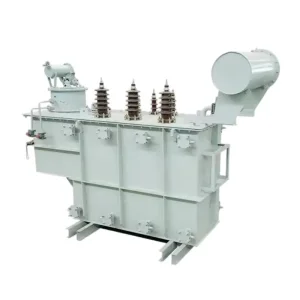
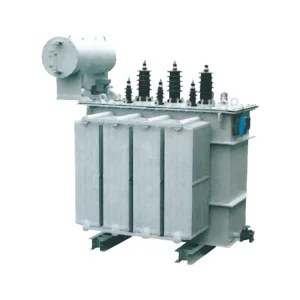
Global Power Transformers Landscape: Demand, Constraints & Market Realities
Analyzing grid modernization bottlenecks, renewable integration pressures, and procurement cycles across utility and industrial sectors worldwide.
Electrification & Renewables Wave
The global transition to decentralized renewable energy—specifically utility-scale photovoltaic solar parks, wind corridors, and high-capacity battery energy storage systems (BESS)—demands step-up transformers capable of handling non-linear harmonic loads, frequent thermal cycling, and bidirectional power flows.
Data Center & AI Load Surges
The hyper-exponential build-out of artificial intelligence clusters and hyperscale cloud facilities has stressed regional distribution grids. Mission-critical operations mandate substation transformers with exceptional MTBF ratings, strict temperature rises, and robust short-circuit withstand capabilities.
Critical Supply Chain Backlogs
Traditional transformer manufacturers in North America and Western Europe face historic delivery lead times exceeding 2 to 3 years. This bottleneck is largely driven by grain-oriented electrical steel (GOES) quotas, specialized copper winding capacity, and bushing availability, driving EPCs to diversify supply networks.
Localized Application Engineering & Mission-Specific Implementations
Tailoring thermal dissipation, dielectric insulation, and enclosure ratings to rigorous operating environments.
Solar & Wind Farms
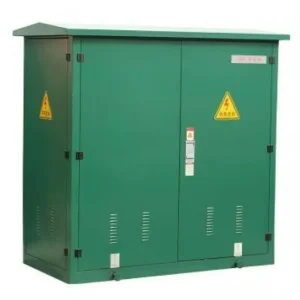
Utilizing step-up units such as the ZGS11 integrated photovoltaic substation, engineered to counter high inverter-induced harmonic distortions (THD), volatile thermal changes, and continuous daytime duty cycles without dielectric degradation.
Subterranean Mining
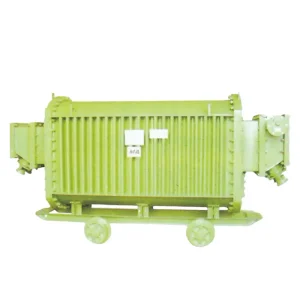
Deploying explosion-proof units like the KBSG9 series. Built within robust corrugated steel shells designed to resist methane/coal dust explosions, severe mechanical shocks, and extremely damp underground mine shafts.
Commercial & High-Rise
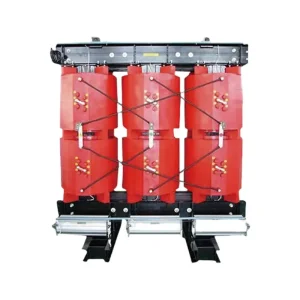
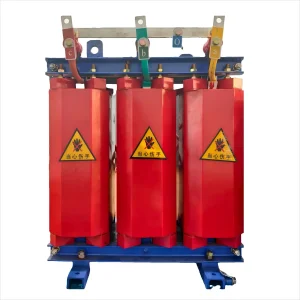
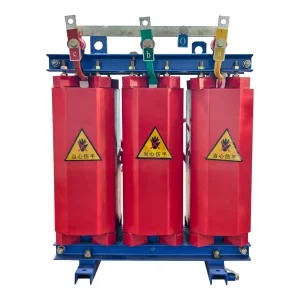
Implementing cast-resin dry-type solutions like the SC(B)10/11/13 series. Zero risk of oil spillage or explosion, self-extinguishing insulation (F1 flame class), minimal maintenance, and low noise profiles appropriate for occupied basements.
Heavy Metallurgy & Chemical
Supplying hermetically sealed oil units (S11/S13-M) with corrugated fin-wall tanks. Accommodates oil expansion without atmospheric contact, preventing dielectric fluid oxidation in sulfur- or chlorine-rich chemical environments.
China Factory Supply Chain Ecosystem: Resilience & Speed
How concentrated industrial clustering, integrated material sourcing, and lean production create structural advantages for global EPC contractors.
Clustered Raw Material Access
Located in core manufacturing hubs such as Yueqing, our production lines benefit from proximity to high-permeability, laser-treated Silicon Steel (CRGO), oxygen-free electrolytic copper rods, and specialized high-purity transformer naphthenic oils.
- Immediate access to top-grade magnetic cores reduces delivery latency.
- Direct procurement partnerships stabilize raw material price volatility.
- Complete control over copper wire drawing and paper wrapping processes.
Automated Precision Tooling
Core slitting lines utilize Swiss-engineered automatic shear systems, guaranteeing step-lap core stacking with virtually burr-free edges, drastically mitigating excitation currents and cutting eddy current losses.
- Automated foil winding ensures exceptional short-circuit radial strength.
- Controlled vacuum drying and pressure impregnation ovens.
- Cleanroom casting systems eliminating micro-voids in resin blocks.
Comprehensive Factory Testing
Every single power transformer unit manufactured undergoes rigorous in-house quality verification in compliance with ISO 9001 and IEC procedures prior to port departure.
- Routine impulse tests, winding resistance, and ratio checks.
- Partial discharge measurement below 10pC for dry-type models.
- Short-circuit withstand confirmation and full oil dielectric analysis.
Next-Generation Technology Roadmap & Sustainability
Pioneering transformer modernization through smart digital monitoring, bio-degradable dielectrics, and amorphous core technology.
IoT Edge Sensing & Real-time DGA
Embedding multi-gas Dissolved Gas Analysis (DGA) sensors, fiber-optic winding temperature probes, and smart On-Load Tap Changer (OLTC) telemetry. These systems interface natively with IEC 61850 substation automation architectures for predictive asset maintenance.
Biodegradable Ester Fluids
Progressively transitioning from petroleum mineral oils to synthetic and natural ester liquids (FR3). These dielectric fluids deliver exceptionally high flash points (>300°C), drastically reducing fire risks while providing 100% biodegradability in eco-sensitive water catchment regions.
Amorphous Metal Core Alloys
Integrating non-crystalline metallic alloy ribbons within core structures. This advanced metallurgical process drops core no-load losses by up to 60-70% compared to standard CRGO silicon steel, positioning utilities to exceed Tier 2 EcoDesign directive thresholds.
International Compliance, Factory Acceptance & Field Engineering
Ensuring end-to-end reliability from factory floor validation to on-site grid energization.
Standards Compliance
Every apparatus is drafted, engineered, and assembled to strictly satisfy international benchmarks: IEC 60076 (Power Transformers), IEC 60076-11 (Dry-Type), ANSI/IEEE C57, AS 60076, and European Ecodesign Regulation EU 548/2014.
Hybrid FAT & Inspection
We facilitate complete on-site and remote high-definition interactive Factory Acceptance Tests (FAT). Clients can witness temperature rise measurements, insulation resistance tests, and lightning impulse breakdown verifications in real-time.
Global Logistics & Spares
Heavy sea freight packaging with dual nitrogen-purged tanks for larger transformers. Complete documentation sets, CAD single-line drawings, foundation footprints, and 10-year spare parts inventories shipped rapidly for uninterrupted operational lifecycles.
Engineering FAQ: Transformer Selection & Integration
Authoritative technical answers to common procurement, engineering, and deployment questions.
Dry-type cast resin units (SCB series) rely on air cooling and epoxy resin dielectric encapsulation, making them fire-safe, non-polluting, and suitable for commercial buildings, tunnels, and data centers. Oil-immersed units (S11, S13) offer superior cooling efficiency, higher kVA ratings per unit volume, and better weather resilience, making them the standard choice for outdoor distribution and high-voltage transmission grids.
Essential inputs include rated capacity (kVA/MVA), primary and secondary voltages, winding connection vector group (e.g., Dyn11, YNd11), network system fault level (kA or MVA), tapping range, and whether the system operates on a grounded or ungrounded neutral. These parameters dictate winding layout, clearance insulation distances, and core bracing structures.
An OLTC (SZ11/SFZ11 series) adjusts the transformer turns ratio dynamically without interrupting the load current, essential for grids with erratic voltage profiles, high penetration of intermittent solar/wind generation, or critical process plants. OCTC requires disconnecting the load before manual mechanical switching, which is only suitable for stable distribution grids.
Hermetically sealed transformers eliminate the conservator tank. The expansion and contraction of the dielectric oil during thermal cycles are accommodated by the elastic breathing of the corrugated sheet radiator tank walls. By keeping insulating oil isolated from atmospheric oxygen and moisture, oil aging is substantially delayed, virtually eliminating routine fluid purges.
Specialty, Mining & Industrial Power Solutions
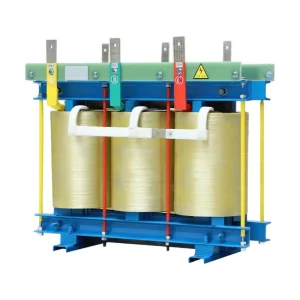
Comprehensive transformer systems engineered for demanding industrial tasks, underground mine sites, auxiliary power control, and step-down applications.