Flagship Industrial Electrical & Power Regulation Lineup
Explore high-performance transmission, circuit isolation, compensation, and distribution components engineered for extreme industrial duty cycles.
The Engineering Anatomy of DBW High-Power Compensated Regulators
A rigorous examination of single-phase (DBW) and three-phase (SBW) automatic voltage regulation architecture engineered for massive industrial loads and mission-critical uptime.
Buck-Boost Compensation Topology
DBW regulators utilize a series-connected compensation transformer coupled with an auto-coupling columnar regulator. Unlike electronic tap changers that introduce destructive harmonic distortion, the vector addition/subtraction mechanism smoothly injects counter-voltages into the line without modifying the fundamental AC sinusoidal waveform.
This design reduces dielectric stress on downline semiconductor loads, motor windings, and frequency converters, achieving MTBF ratings exceeding 100,000 continuous operating hours.
Microprocessor-Driven Servo Vectoring
The control plane pairs high-speed DSP sampling with multi-pole reversible servomotors and precision planetary gearing. The digital controller executes root-mean-square (RMS) voltage calculations at 2.4 kHz, continuously verifying line variations.
Upon detecting sag, swell, or brownout conditions, high-torque positioning algorithms drive silver-alloy roller carbon brushes across specialized uninsulated tracks of the auto-transformer, eliminating arcing and mechanical binding.
Dual Bypass & Fail-Safe Redundancy
China DBW regulator factories incorporate isolated manual and automatic static bypass switches directly into the primary enclosures. In case of control-card lockup, severe phase imbalance, or scheduled maintenance, industrial loads are seamlessly redirected to raw mains.
Integrated mechanical interlocks prevent backfeeding or simultaneous phase cross-coupling, maintaining total protection for sensitive equipment and field operating personnel.
Global Power Quality Landscape & Industrial Demand Vectors
Why modern industrial economies rely heavily on Chinese DBW/SBW manufacturing hubs to neutralize utility grid volatility and intermittent renewable injection.
The Hidden Financial Toll of Unstabilized Voltage
Global utility infrastructures face unprecedented strain from distributed renewable inputs (solar PV, onshore wind) and nonlinear power conversion devices. These dynamics generate sudden voltage dips, high-frequency transients, and sustained voltage drops across industrial corridors.
In high-throughput sectors like semiconductor packaging, automotive robotics, and plastics extrusion, a 10% voltage sag lasting mere milliseconds can trigger immediate drive faults, CNC servo drift, and costly batch rejections. Sourcing custom-calibrated DBW series stabilizers from China provides an affordable, industrial-grade defense perimeter that locks operating voltage within ±1% to 3% accuracy.
Emerging Market Electrification Challenges
In Southeast Asia, South America, Central Asia, and Africa, industrial growth often outpaces local grid upgrades. Large industrial sites regularly contend with supply swings of -30% to +25% on single-phase and three-phase lines.
Standard electronic stabilizers fail under these rigorous operating environments due to thermal overheating and limited compensation ranges. Leading Chinese OEM/ODM factories engineer heavy-gauge DBW units featuring extended input windows (±20%, ±30%, or bespoke ±40%), cold-rolled non-oriented silicon steel cores, and double-insulated electrolytic copper windings capable of enduring continuous 24/7/365 stress.
Localized Application Architectures & Deployment Blueprints
Real-world integration schemes showing how DBW/SBW voltage stabilization systems protect high-capital industrial machinery and digital infrastructures.
CNC & Automated Machining
Multi-axis milling, laser cutting, and robotic pick-and-place lines require steady bus voltages. Voltage drops cause spindle speed drops and encoder timing errors. DBW series stabilizers safeguard single-phase master controls while three-phase SBW modules isolate heavy drive cabinets.
Medical Radiology & MRI/CT
Medical imaging systems exhibit extreme instantaneous load fluctuations during scan pulses. DBW custom regulators deliver fast transient compensation with zero waveform clipping, preventing diagnostic artifact formation and protecting high-precision X-ray tubes.
Edge Telecom & Data Hubs
Remote telecommunication base transceiver stations (BTS) and modular micro-data nodes frequently operate off unstable rural grids or diesel microgrids. Compact DBW cabinets maintain constant 220V/230V power for telecom rectifiers, battery arrays, and cooling pumps.
Heavy Metallurgy & Chemical
Chemical processing and arc-melting setups face ambient heat, corrosive atmospheres, and conductive dust. Yueqing factories configure DBW systems inside IP54/NEMA-3R enclosures with conformal-coated electronics, sand filters, and forced air circulation.
China’s Supply Chain Resilience & Manufacturing Efficiency
The structural, raw-material, and metallurgical factors that position China's electrical equipment hubs ahead of global industrial peers.
The Yueqing Electrical Industrial Cluster
Yueqing, Zhejiang is globally recognized as the premier manufacturing ecosystem for low- and medium-voltage electrical apparatus. From pure electrolytic copper drawing mills and high-permeability grain-oriented (CRGO) silicon steel slitters to automated CNC stamping, winding, and injection molding plants, 95% of bill-of-materials components are fabricated within a 25-kilometer radius.
This geographic concentration reduces production lead times from months to days, enables agile custom engineering modifications, and drives out redundant logistics overhead.
Deep Component-Level Vertical Integration
Leading Chinese DBW factories do not simply assemble pre-purchased parts. They run in-house CNC vacuum pressure impregnation (VPI) facilities, auto-welding bays, and multi-axis coil winders that wind both copper strip and oxygen-free enameled wire onto specialized toroidal and columnar formers.
By controlling the whole manufacturing cycle—from core annealing to microprocessor SMD pick-and-place lines—factories ensure strict dimensional tolerances, predictable magnetic flux density, and lower core loss factors.
Rigorous Scalability & Agile Prototyping
Whether an international EPC contractor needs a one-off 800 kVA containerized DBW stabilizer with anti-corrosion marine coating or an original equipment manufacturer requires 5,000 units of custom 10 kVA cabinet modules per year, Chinese factories adapt quickly.
Experienced electrical design departments provide parametric 3D CAD modeling, thermal CFD heat-dissipation simulations, and single-line schematics within 48 hours of initial engineering reviews.
Engineering Selection Matrix: DBW vs. Alternative Topologies
A technical comparison for plant engineers, procurement managers, and electrical system integrators.
| Performance Parameter | DBW Series (Compensated Servo) | Electronic Static (SCR/Triac) | Magnetic Saturation (CVT) | Relay Switching Step Type |
|---|---|---|---|---|
| Power Range Availability | High 10 kVA – 2000 kVA | 5 kVA – 500 kVA | 0.5 kVA – 50 kVA | 0.5 kVA – 20 kVA |
| Output Precision | ±1% to ±3% (Adjustable) | ±1% to ±2% | ±3% to ±5% | ±8% to ±10% |
| Waveform Distortion (THD) | 0% Added Harmonic Distortion | Low to Medium (2% - 5%) | High (Up to 8% clipping) | Zero (Discrete step switching) |
| Efficiency Under Full Load | ≥ 98.5% | 95% - 97% | 85% - 90% | 96% - 98% |
| Overload Tolerance | 200% for 60s / 150% for 10m | 120% for 10s (SCR sensitive) | 150% for 10s | 120% for 30s (Contact welding) |
| Lifecycle Maintenance Cost | Minimal Carbon check at 3 yrs | Modular board swaps required | Zero, but runs hot | Frequent relay replacements |
| Capital Cost per kVA | Optimal Cost/Capacity Ratio | High Capital Investment | Moderate to High | Lowest (Low Reliability) |
Next-Generation Roadmap: The Evolution of Industrial Stabilization
How Chinese factories integrate solid-state power electronics, IoT telematics, and eco-friendly insulating materials into future regulator architectures.
Hybrid IGBT Electronic Tap Augmentation
R&D teams are combining mechanical servo compensation with sub-cycle electronic assist stages. In this hybrid design, an array of insulated-gate bipolar transistors (IGBTs) handles microsecond-scale voltage spikes and dips, while the primary servo auto-transformer tracks slower line drift.
This dual-engine topology delivers response times under 5 milliseconds while keeping overall production costs and thermal losses substantially lower than pure static converters.
IoT Edge Telemetry & Condition Monitoring
Modern DBW regulator cabinets now feature native Modbus-RTU, BACnet, and Ethernet/IP industrial communication cards. Field data—including real-time phase currents, ambient transformer temperatures, carbon brush position counts, and total sag counts—streams directly to plant SCADA networks or cloud monitoring dashboards.
Machine learning models analyze contact brush travel patterns to schedule predictive service well before physical failure modes emerge.
Low-Loss Metallurgy & Circular Materials
Environmental standards demand reduced no-load losses across grid equipment. Leading factories have transitioned to laser-scribed high-permeability silicon steel sheets (0.23 mm to 0.27 mm thickness) that lower magnetizing current draw and reduce heat loss by 18%.
Additionally, non-toxic, flame-retardant epoxy resins and fully recyclable copper/aluminum framing meet strict European and international decarbonization mandates.
Compliance Verification, Testing & Field Engineering
Factory Acceptance Testing (FAT), Site Acceptance Testing (SAT), and strict alignment with international safety and electromagnetic standards.
International Certification Standards
Export-oriented Chinese DBW/SBW manufacturers build and test equipment in accordance with IEC 60146, IEC 61000-6-2/4, CE LVD/EMC directives, and UL 508 / 1012 design benchmarks. High-voltage insulation tests verify dielectric barrier strength up to 2500V AC for 60 seconds with zero dielectric puncture or flashover.
Comprehensive Factory Acceptance Testing (FAT)
Before dispatch, DBW units undergo extensive computerized testing: partial-discharge profiling, heat run tests under simulated full-load current, simulated input voltage sag/swell step responses, and acoustic noise verification in sound-damped chambers to guarantee operation below 65 dBA.
Global Logistics & Installation Support
Global project buyers receive high-definition video-assisted commissioning support, complete bilingual terminal wiring documentation, and full spare-parts provisioning (including replacement carbon brushes, micro-switches, and control boards). Professional field engineers can also be deployed internationally for large turnkey installations.
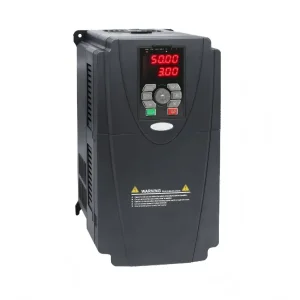
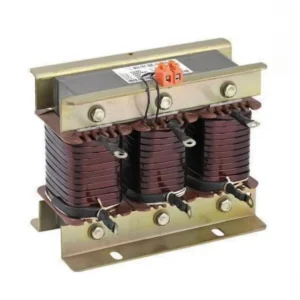
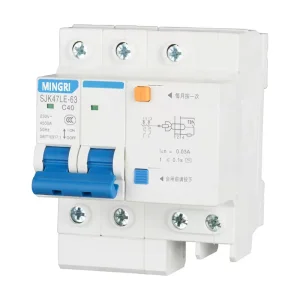
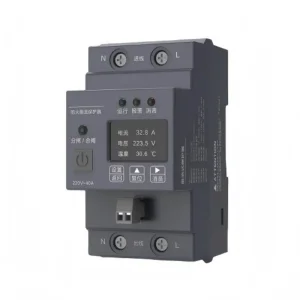
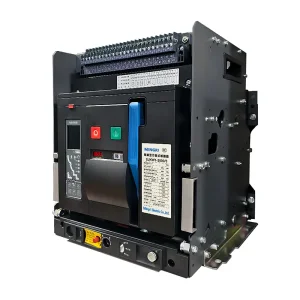
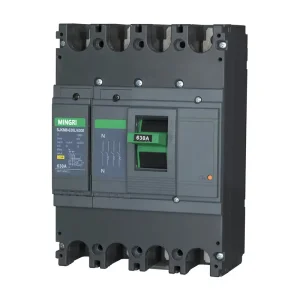
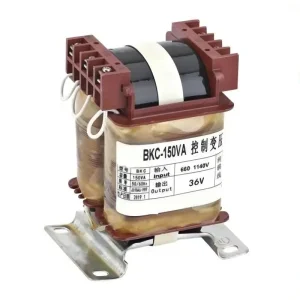
Advanced Circuit Protection, Drives & Control Transformers
Complementary distribution components and motor controllers manufactured to high electrical endurance standards.
Frequently Asked Questions: Technical & Sourcing Authority
Direct engineering answers addressing DBW/SBW equipment capabilities, procurement procedures, and factory customization options.
- Rated load capacity (kVA or continuous running kW plus motor starting PF).
- Nominal system voltage, phase count, and operating frequency (e.g., 1-Phase 230V 50Hz).
- Anticipated grid swing margin (e.g., ±15%, ±20%, or ±30%).
- Required output regulation accuracy (±1%, ±2%, or ±3%).
- Enclosure environmental rating (IP20 indoor, IP54 outdoor weatherized, or marine-grade C5-M coating).