High-Performance MCCB Selection for Silicon Valley & SF Infrastructure
Immediate procurement pathways for heavy commercial, high-density edge compute, and renewable storage topologies.
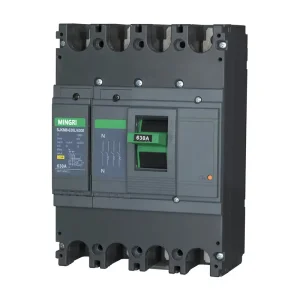
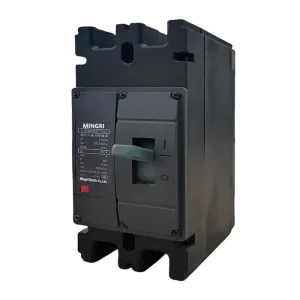
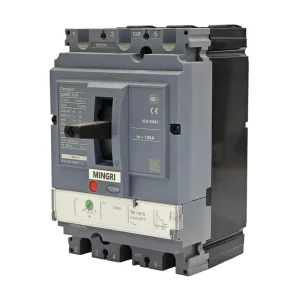
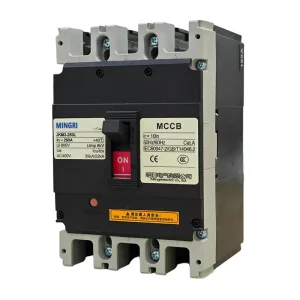
Powering the San Francisco Bay Area: The New Electrification Frontier
Analyzing structural shifts in power demands, seismic mitigation, and Title 24 compliance across Northern California.
The San Francisco Bay Area—encompassing the urban density of San Francisco, the biotech hubs of South San Francisco and Emeryville, and the hyperscale data center clusters across Silicon Valley (Santa Clara, San Jose, and Sunnyvale)—stands at the epicenter of North America's most demanding electrical transformation. With California's aggressive decarbonization mandates (Senate Bill 100) pushing for 100% zero-carbon electricity by 2045, electrical infrastructure is being subjected to unprecedented operational stresses.
Unlike conventional industrial zones, the San Francisco commercial and light-industrial electrical network operates under three overlapping constraints: **High Fault-Current Density**, **Stringent Environmental and Energy Efficiency Mandates (California Title 24)**, and **Rigorous Seismic Acceleration Thresholds (IEEE 693 and California Building Code CBC 2022 Chapter 16)**. As legacy switchboards and distribution panels are upgraded to accommodate dual-feed electric vehicle fleet charging plazas, rooftop photovoltaic (PV) arrays, and multi-megawatt battery energy storage systems (BESS), the demand for high-reliability Molded Case Circuit Breakers (MCCB) has reached an inflection point.
Microgrid Integration and Urban Building Decarbonization
In downtown San Francisco and the Transbay financial district, high-rise retrofit programs require compact switchgear configurations capable of interrupting high prospective short-circuit currents without sacrificing real estate. Commercial office towers converting from central natural gas heating to heavy VRF (Variable Refrigerant Flow) electric heat pump chillers introduce severe inrush currents and harmonic distortion.
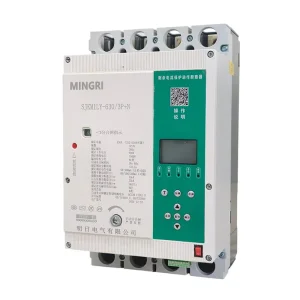
To maintain selectivity and coordinate downstream sub-distribution, consulting electrical engineers in San Francisco increasingly mandate **Electronic Trip Units (ETUs)** with micro-step LSI (Long-time, Short-time, Instantaneous) settings and built-in ground-fault protection (LSIG). This level of granular trip adjustment prevents catastrophic facility-wide outages during localized equipment faults, an imperative for the region’s data processing hubs, financial centers, and high-throughput biotechnology cleanrooms.
Hyperscale & Edge Compute
Engineered to handle elevated ambient temperatures within AI compute pods and data center switchboards with non-derating performance up to 50°C ambient calibration.
DC Breakers for BESS & Solar
Arc chutes engineered with ceramic splitters and multi-stage permanent magnet blow-outs to instantly interrupt non-zero-crossing direct currents up to 1500VDC.
Seismic & Shock Resilience
Reinforced thermoset polyester molding compounds (SMC/BMC) verified to withstand high acceleration response spectra (IEEE 693 High Seismic Level).
Global Enterprise Sourcing: Mitigating North American Supply Vulnerabilities
How Tier-1 developers and EPCs are re-engineering their electrical switchgear procurement models.
Over the past five years, the global electrical balance of plant (eBoP) marketplace has experienced severe inventory imbalances. North American distribution channels frequently experience lead times extending from 36 to 60 weeks for molded case circuit breakers rated above 250A. For turnkey commercial developers in San Francisco and Silicon Valley—where construction loan interest carries high carrying costs—waiting over a year for low-voltage power distribution gear is economically unfeasible.
Consequently, global industrial procurement directors are diversifying their qualified vendor lists (AVL). Partnering directly with high-volume, vertically integrated Chinese circuit breaker manufacturers provides:
- Direct Foundry-to-Switchboard Integration: Eliminating distributor middle-tiers drastically cuts transactional friction and ensures verifiable batch-level raw material traceability (silver-nickel contact tips, electrolytic copper terminals, specialized arc chute steels).
- Lead-Time Compression: Standard production cycles of 3 to 6 weeks for standard and electronic trip breakers, compared to 9–14 months across traditional Western brand distribution backlogs.
- Custom Footprint & Retrofit Engineering: Availability of customized mounting plates, busbar extensions, and rotary handles designed to drop into legacy switchboards without requiring full field repaneling.
- Comprehensive TCO Optimization: High capital cost reduction (often 30% to 45%) across balance of plant budgets, allowing California clean energy and commercial projects to meet aggressive ROI hurdles.
| Evaluation Parameter | Legacy North American Distributors | Mingri Electric Direct OEM/ODM Channel | San Francisco Project Benefit |
|---|---|---|---|
| Typical Order Lead Time | 32 – 52 Weeks | 4 – 8 Weeks (Direct Vessel to Oakland) | Prevents liquidated damages on mission-critical completions |
| Trip Unit Versatility | Fixed Thermal-Mag (Base models) | Interchangeable Microprocessor ETU / DC | Flexible on-site field calibration for Title 24 loads |
| BESS/Solar DC Rating | Limited selection up to 1000VDC | Engineered topologies up to 1500VDC | Native compatibility with modern utility string inverters |
| Factory Direct Customization | Restricted to static catalog SKUs | Full OEM/ODM busbar, shunt trip, UVR options | Drop-in replacement for aging Bay Area urban substations |
| Total Cost of Ownership | High distributor margin markup | Factory-direct tier-1 pricing structure | Maximizes Capex efficiency across high-density projects |
Engineering Solutions: Advanced Interruption Physics & Digital Integration
A deep technical breakdown of arc dynamics, selective coordination, and microgrid switching capabilities.
De-ion Arc Quenching Grids
Utilizing high-purity electroplated steel de-ion plates, our breakers split prospective short-circuit arcs into series micro-arcs within 2 milliseconds. Electromagnetic forces rapidly propel the plasma column into the quenching chamber, cooling the arc gases and preventing re-ignition under heavy prospective fault currents.
Intelligent Electronic Trip Units (ETU)
Equipped with 32-bit internal DSP controllers, our electronic breakers calculate true root-mean-square (RMS) current up to the 31st harmonic. This prevents nuisance tripping caused by high non-linear switching frequencies generated by Silicon Valley's concentrated variable frequency drive (VFD) and server power supply loads.
IoT & Modbus Communication
Native Modbus-RTU, Profibus, and Ethernet communications allow continuous telemetry streaming directly to Building Management Systems (BMS) and SCADA engines. Real-time temperature monitoring at internal bus terminals provides predictive alerts prior to terminal degradation.
Selective Coordination and Arc Flash Energy Reduction
Under the National Electrical Code (NEC 240.87 - Arc Flash Energy Reduction), systems utilizing breakers rated at 1200A or higher require verified energy reduction systems when the clearing time exceeds 0.07 seconds. Our flagship SJKM8 and SJKM3E series incorporate **Zone Selective Interlocking (ZSI)** and **Maintenance Mode Dynamic Energy Reduction Switches (ERMS)**.
When an electrical maintenance technician operates within the arc flash boundary in a San Francisco commercial panelboard, the ERMS switch sets instantaneous tripping to zero-delay mode. If an arcing fault initiates, the breaker clears the fault instantaneously (under 30 ms), slashing incident arc energy (cal/cm²) to protect operators and preserve expensive switchgear bus assemblies.
Technology Roadmap: The Next Decade of Solid-State & AI-Driven Protection
Pioneering the evolution from electromechanical current interruption to sub-millisecond semiconductor isolation.
As we look toward 2030 and beyond, the intersection of AI computing workloads, distributed microgrids, and bi-directional power flow requires a fundamental reimagining of circuit breaker operation. Traditional mechanical contact separation, governed by springs and mechanical latches, is intrinsically limited by inertial mass (clearing in 15 to 35 milliseconds).
Our R&D engineering divisions are actively testing and scaling next-generation breaker architectures designed for the high-availability demands of modern electrical ecosystems:
1. Solid-State Circuit Breakers (SSCB) & Hybrid Breakers
By pairing Silicon Carbide (SiC) and Gallium Nitride (GaN) power semiconductors with ultra-fast mechanical disconnects, hybrid solid-state topologies interrupt fault currents in less than 50 microseconds (μs)—virtually eliminating arcing and mechanical wear. For hyperscale AI data centers where voltage sags can crash server racks across an entire compute zone, sub-millisecond isolation represents the gold standard of continuity.
2. Edge-AI Arc Signature Recognition
Deploying neural network microchips directly inside the MCCB enclosure allows the device to sample current waveform transients at MHz frequencies. The integrated inference model differentiates between benign operational arcs (e.g., motor contactors or high-draw server start-ups) and hazardous parallel/series arcing faults, stopping electrical fires before insulation flashover occurs.
3. Digital Twin & Contact Health Prognostics
Every mechanical clearing operation creates micro-erosion on silver-alloy contacts. Integrated digital twin algorithms calculate cumulative contact wear (∫I²t degradation) in real time based on fault current magnitudes and clearing temperatures. Maintenance teams receive automated notifications via cloud-linked SCADA when contact wear exceeds safety margins, enabling true predictive conditioning.
Local Support, Testing Protocols & Regulatory Harmonization
Adhering to stringent North American and international safety, seismic, and electrical codes.
Standards Harmonization
Engineered and tested in accordance with IEC 60947-2, GB/T 14048.2, and aligned with UL 489 physical creepage and clearance distances, ensuring safe application in global projects and switchgear assemblies.
Quality & Testing Audits
Every breaker unit undergoes automated routine factory testing: Contact resistance measurement, 100% dielectric withstand voltage verification, and 3-stage calibrated trip timing verification under simulated overload and short circuit.
Direct Pacific Logistics
Strategic factory routing from our advanced Yueqing manufacturing base directly to the Port of Oakland and Port of San Francisco. Seamless customs clearance with fully verified documentation, test certs, and certificates of origin.
Frequently Asked Questions (FAQ)
Expert engineering insights regarding MCCB application, coordination, and procurement for San Francisco and global markets.
What is the difference between Icu and Ics ratings in MCCBs?
Icu (Ultimate Short-Circuit Breaking Capacity) indicates the maximum short-circuit current the breaker can safely interrupt without destruction; however, the breaker may require re-testing or replacement afterwards. Ics (Service Short-Circuit Breaking Capacity) defines the fault current level the breaker can interrupt repeatedly (typically 75% to 100% of Icu) and remain operational for continuous service. For San Francisco enterprise data centers, an Ics=100% Icu specification is widely recommended to avoid system downtime during transient branch faults.
How do California Title 24 efficiency standards impact MCCB selection?
California Title 24 mandates rigorous building energy management, requiring detailed sub-metering of lighting, HVAC, and power receptacle circuits. Modern electronic MCCBs assist compliance by providing built-in Class 1 accuracy current and power metering sensors directly integrated into the breaker trip unit. This eliminates the need for separate external Current Transformers (CTs) and standalone meters inside compact electric closets, saving significant cabinet space and labor.
Can DC molded case circuit breakers be used in AC circuits and vice versa?
Standard AC MCCBs should never be utilized in high-voltage DC installations without factory verification. Alternating current naturally passes through zero-voltage points twice per cycle (at 60Hz in the US), allowing the breaker arc chute to easily extinguish the arc. Direct current (DC) has no natural zero-crossing; the arc is continuous and sustained. Dedicated DC MCCBs (such as our SJKM5DC series) feature enhanced permanent magnetic blowout coils and elongated ceramic splitter plates specifically designed to stretch and quench stubborn DC arcs.
What is the standard procedure for seismic verification in California projects?
California Building Code requires switchboards and distribution equipment to maintain structural integrity under high lateral seismic acceleration forces (SDS parameters). Breakers must be installed in enclosures that have undergone tri-axial shake-table testing in accordance with IEEE 693 or ICC-ES AC156 standards. Our breakers feature rigid thermoset BMC structural casings and locked contact mechanisms that resist accidental unlatching or contact chattering under extreme ground vibrations.
How does thermal-magnetic compare to electronic trip unit (ETU) protection?
Thermal-magnetic trip units rely on a bimetallic strip (heated by sustained overcurrent) and an electromagnetic solenoid (activated by rapid short circuit). While robust and cost-effective, their trip curve is fixed and sensitive to ambient switchboard temperatures. Electronic Trip Units (ETU) use internal current transformers and microprocessor logic to measure true RMS currents. They offer wide adjustability for long-time delay (Ir), short-time delay (Isd), instantaneous pick-up (Ii), and ground-fault protection (Ig), completely unaffected by external ambient temperatures.
What documentation accompanies OEM/ODM shipments to Northern California?
Shipments are supplied with complete comprehensive technical dossiers including: Type-Test Certificates issued by accredited third-party international testing laboratories, certified factory routine test sheets (dielectric, tripping timing, contact resistance), dimensional CAD/BIM drawing files, step-by-step installation manuals, and Certificate of Compliance confirming material conformity.
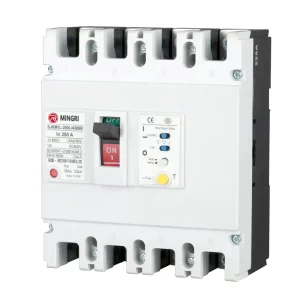
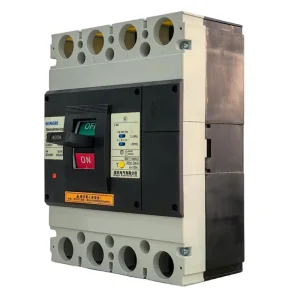
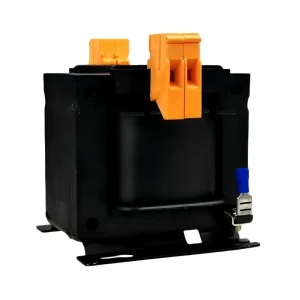
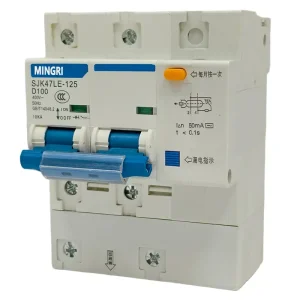
Comprehensive Industrial & Infrastructure Breaker Lineup
Complete low-voltage protection, earth leakage interrupters, and industrial control transformers engineered for global and regional deployment.
Accelerate Your Project Timeline with Factory-Direct Engineering Support
Whether engineering a switchgear lineup for a Silicon Valley edge data facility, a Bay Area commercial retrofit, or utility-scale energy storage, our senior application engineers provide custom CAD files, selective coordination studies, and competitive quotes within 24 hours.
Send Inquiry Now