Primary Industrial Switchgear & Fused Knife Disconnect Assemblies
Engineered with zero-clearance arc chutes, high electrolytic grade copper blades, and heavy-duty thermoset housings for severe-duty motor and main distribution panels.
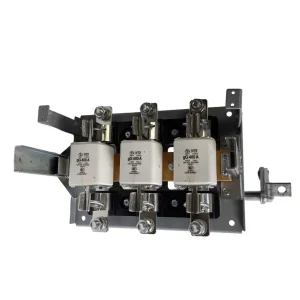
Wholesale HR3 Fuse Type Knife Switch for Motor Protection Manufacturers, Factories
Technical Specs & RFQ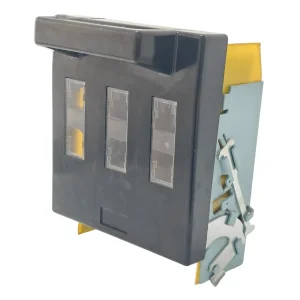
OEM HR5 Fused Disconnect Switch with Visible Contacts Supplier, Factory
Technical Specs & RFQ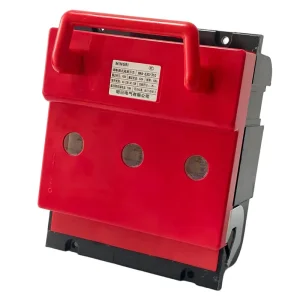
Wholesale HR6 Industrial Fused Knife Disconnect Switch Suppliers, Factories
Technical Specs & RFQ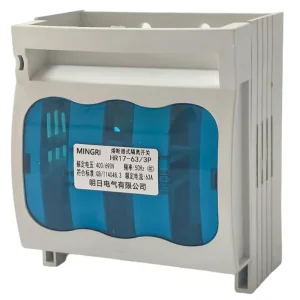
ODM HR17 Fused Isolation Switch For High Current Suppliers, Companies
Technical Specs & RFQ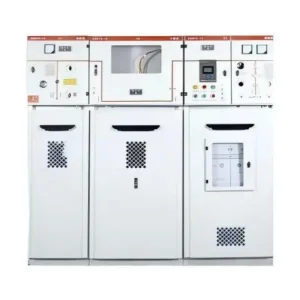
China XGN15-12 Metal-Clad Fixed-Type Ring Main Unit Switchgear in Cubicle Design Supplier, Manufacturer
Technical Specs & RFQ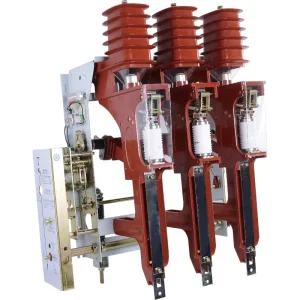
China China FZN25-12 Indoor AC High-Voltage Vacuum Load Switch - 12kV, 630A, Reliable Factory Supplier Manufacturers, Manufacturer
Technical Specs & RFQ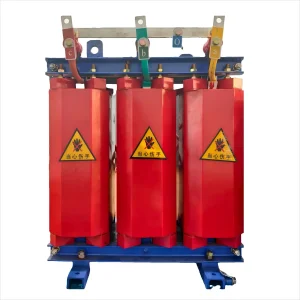
China SC(B)10 Type 10kV Resin Insulation Dry Type Power Transformer - Reliable Solution from China Suppliers and Factory Manufacturers, Company
Technical Specs & RFQ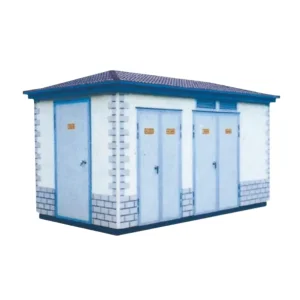
High-Quality YB□12-0.4 Series Prefabricated Substation (European Type Substation) Factory, Company
Technical Specs & RFQEngineering Architecture of Fused Disconnect Switches: Critical Arc Quenching and High Rupturing Capacity (HRC) Mechanics
Analyzing how current-limiting silver sand fuses interact with dual-break rotary knife contacts under extreme symmetrical short-circuit prospective currents.
In modern low-voltage and medium-voltage power distribution networks, the fused disconnect switch (also classified globally as a switch-disconnector-fuse or fuse combination unit under IEC 60947-3 / UL 98 standards) serves as the primary fail-safe defense perimeter. Unlike thermal-magnetic molded case circuit breakers (MCCBs) which rely on mechanical trip latches susceptible to contact welding, friction fatigue, and electronic tripping calibration drift over decades of operation, a fused disconnect utilizes metallurgy-driven current limitation. Under massive fault conditions—up to 100kA to 200kA symmetrical rms—the embedded high-rupturing capacity (HRC) fuse links melt and vaporize in less than a quarter-cycle (typically under 4 milliseconds), attenuating both peak prospective currents ($I_{peak}$) and specific let-through thermal energy ($\int i^2 dt$).
Visible Physical Isolation Air-Gap
Mandated by OSHA Lockout/Tagout (LOTO) protocols and NFPA 70E electrical safety codes, our HR3, HR5, and HR6 series feature transparent polycarbonate observation windows or clear blade-receptive housings. Maintenance teams can physically verify a true open circuit before conducting downstream panel servicing, mitigating flashover hazards.
Deion Arc Chute Deionization
Arc containment compartments incorporate stacked magnetic deionizing steel plates with ceramic side-wall barriers. During manual or motorized load interruption, magnetic blowout forces drive the plasma arc deep into the grid splitter, segmenting, cooling, and extinguishing the arc voltage within milliseconds without structural blast damage.
High Short-Circuit Current Rating (SCCR)
Integrating DIN NH00 to NH4 blade fuses or UL Class J/CC/T cylindrical cartridges enables our fused disconnect assemblies to effortlessly withstand short-circuit stresses in heavy industrial plants where available prospective fault energies exceed 100 kA at 690 VAC or 1500 VDC.
| Performance Parameter | Fused Disconnect Switch (HR Series) | Molded Case Circuit Breaker (MCCB) | Non-Fused Air Break Disconnector |
|---|---|---|---|
| Short-Circuit Withstand (SCCR) | Up to 120 kA - 200 kA (Fuse Limited) | Typically 35 kA - 65 kA (Cost prohibitive >100kA) | Limited to busbar withstand (10 kA - 25 kA) |
| Let-Through Energy ($\int i^2 dt$) | Extremely Low (Sub-cycle fuse blowout) | Moderate (Tripping delay 8ms - 20ms) | No thermal protection capability |
| Visible Contact Separation | Standard on Knife & Rotary HR series | Hidden contacts (Relies on mechanical flag) | Direct visible knife blade separation |
| Contact Welding Susceptibility | Virtually Zero (Fuse blows prior to blade fusion) | High risk under intense electromagnetic surge | Very High under uncoordinated faults |
| DC System Compatibility | Rated up to 1500 VDC (Photovoltaic/BESS links) | Requires costly specialized magnetic DC breakers | Requires de-rating and auxiliary snubber arcs |
Global Industrial Procurement Dynamics: Energy Transition, High-Density Data Centers, and Renewable Resiliency
Why Tier-1 EPC contractors, electrical panel builders, and heavy industrial plant managers are shifting capital allocations toward specialized fused isolation technologies.
The global fused disconnect switch market is experiencing an unprecedented structural resurgence driven by three macroeconomic technological megatrends: Grid Decentralization (Renewables & BESS), Hyperscale Cloud Infrastructure Expansion, and Automated Heavy Manufacturing Electrification. As power system architectures evolve away from massive centralized thermal generation toward distributed variable power sources, fault current profiles have become vastly more unpredictable.
In centralized photovoltaic arrays and battery energy storage containers (BESS), prospective short circuits produce steep rates of current rise ($di/dt$) combined with absent natural zero-crossing points inherent to direct-current topologies. Standard circuit breakers frequently fail to quench continuous 1000V–1500V DC arcs without catastrophic plasma blowout. Consequently, global corporate procurement directives now specifically mandate rotary or knife-blade fused disconnect switches calibrated with pure silver $gPV$ and $aR$ semiconductor-grade fuse links to protect multi-megawatt string inverters, battery management racks, and DC bus combiners.
Renewable Energy & BESS
DC-rated 1000V–1500V fused disconnects prevent runaway thermal cascading in lithium battery banks, providing instantaneous galvanic isolation during inverter bridge breakdown.
Hyperscale AI Data Centers
High compute density racks require ultra-compact footprint switchgear. Compact fused knife disconnects offer selective coordination, isolating localized faults without tripping main sub-station feeds.
Heavy Metallurgy & Mining
Corrosive, vibrating, and dust-laden operating environments favor robust glass-fiber reinforced unsaturated polyester (DMC) switch enclosures with silver-plated surface knife blades resistant to oxide buildup.
Harsh Marine & Oil/Gas
Explosion-proof enclosures and IECEx/ATEX compatibility certifications empower our switchgear to perform unfailingly aboard offshore drilling platforms, chemical synthesis facilities, and LNG terminals.
China Factory 4.0 Advantage: Vertical Integration, Automation & Agile Engineering from Yueqing Hub
How state-of-the-art robotic stamping, automatic silver-soldering lines, and rigorous end-of-line dielectric diagnostics guarantee uncompromising quality at scalable pricing.
Situated in Yueqing, Zhejiang—the globally recognized epicenter of low- and medium-voltage electrical manufacturing—our industrial complex synthesizes an integrated supply chain ecosystem. In contrast to international assembly brands that subcontract crucial tooling and stamping across geographically dispersed vendors, our facility maintains complete in-house vertical control over the entire production cycle:
Automated Stamping & Silver Brazing
Equipped with high-precision multi-stage progressive stamping dies and automated induction silver-brazing lines. Every copper blade contact attains an electrolytic purity rating exceeding 99.95% ($T2$ copper), overlaid with a 15–20 micron silver plating layer that prevents thermal runaway under continuous maximum rated currents.
Thermoset Compression Molding
We manufacture custom BMC (Bulk Molding Compound) and DMC (Dough Molding Compound) thermoset structural enclosures. These bases deliver superior glow-wire flammability indices (GWFI up to 960°C), exceptional anti-tracking indices (CTI > 600V), and zero structural deflection during high-stress operational cycling.
100% Comprehensive Digital Quality Assurance
Every single unit emerging from our assembly line undergoes automated testing: Contact Resistance Measurement (micro-ohmmeter inspection < 25 µΩ per pole), AC Power-Frequency Withstand Voltage Screening (up to 4.2 kV for 1 minute), and mechanical endurance verification across 3,000–10,000 continuous switching sequences.
Engineered for Harsh Environments: Critical Application Topology Architectures
From extreme tropical humidity to Arctic sub-zero substations, discover how our fused isolation units perform across mission-critical field conditions.
Motor Control Centers (MCC) & Heavy Pumps
In thermal power stations and petrochemical water pumping installations, motor branch circuits experience locked-rotor inrush currents up to 6–8 times full-load amps. Our HR3 and HR6 fused knife switches, paired with motor-rated $aM$ fuse links, safeguard against destructive motor stall events while eliminating nuisance trips during severe acceleration cycles.
Low-Voltage Distribution Boards (MNS / GCS)
Custom engineered for seamless integration into drawout and fixed-type switchgear cubicles. The modular HR17 fused isolation switch allows busbar-mounted vertical or horizontal installations, drastically optimizing interior cabinet real estate and delivering unmatched dynamic thermal stability up to 1600A rated line current.
Solar PV Combiner Boxes & Grid-Tie Inverters
Operating continuously under elevated ambient desert temperatures exceeding 50°C. Our specialized DC switch-disconnector-fuse mechanisms utilize pure silver conductors and ceramic thermal dissipation sleeves to prevent thermal de-rating, sustaining flawless load isolation up to 1500 VDC under full irradiance conditions.
Frequently Asked Questions: Switch-Disconnector-Fuse Engineering & Procurement
In-depth responses to critical design, compliance, customization, and deployment queries posed by global consulting engineers and electrical buyers.
A non-fused disconnector (isolator) is exclusively designed to open and close electrical circuits under rated load conditions (or no-load conditions) and provide galvanic air separation. It possesses zero inherent short-circuit breaking capability and relies entirely on upstream protective devices. In contrast, a fused disconnect switch couples the manual switching/isolating contact mechanism with series-connected HRC fuse cartridges. This integrated topology equips the switch to self-interrupt catastrophic short-circuit currents up to 100kA–200kA within milliseconds, physically shielding downstream transformers, busway runs, and motor terminals.
Total selective coordination occurs when downstream branch fuses operate faster than upstream overcurrent devices during fault conditions, avoiding blackouts on adjacent healthy circuits. Current-limiting fuses in our HR3/HR5/HR6 assemblies melt so rapidly under short-circuit conditions that their total clearing energy ($\int i^2 dt$) is smaller than the melting energy of the upstream main device. This achieves effortless 2:1 or 1.6:1 amp-ratio selectivity, eliminating the expensive digital zone-selective interlocking (ZSI) wiring required by electronic circuit breakers.
Yes. We engineer customized mechanical rotary and flanged handles featuring IP65 or NEMA 4/4X environmental ratings. Handle interlocks prevent cabinet door opening when the switch is in the "ON" state, incorporate padlockable provisions accommodating up to 3 padlocks in the "OFF" position for stringent LOTO compliance, and include defeatable bypass mechanisms for certified maintenance personnel.
Our manufacturing operations and switches comply fully with IEC 60947-1, IEC 60947-3, GB/T 14048.3, and CE marking criteria. Complete type tests are conducted in accredited third-party high-power testing laboratories (such as KEMA, ASTA, and CNAS-approved laboratories), verifying temperature rise limits, mechanical endurance (thousands of operations under AC-21A / AC-22A / AC-23A utilization categories), and short-time withstand current ($I_{cw}$). Model-specific test certificates are supplied with technical commercial proposals.
Integrated Low-Voltage & Medium-Voltage Distribution Portfolio
Complementary circuit protection devices, low-voltage drawout panels, high-voltage load break switches, and reactive compensation solutions.
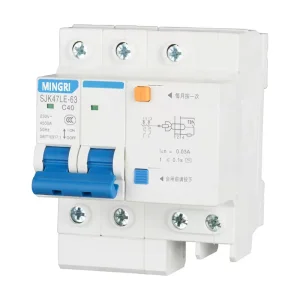
High-Quality SJK47LE-63 Residual Current Circuit Breaker RCCB Companies, Company
Technical Specs & RFQ
ODM China HR6 Industrial Fused Knife Disconnect Switch Factory - Reliable Circuit Protection & Suppliers for 4A-630A Loads Supplier, Manufacturer
Technical Specs & RFQ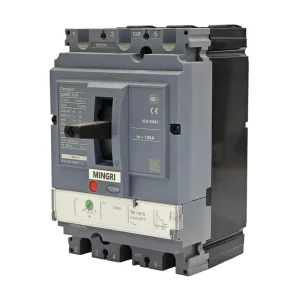
High-Quality SJKM5 Industrial MCCB Breaker for Short-Circuit Protection Manufacturers, Manufacturer
Technical Specs & RFQ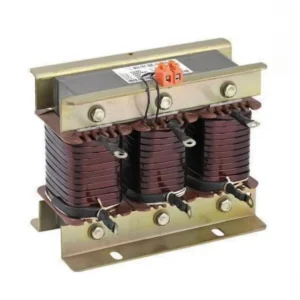
High-Quality CKSG Series Low Voltage Series Reactor Manufacturers, Manufacturer
Technical Specs & RFQ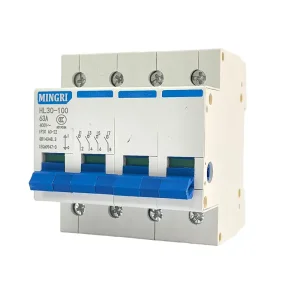
Wholesale High-Performance HL30 Miniature Disconnect Switch 1-4P 6-100A from China Factory & Suppliers for AC Systems Factories, Company
Technical Specs & RFQ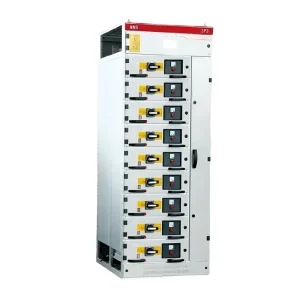
China MNS Low Voltage Withdrawable Switchgear for Power Control Factory, Companies
Technical Specs & RFQ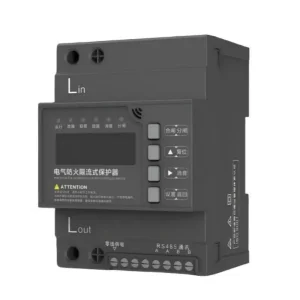
ODM Single phase small electrical fire-resistant current limiting protector Supplier, Companies
Technical Specs & RFQ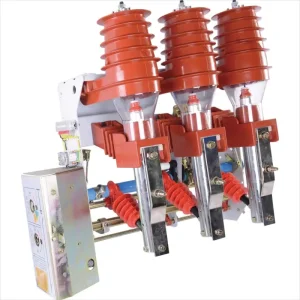
High-Quality High Voltage Air Load Breaker Fuse Switch FK(R)N12-12 for 12kV Systems | China Suppliers & Factory Supplier, Company
Technical Specs & RFQReady to Engineer Your Custom Fused Disconnect Solution?
Submit your single-line diagrams, short-circuit current requirements, or OEM specification sheet to our technical engineering division for rapid quotation and CAD layout support.