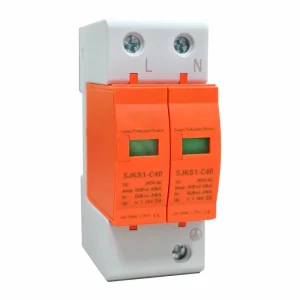
High-Voltage & Low-Voltage Distribution Equipment
Integrated switchgear, safety switches, and system components tested according to IEC and GB standards.
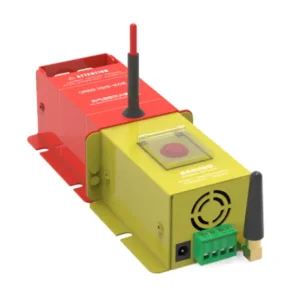
China Intelligent Wireless Automatic Gas Fire Extinguishing Device - Hot Aerosol Series
View Details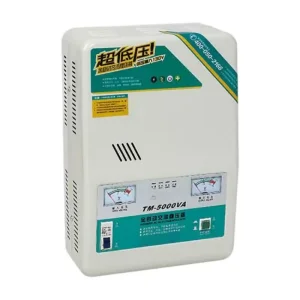
OEM TM Single-Phase Series Relay Type Fully Automatic AC Voltage Regulator
View Details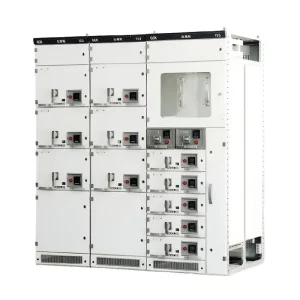
Wholesale GCK Low Voltage Withdrawable Switchgear for Industrial Plants
View Details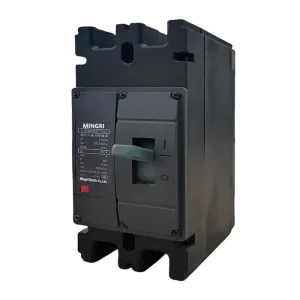
ODM SJKM5DC DC Molded Case Circuit Breaker 1500V for Solar Arrays
View Details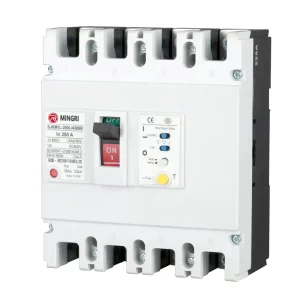
China SJKM1L Earth Leakage Circuit Breaker ELCB for Industrial Safety
View Details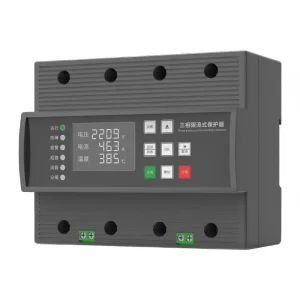
High-Quality Three-Phase Current-Limiting Protector 80/125A Monitoring Device
View Details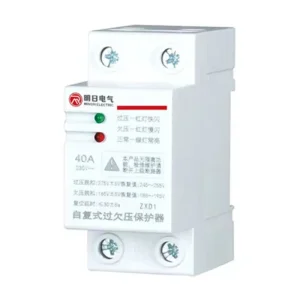
OEM MRGQ-63 Series Self-Resetting Over and Under Voltage Protector
View Details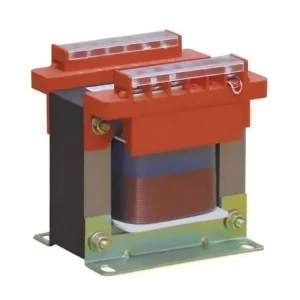
Wholesale BK Series Control Transformers Reliable Power Solutions
View DetailsEngineering Principles of High-Voltage Isolation Systems
A comprehensive analysis of contact resistance, dynamic thermal stability, and mechanical interlock integrity across utility-scale power grids.
In modern electrical transmission and distribution networks, the High-Voltage Disconnector (also designated as an isolating switch) acts as the paramount mechanical safety barrier. Unlike circuit breakers, which are engineered to interrupt load and transient fault currents, disconnectors provide visible, fail-safe galvanic isolation between energized grid infrastructure and de-energized maintenance zones. The design integrity of disconnectors directly dictates the physical safety of maintenance crews, substation reliability indices (SAIDI/SAIFI), and the continuous operation of industrial substations rated from 12 kV up to 40.5 kV and beyond.
As transmission voltages increase and fault currents exceed 25 kA to 31.5 kA for 3-second durations, the mechanical dynamics and material properties of disconnector assemblies undergo extreme physical stress. Our engineering architecture utilizes high-conductivity silver-plated T2 electrolytic copper contacts, engineered to mitigate micro-arcing and minimize thermal rise under full continuous load ratings up to 3,150 A. In accordance with IEC 62271-102 standards, disconnector assemblies must guarantee dielectric performance across open isolation gaps with a 15% to 20% safety margin over terminal-to-earth breakdown limits.
Critical Mechanical and Dielectric Parameters
A fundamental parameter of high-voltage disconnector design is dynamic thermal stability. During an external phase-to-phase or phase-to-ground fault, electromagnetic forces proportional to the square of peak current ($I_{peak}$) threaten to force contact blades apart. To counteract this electromagnetic repulsion, our disconnectors employ self-compensating jaw geometries with stainless-steel pre-compressed springs. When peak short-circuit currents (typically 2.5 times the rated short-time current) surge through the contacts, the resultant electromagnetic vectors force the jaws inward, enhancing contact pressure precisely when risk is greatest.
| System Parameter | 12 kV Class (Indoor/Outdoor) | 24 kV Class (Switchgear/Pole) | 40.5 kV Class (Substation Grade) |
|---|---|---|---|
| Rated Frequency (fr) | 50 / 60 Hz | 50 / 60 Hz | 50 / 60 Hz |
| Rated Normal Current (Ir) | 630 A / 1250 A | 630 A / 1250 A / 2000 A | 1250 A / 2000 A / 3150 A |
| Rated Short-Time Withstand (Ik) | 20 kA / 25 kA (4s) | 25 kA / 31.5 kA (4s) | 31.5 kA (4s) |
| Peak Withstand Current (Ip) | 50 kA / 63 kA | 63 kA / 80 kA | 80 kA |
| Power Frequency Withstand (Across Gap) | 48 kV (1 min) | 79 kV (1 min) | 118 kV (1 min) |
| Lightning Impulse Withstand (Across Gap) | 85 kV (BIL) | 145 kV (BIL) | 215 kV (BIL) |
Why Yueqing Represents Global Excellence in High-Voltage Switchgear
Combining complete regional industrial supply ecosystems with automated production, precision machining, and rigid international quality assurance.
Vertical Supply Integration
Situated in the heart of Yueqing's electrical equipment cluster, our manufacturing base integrates raw electrolytic copper processing, precision hot-dip galvanizing, and epoxy resin casting within a 15-kilometer radius. This enables rapid prototype fabrication, tight component tolerance control, and uncompromised cost efficiency.
Stringent ISO & IEC Auditing
Operating under certified ISO 9001, ISO 14001, and ISO 45001 frameworks, every batch of disconnectors undergoes routine dielectric testing, micro-ohm loop resistance inspection, and dimensional verification prior to packing. Third-party type testing (KEMA/CNAS accredited) certifies short-circuit and temperature rise compliance.
Flexible OEM/ODM Engineering
We provide tailored mechanical interlocking mechanisms, customized busbar terminal configurations (NEMA pad hole patterns), motorized operating mechanisms (24V/110V/220V DC), and auxiliary signaling switch blocks (up to 8NO+8NC) designed to interface cleanly with SCADA network requirements.
Macro Trends Transforming the High-Voltage Switchgear Sector
How the global energy transition, F-Gas regulations, and digital transformation are reshaping isolating equipment architecture.
SF6-Free & Fluorine-Free Alternatives
Driven by the European Union’s F-gas regulations and global carbon-neutrality mandates, utilities are rapidly shifting toward solid-insulated (SIS) and eco-friendly gas mixtures (synthetic air or nitrogen-based systems). Our engineering team pioneers dry-air insulated isolating devices eliminating SF6 greenhouse gas risks entirely.
IoT-Enabled Predictive Monitoring
Traditional manual inspections are transitioning to real-time disconnector health monitoring. Embedded infrared thermal sensors, motor current signature analysis (MCSA) on actuators, and optical contact position sensors stream telemetry via Modbus/IEC 61850 directly to utility asset management software.
High-Voltage DC (HVDC) Integration
With utility-scale solar PV installations migrating from 1000V DC to 1500V DC systems, and offshore wind power transmission relying heavily on DC converter stations, isolating switches must resist rapid dielectric degradation and arc tracking under continuous direct current stresses without zero-crossing points.
Macro Industry Solutions & Localized Operating Environments
Engineered to ensure unyielding mechanical and electrical performance across demanding industrial environments worldwide.
Coastal & Offshore Corrosive Environments
For installations exposed to heavy saline moisture, tropical marine humidity, and sulfur dioxide emissions, our disconnectors are built with 316 stainless-steel fasteners, hot-dip galvanized steel chassis exceeding 85 μm coating thickness, and hydrophobic silicone rubber composite insulators with high creepage distances (Class IV / 31mm/kV).
Utility Transmission & Primary Substations
High-voltage disconnectors configured for center-break, vertical-break, or double-break architectures up to 40.5 kV. Designed for seamless interlock coupling with earthing switches (integral earthing blades) to ensure operators cannot ground live circuits or close disconnectors against closed ground leads.
Mining, Heavy Industry & Rail Traction
Severe industrial environments face extreme harmonic distortion, high dust ingress, and frequent vibration cycles. Our disconnectors incorporate heavy-duty cast aluminum gearboxes, self-wiping contact jaws that shear through dust and ice up to 10mm thickness, and IP55 rated motorized operating enclosures.
Global Enterprise Sourcing & Compliance Specifications
Essential criteria EPC contractors, grid operators, and electrical distributors require during technical submittals.
Type Test Dossiers
Full verification reports from accredited independent high-power laboratories covering temperature rise tests, peak dynamic withstand currents, lightning impulse withstand, and mechanical endurance at extreme ambient ranges (-40°C to +55°C).
Logistical Packaging
Export-ready vacuum-sealed barrier packaging with desiccants inside heavy-duty fumigated plywood crates (ISPM 15 certified), designed to withstand intermodal marine transit, port handling, and rough terrain inland transportation.
FAT & SAT Support
Support for comprehensive Factory Acceptance Testing (FAT) with digital high-definition video inspections or on-site client audit protocols, alongside clear installation manuals and commissioning support packages for Site Acceptance Testing (SAT).
Reliable Spare Parts Availability
Standardized spare parts supply for contact fingers, motor gear drives, micro-switches, and earthing interlocks. We guarantee component interchangeability and dimensional drawing preservation across a minimum 15-year lifecycle window.
Frequently Asked Questions (FAQ)
In-depth engineering answers addressing high-voltage disconnector selection, integration, and operational standards.
What is the functional difference between an isolating disconnector and a load break switch?
A disconnector is designed strictly for no-load switching operations, providing a visible, verifiable isolation gap with high dielectric withstand. It possesses no arc-quenching medium and must never be opened while conducting load current. In contrast, a load break switch (LBS) includes an arc chute or vacuum interrupter to break normal rated load currents, but cannot clear short-circuit fault currents like a circuit breaker.
How do mechanical and electrical interlocks protect disconnector operations?
Interlocks are crucial safety features preventing accidental operation under load. A mechanical Castell key or electrical interlock solenoid connects the disconnector mechanism directly with upstream and downstream circuit breakers. The disconnector operating shaft remains locked unless the associated circuit breaker is proven open, and the earthing switch cannot be engaged while the disconnector main contacts are closed.
What materials ensure long-term contact reliability in outdoor high-voltage disconnectors?
Main contact blades are fabricated from high-purity T2 electrolytic copper, plated with a minimum 15 to 20 μm layer of hard silver. Contact fingers are paired with non-magnetic stainless steel compression springs to maintain consistent contact force without softening under operating temperatures up to 105°C. Moving hinges utilize sealed self-lubricating bronze bearings to prevent galling and corrosion.
Can motorized actuators be retrofitted with remote SCADA automation?
Yes. Our motorized operating mechanisms feature integrated auxiliary micro-switches, local/remote selector switches, and standard terminal strips ready for RTU/PLC integration. Actuators operate on standard substation auxiliary supplies (24V, 48V, 110V, 220V DC or 230V AC) and feature emergency manual hand-cranks with automated motor circuit electrical cutouts.
High-Voltage Switchgear, Transformers & Regulators
Complementary power equipment engineered to deliver total substation reliability and safety.
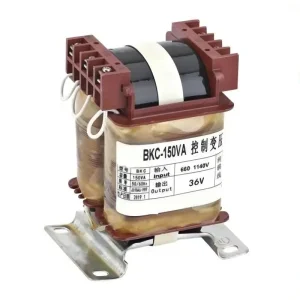
ODM BKC Series Control Transformers for Industrial Power Solutions
View Details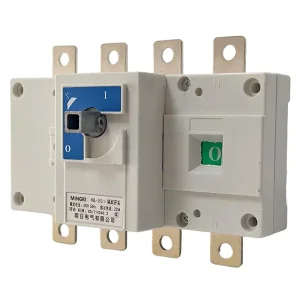
Wholesale HGL Load Isolation Switch 63A-3150A Industrial Switchgear
View Details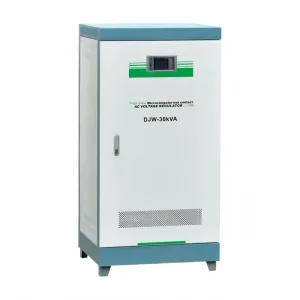
ODM DJW / SJW Series Microcomputer Non-Contact AC Voltage Regulator
View Details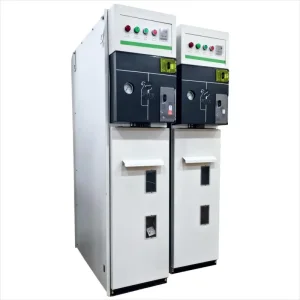
ODM XGN15-24 Medium Voltage Switchgear SF6 Insulated Ring Main Unit
View Details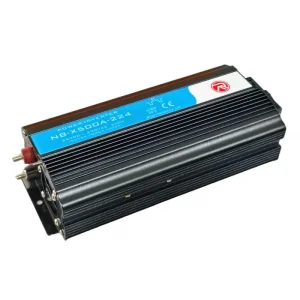
ODM DC to AC Power Inverter X500 with Built-in EU Socket
View Details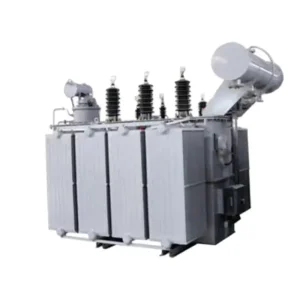
Wholesale S11 Type 35kV Series Distribution Power Transformer
View Details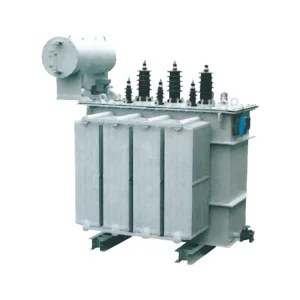
China S11 Type 35kV/6-10kV Series Industrial Power Transformer
View Details