Primary Low & Medium Voltage Portfolio
Explore our foundational range of circuit protection and high-breaking capacity switchgear solutions engineered for demanding global deployments.
-
-
-
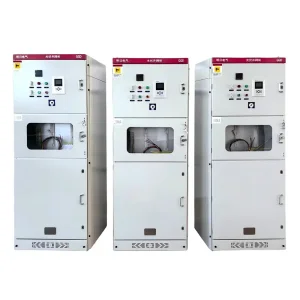
OEM GGD AC Low Voltage Distribution Cabinet for Industrial Power Factories, Factory
-
-
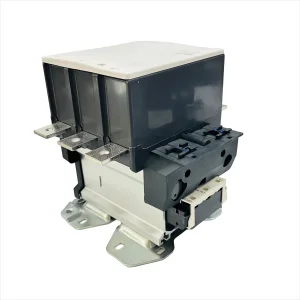
China CJX2-F Series AC Contactor for Motor Control Suppliers, Manufacturer
-
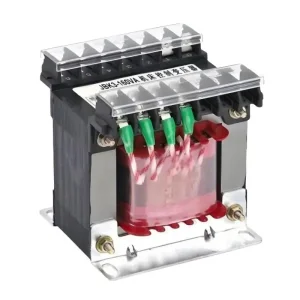
High-Quality JBK3 series machine tool control transformers Manufacturer, Factory
-
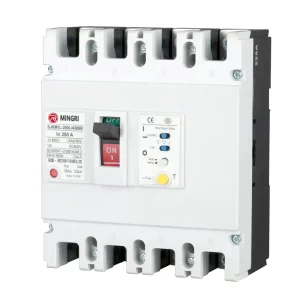
China SJKM1L Earth Leakage Circuit Breaker ELCB for Industrial Safety Factory, Companies
-
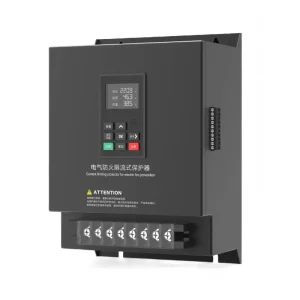
Technical Whitepaper: HH15 QSA Knife Melt Architecture
A rigorous examination of contact mechanics, arc suppression dynamics, and fuse-link integration in low-voltage load isolation assemblies.
The HH15 (QSA) series fuse-switch disconnector (knife melt isolation switch) represents an industry benchmark for low-voltage secondary power distribution systems. Operating up to rated operational voltages of 690V AC (50/60 Hz) and rated currents from 63A up to 1250A, this switch amalgamates high-durability load-break switching with the immense short-circuit breaking capabilities of High Breaking Capacity (HRC) melt fuses.
1. Arc Quenching and Contact Topology
Unlike standard disconnector handles, the HH15 QSA incorporates a double-break, spring-assisted rapid release kinematic train. When the manual operating handle passes dead-center, the internal spring mechanism discharges stored mechanical energy, driving the knife-blade contacts into or out of the lyre-type stationary clips at velocities exceeding manual actuation limits. This swift aperture suppresses arc dwell time, significantly attenuating ionized plasma development within the phase-segregated arc chute compartments.
| Parameter Parameter | HH15-63 ~ 160 (QSA) | HH15-250 ~ 630 (QSA) | HH15-800 ~ 1250 (QSA) |
|---|---|---|---|
| Rated Insulation Voltage (Ui) | 800 V | 1000 V | 1000 V |
| Rated Operational Voltage (Ue) | AC 380V / 660V | AC 380V / 660V | AC 380V / 660V |
| Rated Conditional Short-Circuit Current | 100 kA (at 500V) | 100 kA / 120 kA | 100 kA (at 660V) |
| Utilization Category (IEC 60947-3) | AC-22A / AC-23A | AC-22A / AC-23A | AC-21A / AC-22A |
| Mechanical Endurance | 10,000 Cycles | 8,000 Cycles | 5,000 Cycles |
2. Phase-to-Phase Segregation and Thermal Performance
Constructed with glass-fiber reinforced unsaturated polyester resin (DMC/SMC), the base chassis exhibits exceptional comparative tracking index (CTI > 600V) metrics, providing zero-creepage dielectric isolation between adjacent poles. Even under protracted fault conditions or harmonic-induced heating, the non-hygroscopic composite maintains mechanical rigour without structural deflection or off-gassing degradation.
Global Enterprise Procurement Demands
Addressing the nuanced challenges faced by international EPCs, low-voltage panel builders, and regional utility operators.
Guaranteed Breaking Integrity
Global procurers demand verifiable conditional short-circuit current performance up to 100kA to prevent arc-flash catastrophes during upstream breaker trip failures.
Interchangeability & Standardization
Enclosure manufacturers necessitate standardized foot-printing compatible with legacy German and British DIN-type knife melt links, avoiding bespoke panel re-punching.
Supply Predictability & Volume Pricing
Direct wholesale agreements with core manufacturing plants to eliminate intermediary margins, lock in bulk copper costs, and safeguard against delivery lead-time volatile disruptions.
China Factory 4.0: Supply Chain Resilience & Precision
Leveraging high-throughput automation and raw-material cluster integration in Yueqing, Zhejiang, for unbeatable reliability.
Our Yueqing assembly installations deploy precision robotic stamping presses, automated laser cutting cells, and silver-electroplating production chains running in an unbroken operational sequence. Every single contact blade utilized in the HH15 QSA isolation switch is electroplated with high-purity silver to a thickness of no less than 15 microns, maintaining terminal contact resistance below 25 micro-ohms. By mastering raw copper procurement, specialized SMC molding, and fully automated robotic calibration internally, we guarantee stringent price stability alongside uncompromising quality.
Macro Industry Application Solutions
Engineered to serve critical nodes in industrial automation, renewables, and heavy metallurgical plants.
Solar PV Inverter Stations
Serves as the low-voltage isolation boundary between utility-scale central inverters and step-up oil-immersed transformers, providing physical visual break confirmation during maintenance cycles.
Automated Manufacturing & MCC Panels
Seamlessly integrates into Motor Control Centers (MCC), providing instant, passive circuit interruption for high-inertia induction motors under catastrophic locked-rotor stall incidents.
Commercial Prefab Substation Feeds
Installed inside YB-series compact distribution cabins, offering visible contact points to eliminate backfeed hazards for field line-technicians working downstream.
Technology Roadmap & Future Outlook
Navigating the transition from passive electro-mechanical disconnectors to smart, sensor-integrated grid components.
Embedded Micro-Sensors
Integration of passive RFID and infrared surface temperature monitors on high-stress knife clips, continuously reporting terminal delta-T metrics to prevent thermal runaway before failure occurs.
Solid-State Hybrid Triggering
Development of hybrid micro-gap actuators to shorten breaking duration to sub-5ms intervals, minimizing arc energy dissipation and dramatically extending switch mechanical longevity.
100% Recyclable Thermoset Matrix
Phasing out conventional phenolic moldings in favor of bio-derived resins with ultra-low lifecycle carbon footprints, directly satisfying EU RoHS and circular economy imperatives.
Localized Support & Compliance Assurance
Comprehensive engineering documentation, type tests, and localized application guidance.
Mingri Electric backs every international procurement with total regulatory transparency. Our HH15 QSA series fully complies with IEC 60947-1, IEC 60947-3, GB/T 14048.3, alongside CE declarations. To eliminate project compliance roadblocks for engineering contractors:
- Type Test Reports: Certified by independent third-party laboratories (including ASTA, CE, and CNAS accredited testing centers) verifying rated making/breaking capacity, temperature rise limits, and conditional short-circuit performance.
- Bilingual 3D CAD/BIM Integration: Parametric STEP, IGES, and Revit files available for mechanical panel-layout validation, preventing on-site copper bar misalignment.
- Factory Acceptance Testing (FAT): Comprehensive FAT protocols, remote high-definition live video inspection sessions, or on-site inspections at our Yueqing factory facilities.
Frequently Asked Questions (FAQ)
In-depth technical answers addressing operational mechanics, safety thresholds, and specification nuances.
Complementary Switchgear, Protection & Disconnect Components
Complete your power delivery architecture with our field-tested medium and low voltage balance-of-system equipment.
-
-
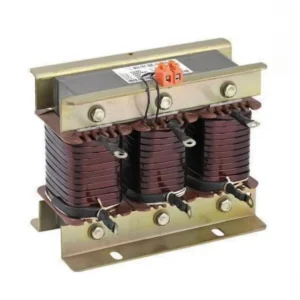
High-Quality CKSG Series Low Voltage Series Reactor Manufacturers, Manufacturer
-
-
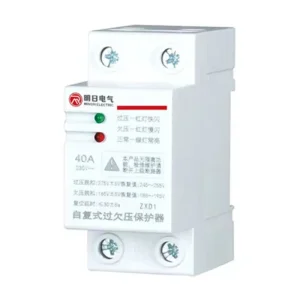
OEM MRGQ-63 Series Self-Resetting Over and Under Voltage Protector Manufacturer, Company
-
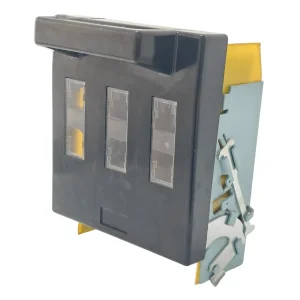
OEM HR5 Fused Disconnect Switch with Visible Contacts Supplier, Factory
-
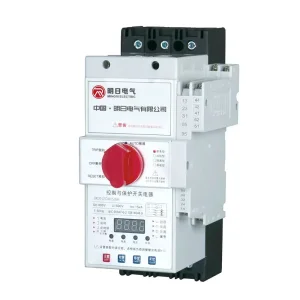
-
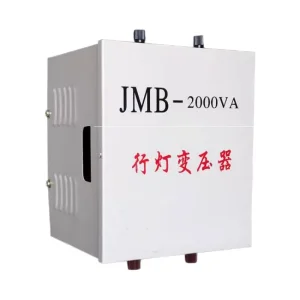
ODM JMB/BJZ/DG/BZ(DM) Series Lighting & Hand Lamp Control Transformer Suppliers, Company
-
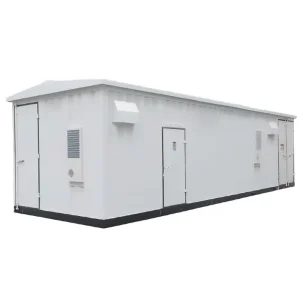
OEM Modular Intelligent Prefabricated Cabin Substation with Smart Features Manufacturers, Companies