Engineered Switchgear, Breakers & Dynamic Controls
High-performance vacuum breakers, intelligent distribution panels, and compact contactors manufactured under stringent ISO 9001 and IEC/UL standards for uninterrupted global operations.
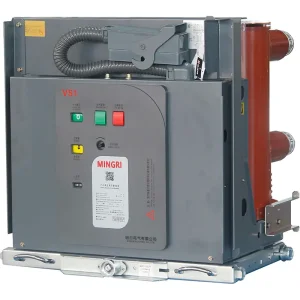
VS1-12/24 Withdrawable Indoor High Voltage Vacuum Circuit Breaker
View Technical Specs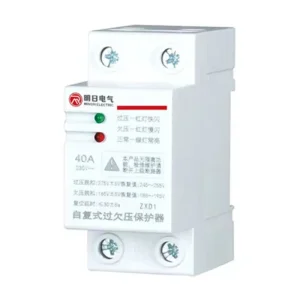
OEM MRGQ-63 Series Self-Resetting Over and Under Voltage Protector
View Technical Specs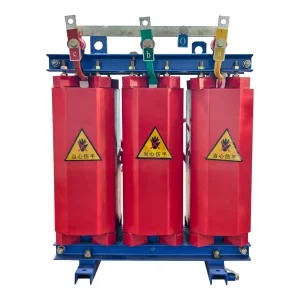
Wholesale SC(B)11 10kV Resin-Insulated Dry Casting Transformer
View Technical Specs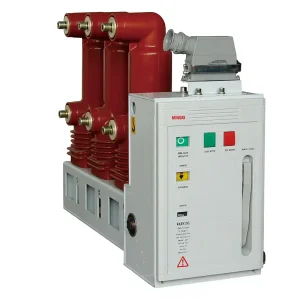
Wholesale VSB-12 Indoor High-Voltage Vacuum Circuit Breaker
View Technical Specs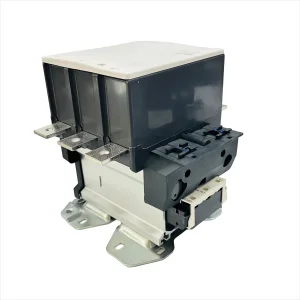
China CJX2-F Series AC Contactor for Motor Control Systems
View Technical Specs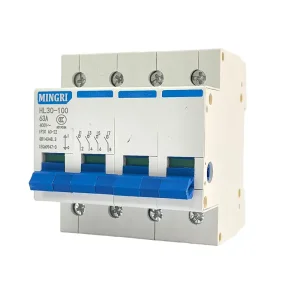
High-Performance HL30-100 Miniature Disconnect Switch 1-4P
View Technical Specs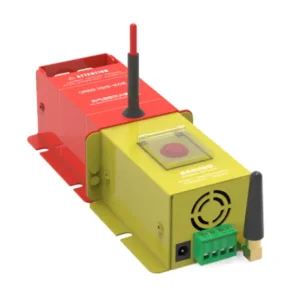
Intelligent Wireless Automatic Gas Fire Extinguishing Device
View Technical Specs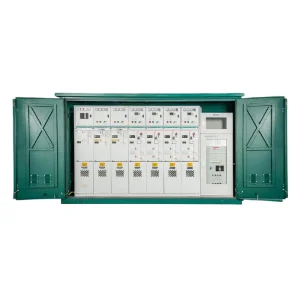
OEM High Voltage Outdoor Intelligent Switch Box System
View Technical SpecsThe 60Hz Electrification Landscape: North America, APAC & Middle East
While 50Hz networks dominate European and Central Asian geographies, 60Hz architectures govern over 32% of global industrial electricity generation, spearheading massive infrastructure investments across the United States, Canada, Mexico, Saudi Arabia, South Korea, Taiwan, and the Philippines.
In wholesale and procurement channels, sourcing 60Hz AC contactors requires far more precision than merely substituting coil label ratings. A 60Hz electromagnetic system behaves with fundamentally distinct thermodynamic and electromechanical properties compared to its 50Hz counterpart. Because AC line frequency directly impacts alternating magnetic flux velocities, core saturation kinetics, inductive reactance ($X_L = 2\pi f L$), and zero-crossing quenching intervals, specifiers and electrical contractors cannot view contactors as agnostic commodities.
Across North American commercial HVAC chiller operations, automated manufacturing facilities, hyperscale data center power distribution units (PDUs), and petrochemical process skids, 60Hz contactors undergo accelerated cyclic stresses. The 20% increase in frequency means 120 current reversals per second rather than 100, impacting armature chatter tendencies, shade-ring phase calibration, hysteresis thermal generation, and silver alloy contact erosion dynamics.
North American NEMA vs. IEC Demands
In the US and Canada, wholesale switchgear must balance both IEC 60947-4-1 compact modularity and NEMA ICS 2 extreme duty reserve margins. 60Hz coils operating under 480V Delta or 480Y/277V systems demand stringent creepage and clearance distances matching UL 508 / UL 60947-4-1 requirements with high withstand short-circuit current ratings (SCCR).
GCC & Saudi Arabian Grid Realities
Saudi Arabia operates a unique unified 60Hz system within the Middle East, requiring contactors capable of handling high ambient desert temperatures exceeding 55°C without coil derating or contact welding under dusty, cyclic industrial loads in water desalination, refining, and cement manufacturing.
East Asian Industrial Cleanroom Automation
South Korea and Taiwan’s advanced semiconductor foundries and EV battery factories rely on 60Hz infrastructure. Contactors in these environments require low acoustic humming (<20 dB), high electrical endurance (>1.5 million cycles), and ultra-fast opening times to protect delicate automated robotic cells.
Magnetic Flux, Thermal Dissipation & Arc Quenching at 60Hz
An in-depth technical analysis of core metallurgy, eddy current loss equations, shading coil impedance tuning, and contact bridge kinetic response under 60-cycle zero-crossing intervals.
The Magnetomotive Force & Core Loss Paradox
The magnetic core structure of a 60Hz AC contactor relies on thin, cold-rolled grain-oriented silicon steel laminations (typically 0.35mm to 0.5mm thickness). According to Faraday’s Law of Induction and the magnetic circuit equation:
Φ_max = V_rms / (4.44 · f · N · A_core)
Where f is frequency (60 Hz), N is total coil turns, and A_core is the effective cross-sectional magnetic area. Increasing frequency from 50Hz to 60Hz reduces the required peak magnetic flux density (B_max) for a given voltage, but dramatically increases iron losses.
Iron core losses consist of hysteresis loss ($P_h \propto f \cdot B_{max}^n$) and eddy current loss ($P_e \propto f^2 \cdot B_{max}^2$). Because eddy current losses escalate with the square of frequency ($f^2$), a contactor core designed without optimized inter-lamination insulation varnish and high silicon content (≥3.0%) will run substantially hotter in a 60Hz environment. Sourcing from experienced wholesale manufacturers ensures that stamping tolerances, annealing cycles, and lamination coatings are calibrated specifically for 60Hz thermal equilibrium.
Shading Coil Calibration: Eliminating 120Hz Mechanical Hum & Chatter
In a single-phase AC electromagnetic yoke, the alternating magnetic force drops to zero twice per cycle. In a 60Hz circuit, this creates an inherent 120Hz mechanical vibration pulsation. To counteract this force dip and prevent contact separation (chatter), a heavy copper or silver-plated shading ring (flux splitting band) is embedded in the pole faces of the stationary E-core.
The shading ring acts as an inductive shorted secondary turn, inducing a secondary magnetic flux out of phase with the primary flux by approximately 60° to 75°. At 60Hz, the phase lag angle ($\theta = \arctan(\omega L / R)$) increases due to the higher angular velocity ($\omega = 2\pi f = 377 \text{ rad/s}$ vs $314 \text{ rad/s}$ at 50Hz). If a wholesale vendor supplies uncalibrated 50Hz shading coils for 60Hz lines, the resulting vector resultant fails to maintain the minimum mechanical holding threshold. This leads to destructive micro-bounces, audible chattering, accelerated contact pitting, and premature coil insulation breakdown.
Arc Dynamics and Zero-Crossing Extinction Kinetics
When contact tips separate under heavy inductive motor starting currents (AC-3 or AC-4 utilization), an electric arc is struck across the silver alloy contacts. The primary mode of AC contactor arc extinction relies on the current naturally passing through zero.
- Zero-Crossing Period: At 60Hz, zero-crossing occurs every 8.33 milliseconds, compared to 10.0 milliseconds at 50Hz. This shorter window limits the total thermal energy ($E_{arc} = \int v(t) \cdot i(t) \, dt$) injected into the contact tips per half cycle.
- De-Ion Grid & Arc Chute Geometry: Because zero crossing is faster, the rate of rise of recovery voltage (RRRV or $du/dt$) is steeper. Arc chutes must feature precisely staggered steel splitter plates that segment the arc into series micro-arcs, rapidly cooling the plasma below the dielectric breakdown threshold of air.
- Contact Metallurgy: Modern 60Hz contactors utilize Silver Tin Oxide ($AgSnO_2$) or Silver Nickel ($AgNi$) contacts with trace metal oxide additives ($In_2O_3$, $WO_3$) to resist material migration and micro-welding caused by rapid switching transients.
| Performance Characteristic | Standard 50Hz Architecture | Optimized 60Hz Architecture | Universal Electronic Coil (50/60Hz) |
|---|---|---|---|
| Line Angular Frequency ($\omega$) | 314.16 rad/s | 376.99 rad/s | Adaptive DC Rectified Core |
| Zero-Crossing Duration | 10.00 ms | 8.33 ms Faster Extinction | Independent of Input Phase |
| Shading Ring Inductive Lag | Standard copper band (50Hz tune) | Compensated cross-section copper/brass | Not Required (Pure DC Drive) |
| Coil Reactance ($X_L$) | Baseline Reactance | +20% higher impedance vs 50Hz | Microprocessor PWM controlled |
| Acoustic Noise (Hum) | <28 dB at rated voltage | <26 dB with precision pole lamination | <15 dB (Whisper Silent) |
| Pickup / Dropout Response | 15–30 ms pull-in time | 12–25 ms pull-in time | Programmable Soft Closure |
Mission-Critical Industrial Application Profiles
From heavy-duty chiller skids in American corporate campuses to deep-well submersible pumps in the Arabian peninsula, 60Hz contactors must survive extreme duty cycles and environmental adversity.
Commercial HVAC-R & Chillers (Definite Purpose)
Large scroll and centrifugal chillers require 60Hz Definite Purpose (DP) contactors capable of handling high Locked Rotor Amperes (LRA up to 6x Full Load Amps). Under ARI 780/790 standards, contacts must operate reliably across frequent cycling in low-impedance 480V 3-phase circuits without contact sintering or spring fatigue.
Petrochemical & Hazardous Mining Pumps
In continuous petrochemical extraction and slurry pumping, contactors operate in sealed NEMA 4X / NEMA 7 explosion-proof enclosures. Higher ambient temperatures inside sealed dead-front cabinets exacerbate 60Hz core losses. Heavy-duty silver-cadmium-free alloy contacts protect against corrosive H2S gas pitting and sulfur degradation.
Semiconductor Cleanrooms & Robotic Lines
Precision automated wafer fab and lithium-battery packaging equipment require 60Hz contactors that introduce zero mechanical EMI interference or voltage sag harmonics during pick-up. Contactors fitted with electronically controlled DC-driven coils provide soft, zero-chatter closures that safeguard sensitive sensors.
Hyperscale Data Center Static Transfer Switches
Data center infrastructure requires seamless 60Hz ATS (Automatic Transfer Switch) and bypass contactor panels. With unyielding uptime requirements (99.999%), 3-pole and 4-pole contactors must feature mechanical interlocks, auxiliary feedback blocks, and Gold-flashed micro-switches for direct integration with building management networks.
Solar PV Inverters & Microgrid BESS Storage
Grid-tied solar inverters in 60Hz regions utilize heavy AC contactors for islanding isolation and safe reconnect sequence control. Bidirectional capability, high dielectric withstand between open contacts (>4kV), and DC-suppressed auxiliary contacts ensure compliance with UL 1741-SA and IEEE 1547 interconnection codes.
Marine & Offshore Platform Auxiliary Grids
Commercial vessels, cruise liners, and drillships frequently run isolated 440V / 450V 60Hz auxiliary power plants. Marine-grade contactors require ABS, DNV, and Lloyd's Register marine shock/vibration certifications, featuring flame-retardant V0-rated polymers and captive terminal hardware.
Turnkey Coordination, Smart IoT Contactors & Technology Roadmap (2025–2035)
Transitioning from electromechanical relays to smart, solid-state hybrid contactors with embedded Edge-AI sensing, energy monitoring, and Type 2 short-circuit coordination.
Type 2 Coordination: Preventing Systemic Downtime
In enterprise motor branch circuits, electrical engineers mandate Type 2 Coordination per IEC 60947-4-1. Under Type 1 coordination, a short-circuit fault may permanently damage the contactor and overload relay, requiring panel downtime and component replacement. Under Type 2 coordination, however, after a high-magnitude short circuit occurs (e.g., 65kA or 100kA), the contactor must suffer no damage, contact welding, or altered trip characteristics, remaining capable of immediate re-energization.
Achieving Type 2 performance at 60Hz requires fine-tuned matching between the upstream molded case circuit breaker (MCCB), current-limiting fuses, and contactor arc chutes. The rapid current rise ($di/dt$) characteristic of 60Hz systems demands contact springs with reinforced initial contact force (Gram-force) to prevent magnetic blow-open before upstream protective devices clear the prospective fault.
The 2025–2035 Technology Roadmap: Solid-State & Edge IoT Contactors
The next generation of wholesale contactors represents a convergence of high-power semiconductor engineering and cloud-native edge telemetrics:
Hybrid Solid-State Contactors
Combining Silicon Carbide (SiC) MOSFETs/IGBTs in parallel with bypass mechanical contacts. The solid-state switch activates precisely at zero-crossing during make-and-break cycles, completely eliminating electric arcing, contact erosion, and acoustic noise, while mechanical contacts carry continuous load current with near-zero heat loss.
Predictive IoT Contact Wear Sensors
Embedded micro-sensors measure millivolt drop across contact poles, mechanical travel time, coil current waveforms, and pole temperature in real-time. By feeding this telemetry via Modbus-RTU, IO-Link, or Ethernet/IP, plant operators receive algorithmic Remaining Useful Life (RUL) warnings well before contact welding or failure occur.
Eco-Design & Circular Metallurgy
Complete phase-out of hexavalent chromium and cadmium alloys. Modern wholesale factories implement recyclable thermoset moulding resins, halogen-free coil formers, and closed-loop silver recovery initiatives, lowering Scope 3 carbon footprint while maintaining strict RoHS and REACH compliance.
Frequently Asked Engineering Questions
Critical technical insights addressing frequency conversion, derating factors, NEMA/IEC utilization rules, and global testing standards for procurement directors and panel builders.
Specialty Transformers, DC Breakers & Starting Panels
Complementing low-voltage contactors with medium-voltage cast resin dry transformers, high-voltage starter cabinets, DC photovoltaic circuit breakers, and industrial control transformers.
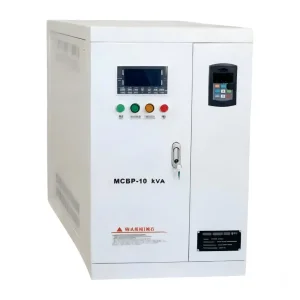
OEM MCBP Series Variable Frequency Power Supply Solution
View Technical Specs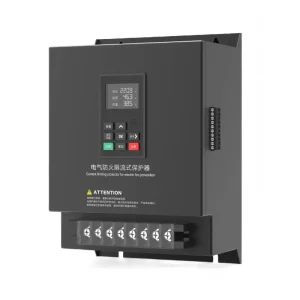
Wholesale 80A Three-Phase Intelligent Electrical Fire Protector
View Technical Specs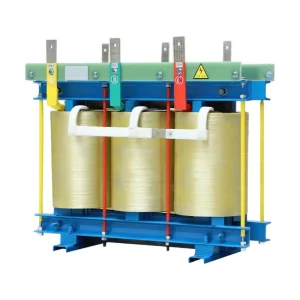
SG(B)10 Series 10kV Non-encapsulated Dry Type Transformer
View Technical Specs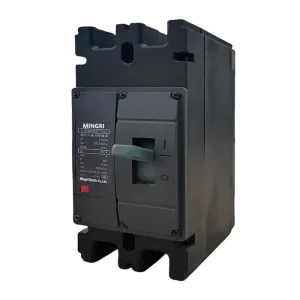
ODM SJKM5DC DC 1500V Molded Case Circuit Breaker for Solar
View Technical Specs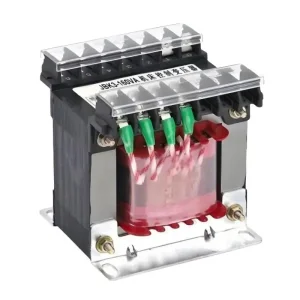
JBK3 Series Machine Tool Control Step-Down Transformers
View Technical Specs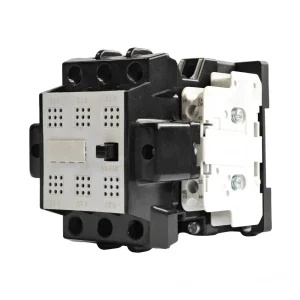
OEM CJX1 (3TB) Series Heavy AC Contactors 9–400A AC-3
View Technical Specs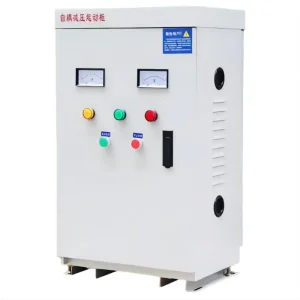
Wholesale MCX01 Autotransformer Step-Down Starting Cabinet
View Technical Specs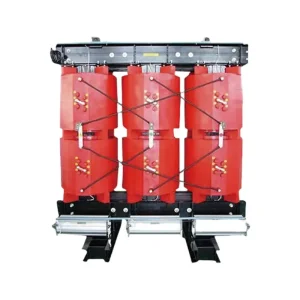
SC(B)13 Type 10kV High-Efficiency Resin Cast Dry Transformer
View Technical SpecsFactory Verification & Engineering Quality Architecture
State-of-the-art automated assembly lines, robotic coordinate measuring machines (CMM), cleanroom automated winding, and full-spectrum electrical life test laboratories.
Automated Automated Assembly & Optical Inspection
Every 60Hz contactor core, coil, and contact assembly is processed through high-speed automated assembly cells. Multi-axis high-resolution optical vision systems verify contact alignment gap dimensions, spring compression stroke, and shading coil rivet tension to within ±0.02 mm tolerances.
Full Cycle Impulse & Partial Discharge Testing
Batch testing protocols subject contactor poles to 8kV lightning impulse withstand tests, 50/60Hz dielectric high-potential proof tests, and thermal cycle endurance runs from -40°C to +85°C, ensuring that insulating mouldings survive severe atmospheric transients.
Comprehensive OEM / ODM Customization Skids
Wholesale clients benefit from fully customizable terminal configurations (box lugs, screw clamps, ring tongue studs), tailored coil voltages (110V 60Hz, 120V 60Hz, 208V 60Hz, 277V 60Hz, 480V 60Hz), private label brand embossing, and custom packaging meeting international maritime container standards.
When finalizing high-volume procurement schedules for international projects operating under 60Hz architectures, request full manufacturer Type Test Certificates from accredited third-party laboratories (KEMA, ASTA, UL, or TÜV Rheinland). Validate that all short-circuit breaking capacity data adheres strictly to your target country’s installation codes (NEC NFPA 70 in the USA, CEC in Canada, or SASO in Saudi Arabia) to guarantee streamlined commissioning and municipal inspection sign-offs.