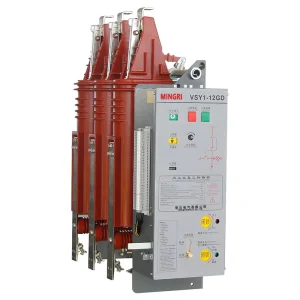
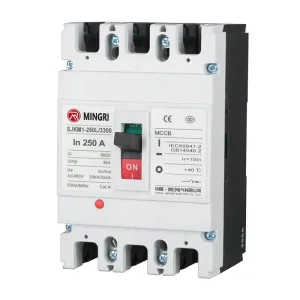
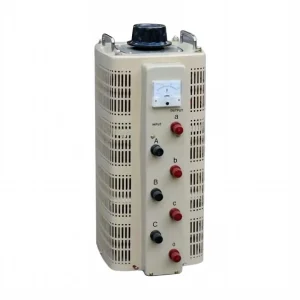
Featured Industrial Switchgear & Primary Circuit Protection
Explore our high-reliability power management lineup integrated alongside surge suppression topologies to provide uninterrupted power continuity across global utilities and heavy industry.
Global Macro Landscape: Industrial Surge Vulnerability & Standardization
Analyzing transient overvoltages, lightning electrodynamics, and international compliance architectures across modern energy grids.
In modern industrial facilities, microgrid infrastructures, and high-density computing topologies, transient overvoltages represent the single greatest threat to process continuity, semiconductor longevity, and asset health. A transient is a short-duration, high-energy surge characterized by nanosecond rise times and microsecond decay intervals, generated either externally via direct or indirect atmospheric lightning discharges (LEMP - Lightning Electromagnetic Pulse), or internally via inductive load switching, heavy machinery startup, variable frequency drive (VFD) harmonics, and utility power grid switching events (SEMP - Switching Electromagnetic Pulse).
Modern semiconductor architectures operating at lower logic voltages (sub-3.3V) have drastically reduced the dielectric withstand threshold of critical industrial controllers, programmable logic controllers (PLCs), distributed control systems (DCS), and supervisory telemetry. Consequently, the reliance on advanced, multi-stage OEM Surge Protection Devices (SPDs) is no longer a peripheral consideration but an architectural foundation required by standards such as IEC 62305 (Lightning Protection Standard), IEC 61643-11 (Surge protective devices connected to low-voltage power systems), and UL 1449 5th Edition.
Global engineering procurement organizations require specialized OEM partners capable of fine-tuning the balance between nominal discharge current ($I_n$), maximum discharge current ($I_{max}$), impulse discharge current ($I_{imp}$), and voltage protection level ($U_p$). Without precision coordination across the defined Lightning Protection Zones (from LPZ 0A at exterior installations to LPZ 3 within sub-cabinet sensitive electronic tiers), downstream equipment faces insulation breakdown, gradual degradation of dielectric matrices, and catastrophic downtime.
The Yueqing Industrial Cluster & Chinese Manufacturing Ecosystem
How hyper-concentrated supply chains, automated sintering, and high-current impulse testing labs establish global cost-to-performance leadership.
Vertical Supply Chain Integration
The concentration of electrical apparatus production in Yueqing, Zhejiang, gives OEM manufacturers instantaneous access to certified zinc oxide (ZnO) grain formulation, gas discharge tube (GDT) ceramic enclosures, silver-copper alloy contact welding, and automated thermoset plastic molding within a 15-kilometer radius. This condensed supply web cuts raw component lead times by up to 65% compared to fragmented western assemblies.
Precision MOV Sintering & Doping
Metal Oxide Varistors form the non-linear resistive heart of voltage-limiting SPDs. Modern Chinese smart factories employ closed-loop, computer-controlled tunnel kilns with micro-atmosphere control to sinter bismuth, antimony, and cobalt-doped ZnO micro-structures. This process yields ultra-uniform grain boundaries, minimal leakage currents ($< 20 \mu A$), and high energy absorption density ($J/cm^3$) that suppresses thermal runaway risks.
In-House Impulse Testing Laboratories
Leading Chinese OEM/ODM suppliers maintain comprehensive surge test stations capable of generating 10/350 µs lightning impulse currents up to 100 kA, combination wave 1.2/50 µs - 8/20 µs up to 200 kA, and continuous thermal stability tests. Every production batch undergoes automated parameter screening (Varistor Voltage $U_v$, Leakage Current $I_L$) prior to terminal assembly, ensuring full trace integrity for global regulatory submissions.
Localized Application Blueprints & Mission-Critical Demands
Tailored transient voltage suppression strategies deployed across severe operational environments.
Photovoltaic & BESS (DC 1000V / 1500V)
Modern solar arrays and battery energy storage containers operate at elevated continuous direct voltages. DC SPDs require specialized Y-type circuit topologies with three varistor paths coupled with integrated thermal disconnectors to suppress bidirectional surges and eliminate risks of permanent DC arcing during end-of-life varistor puncture.
EV Ultra-Fast DC Chargers
High-power charging stations (150 kW - 480 kW) sit exposed to outdoor atmospheric discharge while directly connected to commercial grid lines. OEMs integrate robust Type 1+2 combo modules on the AC input side and dedicated 1000V DC SPDs on the converter-to-vehicle line, protecting both the liquid-cooled charging rectifiers and vehicle onboard ECUs.
Data Centers & Telecom 5G Macro Sites
Uninterrupted computing operations require hybrid MOV + Gas Discharge Tube (GDT) designs to provide completely zero continuous leakage current, preserving energy efficiency while preventing premature aging of the protective elements. Coaxial and PoE surge suppressors are integrated on communication pathways to protect gigabit Ethernet transmission.
Technological Trends: Smart SPDs, IoT Telemetry & Hybrid Topologies
The transition from passive analog sacrificial suppressors to active, connected grid telemetry devices.
The industrial surge protection industry is experiencing a technological pivot driven by automated building management systems (BMS), Industrial Internet of Things (IIoT), and preventive maintenance initiatives. Historically, SPDs were passive components relying on local mechanical visual flags (Green = Normal, Red = Defective). If a surge event occurred between routine technician inspection rounds, downstream circuits were left exposed without maintenance teams being aware of the compromised barrier.
Next-generation OEM surge equipment incorporates three foundational architectural advancements:
- Embedded Microcontroller Telemetry: Micro-current sensors inside the SPD chassis continuously monitor leakage current through the MOV stack, track the cumulative number of surge impacts, log high-energy surge discharge time stamps, and record ground potential rise events via integrated RS-485 Modbus or wireless LoRaWAN protocols.
- Hybrid Series Spark-Gap / MOV Configurations: By placing a sealed GDT or triggerable spark gap in series with high-capacity varistor elements, galvanic isolation is established during normal steady-state operation. This totally eliminates standby leakage current, avoids varistor thermal aging caused by harmonic distortions, and extends component MTBF by over 300%.
- Low-Temperature Soldered Thermal Disconnectors: To pass stringent UL 1449 abnormal overvoltage and thermal runaway testing, manufacturers engineer micro-machined, spring-loaded mechanical disconnection bridges calibrated with eutectic alloys. When the MOV temperature reaches ~135°C, the bridge mechanically snaps open, physically decoupling the failing component within milliseconds and extinguishing any subsequent power-frequency follow current.
| SPD Class (IEC / UL) | Impulse Waveform | Typical In / Imax / Iimp | Primary Installation Point | Typical Equipment Protected |
|---|---|---|---|---|
| Type 1 / Class I | 10/350 µs direct pulse | $I_{imp}$: 12.5 kA - 50 kA / pole | Main Distribution Board (MDB) at service entrance | Transformers, large chillers, main switchboards |
| Type 2 / Class II | 8/20 µs induced pulse | $I_n$: 20 kA - 40 kA / $I_{max}$: 40 kA - 100 kA | Sub-Distribution Boards (SDB), branch panels | Inverters, HVAC systems, industrial motor drives |
| Type 3 / Class III | 1.2/50 µs + 8/20 µs (Combo) | $U_{oc}$: 6 kV - 20 kV / $I_n$: 3 kA - 10 kA | Point of Use (POU) within 5 meters of device | PLCs, SCADA nodes, servers, lab instruments |
| Type 1+2 Special PV | 10/350 µs & 8/20 µs DC | $I_{imp}$: 5 kA / $I_{max}$: 40 kA (DC 1500V) | DC Combiner Boxes, central PV inverter inputs | Solar PV strings, MPPT converters, BESS racks |
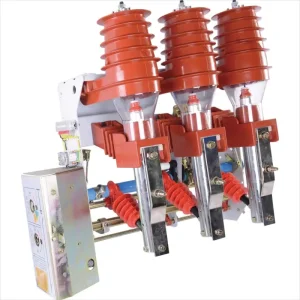
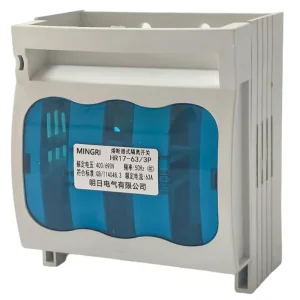
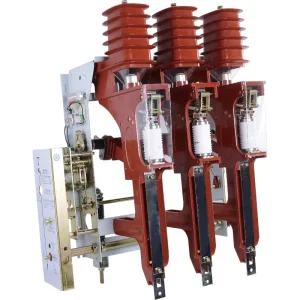
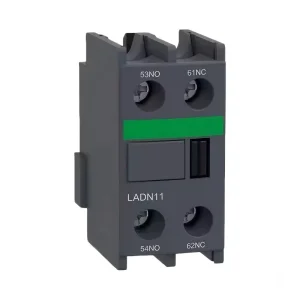
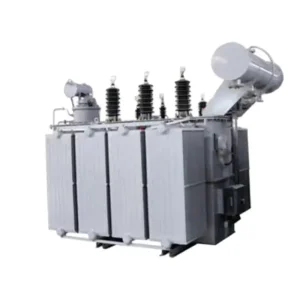
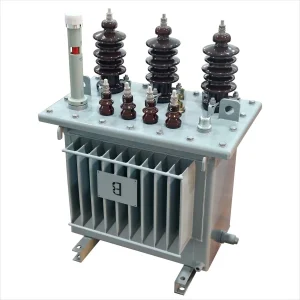
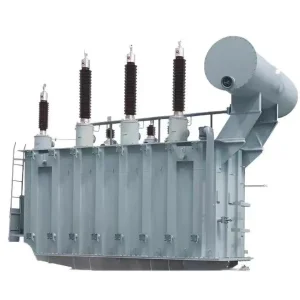
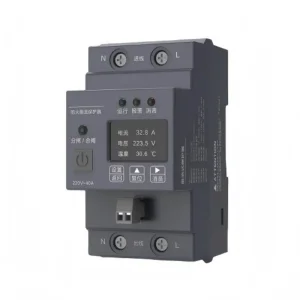
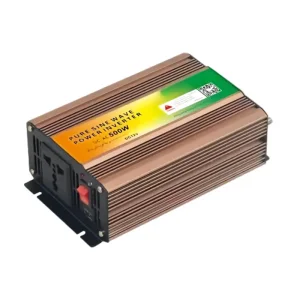
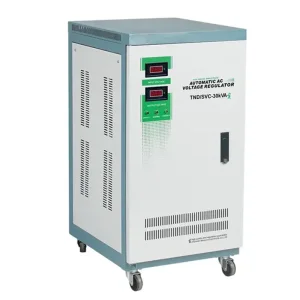
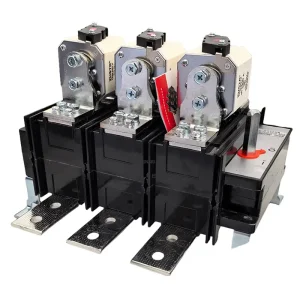
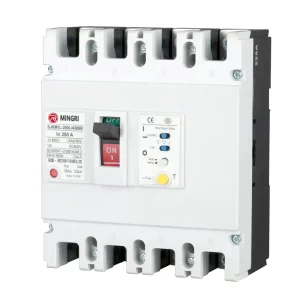
Integrated Power Transmission, Transformation & Protection Solutions
Reliable medium- and low-voltage electrical apparatus manufactured for global EPC contractors, industrial distribution networks, and utilities.
Global Procurement Roadmap: Auditing OEM SPD Manufacturers
Critical verification protocols for international procurement engineers evaluating Chinese manufacturing partners.
Selecting an OEM/ODM surge protection device partner requires evaluating both manufacturing precision and rigorous testing qualifications. Global EPC firms and brand distributors must audit potential factories against four core criteria:
Independent Laboratory Certifications
Ensure products hold accredited third-party test certifications from recognized bodies such as TÜV Rheinland, DEKRA (KEMA-KEUR), Intertek, or UL. A simple "factory self-declaration" does not guarantee compliance under the destructive energy conditions specified in IEC 61643-11 or UL 1449.
Custom Mold & Housing Tooling
Reliable OEM manufacturers offer in-house injection mold design utilizing flame-retardant polyamide (PA66) certified to UL94 V-0 standards. Custom tooling capabilities allow OEM clients to integrate distinctive chassis aesthetics, branded mechanical color schemes, proprietary terminal block geometries, and specialized DIN-rail snap locks.
Backup Overcurrent Coordination
A surge arrester must coordinate with a specialized backup surge protector (SCB - Surge Circuit Breaker) or dedicated fuse. Leading OEMs provide verified coordination data tables ensuring the backup device trips under power-frequency short-circuit faults without nusiance-tripping during heavy 100 kA lightning discharge pulses.
Technical Knowledge Base: Engineering Questions & Answers
Direct technical answers addressing critical parameters, installation topologies, and customization capabilities.