High-Performance Power Equipment & Assemblies
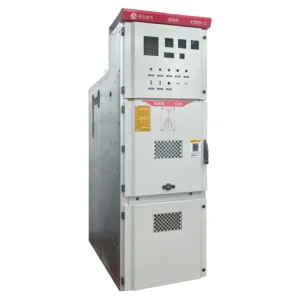
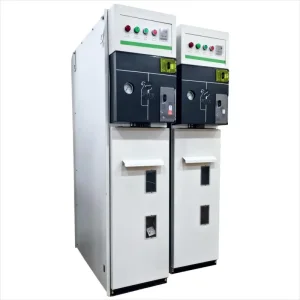
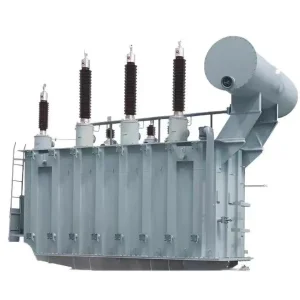
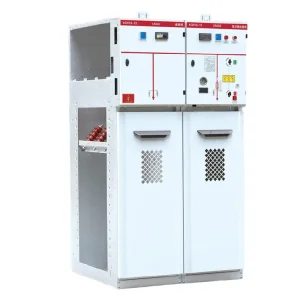
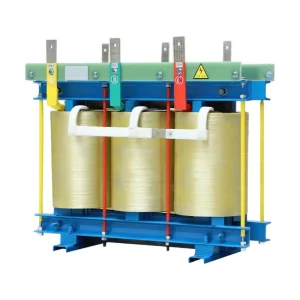
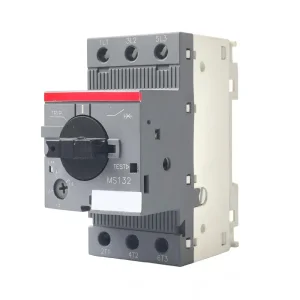
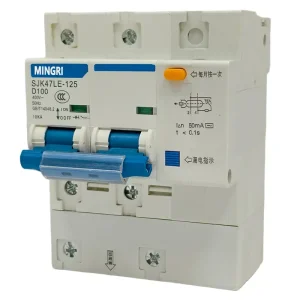
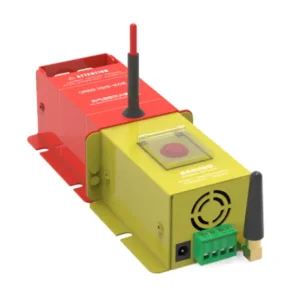
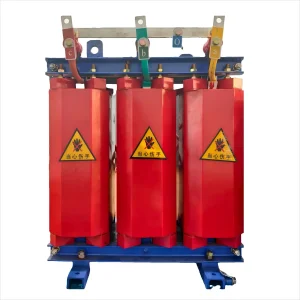
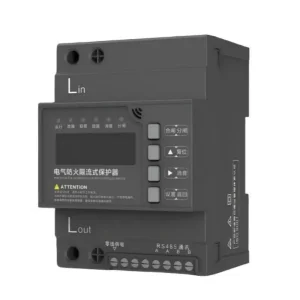
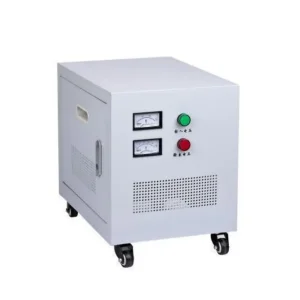
Explore our core medium-to-low voltage transformation systems, precision regulators, and intelligent overload containment devices designed for mission-critical installations.
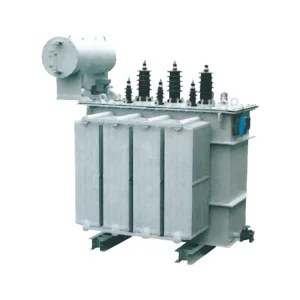
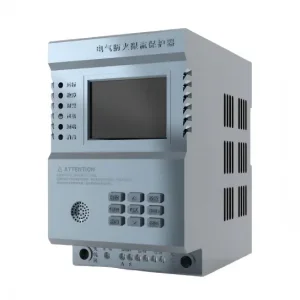
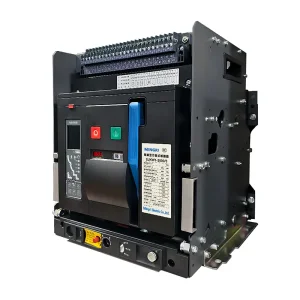
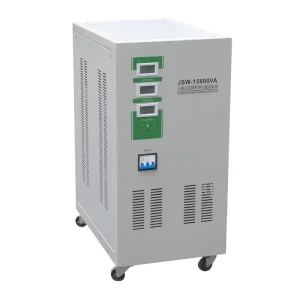
Executive Technical Overview: The Evolution of Industrial Power Distribution Cabinets
In modern industrial facilities, mega data centers, and renewable utility substations, the electrical distribution cabinet is no longer merely a sheet metal enclosure housing circuit interrupters. It represents an intelligent, thermographically monitored, arc-fault-contained power hub.
Structural Integrity & Form Segregation
Modern electrical engineers mandate strict internal compartmentalization up to Form 4b (IEC 61439-2). This design completely separates busbars, functional units, and external termination terminals using physical, grounded metallic barriers. This isolation protects operational staff against accidental flashovers, prevents arc propagation across adjacent bays, and allows live maintenance on individual withdrawable drawers without interrupting upstream feeders.
- Form 2a to Form 4b configurations
- Cold-rolled or Aluzinc steel chassis (2.0mm to 2.5mm)
- Earthquake and seismic-tested to Zone 4 parameters
Thermal Modeling & Current Capacity
Thermal management is the critical parameter governing continuous load delivery. Copper busbar architectures designed via 3D computational fluid dynamics (CFD) optimize natural convection through precision ventilation louvers and top-mounted exhaust baffles. High-purity T2 electrolytic copper busbars, silver-plated at mating surfaces, eliminate hot spots, ensuring temperature rise remains well within the 70K limits defined under ambient 40°C site conditions.
- T2 grade 99.95% electrolytic copper conductivity
- Silver-plated contact points prevent galvanic degradation
- Thermal imaging ports for non-invasive IR inspection
IoT Telemetry & Microgrid Synchronization
As the backbone of Industry 4.0, our OEM cabinets integrate edge controllers, Modbus-TCP/IP and IEC 61850 communication gateways, and multi-channel power analyzers. They deliver continuous monitoring of true RMS voltages, harmonics (THD up to the 63rd order), dynamic power factors, and residual leakage currents. This real-time telemetry facilitates predictive maintenance, preventing catastrophic unplanned downtime.
- IEC 61850 & Modbus-TCP/IP industrial protocol support
- Contactless wireless busbar temperature sensing nodes
- High-speed automatic transfer switching (ATS < 80ms)
Global Enterprise Sourcing: Navigating Technical Specifications & Compliance
Procurement directors and Chief Electrical Engineers require precision alignment between design single-line diagrams (SLD) and physical cabinet fabrication. Standardizing OEM cabinet procurement mitigates life-cycle operational risks.
Engineering Rigor & SLD Realization
Enterprise procurement fails when vendor tolerances deviate from the consultant engineer's Single Line Diagram. Our engineering division operates advanced CAD/CAM software to perform comprehensive load schedule analyses, busbar electrodynamic deflection calculations under short-circuit stresses, and fault clearing coordination. Every OEM project undergoes rigorous preliminary review, matching prospective fault currents (kA) with correctly rated breaking devices.
Dual IEC/UL Standardization Alignment
Global multi-site rollouts often demand seamless cross-standardization between European IEC standards and North American UL/NEMA architectures. Mingri Electric crafts modular switchgear enclosures capable of dual-rating validation: meeting IEC 61439-1/2 for EMEA/APAC regions and meeting UL 891 / NEMA Type 1, 3R, 4X requirements for North and South American infrastructure deployments.
Tier-1 Component Neutrality
Clients often require standardized switchgear internals to match existing on-site spare-part inventories. As an agile OEM manufacturer, our power distribution cabinets support flexible breaker and contactor integration—accommodating industry-standard brands (Schneider Electric, ABB, Siemens, Mitsubishi) or high-reliability proprietary Chinese assemblies (such as Mingri SJKW1 series ACB) for maximum capital efficiency.
| Performance Characteristic | IEC 61439 Low-Voltage Assemblies | Medium-Voltage Metal-Enclosed (KYN28) | Intelligent Gas-Insulated RMU (RM6/XGN) |
|---|---|---|---|
| Rated Operational Voltage (Ue) | Up to 690V AC / 1000V AC | 3.6 kV – 24 kV (Optional 40.5 kV) | 12 kV – 24 kV Ring Main Networks |
| Rated Current (In) | Up to 6300A Main Busbar | 630A – 4000A Feeder/Incomer | 630A Continuous Current |
| Short-Time Withstand (Icw) | 50kA / 65kA / 85kA / 100kA (1s) | 25kA / 31.5kA / 40kA (4s) | 20kA / 25kA (3s / 4s) |
| Internal Arc Classification (IAC) | Arc Flash Mitigated (Passive baffles) | IAC AFLR up to 40kA / 1s | IAC AFLR 20kA / 1s Sealed Tank |
| Ingress Protection (IP Code) | IP30, IP42, IP54, IP65 (Outdoor) | IP4X Enclosure, IP2X Compartments | IP67 Sealed Tank, IP3X External Enclosure |
| Internal Separation Form | Form 1, Form 2b, Form 3b, Form 4a, Form 4b | Metal-Clad LSC2B-PM (Loss of Service) | Hermetically Sealed Stainless Steel Compartment |
Mission-Critical Power Architectures Across Global Industries
From gigawatt-scale hyperscale facilities to remote mining camps and offshore wind integration hubs, power distribution cabinets must operate without disruption under harsh, variable environmental conditions.
Hyperscale Data Centers & Telecommunications
Continuous compute uptime requires 2N or distributed redundant electrical distribution topologies. Mingri OEM power distribution cabinets incorporate sub-cycle fast bus transfer systems, solid-state static transfer switches (STS), zero-harmonic isolation transformers, and integrated branch circuit monitoring (BCM) tracking power usage effectiveness (PUE) down to individual rack feeds.
- Sub-cycle static transfer systems ensuring <4ms transfer
- Branch circuit power monitoring with Class 0.5S revenue accuracy
- Low heat loss busbar configurations for reduced cooling overhead
Heavy Manufacturing, Petrochemical & Mining
Severe corrosive environments laden with airborne particulate matter, combustible dust, or hydrogen sulfide demand heavy-gauge enclosures fabricated from 316L stainless steel. Our hazardous-duty distribution panels provide NEMA 4X / IP66 ratings, explosion-proof pressurization (Purge Type Z & X), and robust Class H thermal insulation capable of withstanding industrial plant dynamics.
- Heavy gauge AISI 304/316L stainless steel enclosures
- Positive pressure purge systems for Zone 1 and Zone 2 safety
- Heavy shock resistance against industrial stamping vibration
Utility-Scale Solar PV & BESS Integration
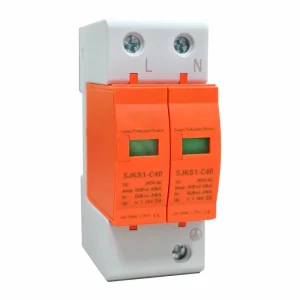
Decarbonization projects require specialized 800V AC solar collection panels and bi-directional battery energy storage system (BESS) cabinets. Equipped with rapid DC-coupled disconnects, active harmonic filtration (AHF), and high-capacity surge protection devices (SPDs), our systems eliminate inverter backfeed resonance and protect sensitive power electronics from grid-side transients.
- Dedicated 800V AC string inverter aggregation panels
- High-capacity Type 1+2 surge protection mitigating switching spikes
- Integration with automated aerosol fire suppression devices
Technological Roadmap & Future Outlook: Towards Smart, Sustainable Grids
The transition toward eco-friendly insulation, solid-state circuit disruption, and machine-learning diagnostics is transforming switchgear performance.
Phase 1: SF6-Free Eco-Gas & Solid Insulation
Global regulatory restrictions on fluorinated greenhouse gases (such as the EU F-Gas Regulation) are accelerating the obsolescence of sulfur hexafluoride (SF6). Mingri Electric has pioneered solid dielectric insulated ring main units (GXGN-12) and clean-air medium-voltage switchgear. These units achieve zero global warming potential (GWP < 1) while matching conventional SF6 insulation clearances.
Phase 2: Solid-State Circuit Breaker (SSCB) Hybridization
Traditional mechanical air circuit breakers clear short circuits within 30 to 60 milliseconds—a window sufficient to cause voltage sags across sensitive microelectronics. Next-generation distribution cabinets integrate silicon carbide (SiC) based solid-state interrupters that isolate microsecond faults (<100 µs), eliminating arc flash events entirely and protecting microgrid semiconductors.
Phase 3: Digital Twin & Predictive Maintenance
Future distribution cabinets function as self-diagnostic edge computing nodes. By combining fiber-optic temperature sensors along internal bus junctions with high-frequency acoustic partial discharge detectors, edge algorithms calculate real-time contact resistance deterioration. This digital twin infrastructure forecasts remaining operational life (RUL) before mechanical contact binding occurs.
End-to-End Quality Assurance, Localized Support & Field Commissioning
Deploying large-scale electrical infrastructure overseas requires tight coordination, robust export packaging, and field-readiness support.
ISO 9001 / 14001 / 45001 Certification Framework
Every distribution cabinet is designed, fabricated, and wired inside our state-of-the-art Yueqing facility under strict quality management systems. From raw steel tensile verification and automated laser CNC cutting to powder-coating thickness checks (minimum 80µm electrostatically cured polyester resin), our rigorous QA processes eliminate field installation defects.
Export Seaworthy Packaging & Climate Preservation
Marine logistics demand protection against moisture intrusion, salt fog corrosion, and dynamic container shifting. Mingri Electric utilizes reinforced fumigated wooden crates, heat-sealed foil vacuum packing with moisture desiccants, and external shock indicators. This preserves internal copper busbars, circuit breaker trip mechanisms, and digital microprocessors during transoceanic transit.
Factory Acceptance Testing (FAT) & Field Remote Support
We welcome third-party inspection agencies (SGS, TÜV, Bureau Veritas) or direct client representatives for comprehensive Factory Acceptance Testing (FAT). Live witness testing covers dielectric high-voltage testing, primary injection short-circuit timing, interlock logic verification, and insulation resistance measurements. Post-delivery, our engineering team provides round-the-clock remote commissioning assistance.
Frequently Asked Questions: Industrial Distribution Engineering & Sourcing
Addressing the core technical, mechanical, and commercial challenges encountered by engineering procurement teams.
Under IEC 61439-2, Form 2b segregates the main horizontal/vertical busbars from the functional units (breakers/contactors), but incoming/outgoing cable terminals remain integrated with the busbar space. In contrast, Form 4b provides complete internal compartmentalization: busbars are segregated from functional units, functional units are separated from each other, and all external cable termination points have independent, dedicated metallic housings. This ensures technicians can land or service field cables safely without de-energizing the main switchboard.
Busbar dynamics under short circuits generate massive electromagnetic repulsion forces. We engineer our copper busbar profiles and high-strength polyamide/DMC support insulators using finite element calculation models. Spacings between supports are configured so mechanical deflection remains below yield point thresholds, fully validated through type tests up to 100kA for 1 second, preventing phase-to-phase flashovers under violent grid fault conditions.
Yes. In retrofit or marine container substations where civil door clearances and trench locations are fixed, standard catalogue enclosures often cannot fit. Our design engineering team customizes height, width, and depth parameters, adjusts top or bottom cable entry glands, and configures front-access-only cabling topologies that eliminate rear maintenance corridor requirements.
Every shipment includes an exhaustive technical dossier: signed Factory Acceptance Test (FAT) routine test reports, general arrangement (GA) dimensional drawings, complete single-line and multi-line schematic diagrams, internal terminal schedule lists, component manuals, third-party type test certificates, and comprehensive Operation & Maintenance (O&M) manuals in bilingual formats.
High-Capacity Medium-Voltage Switchgear, RMUs & Safety Devices
Complete your facility's electrical distribution network with our industry-leading withdrawable switchgear, gas/solid insulated RMUs, and advanced fire suppression technology.