Featured Combined Power Apparatus & Switching Systems
Direct from our specialized Yueqing manufacturing cluster: rigorous medium-voltage dry transformers, vacuum breakers, and precision industrial controls.
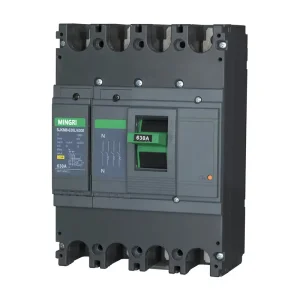
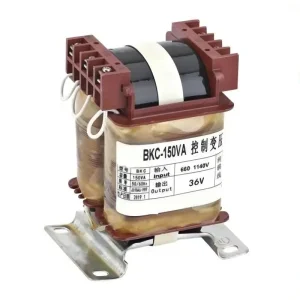
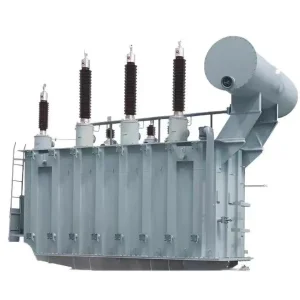
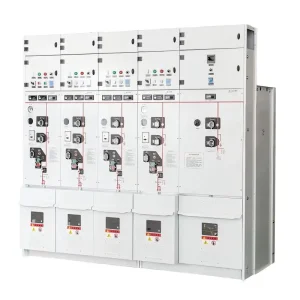
Industrial Status & Evolution of Combined Transformer Systems
Understanding the transition from discrete instrument transformers to integrated metering-protection compact architectures across the utility landscape.
The Strategic Shift Toward Combined Instrument Units (MOF / CT-VT)
In modern electrical distribution and grid management, the combined transformer—often architected as a Metering OutFit (MOF) or combined current-voltage transformer unit (JLS series)—consolidates the functionality of multiple Current Transformers (CT) and Potential/Voltage Transformers (PT/VT) into a singular hermetically sealed or cast-resin encapsulation. Historically, transmission substations and industrial intake points deployed isolated current and voltage sensing devices across distinct mounting bays. This paradigm resulted in bloated footprint footprints, extensive high-voltage cabling interconnections, multiplied dielectric failure surfaces, and high site-civil engineering expenses.
Today's utility grids require optimized infrastructure capable of simultaneous revenue-grade tariff metering (accuracy classes 0.2S, 0.5S) alongside secondary cores dedicated to fast-acting directional relay protection (5P20, 10P20 class). Global grid modernization efforts in North America (IEEE C57.13 compliance), Europe (IEC 61869-1/2/3/4 standards), and the Asia-Pacific region are standardizing on combined equipment to integrate distributed generation feeds—such as commercial photovoltaic arrays and wind interties—directly into medium-voltage distribution systems without constructing full-scale metering yard extensions.
OEM Manufacturing Paradigms & Core Technologies
Precision winding, vacuum cast resin, and hermetic tank processing implemented by China's advanced manufacturing cluster.
Dielectric Oil & Resin Chemistry
Utilizing automated vacuum pressure impregnation (VPI) alongside degassed mineral dielectric oils or advanced epoxy resin mixes. This ensures partial discharge levels below 5 pC at 1.2 Um/√3, directly mitigating internal insulation aging and eliminating catastrophic tracking faults under continuous high electrical stress.
Ferroresonance & Transient Mitigation
Our core assemblies utilize ultra-low loss grain-oriented silicon steel (CRGO) or nanocrystalline ribbons. Designed with low operating magnetic flux densities (typically ≤ 1.2 Tesla under nominal continuous rated voltage), effectively suppressing core saturation and preventing lethal ferroresonance phenomena during single-phase grounding swings.
Dynamic Short-Circuit Stability
Current transformer windings are designed with mechanical reinforcement to withstand severe thermal and electromagnetic forces up to 31.5 kA for 3 seconds. Multi-ratio taps configured on secondary windings enable flexible field adjustments without de-tanking or exposing primary high-voltage elements.
Localized Deployment Scenarios in Modern Electrical Networks
From utility point of common coupling (PCC) boundaries to high-density subterranean substations.
Renewable Step-Up Substations
Installed at commercial solar parks and BESS (Battery Energy Storage Systems) to deliver bi-directional energy measurement and fast phase-overcurrent signals to protection automation schemes.
Urban Compact Substations
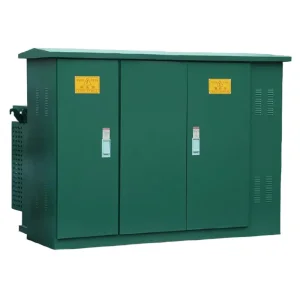
Seamlessly integrated within American-style pad-mounted cabinets (ZGS series) and European-style prefabricated substations (YB series) where space availability is constrained.
Heavy Industrial Intake Points
Provides dual measurement for metallurgic, chemical, and manufacturing facilities demanding class 0.2 accuracy for direct power purchase agreements and load balancing.
Smart Grid Feeder Automation
Coupled with remote terminal units (RTUs) and reclosers along overhead distribution feeders to enable Automated Fault Location, Isolation, and Service Restoration (FLISR).
Combined Transformer Roadmap: Toward Digital & Non-SF6 Systems
How digital instrumentation, LPIT standards, and eco-friendly insulating media are transforming transformer manufacturing.
IEC 61850 Process Bus Integration
Replacement of bulky copper secondary wiring with low-power instrument transformers (LPIT) using Rogowski coils and capacitive dividers. Direct output of Sampled Values (SV) via optical fiber merging units, eliminating secondary circuit open-loop hazards.
Ester Dielectrics & SF6-Free Gas
Transitioning oil-immersed combined assemblies to natural synthetic esters featuring high fire points (>300°C) and rapid biodegradability. For gas-insulated variants, moving to clean air and fluoronitrile gas mixtures with a Global Warming Potential (GWP) < 1.
Embedded IoT & Predictive Diagnostics
Fabrication of internal fiber-optic Bragg grating (FBG) temperature probes, real-time dissolved gas analysis (DGA) micro-sensors, and high-frequency CT partial discharge (HFPD) sensors for dynamic condition-based asset management (CBM).
Full-Lifecycle OEM/ODM Manufacturing Capabilities
Comprehensive engineering from electromagnetic simulation to full-type testing validation.
Rigorous Electromagnetic Modeling
Every core geometry is calculated using 3D finite element analysis (FEA) to map stray flux, prevent localized hot-spotting, and balance core cross-sections for dual CT/VT cohabitation inside tight footprints.
State-of-the-Art Factory Infrastructure
Equipped with dust-free winding rooms, CNC foil winders, automated casting chambers under deep vacuum, and an in-house Faraday cage high-voltage test bay certified for partial discharge and impulse testing.
Global Compliance & Type Test Reports
Equipment is engineered and type-tested in alignment with IEC 60076, IEC 61869, IEEE C57.13, and GB/T 20840 standards. Routine test certificates including lightning impulse (BIL up to 200 kV) accompany every dispatch.
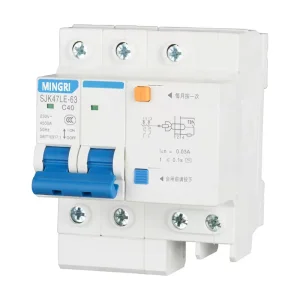
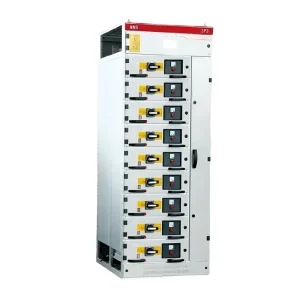
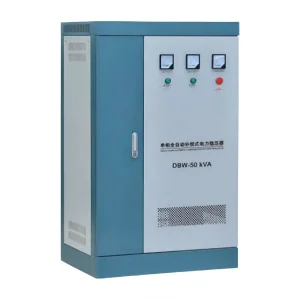
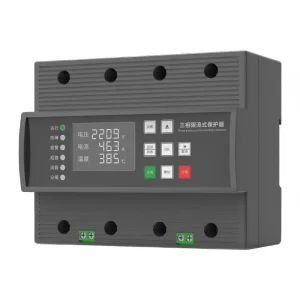
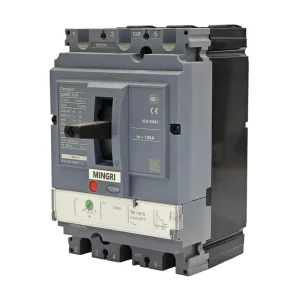
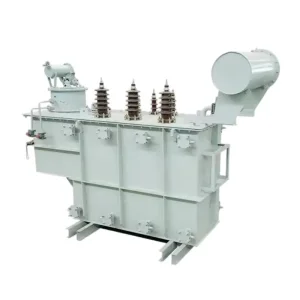
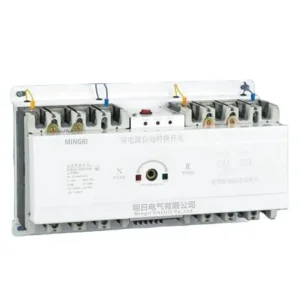
Integrated Distribution, Regulation & Switching Apparatus
Complementary medium and low-voltage solutions engineered for seamless compatibility with combined transformer installations.
Frequently Asked Questions for Project Engineers & EPCs
Clear, direct answers regarding equipment sizing, compliance, testing, and lifecycle reliability.
A combined transformer embeds both current and potential sensing elements within a single enclosure (oil-immersed or cast resin). This reduces installation footprint by 40-50%, eliminates multiple busbar connections, reduces structural support framing costs, and provides pre-calibrated phase angle synchronization between current and voltage vectors for more precise energy metering.
Yes. Our OEM engineering provides independent multi-core secondary arrangements. For example, a CT element can be fabricated with Core 1 rated at 0.2S for utility revenue settlement and Core 2 rated at 10P20 for trip activation under heavy fault conditions, fully isolating metering instruments from overcurrent saturation during line short circuits.
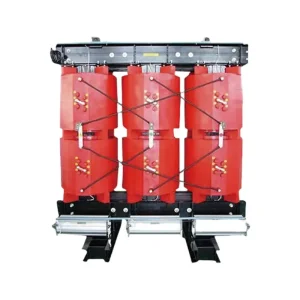
Dry-type cast resin units (such as SC(B) series companion units or epoxy-cast MOFs) are ideal for indoor switchgear cubicles, commercial buildings, underground vaults, and areas with strict fire-safety regulations. Oil-immersed units (hermetically sealed steel tanks) provide superior BIL withstand and weathering protection for outdoor pole-mounted utility interconnections up to 35 kV/40.5 kV.
Please provide your Single Line Diagram (SLD), nominal and maximum operating voltage (e.g., 10 kV/12 kV, 33 kV/36 kV), frequency (50/60 Hz), primary and secondary rated currents, rated burden (VA) per secondary core, required accuracy classes (0.2, 0.5, 5P, 10P), short-time thermal current (Ith), insulation level (BIL), and ambient installation environment.