Featured Industrial Breakers & Switching Systems
Direct from Yueqing's precision manufacturing core: verified medium and low-voltage protection equipment configured for utility substations, primary power distribution, and automation panels.
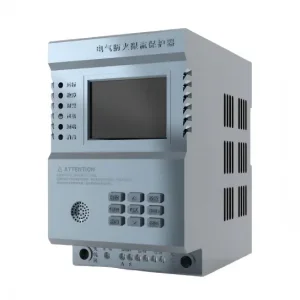
China Single Phase Current Limiting Protector 20-80A 220VAC
View Specifications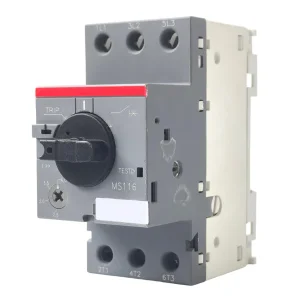
ODM MS116 Low Voltage Motor Protection Circuit Breaker Supplier
View Specifications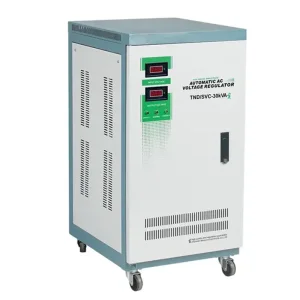
ODM TND/S Two Phase Series Fully Automatic Ac Voltage Regulator
View Specifications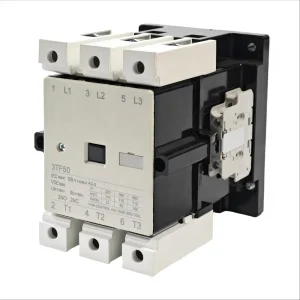
ODM CJX1 (3TF) Series AC Contactors 9-400A 690V Suppliers
View Specifications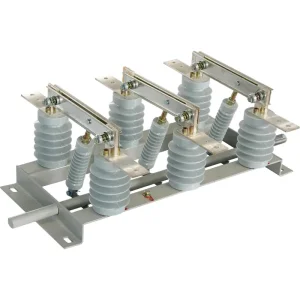
OEM China GN19-12 Indoor High-Voltage Isolating Switch
View Specifications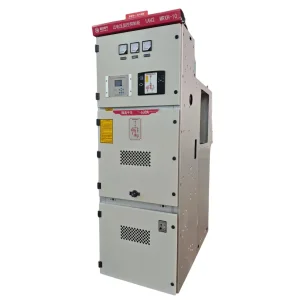
High-Quality MRXH-10 Arc Suppression & Resonance Cabinet
View Specifications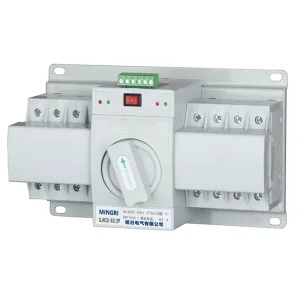
OEM SJKQ1 Manual/Automatic Dual-Use ATS Switch
View Specifications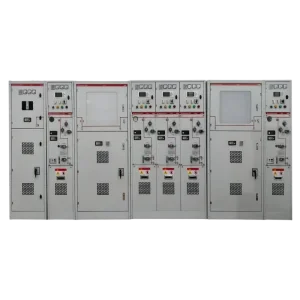
SafeRing-12 Fully Insulated Inflatable Ring Switchgear
View SpecificationsTechnical Roadmap & Future Outlook of Air Load Breaker Systems
Transitioning from mechanical interruption to self-healing digital switchgear: how advanced arc extinguishing, SF6 elimination, and edge telemetry redefine low and medium-voltage protection.
The Engineering Evolution: Air Arc Quenching vs. Vacuum Interruption
In modern industrial grid deployment, Air Load Breakers (ALB), Load Break Switches (LBS), and Air Circuit Breakers (ACB) constitute the foundational switching and fault-isolation barrier. Unlike hermetically sealed vacuum interrupters or high-pressure gas enclosures, air load breaking technology harnesses atmospheric pressure or specialized air-blast decompression channels to rapidly stretch, cool, and deionize electrical arcs generated under nominal full-load and moderate overload conditions.
Original Equipment Manufacturers (OEM) and Original Design Manufacturers (ODM) are accelerating the transition from standard multi-plate de-ion arc chutes toward aerodynamically tuned composite ablation chambers. These chambers utilize gas-generating polymers (such as polyoxymethylene and specialized polyamide compounds) that release high-velocity hydrogen and carbon monoxide gas jets upon arc exposure. The generated blast aggressively cools the thermal arc plasma within half a cycle (≤ 10 milliseconds), preventing restrikes without generating toxic fluorinated byproducts.
Eco-Air Dielectric & F-Gas Decoupling
Global regulatory mandates—notably the European Union’s revised F-Gas Regulation and North American decarbonization standards—are phasing out Sulfur Hexafluoride (SF6) due to its extreme Global Warming Potential (GWP 25,200). ODM engineering roadmaps now lead with synthetic dry air and pressurized eco-gas mixtures operating up to 40.5 kV, delivering zero greenhouse footprint alongside non-toxic disposal.
- Zero GWP and ODP compliance
- No hazardous decomposition derivatives
- Elimination of localized gas recovery protocols
IoT-Enabled Predictive Telemetry
Modern air load breakers incorporate integrated micro-sensor arrays measuring continuous primary contact thermography, mechanical spring latch tension, dynamic vibration profiles, and opening speed kinetics. Utilizing standardized Modbus-TCP, IEC 61850 MMS/GOOSE protocols, and industrial edge processors, the switchboard predicts maintenance milestones long before catastrophic contact erosion occurs.
- Contact wear calculations via cumulative I²t tracking
- Real-time wireless busbar temperature monitoring
- Autonomous alarm triggering for spring relaxation
Bidirectional Microgrid Arc Dynamics
With distributed energy resources (DERs), solar PV farms, and Battery Energy Storage Systems (BESS) feeding fluctuating bidirectional power flows into urban feeders, air break interrupters must clear loads regardless of power factor and current direction. High-end ODM units leverage symmetrical magnetic blowout coils that force arcs into the de-ionizing grid independently of polarity.
- Ultra-fast critical current interruption (0.5 to 50 A)
- Bidirectional current clearing without derating
- Compatibility with rapid auto-reclosing schemes
| Interruption & Insulation Medium | Arc Quenching Velocity | Dielectric Recovery (kV/µs) | Environmental / GWP Impact | CapEx vs. Lifecycle OpEx | Primary Sector Fit |
|---|---|---|---|---|---|
| Next-Gen Air Load Breaker (Ablative Air) | 10 – 16 ms | 0.8 – 1.2 | GWP = 0 (Eco-Clean) | Lowest CapEx / Minimal OpEx | Urban Distribution, Commercial, Smart Sub-Panels |
| Vacuum Circuit Interrupter (VCB) | 6 – 12 ms | 3.0 – 5.0 | GWP = 0 (Sealed Bottle) | Moderate CapEx / Low OpEx | Industrial Medium Voltage, High Fault Currents |
| SF6 Gas Insulated Switchgear (GIS) | 8 – 14 ms | 2.0 – 3.5 | GWP = 25,200 (Strictly Regulated) | High CapEx / Heavy Compliance OpEx | Space-Constrained Substations, Coastal / Marine |
| Solid Dielectric / Polymeric Insulation | 12 – 18 ms | 1.5 – 2.2 | GWP = 0 (Zero Gas) | Moderate to High CapEx / Maintenance-Free | Mining, Harsh Chemical Plants, Underground Vaults |
Cross-Sector Macro Industrial Solutions
Engineered to withstand rigorous mechanical vibration, electrical stresses, and extreme ambient fluctuations across heavy utility, renewables, and hyperscale operations.
Renewable Generation & Solar Step-Up
Photovoltaic installations and wind collector rings endure severe harmonics and unpredictable duty switching. Our specialized ODM air break disconnectors and isolation cabinets (like GN19 and SafeRing series) provide galvanic visible isolation before transformer maintenance, resisting high UV, salt fog, and ambient swings between -30°C and +50°C.
Explore Solar Substation SolutionsMission-Critical Data Centers (Tier III & IV)
For cloud compute and edge facilities, zero-loss transfer is non-negotiable. Synchronized Automatic Transfer Switches (such as SJKQ1) coupled with intelligent low-voltage molded case circuit breakers (SJKM3) ensure uninterruptible dual-bus switching. Complete selectivity prevents downstream branch tripping from knocking out upstream distribution feeders.
Review Data Center LineupsHeavy Metallurgical & Chemical Complexes
Continuous chemical extraction, arc furnace feeds, and petrochemical pumps generate violent load fluctuations and resonance spikes. Deploying MRXH-10 Arc Suppression and Resonance Cabinets alongside high-capacity CJX1 contactors shields transformers from devastating iron-resonance overvoltages and capacitive grounding surges.
Inspect Resonance CabinetsSmart Urban Grid & Substation Automation
Urban ring main distribution networks rely heavily on modular switchgear like SM6, RM6, and KYN28 units. Integrating remote motorized operating mechanisms (RTUs) with air break disconnectors enables fault detection, isolation, and service restoration (FDIR) in under 60 seconds, drastically curbing customer average interruption duration (CAIDI).
View Ring Main Unit SpecsChina Factory 4.0: Supply Chain Resilience & Manufacturing Velocity
How the Yueqing electrical equipment industrial cluster delivers unrivaled economies of scale, vertical integration, and tight tolerances for multinational ODM partners.
Hyper-Clustered Vertical Component Ecosystem
Situated in the heart of Yueqing, Zhejiang—China’s undisputed capital of low and medium-voltage electrical manufacturing—our facilities draw from a hyper-localized supply chain. Over 92% of raw mechanical and electromechanical components are sourced within a 15-kilometer operational radius:
- Electrolytic Copper Extrusions: >99.99% purity T2 copper busbars cold-drawn on high-precision German forming tables.
- Silver Alloy Contacts: Robotic vacuum brazing of AgCdO or AgSnO2 contact tips ensuring minimum electrical erosion during full-load breaking.
- Thermosetting BMC/SMC Moldings: High-dielectric, arc-resistant structural casings hot-pressed with computerized tonnage control.
- CNC Robotic Bending & Laser Cutting: 2mm Aluzinc sheet-metal switchgear housing enclosures with tolerances within ±0.05 mm.
Automated Quality Gates & Intelligent Verification
Precision manufacturing guarantees life-and-death reliability in the field. Our Industry 4.0 automated assembly lines feature multi-point inline computerized inspection systems:
- 100% High-Voltage Withstand Testing: Power-frequency voltage test up to 42 kV / 1 min and lightning impulse testing up to 95 kV BIL.
- Dynamic Mechanical Characteristic Analysis: High-speed optical encoders monitor contact velocity, bounce duration (≤ 2 ms), and stroke displacement.
- Micro-Ohm Contact Resistance Validation: Digital DC micro-ohmmeters confirm loop resistance remains within strict IEC type-test limits.
- Robotic Continuous Torque Screwdriving: Automated fastening with optical vision torque verification prevents loose bus connection failures.
Global Enterprise Procurement: TCO Optimization & Compliance Assurance
A structured strategic framework for EPC contractors, utility distribution engineers, and panel-building OEMs to mitigate supply risk and ensure cross-border standard compliance.
Total Cost of Ownership (TCO) Architectural Breakdown
When selecting an ODM manufacturer for air load break switches and circuit breakers, initial acquisition costs represent merely 30% to 40% of the equipment’s true lifetime operational expense. International buyers must evaluate three pivotal financial indices:
1. Thermal Dissipation & I²R Energy Losses: Inferior internal contact materials drive elevated micro-ohm resistance. Over a 25-year duty cycle across hundreds of breaker cubicles, excessive thermal loss translates directly into higher auxiliary substation HVAC cooling loads and continuous kilowatt-hour waste. Mingri Electric’s precision contact assemblies ensure ultra-low resistance across all current paths.
2. Planned Maintenance Intervals vs. Contact Replacements: Air load breakers designed with modular, easily accessible arc chutes allow single-technician contact inspections without disassembling the entire switchgear bay. This slashes mean time to repair (MTTR) by up to 65%.
3. Interoperability and Footprint Retrofitting: Standardized withdrawable chassis dimensions enable seamless drop-in replacements for aging legacy installations, eliminating costly busbar re-engineering and sheet metal modifications.
IEC 62271-102 / 62271-103
Defines high-voltage alternating current disconnectors, earthing switches, and switch-disconnectors (1 kV to 52 kV). Confirms short-time withstand current (Ik) and making capacity under short-circuit.
IEC 60947-2 & 60947-3
Governs low-voltage switchgear, circuit breakers, and load break isolators up to 1000V AC. Certifies operational endurance, insulation coordination, and dielectric clearance distances.
ISO 9001 / 14001 / 45001
Triple-certified integrated management frameworks overseeing factory-wide environmental stewardship, workforce safety, traceability of raw metals, and standardized QA validation.
Advanced Medium & Low Voltage Protection Apparatus
Expand your switchboard engineering portfolio with specialized isolation knives, vacuum breakers, dry-type transformers, and automatic extinguishing modules.
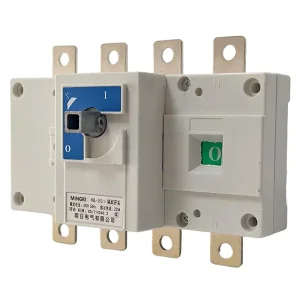
ODM HGL 3/4 Pole Load Isolation Switch Manufacturers
View Specifications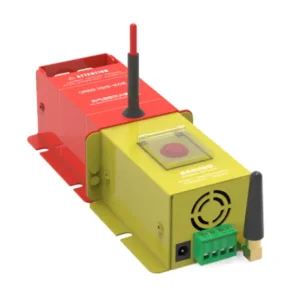
Intelligent Wireless Automatic Gas Fire Extinguishing Device
View Specifications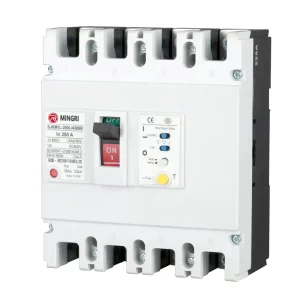
China SJKM1L Earth Leakage Circuit Breaker (ELCB)
View Specifications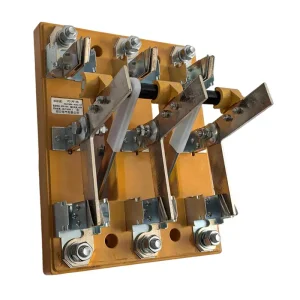
HS13BX Double Throw Rotary Knife Disconnect Switch
View Specifications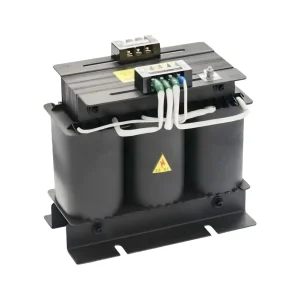
JSG Series Three-Phase Dry-Type Servo Transformer
View Specifications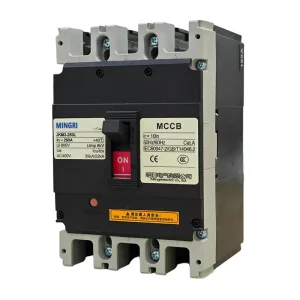
OEM SJKM3 MCCB Moulded Case Circuit Breaker
View Specifications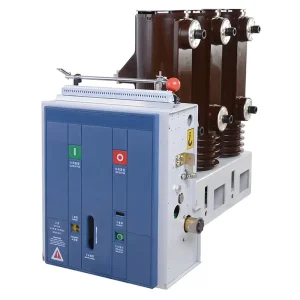
VS1-12C Indoor MV Side-Mounted Vacuum Circuit Breaker
View Specifications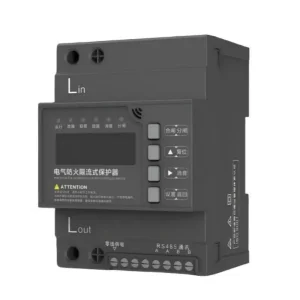
Single Phase Current-Limiting Protector for Fire Safety
View SpecificationsTechnical & Procurement Frequently Asked Questions (FAQ)
Comprehensive engineering clarifications covering selection parameters, testing criteria, environmental limitations, and custom ODM contract capabilities.
What is the technical operational boundary between an Air Load Break Switch (LBS) and an Air Circuit Breaker (ACB)?
An Air Load Break Switch (LBS) is engineered primarily to make, carry, and interrupt nominal continuous load currents (typically up to 630A or 1250A in MV tiers) as well as close into short-circuit conditions when coordinated with high-rupturing-capacity (HRC) fuses. In contrast, an Air Circuit Breaker (ACB) incorporates an active electronic or microprocessor trip unit (microcontroller-driven) capable of autonomously detecting, timing, and quenching full short-circuit fault currents (up to 50kA – 100kA rms) without supplementary fuse intervention. ODM buyers frequently use LBS units in ring main feeder cubicles where CapEx optimization is critical, reserving ACBs for main incoming LV transformer feeds.
How do environmental altitude and high humidity impact the dielectric rating of air-insulated breakers?
Because air acts as the direct insulating and arc-quenching dielectric, atmospheric density variations directly alter breakdown withstand voltage. According to IEC 62271-1, at altitudes exceeding 1,000 meters above sea level, dielectric strength diminishes due to reduced atmospheric pressure. For projects located at 2,000m or 3,000m (e.g., Andean or Central Asian mining installations), Mingri Electric applies an altitude correction factor (Ka), increasing strike distance clearances, specifying extended creepage insulator bushings (≥ 25mm/kV or 31mm/kV for heavy condensation), and integrating anti-condensation internal heating strips inside the switchgear cubicle.
What specific Factory Acceptance Testing (FAT) documentation accompanies overseas orders?
Prior to maritime export packaging, each production batch undergoes mandatory FAT verification. Standard documentation dossiers include: (1) Main circuit resistance (micro-ohm) test reports, (2) One-minute power frequency withstand voltage test records across open contacts and phase-to-earth, (3) Mechanical timing records verifying opening/closing velocity, simultaneous contact closure deviation (≤ 2ms across three poles), and contact bounce, and (4) Auxiliary interlock and secondary wiring insulation proofing. Digital video-witnessed FAT and third-party inspections (SGS, TÜV, Bureau Veritas) are routinely facilitated on our factory floor.
Can Mingri Electric customize air load breakers to match existing international retrofits?
Yes. Our ODM and OEM engineering divisions specialize in structural and electrical retrofits. If you provide single-line diagrams (SLD), spatial envelope limits, and existing busbar connection drawings, our R&D center provides comprehensive 3D CAD modeling within 5 business days. Customization scope spans special copper terminal drillings, motorized shunt trips, undervoltage release coils with custom DC/AC control voltages (24VDC, 110VDC, 220VAC), micro-switch auxiliary contact configurations (up to 6NO + 6NC), and customized mechanical key interlocks (Castell/Kirk type interlocks).
What are the lead times and minimum order quantities (MOQ) for custom ODM switchgear configurations?
Standard catalog models maintain ready-stock modular subassemblies, enabling dispatch within 10 to 15 days. For custom ODM orders involving tailored sheet-metal enclosures, specialized micro-trips, or certified type-tested combinations, typical production turnaround ranges between 3 to 5 weeks from technical drawing approval. Our flexible manufacturing lines support early-stage engineering projects with low MOQs (as low as 1 to 5 units for customized medium-voltage switchgear bays) while retaining scalable monthly output exceeding 1,200 switchgear cabinets and 10,000 low-voltage circuit breakers.