Primary MV & LV Switchgear Solutions
Engineered withdrawable, fixed, and enclosed switchgear panels built for extreme continuous duty, high fault ride-through capacity, and automated power management.
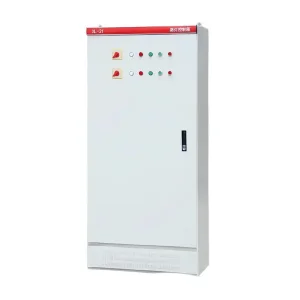
Wholesale XL-21 Power Distribution Cabinet Low Voltage Switchgear
View Engineering Specs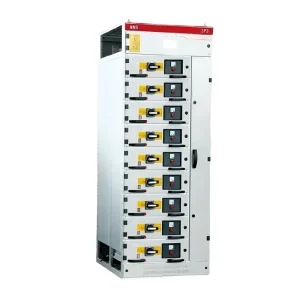
China MNS Low Voltage Withdrawable Switchgear for Power Control
View Engineering Specs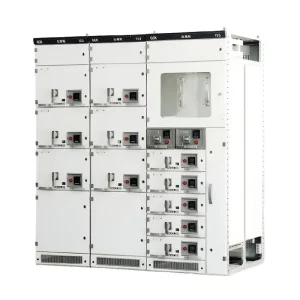
Wholesale GCK Low Voltage Withdrawable Switchgear for Industrial Plants
View Engineering Specs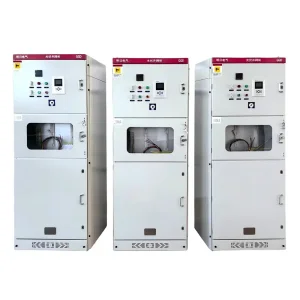
OEM GGD AC Low Voltage Distribution Cabinet for Industrial Power
View Engineering Specs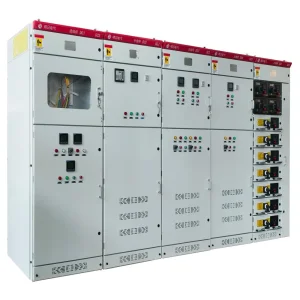
High-Quality GCS Low Voltage Withdrawable Switchgear Panel
View Engineering Specs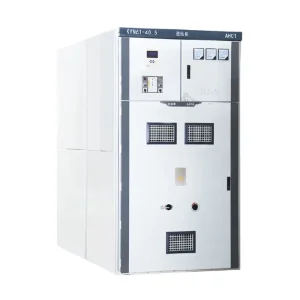
OEM KYN61-40.5 Armoured Moving Type AC Metal Enclosed Switchgear
View Engineering Specs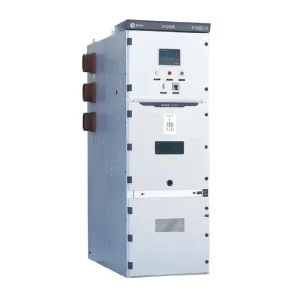
China KYN28-24 Withdrawable Armored Metal-Enclosed Switchgear
View Engineering Specs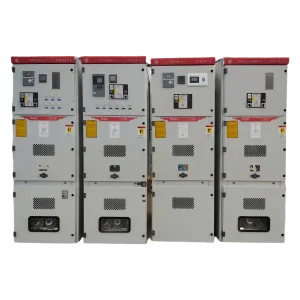
High-Quality KYN28-12 Withdrawable Armored Metal-Enclosed Switchgear
View Engineering SpecsThe Global Landscape: Strategic Procurement & Decarbonization
A comprehensive examination of how global grid modernizations, hyperscale data centers, and renewable interconnects are reshaping switchgear architectural demands.
The global electrical transition has shifted electrical switchgear from conventional mechanical isolation equipment to digitized power intelligence centers. Heavy industries, utility grids, and engineering, procurement, and construction (EPC) contractors require high operational reliability, robust internal arc fault containment (IAC AFLR), and seamless fieldbus communications under protocols such as IEC 61850 and Modbus TCP.
As modern infrastructure migrates away from monolithic distribution hubs toward distributed energy resources (DERs), switchgear must accommodate bidirectional power flow, intermittent renewable loads, and automated load-shedding schemes. Switchgear factories that combine high-precision structural CNC stamping, robotic laser welding, and automated dielectric testing are enabling EPCs to compress procurement schedules while maintaining rigid compliance with IEC 62271-200 and GB/T 3906 standards.
Grid Decarbonization Pressures
International environmental accords and regional directives mandate dramatic reductions in greenhouse gases, spurring switchgear companies to deploy dry-air, synthetic gas mixtures, and vacuum interruption systems that minimize global warming potential (GWP) without sacrificing dielectric integrity.
Stringent Arc-Fault Survivability
Modern plant managers demand internal arc classification (IAC) ratings that guarantee operator survivability up to 31.5 kA for 1 second. Through rapid pressure-relief flaps, patented exhaust labyrinth designs, and ultrafast optical sensors, contemporary panels prevent structural explosion.
Dynamic Thermal Conditioning
With data center compute power scaling rapidly, continuous busbar currents frequently exceed 3150A to 4000A in compact enclosures. Innovative thermosiphons, high-conductivity oxygen-free copper busing, and passive convection channel design prevent temperature degradation.
China Factory 4.0: Supply Chain Resilience & Precision
Inside the Yueqing industrial cluster: leveraging end-to-end integration, robotic welding, and automated quality control to lower total cost of ownership (TCO).
Component Ecosystem
Rooted in Yueqing, Zhejiang—the power capital of China—factories access an integrated upstream supply network for electrolytic copper, BMC insulators, vacuum interrupters, and microcomputer protection units within a 20-mile radius, shrinking lead times by over 40%.
Automated Sheet Metal
Deploying advanced Salvagnini and Trumpf CNC flexible manufacturing cells ensures enclosure tolerance accuracy within ±0.2 mm. Laser-cut double-folded aluminum-zinc alloy sheets (Galvalume) provide cathodic edge protection and unmatched mechanical rigidity against arc blasts.
Automated Routine Testing
Every compartment undergoes comprehensive routine inspections: power frequency withstand voltage testing (up to 95 kV for 40.5 kV equipment), loop resistance measurement (≤ 1.2 micro-ohms across primary contacts), and mechanical interlock operational cycles prior to dispatch.
BIM & Digital Twin Ready
Custom switchboards are matched to client single-line diagrams (SLDs) through 3D SolidWorks and EPLAN electrical design setups, generating comprehensive fabrication drawings and thermal analysis models that easily port into global EPC BIM platforms.
Engineered Application Architectures
Tailored topologies for mission-critical installations requiring non-stop uptime, thermal durability, and absolute operational isolation.
Hyperscale Data Centers (Tier III & IV)
Low-voltage withdrawable switchgear such as MNS and GCS configured with redundant Automatic Transfer Switches (ATS) and motorized drawout air circuit breakers (ACBs). Features comprehensive thermal monitoring at joint terminals, sub-cycle static switching, and continuous Form 4b internal separation to prevent downtime during maintenance.
Utility Solar & Wind Farms
Medium-voltage metal-clad enclosures including KYN28-24 and KYN61-40.5 serving as collector switchgear for step-up transformers. Built to withstand extreme diurnal thermal swings, high harmonic distortions from inverters, and high-altitude insulation derating up to 4000 meters above sea level.
Petrochemical & Heavy Industrial
Ruggedized fixed-mounted GGD cabinets and withdrawable GCK systems paired with visible disconnect switches (HR5) and fused vacuum load breakers (FKRN12-24D). Engineered with IP54 ingress protection, anti-corrosive tin/silver busbar plating, and gas-sealed compartments resisting sulfurous and coastal atmospheres.
Critical Transfer Switches, Regulators & Components
Certified automatic transfer switching mechanisms, current limiters, and precision voltage regulators safeguarding continuity across high-demand electrical grids.
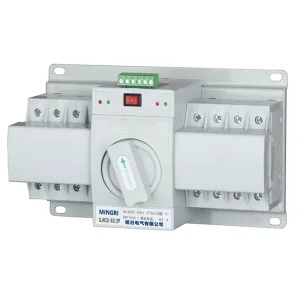
ODM SJKQ1 ATS Automatic Transfer Switch - Power Solution
View Engineering Specs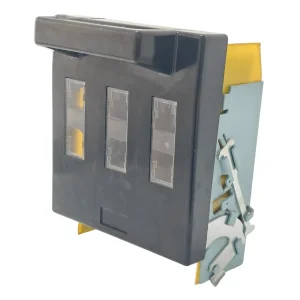
OEM HR5 Fused Disconnect Switch with Visible Contacts
View Engineering Specs
China GGD AC Low Voltage Distribution Cabinet 380V/50Hz
View Engineering Specs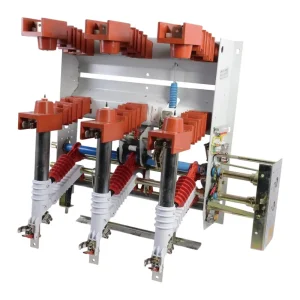
ODM High Voltage Load Breaker Switch FK(R)N12-24D - 24kV
View Engineering Specs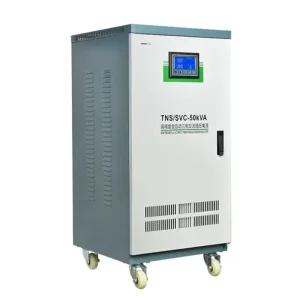
High-Quality TNS 3-Phase Series Fully Automatic AC Voltage Regulator
View Engineering Specs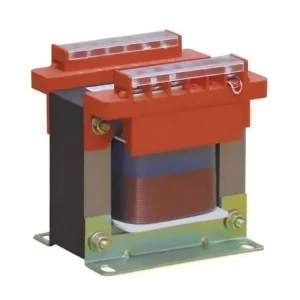
Wholesale BK Series Control Transformers Power Solutions
View Engineering Specs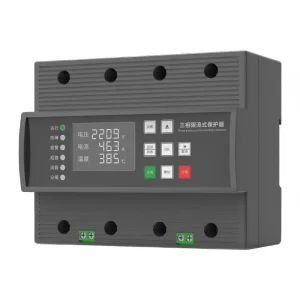
Wholesale 80/125A Economic Three-phase Current-limiting Protector
View Engineering Specs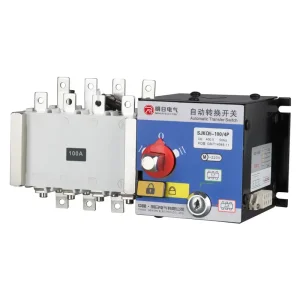
China SJKQ5 ATS Dual Power Automatic Transfer Switch 20A-3200A
View Engineering SpecsTechnical Topology & Switchgear Architecture Guide
Selecting the optimal medium and low-voltage platform based on duty cycle, maintenance overhead, and environmental parameters.
KYN28A-24 / KYN61-40.5
Metal-Clad MV Switchgear
Features withdrawable vacuum circuit breakers (VCB) with independent segregation across 4 metal-enclosed zones: Busbar, Breaker, Cable, and Low Voltage Compartments. Employs fool-proof five-prevention mechanical interlocking to prevent human operational error under live busbar states.
MNS & GCS Series
Modular Withdrawable LV Systems
Offers Form 3b to Form 4b internal segregation with high drawer interchangeability. Allows hot-swapping motor control center (MCC) modules without de-energizing the main vertical distribution busbars, making it ideal for non-stop industrial processing plants.
GGD & XL-21 Enclosures
Fixed-Mount Power Panels
Cost-effective, highly durable distribution boards designed for municipal facilities, mining sites, and secondary substations. Employs open ventilation layouts for rapid heat dissipation and simple front/rear terminal access for oversized armored cable terminations.
Switchgear Engineering & Procurement Q&A
Expert clarifications regarding international standards, routine type tests, customization options, and global shipping logistics.