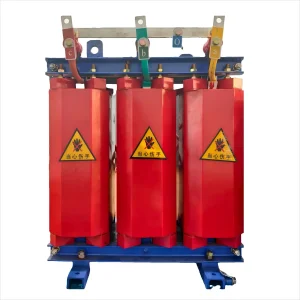
Featured Secondary Distribution & Ring Main Unit Assemblies
Explore standard-compliant 12 kV, 24 kV, and 40.5 kV gas-insulated and metal-enclosed cubicle configurations engineered for maximum operational uptime and personnel protection.
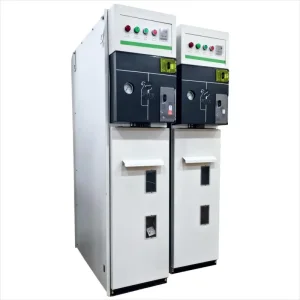
ODM XGN15-24 Medium Voltage Switchgear Sf6 Insulated Ring Main Unit Manufacturers, Companies
Explore Specifications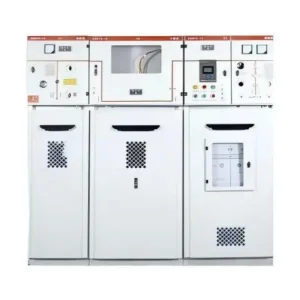
China XGN15-12 Metal-Clad Fixed-Type Ring Main Unit Switchgear in Cubicle Design Supplier, Manufacturer
Explore Specifications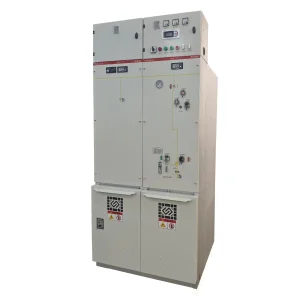
OEM SafeRing-40.5 Gas Insulated Ring Main Unit (RMU) -SF6 Sealed Switchgear Supplier, Company
Explore Specifications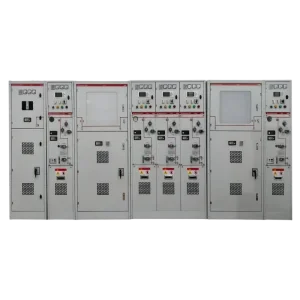
Wholesale SafeRing-12 Fully insulated inflatable ring switchgear with Insulation Protection Manufacturers, Companies
Explore Specifications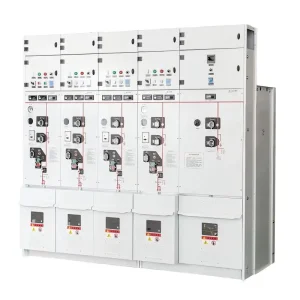
China HBXGN-12(F) Environment-friendly gas insulated metal enclosed switchgear Factories, Companies
Explore Specifications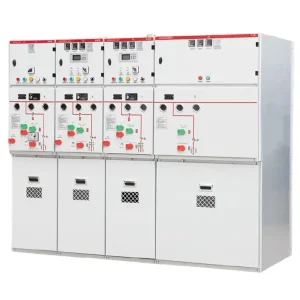
ODM GXGN-12 Solid-Insulated Fully Enclosed Ring Main Unit Switchgear Manufacturers, Company
Explore Specifications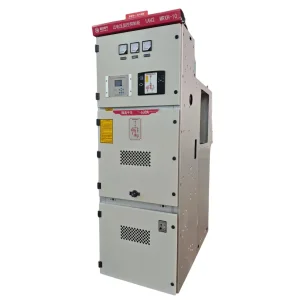
High-Quality MRXH-10 Arc Suppression and Resonance Elimination Cabinet Manufacturer, Company
Explore Specifications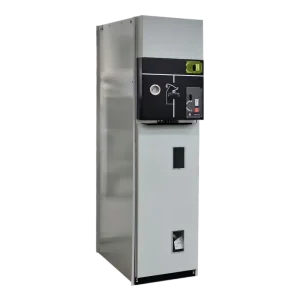
High-Quality SM6 Modular Air Insulated Medium Voltage Ring Main Unit (RMU) Supplier, Factories
Explore SpecificationsExecutive Engineering Overview: Secondary Distribution Infrastructure
In modern high-reliability electrical grids, the Ring Main Unit (RMU) represents the foundational backbone of secondary medium-voltage (MV) power distribution networks ranging from 12 kV up to 40.5 kV.
Closed Ring Topology & Reliability
Unlike conventional radial feeders where an upstream circuit failure causes widespread blackouts, a Ring Main Unit (RMU) network architecture facilitates bi-directional energy feeding. If a cable fault manifests along the loop, intelligent sectionalizing disconnectors swiftly isolate the faulted link, while downstream smart transfer systems backfeed unaffected nodes within milliseconds.
- Dramatically curtails SAIDI (System Average Interruption Duration Index)
- Minimizes SAIFI (Interruption Frequency) for high-density metropolitan areas
- Enables autonomous loop re-configuration via Feeder Automation (FA)
Compact Hermetic Sealing
Medium-voltage substations face escalating spatial constraints within subterranean utility vaults, containerized modular BESS systems, and high-rise commercial plinths. Factory-assembled sealed stainless steel enclosures isolate high-voltage live parts entirely from atmospheric pollutants, aggressive moisture, and chemical airborne contaminants.
- Laser-welded 304 or 316L stainless steel vessels conforming to IP67
- Maintenance-free primary conductive paths for 30+ operational years
- Footprint footprints reduced by upwards of 60% compared to conventional air-insulated cubicles
Safety Interlocking & Arc Mitigation
Personnel safety is the paramount directive in switchgear engineering. Leading RMU manufacturers incorporate multi-stage mechanical "Five-Prevention" interlocks alongside rigorous internal arc testing according to IEC 62271-200. Structural arc vents safely redirect explosive thermal expansion downward or rearward.
- Certified IAC AFLR ratings guaranteeing 360-degree operator safety
- Mechanical interlocks preventing closing of earth switch under live line
- Integrated capacitive voltage indication systems (CVIS / VPIS) for circuit verification
Dielectric Insulation Matrix: Engineering Selection Guide
Selecting the optimal Ring Main Unit involves assessing dielectric breakdown strength, lifecycle emissions, maintenance accessibility, and environmental thermal resilience across diverse operational landscapes.
| Insulation Medium | Core Architecture | Environmental Rating / GWP | Dimensions & Footprint | Primary Industrial Use-Case | Maintenance Profile |
|---|---|---|---|---|---|
| SF6 Gas Insulated (GIS) (e.g., SafeRing, RM6, XGN15) |
Sealed stainless steel tank containing sulfur hexafluoride at 0.03–0.05 MPa relative pressure. | GWP ~ 24,300 Requires certified recycling protocols. |
Ultra-compact footprint; ideal for subterranean vaults and compact substations. | Municipal grids, metro lines, heavy industry, cost-optimized secondary loops. | Hermetically sealed tank; 30+ year maintenance-free primary contact path. |
| Solid Insulated (SIS) (e.g., GXGN-12) |
Vacuum interrupter and busbars individually cast inside solid epoxy resin or silicone elastomer. | Zero GWP (SF6-Free) 100% fluorinated gas free. |
Modular phase-isolated architecture; prevents phase-to-phase short-circuit faults. | Mining tunnels, alpine sub-zero climates, chemically aggressive fertilizer plants. | Impervious to ambient dust, zero gas pressure monitoring sensors required. |
| Eco-Gas Insulated (Eco-GIS) (e.g., HBXGN-12F) |
Dry Air, Synthetic Nitrogen-Oxygen mixes, or C4-FN fluoronitrile dielectric gas blends. | GWP < 1 Compliant with stringent EU F-Gas mandates. |
Near-identical dimensions to SF6 GIS with slight internal clearance adjustments. | Green hydrogen plants, ESG-compliant European utility tenders, sustainable corporate hubs. | Monitored via digital gas density sensors; end-of-life atmosphere-safe venting. |
| Air Insulated Modular (AIS) (e.g., SM6, KYN28) |
Atmospheric air dielectric clearance with modular metal partition cubicle design. | GWP = 0 Natural environmental medium. |
Larger physical footprint requiring dedicated clean indoor switchgear rooms. | Factory indoor substations, accessible institutional switchrooms, commercial towers. | Visual access to isolators; regular cleaning and contact inspection recommended. |
Global Commercial Dynamics & Manufacturing Ecosystem
The medium-voltage secondary switchgear landscape is undergoing profound structural shifts propelled by global decarbonization initiatives, urban electrification, and grid modernization.
Market Expansion Drivers
Global demand for Ring Main Units is projected to surpass $4.8 billion by 2030, charting an aggressive CAGR. The massive roll-out of electric vehicle (EV) megawatt fast-charging plazas, data centers driven by artificial intelligence compute loads, and utility-scale solar PV sites necessitate decentralized, self-healing secondary distribution substations.
Tier-1 MNCs vs. Specialized ODM Hubs
While legacy multinationals like Schneider Electric, ABB, and Siemens set canonical design templates (such as SM6, SafeRing, and 8DJH platforms), modern engineering procurement executives increasingly leverage specialized Chinese original design manufacturers (ODMs). Concentrated industrial clusters in Yueqing, Zhejiang deliver high precision CNC fabrication, automated helium leak detection, and localized type-test compliance at superior CAPEX efficiencies.
Supply Chain Resilience & Customization
EPC contractors often encounter rigid lead-time bottlenecks spanning 40 to 60 weeks from legacy Western conglomerates. Flexible tier-1 Chinese manufacturers shorten fabrication timelines to 6–10 weeks while facilitating deep modular tailoring: dual busbar configurations, non-standard metering transformers, custom auxiliary voltages (24VDC, 110VDC, 220VAC), and specialized RTU integration.
Critical Field Application Topologies
From extreme sub-zero wind plateaus to chemically corrosive coastal petrochemical refineries, Ring Main Units must function without failure under severe electrical and environmental stresses.
Renewable Energy & BESS Step-Up
In utility-scale wind farms and photovoltaic solar power stations, Ring Main Units reside directly within prefabricated pad-mount substations or inside wind turbine towers. SafeRing-40.5 and SafeRing-12 units handle continuous cycling, harmonic distortions from power inverters, and high-energy transient switching overvoltages without dielectric degradation.
Metropolitan Secondary Substations
Underground vaults in high-density urban downtowns demand maximum power density per square meter. Compact SF6-insulated cubicles or solid-insulated GXGN-12 RMUs fit comfortably through standard freight elevators and doorway passages, eliminating costly civil infrastructure overheads during brownfield substation upgrades.
Heavy Industrial & Chemical Processing
Oil refineries, chemical processing plants, and port facilities expose electrical panels to corrosive salt spray, sulfur dioxide, and airborne particulate dust. Hermetically laser-welded IP67 switchgear enclosures protect vacuum interrupter contacts, disconnecting linkages, and busbar junctions from atmospheric degradation.
Compliance, Type Testing & Quality Engineering
Compliance with rigorous international standards is mandatory to ensure interoperability, short-circuit withstand capabilities, and operator safety across cross-border utility deployments.
IEC & IEEE Regulatory Rigor
Fully compliant RMU factories subject assemblies to independent type-testing accredited by ILAC-MRA laboratories (e.g., KEMA, CESI, XIHARI) in accordance with IEC 62271-200 (AC metal-enclosed switchgear), IEC 62271-100 (Circuit Breakers), and IEC 62271-102 (Alternating current disconnectors and earthing switches).
- Dynamic & short-time withstand current testing: up to 25 kA / 3 seconds
- Lightning impulse withstand voltage (BIL): up to 95 kV (12kV) and 185 kV (40.5kV)
- Mechanical endurance classes: M1 (2,000 operations) to M2 (10,000 operations)
Helium Mass Spectrometry Leak Detection
Gas leakage constitutes the chief operational risk for GIS installations. Reputable manufacturing facilities utilize automated vacuum-chamber helium mass spectrometry to verify that primary gas vessel leakage remains strictly below 0.1% per annum, providing documented confirmation for thirty years of operational hermetic sealing.
- Chamber evacuated to sub-millibar pressures for hyper-sensitive detection
- Calibrated leak detection down to 10⁻⁸ mbar·l/s sensitivity thresholds
- Documented individual batch testing reports archived for serial verification
Quality Systems & FAT Protocols
Certified tier-1 facilities operate comprehensive ISO 9001, ISO 14001, and ISO 45001 management systems. Overseas clients and third-party inspectors (e.g., SGS, Bureau Veritas) participate in stringent Factory Acceptance Testing (FAT), including high-voltage power-frequency withstand, partial discharge measurement (< 5 pC), and protection relay loop logic verification.
- Automated primary injection testing for current transformers
- Secondary injection testing verifying instantaneous and timed overcurrent curves
- Live remote video FAT streaming for overseas engineering teams
Smart Switchgear & Grid 2030 Roadmap
The convergence of industrial IoT, non-intrusive sensor arrays, and progressive environmental legislation is rapidly reshaping the next decade of Ring Main Unit design.
Technical Clarifications & Engineering FAQ
Addressing core technical dilemmas encountered by system consultants, substation designers, and EPC procurement leads.
What is the standard functional configuration for a secondary RMU?
The classic baseline configuration is a 3-way or 4-way panel denoted as "CCF" or "CCVV" (where C represents a Cable Switch/Disconnector for the loop feeder, F denotes a Fuse-Switch Disconnector combination for local distribution transformers up to ~1250 kVA, and V represents a Vacuum Circuit Breaker with micro-processor protection for larger step-down transformers or high-capacity outgoing branches).
When should an engineer specify Solid-Insulated (SIS) over Gas-Insulated (GIS)?
Solid-Insulated switchgear (such as GXGN-12) is strongly recommended when operating in ambient conditions prone to extreme thermal cycling (e.g., -40°C in high-altitude mining or wind generation) where SF6 gas faces risks of liquefaction or localized density drops. It is also chosen in locations that enforce zero fluorinated gas liability and in tunnel applications vulnerable to toxic gas pooling.
How does an Internal Arc Classification (IAC) protect utility workers?
Under IEC 62271-200, an IAC AFLR rating certifies that in the catastrophic event of an internal short-circuit fault (up to 20 kA for 1 second), the enclosure doors will remain closed, hot gases will be vented away through dedicated arc ducts, and no fragmentation or burning particles will breach designated safety boundaries in front (F), lateral (L), and rear (R) operational zones.
What crucial engineering parameters are required to issue an RFQ?
For a rigorous factory quotation, always supply: (1) Single-Line Diagram (SLD), (2) Nominal & maximum operating voltage (e.g., 12/24/40.5 kV), (3) Rated normal current (typically 630A for ring feeders, 200A or 630A for transformer branches), (4) Short-circuit breaking capacity (16kA, 20kA, or 25kA / 3s), (5) Auxiliary control voltage, and (6) Automation/communication protocol (Modbus RTU, DNP3, or IEC 61850).
Integrated Switchgear, Protection Devices & Substation Solutions
Complementary medium and low-voltage distribution apparatus including prefabricated package substations, vacuum circuit breakers, and integrated fire-prevention safety controllers.
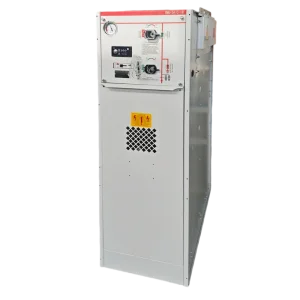
ODM RM6 Fully Enclosed and Fully Insulated Gas-Insulated Ring Network Switchgear Manufacturers, Company
Explore Specifications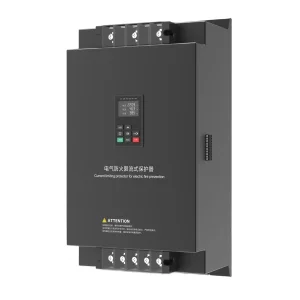
High-Quality 250A Three Phase Electrical Fire Prevention Current Limiting Protector - Reliable Safety Solution from China Suppliers and Factory Supplier, Company
Explore Specifications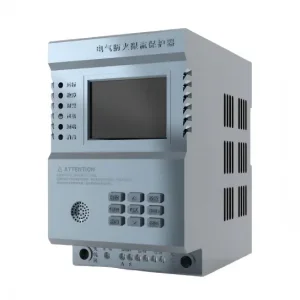
OEM Single Phase Current Limiting Protector 20-80A 220VAC - China Factory Supplier for Enhanced Electrical Safety Manufacturers, Manufacturer
Explore Specifications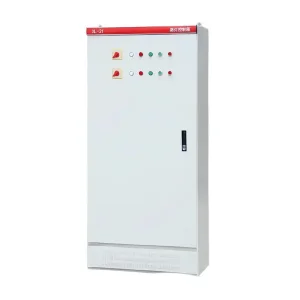
Wholesale XL-21 Power Distribution Cabinet Low Voltage Switchgear Factory, Companies
Explore Specifications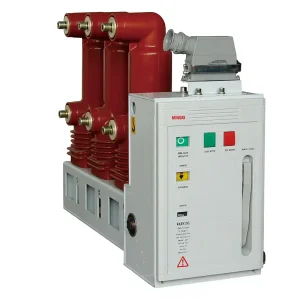
ODM China VSB-12 Indoor High-Voltage Vacuum Circuit Breaker Suppliers - Reliable Factory for 12kV Power Systems Suppliers, Factories
Explore Specifications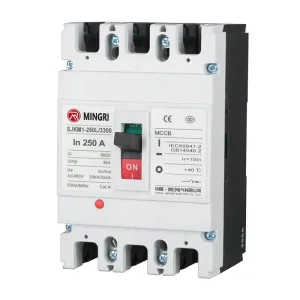
OEM SJKM1 Moulded Case Circuit Breaker (MCCB) for Power Systems Supplier, Manufacturer
Explore Specifications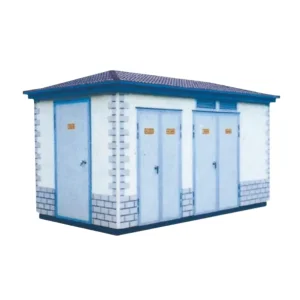
High-Quality YB□12-0.4 Series Prefabricated Substation (European Type Substation) Factory, Company
Explore Specifications