Featured Balance-of-System (eBOS) Solar Components
Core electrical distribution and power control units engineered for solar parks, commercial PV arrays, and grid interconnection substations.
-
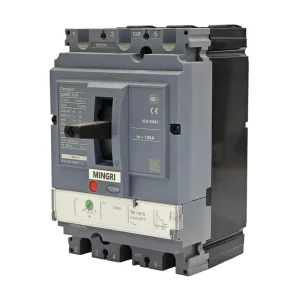 High-Quality SJKM5 Industrial MCCB Breaker for Short-Circuit Protection Manufacturers, ManufacturerView Technical Specifications
-
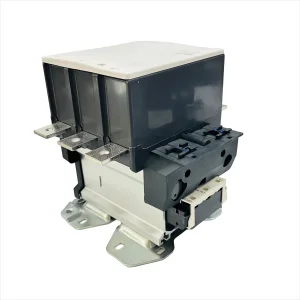 China CJX2-F Series AC Contactor for Motor Control Suppliers, ManufacturerView Technical Specifications
-
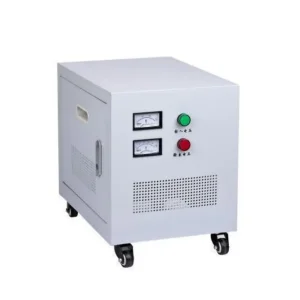 ODM SG/ZSG/SBK Series Three-Phase Dry-Type (Rectifier) Transformer Supplier, ManufacturersView Technical Specifications
-
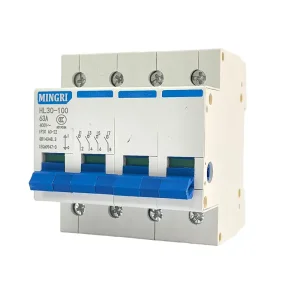 Wholesale High-Performance HL30 Miniature Disconnect Switch 1-4P 6-100A from China Factory & Suppliers for AC Systems Factories, CompanyView Technical Specifications
-
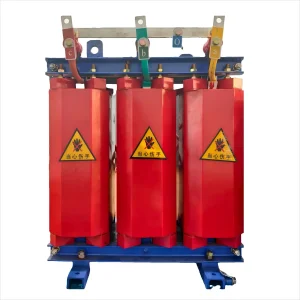 High-Quality SC(B)10 Type 10kV Series Resin Insulation Dry Type Power Transformer Manufacturers, CompaniesView Technical Specifications
-
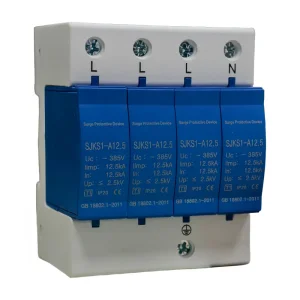 ODM SJKS1D Series Surge Protection Device 1P-4P 50Hz Manufacturers, CompanyView Technical Specifications
-
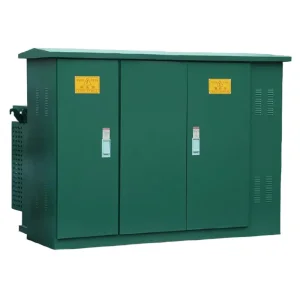 Wholesale ZGS11-12 Combined American Prefabricated Substation for Urban Power Suppliers, ManufacturerView Technical Specifications
-
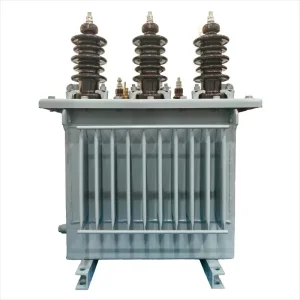 ODM S11-M Type 10kV Series Fully-Sealed Distribution Transformer Supplier, CompaniesView Technical Specifications
Beyond the Photovoltaic Cell: The Critical eBOS Ecosystem
While modern discourse frequently emphasizes photovoltaic panel conversion efficiencies and monocrystalline silicon advances, power engineers and EPC contractors recognize that plant uptime, Levelized Cost of Electricity (LCOE), and long-term asset bankability are strictly governed by the Electrical Balance of System (eBOS).
Grid Congestion & Modern Hosting Capacity
Utility networks across North America, Europe, Australia, and East Asia are experiencing unprecedented saturation at distribution and transmission levels. High-quality solar equipment manufacturers must design switchgear and transformer substations capable of rapid dynamic response, active-reactive power regulation (Volt-VAR control), and instantaneous islanding isolation to maintain interconnection integrity.
The 1,500V DC Transition & High-Fault Currents
The worldwide migration from 1,000V DC to 1,500V DC string topologies reduces combiner box numbers and balance-of-system wiring overhead by up to 30%. However, it concurrently demands enhanced creepage distances, high-capacity Molded Case Circuit Breakers (MCCBs) such as the SJKM5 series, and specialized Type 1/Type 2 Surge Protection Devices (SPDs) to mitigate sustained DC arcing risks.
BESS Hybridization & Bi-directional Power Flow
Solar-plus-storage integration is no longer optional for commercial solar companies. Reversible power flows mandate ring main units (RMUs), vacuum breakers, and intelligent universal air circuit breakers (e.g., SJKW1-2000) that maintain bidirectional measurement precision, microsecond protective clearing, and high-frequency harmonics handling without thermal derating.
The Engineering Reality of Solar Step-Up Stations
In typical megawatt-scale solar parks, low-voltage AC outputs from central or string inverters (ranging from 400V up to 800V) must be collected and stepped up to medium-voltage collector feeder lines (10kV, 12kV, 24kV, or 35kV/40.5kV) prior to final transmission substation entry. High-quality manufacturers deploy integrated solutions like the ZGS11-12 American-style compact prefabricated substation and SC(B)10 epoxy cast resin dry transformers. By co-locating the MV switchgear, transformer core, and LV automation cabinet within an IP54 or IP65 enclosure, EPCs save up to 45% in civil construction expenditure while drastically shortening on-site commissioning time.
Transformer & Substation Selection for Solar Arrays
Selecting optimal balance-of-system topologies requires balancing initial capital expenditure (CAPEX), dielectric reliability, environmental vulnerability, and maintenance schedules across different operational environments.
| Substation / Transformer Class | Dielectric Medium | Rated Voltage Range | Ideal Application Scenario | Core Protection Mechanisms | Maintenance Profile |
|---|---|---|---|---|---|
| SC(B)10 Dry-Type Cast Resin | Epoxy Resin Insulation (Class F/H) | 10 kV / 12 kV / 0.4 kV | Commercial rooftop PV, enclosed commercial microgrids, high fire-risk sites | Pt100 temperature sensors, trip controller, flame-retardant self-extinguishing | Virtually zero maintenance, no oil leakage testing needed |
| S11-M Fully-Sealed Distribution | High-Grade Mineral Insulating Oil | 6 kV to 10 kV / 0.4 kV | Ground-mounted agricultural PV, peri-urban utility arrays, distributed generation | Corrugated tank heat dissipation, pressure relief valve, oil level gauge | Periodic dielectric oil breakdown voltage tests (DGA analysis) |
| ZGS11-12 Prefabricated Substation | Integrated Pad-Mount (Oil/Dry Option) | 12 kV to 40.5 kV Step-Up | Utility-scale central inverter clusters, utility solar step-up plants | Backup current-limiting fuses, bay-o-net fuses, interlocked MV load switches | Consolidated single-point inspection; hot-dip galvanized enclosure |
| KBSG9 Flameproof Mining Series | Hermetic Flameproof Enclosure | 6 kV to 10 kV Industrial | Mine-site solar generation, heavy petrochemical PV arrays, explosive dust areas | Ex d I Mb certified flameproof shell, overcurrent, earth leakage lockouts | Specialized flameproof flange inspection, annual barrier checks |
Rigorous Global Standards: From Yueqing to International Substations
Mingri Electric provides world-class engineering solutions manufactured in our precision facility in Yueqing, Zhejiang, China, aligning seamlessly with stringent regional utility mandates across Europe, Latin America, Southeast Asia, the Middle East, and Africa.
IEC & IEEE Interconnection Protocols
All switchgear units, breakers, and transformers comply strictly with IEC 62271-200 (medium-voltage AC metal-enclosed switchgear), IEC 61439-1 (low-voltage switchgear and controlgear assemblies), IEEE C37 series, and UL standards. This ensures instant technical sign-off during local utility interconnection audits.
Fault Ride-Through (FRT) & Grid Stability
Modern transmission operators mandate Low-Voltage Ride-Through (LVRT) and High-Voltage Ride-Through (HVRT). Our switchgear components and rapid-cycling circuit breakers (SJKW1 intelligent air breakers and SJKM5 MCCBs) prevent premature feeder disconnection during temporary grid voltage sags, supporting regional grid frequency restoration.
Localized Climate Adaptation Profiles
Equipped for demanding environments: high-altitude derating adjustments up to 4,000 meters above sea level, forced cooling configurations for desert applications exceeding 55°C ambient temperatures, and silicone-encapsulated terminals with anti-corrosive powder coatings for coastal and offshore saline conditions.
Turnkey eBOS Topologies for Commercial & Industrial Operations
How professional solar manufacturing partners deliver bespoke electrical architectures across diverse industrial, commercial, and utility topologies.
1. Rooftop C&I Solar & Factory Microgrids
Urban manufacturing plants require clean power without risking factory uptime. Deploying SC(B)10 Dry-Type Resin Transformers coupled with HL30 Miniature Disconnect Switches and CJX2-F AC Contactors ensures high safety ratings, low acoustic noise under 50 dB, zero oil hazard, and rapid motor starting capability without disrupting clean energy production.
2. Extreme Mining & Heavy Extraction Sites
Mining companies increasingly offset heavy diesel consumption by co-locating large solar arrays adjacent to processing operations. Here, KS9 Oil-Immersed Power Transformers and KBSG9 Explosion-Proof Dry Units endure continuous mechanical vibrations, conductive particulate matter, and aggressive voltage dips caused by cyclic crusher loads.
3. Remote Hybrid Microgrids & Agri-PV
Decentralized communities and agricultural solar installations require reliable step-down and step-up transformations. The ZGS11-12 Prefabricated Substation paired with the X500 DC to AC Power Inverter and Single-Phase Current Limiting Protectors guarantees uninterrupted operation, automated surge arrestment, and overload protection even under remote off-grid configurations.
Technology Roadmap & AI-Driven Substation Intelligence
How pioneering manufacturers are evolving from passive mechanical switchgear to predictive, cloud-connected digital eBOS solutions.
Eco-Friendly & SF6-Free Switchgear
With EU F-gas regulations phasing out SF6 due to its elevated Global Warming Potential (GWP), Mingri Electric is investing aggressively in eco-gas (C4-FN mixtures) and solid-insulated medium-voltage architectures such as the HBXGN-12 and GXGN-12 series, offering zero compromise on dielectric endurance.
Embedded IoT & Condition Monitoring
Next-generation switchgear features integrated partial discharge (TEV and ultrasonic) sensing, optical temperature monitoring of primary busbar contact points, and motor-driven withdrawable breakers operable via Modbus TCP/IP and IEC 61850 protocols, minimizing arc flash hazards for maintenance personnel.
Amorphous Alloy Cores for High Efficiency
To satisfy Tier 2 EU Ecodesign and US DOE transformer efficiency thresholds, new distribution models employ amorphous metal alloy cores. This technology reduces no-load core losses by 60% to 75% compared to traditional silicon steel laminations, significantly boosting lifetime PV yield.
Engineering & Procurement FAQ
Authoritative answers to the most common technical questions posed by solar EPC contractors, electrical consultants, and procurement managers.
The American-type prefabricated substation (e.g., ZGS11-12) places the transformer core, high-voltage load switch, and protective fuses directly inside a sealed, oil-immersed tank. This configuration is exceptionally compact, lightweight, and cost-effective, making it ideal for distributed commercial PV and solar step-up clusters. In contrast, European-type substations (YB series) feature separated, partitioned walk-in compartments for medium-voltage switchgear, the power transformer, and low-voltage distribution panels, providing greater operational flexibility and higher expansion capacity for complex utility sites.
The SJKW1-2000 intelligent universal air circuit breaker serves as the central protective clearing backbone for low-voltage collector arrays. Equipped with a microcomputer-controlled trip unit, it provides selective multi-stage protection (instantaneous short-circuit, short-time delay, long-time delay overload, and earth fault). By coordinating trip curves precisely with downstream branch MCCBs (such as the SJKM5 series), it prevents nuisance tripping and ensures that localized faults do not de-energize the entire inverter block.
Solar fields cover extensive open land, making array tables and overhead collector lines vulnerable to direct lightning strikes and induced overvoltage switching surges. High-energy surge protective devices like the SJKS1-B series (rated up to 80kA discharge capacity) clamp catastrophic transients in nanoseconds, safeguarding expensive string inverters, PLC communication units, and step-up transformers from dielectric puncture and catastrophic insulation breakdown.
Yes, provided they are installed inside a suitable weatherproof enclosure (such as an IP54 or NEMA 3R rated cabinet with thermostatic ventilation louvers). While oil-immersed transformers (S11-M) are naturally sealed against ambient moisture, epoxy-cast dry-type transformers offer unmatched fire safety and non-polluting operation, making them mandatory in municipal water catchment zones, commercial roofs, and high-density industrial parks where mineral oil containment pits are restricted.
To generate a fully calculated engineering proposal and single-line diagram (SLD) layout, we require: 1) System SLD including primary voltage and collector voltage (e.g., 400V / 10kV / 35kV); 2) Short-circuit capacity and fault duration (e.g., 25kA / 3s); 3) Inverter type (string vs. central) and total kVA capacity; 4) Site environmental specifics (ambient temperature range, altitude, coastal salt classification); and 5) Required secondary automation protocols (Modbus, IEC 61850).
Industrial Breakers, Starters & Specialized Transformers
Heavy-duty motor starters, flameproof mining transformers, high-capacity surge suppression, and intelligent air circuit breakers engineered for high-availability energy projects.
-
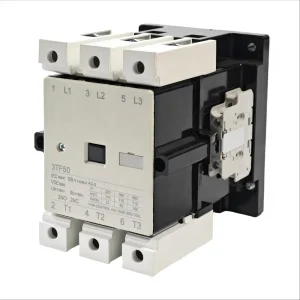 ODM CJX1 (3TF) Series AC Contactors 9-400A 690V Suppliers, CompanyView Technical Specifications
-
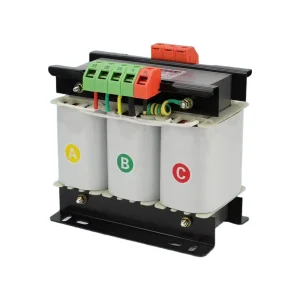 China QZB Series Auto-coupling Reduced-voltage Starting Transformer Factory, CompaniesView Technical Specifications
-
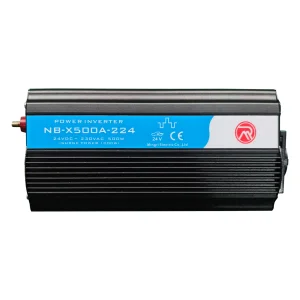 China China X500 DC to AC Power Inverter 500W with EU Socket, USB Ports - Trusted Suppliers & Factory Solution Suppliers, CompanyView Technical Specifications
-
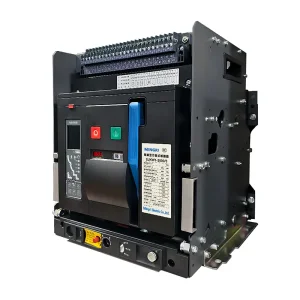 Wholesale Intelligent Universal Circuit Breaker SJKW1-2000 from China Suppliers and Factory for Reliable Power Protection Companies, CompanyView Technical Specifications
-
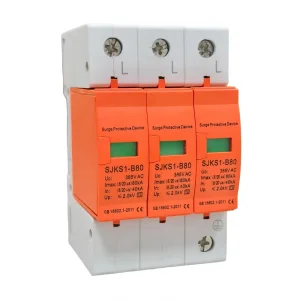 High-Quality SJKS1-B Series Surge Protection Device 80KV 385V Factories, CompaniesView Technical Specifications
-
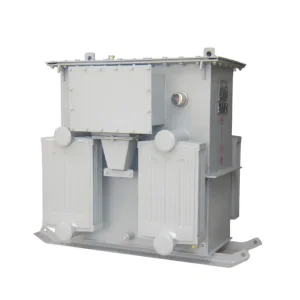 OEM KS9 Type 6-10kV Series Mining Oil-immerse Power Transformer Suppliers, ManufacturerView Technical Specifications
-
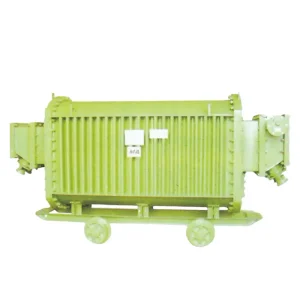 China KBSG9-50~1600/10 Mining Flameproof Dry Type Transformer Factory, CompaniesView Technical Specifications
-
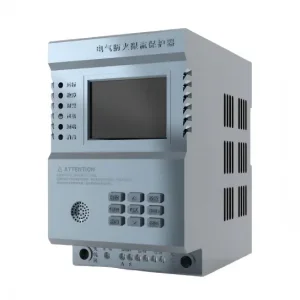 China Single Phase Current Limiting Protector 20-80A 220VAC - Reliable China Suppliers & Factory Solutions Factory, CompaniesView Technical Specifications