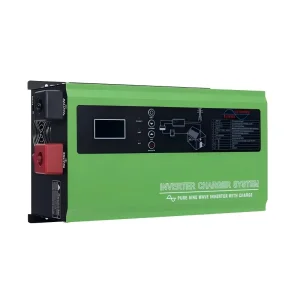
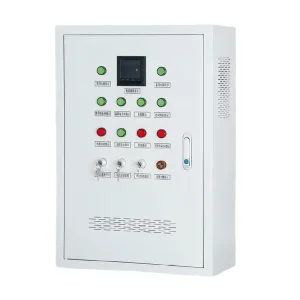
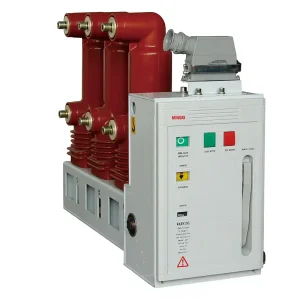
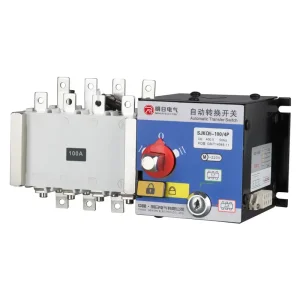
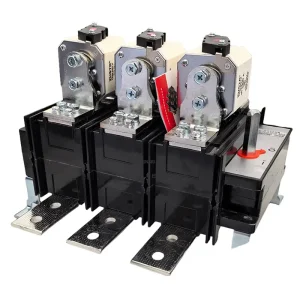
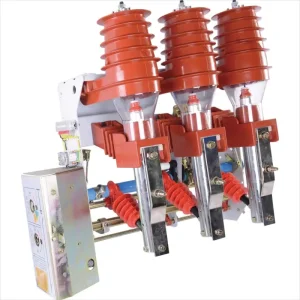
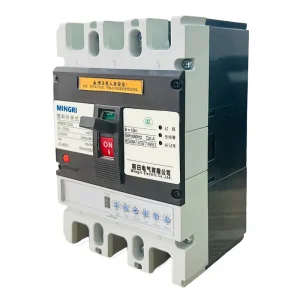
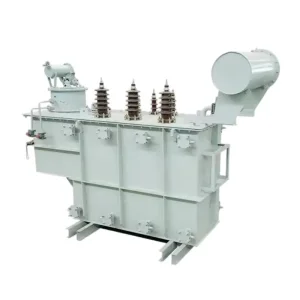
Featured Electrical Protection & Switchgear Infrastructure
Direct sourcing from certified Yueqing manufacturing facilities with complete type-test validations.
Industrial Status: The Global Need for 6kA Surge Protective Devices
Strategic overview of surge suppression topologies across modern automated plants, edge data centers, and renewable energy grids.
In contemporary electrical distribution, secondary transient overvoltages triggered by switching transients (inductive kickbacks, VFD chopping, capacitor bank operations) and indirect lightning discharges constitute over 85% of unexpected downtime in automated industrial controls. China 6kA Surge Protective Device (SPD) suppliers and factories have established themselves as pivotal engineering partners in bridging the gap between heavy primary arresters (Class I / Type 1) and sensitive terminal-load electronics.
A 6kA rated SPD—conventionally configured as a Type 2 or Class II device featuring a nominal discharge current ($I_n$) of 3kA to 6kA and maximum discharge capacity ($I_{max}$) scaling higher—serves as the quintessential barrier within factory sub-distribution boards, industrial control panels, HVAC chillers, and remote telecom BTS sites. Supported by the extensive manufacturing ecosystem in Yueqing (Zhejiang, China), modern 6kA SPD solutions integrate custom metal oxide varistors (MOVs), gas discharge tubes (GDTs), and advanced thermal disconnection technologies to ensure fail-safe disconnection during sustained thermal runaway without disrupting service continuity.
Thermal Dynamic Disconnect
Equipped with internal micro-soldered thermal links that actuate prior to MOV ignition under prolonged overvoltage or end-of-life leakage currents, preventing electrical fires in closed panels.
Low Voltage Protection Level (Up)
Engineered to clamp high-energy transients below 1.2 kV–1.5 kV, maintaining residual voltage well below the dielectric withstand rating ($U_w$) of PLCs, servo drives, and microcontroller boards.
Dry-Contact Remote Signaling
Integrated microswitches transmit visual degradation statuses directly to centralized SCADA and Building Management Systems (BMS) for predictive, proactive component replacement.
Engineering Matrix: Coordinated Surge Suppression Zones
Understanding where a 6kA SPD fits within the multi-stage lightning protection boundary concept (LPZ 0 through LPZ 3).
| Classification | Test Standard | Surge Waveform | Typical Nominal Discharge ($I_n$) | Installation Location | Primary Target Equipment |
|---|---|---|---|---|---|
| Type 1 / Class I | IEC 61643-11 / UL 1449 | 10/350 μs | 25 kA – 50 kA ($I_{imp}$) | Main Distribution Boards (MDB), Service Entrance | Direct lightning strikes, heavy external grid feeds |
| Type 2 / Class II (6kA) | IEC 61643-11 / EN 61643-11 | 8/20 μs | 3 kA – 6 kA ($I_n$) / 10 kA ($I_{max}$) | Sub-Distribution Boards (SMDB), Industrial JXF Boxes | Industrial machinery, HVAC, variable frequency drives, internal switching spikes |
| Type 3 / Class III | IEC 61643-11 | 1.2/50 μs + 8/20 μs | 1.5 kA – 3 kA | Point-of-Use (Near Load), DIN-rail terminal blocks | PLCs, DCS sensors, medical computing, precision lab instrumentation |
Localized Application Scenarios & Engineering Practices
Deployment patterns engineered for rigorous operating conditions across domestic and overseas project footprints.
Industrial Automation & MCC Cabinets
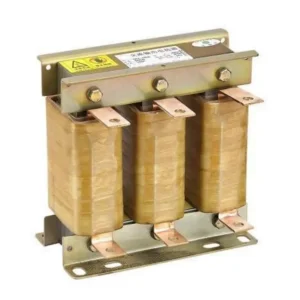
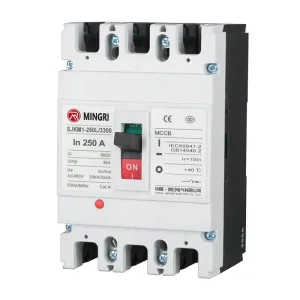
In heavy automated manufacturing where induction motors, inductive heaters, and heavy MCCBs (such as the SJKM1 series) are switched continuously, inductive voltage spikes degrade sensitive micro-controllers. Pairing 6kA SPDs immediately downstream from line reactors safeguards PLC racks and electronic instrumentation from chronic insulation breakdown.
Renewable Inverter & String Combiners
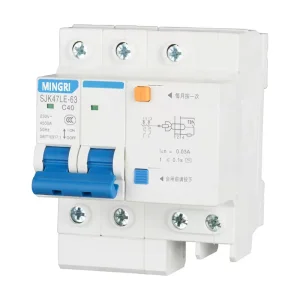
In grid-tied and hybrid photovoltaic installations (utilizing MCS hybrid inverters and compact step-up substations), lightning-induced electromagnetic transients easily couple onto long DC and AC feeder cables. Compact 6kA Type 2 surge devices provide the requisite dynamic voltage clamping without tripping upstream sensitive RCCBs (like the SJK47LE-63).
Harsh Environment Control Boxes
Mounted inside sealed weatherproof panels (such as China JXF enclosures) across coastal pumping stations, oil & gas auxiliary units, and mining switchgear. Units withstand elevated relative humidity and thermal cycling while providing uninterrupted protection against transient surges generated by switching high-current knife switches and ATS equipment.
Technology Roadmap: Next-Generation Surge Suppression Trends
The transition from passive analog components to active, intelligent IoT-integrated grid protection.
IoT-Enabled Degradation Telemetry
Future 6kA SPD lines feature integrated micro-sensor arrays that monitor leakage current micro-amperes ($\mu\text{A}$) and cumulative impulse count. Data is transmitted via RS485 Modbus or LoRaWAN, empowering facility managers to transition from reactive replacement to predictive maintenance schedules.
Hybrid Non-Degrading Topologies
By combining high-energy ZnO Varistors in series with trigger-spark gaps or ultra-fast silicon avalanche diodes (SAD), new hybrid SPD configurations eliminate the leakage current drift typical of conventional MOVs, significantly expanding life cycles in high-ambient temperature regions.
Modular Din-Rail High-Density Packages
Demands for space savings within smart distribution boxes (such as low-voltage GGD and XL-21 switchboards) drive the migration toward ultra-compact 17.5mm single-pole and 4-pole modules without compromising the 6kA nominal discharge handling capacity.
Integrated Grid Solutions: From Medium Voltage to Final Circuit
A holistic engineering approach combining substations, switchgear, vacuum breakers, and secondary surge devices.
1. Primary Substation Isolation & MV Coordination
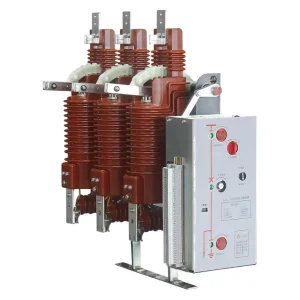
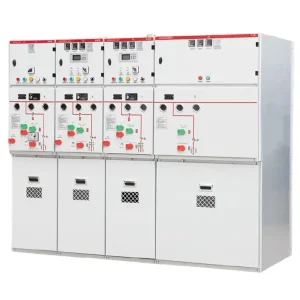
Power enters an industrial installation through medium-voltage switchgear—such as the KYN28-12 armored withdrawable cubicle, SM6 modular switchgear, or RM6 gas-insulated network units. These MV sections, often equipped with 12kV to 40.5kV vacuum circuit breakers (such as VSY2-12GD and VSB-12), absorb massive macro-grid surges. Metal oxide surge arresters (Class I) stationed at the cable termination chamber intercept high-amplitude lightning strokes.
2. Transformer Stepping & Secondary Main Distribution
Stepped down via oil-immersed (SZ11/SFZ11 series) or cast-resin dry-type transformers located in European-style YB prefabricated substations, the 400V/230V busway feeds into low-voltage switchboards (MNS, GCS, GCK). Here, primary Type 1 SPDs (25kA–50kA 10/350 μs) operate synchronously with high-breaking molded case circuit breakers (MCCB SJKM3E/SJKM1) and dual-power ATS (SJKQ5) to decouple incoming lightning current from internal network rings.
3. Branch Distribution & 6kA SPD Final Clamping
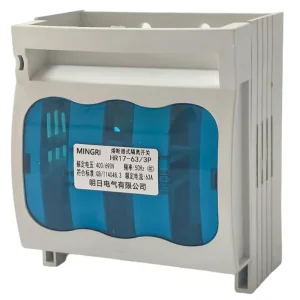
The final line of defense resides within regional control panels and machinery JXF boxes. This is where China 6kA Type 2 SPDs deliver optimal cost-performance efficiency. By coordinating with line reactors and high-current knife switches (HH15/HR17 series), residual switching transients from motor starts, capacitor discharge, and harmonic resonance are suppressed down to safe voltage levels, preventing nuisance trips of RCCBs and saving downstream electronics.
Technical FAQ: Specifying 6kA Surge Protective Devices
Expert answers addressing electrical standards, backup fusing, and system integration questions.
What does the 6kA rating specify on an SPD?
The 6kA rating typically designates either the Nominal Discharge Current ($I_n$, 8/20 μs waveform) that the SPD can withstand for a minimum of 15 successive impulses without degradation, or its Maximum Discharge Current ($I_{max}$) in compact sub-distribution profiles. When sourcing from China manufacturers, confirm whether 6kA represents $I_n$ or $I_{max}$ in the certified test report.
Is dedicated backup overcurrent protection mandatory for 6kA SPDs?
Yes. Per IEC 60364-5-53, SPDs must have upstream short-circuit protection (either dedicated fuses or a coordinated miniature circuit breaker / MCCB). If the prospective short-circuit current of the installation exceeds the internal disconnection rating of the SPD's thermal disconnector, external backup devices prevent busbar flashover.
What is the recommended conductor lead length during installation?
The total lead length (line conductor + earth conductor) connecting the SPD across the distribution rails should strictly not exceed 0.5 meters (50 cm). High lead inductance ($L \cdot di/dt$) adds up to 1 kV per meter during steep current surges, significantly degrading the effective protection level ($U_p$) perceived by sensitive loads.
How do environmental factors impact SPD reliability?
Operating temperature, high humidity, and airborne contaminants can accelerate MOV degradation through continuous nano-ampere leakage currents. Sourcing SPDs constructed with flame-retardant UL94-V0 housings, moisture-impervious epoxy coatings, and verified ISO 9001/ISO 14001 manufacturing guarantees resilient performance across tropical and desert environments.
Complete Medium & Low Voltage Protection Equipment
Explore integrated switchgear, circuit breakers, and power transformers from leading Chinese manufacturing plants.