Integrated Power Distribution & Intelligent Switching Equipment
Engineered to interface seamlessly with modern ATS frameworks, motor control centers (MCC), and utility grid interties for uncompromised runtime reliability.
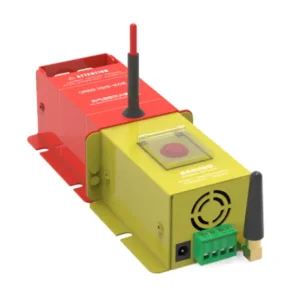
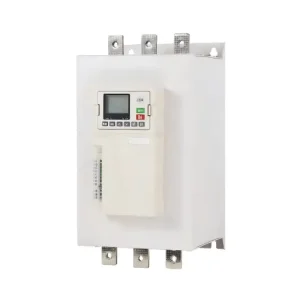
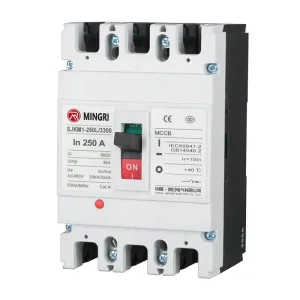
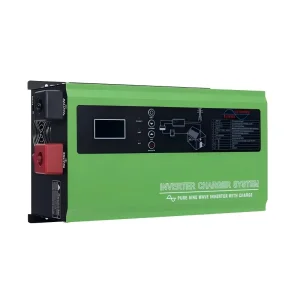
Industrial Manufacturing Excellence: Automatic Transfer Switch OEM/ODM
A comprehensive examination of design tolerances, electromagnetic compatibility, and automated production rigor inside tier-1 Chinese switchgear facilities.
Topological Comparison: Transition Mechanics & Architecture
Understanding the electrical physics and switching kinetics across Open, Fast-Closed, and Delayed transition systems manufactured for utility, gen-set, and microgrid applications.
Open Transition (Break-Before-Make)
The conventional industrial standard where power to the load is interrupted before transferring to the alternate source. Guarantees physical isolation between non-synchronized utility feeders.
- Zero backfeed hazard into de-energized utility
- In-phase monitor integration for inductive loads
- Cost-optimized mechanical interlock configuration
- Standard transfer interruption: 30ms to 200ms
Closed Transition (Make-Before-Break)
Facilitates momentary paralleling (<100ms) between independent live power feeds during scheduled generator testing or peak-shaving operations, eliminating transient drops completely.
- Zero loss of critical IT or medical facility load
- Active synch-check: voltage, frequency, phase drift
- Utility-grade protective relaying & interlocks
- Instantaneous automatic trip if parallel limits drift
Delayed Transition (Programmed Neutral)
Specifically engineered for large inductive motor circuits and high-kVA transformers. Provides an intentional, adjustable dwell time in the neutral position to bleed residual magnetic field energy.
- Prevents severe out-of-phase motor inrush spikes
- Mitigates nuisance breaker trips and shaft shears
- Adjustable center-off dwell: 0.1 to 60 seconds
- Essential for chillers, pumps, and elevator banks
| Classification Parameter | PC-Class ATS (Dedicated Contact) | CB-Class ATS (Circuit Breaker Based) | CC-Class ATS (Contactor Driven) |
|---|---|---|---|
| Primary Contact Mechanism | Heavy-duty electromagnetic knife/vacuum contacts | Dual MCCB or ACB modules with mechanical interlock | Electrically held contactor assemblies |
| Withstand & Closing Rating (WCR) | Highest (up to 100kA without upstream fuse) | Dependent on integrated MCCB/ACB breaking capacity | Requires coordinated upstream current-limiting fuse |
| Integral Overcurrent Protection | External coordination (focused purely on transfer) | Built-in thermal-magnetic / electronic trip unit | None (relies exclusively on branch protection) |
| Mechanical Cycling Endurance | Exceeds 50,000 cycles without contact degradation | Typically 10,000 to 20,000 cycles before service | 25,000 to 40,000 operational cycles |
| Preferred Global Applications | Hyperscale Data Centers, Healthcare, Military Bases | Commercial Infrastructure, Mining, Heavy Industry | Telecom Shelters, HVAC Packages, Light Commercial |
Global Procurement Specifications: OEM Factory Qualification Framework
Comprehensive technical metrics and factory verification protocols required by international engineering, procurement, and construction (EPC) conglomerates.
Metallurgical & Contact Integrity
Contacts must employ vacuum silver tungsten carbide or AgSnO2 composites to prevent contact micro-welding during 100kA short-circuit faults. Factories must demonstrate continuous micro-ohmmeter contact resistance verifications (<50 micro-ohms).
Arc Extinction Chute Aerodynamics
Multi-plate de-ionizing arc chutes constructed from high-dielectric DMC/BMC composite polymers ensure rapid arc elongation, cooling, and split quenching within 8 milliseconds of contact departure, neutralizing ionization risks.
Microprocessor Firmware & SCADA
Dual redundant 32-bit ARM-based controllers execute continuous True-RMS voltage/frequency analytics on all three phases. Modbus-RTU, BACnet, and IEC 61850 protocol stacks interface directly with enterprise Building Management Systems (BMS).
Critical Neutral Isolation Advisory (Overlapping vs. Switched Neutral)
In facilities with separately derived systems (SDS) or sensitive electronic ground fault protection (GFP), 4-pole ATS units must be deployed with either switched neutral poles or overlapping neutral contacts. An overlapping neutral maintains unbroken system grounding continuity during source transition, fully suppressing severe capacitive transient voltages and eliminating erroneous residual ground fault tripping.
Industry-Specific Deployments: Engineering Demands & Compliance
Customized ATS topologies designed for strict international codes across data infrastructure, healthcare, industrial automation, and naval installations.
Tier III & IV Hyperscale Data Centers
Zero tolerance for electrical interruption requires bypass-isolation ATS configurations. Technicians perform comprehensive testing and primary mechanism removal without shedding the server hall load.
- Redundant 2N / N+1 dual utility to genset paths
- Integral isolation draw-out carriages
- Fast harmonic sensing & static bypass gating
- Fully isolated control logic compartments
Healthcare Facilities (NFPA 99 / 110)
Life safety and critical care branches mandate automatic transfer within 10 seconds of regular power failure. Units incorporate seismic-certified housings and weekly programmed generator load exercise routines.
- UL 1008 & OSHPD seismic compliance
- Selectivity coordination with branch circuit breakers
- Emergency, Critical, and Equipment branch tiers
- Independent auxiliary mechanical lockouts
Renewable Energy Microgrids & BESS
Navigating the bidirectional power flow of solar photovoltaics and battery storage. ATS architectures integrate islanding detection algorithms and synchro-phasor telemetry for seamless grid uncoupling.
- Dynamic frequency-tracking transfer logic
- Zero reverse power feed to distributed PV arrays
- Sub-second microgrid islanding separation
- DC-rated disconnect & hybrid inverter interlocks
Technology Roadmap: The Next Frontier of Intelligent Transfer Switching
Anticipating next-generation solid-state architectures, IoT predictive asset diagnostics, and digital twin virtualization.
Solid-State Static ATS (SSTS)
Silicon-Controlled Rectifier (SCR) matrix implementation delivers sub-cycle transfer speeds (<4 milliseconds), rendering transfer completely transparent to server SMPS power supplies without battery degradation.
Predictive Health Telemetry
Integrated infrared fiber-optic temperature sensors monitor main lug connections and arc-chamber thermal rise 24/7. AI models calculate Remaining Useful Life (RUL) based on total interrupted current history.
Zero-Trust Cybersecurity
Firmware cryptographically signed conforming to IEC 62443. Hardware root-of-trust chips secure switchgear Ethernet gateways from unauthorized remote trip signals and grid cyber intrusions.
SF6-Free Medium Voltage
Pioneering eco-gas and solid dielectric insulated MV ATS cabinets. Eliminates high-GWP fluorinated gases while achieving 24kV, 31.5kA short-circuit transfer performance in compact prefabricated envelopes.
Global Compliance, Rigorous Factory Testing & Localized Engineering Support
Ensuring frictionless site acceptance testing (SAT), local grid-code certification, and rapid custom enclosure fabrication.
Standardization & Type-Testing
Every ATS assembly undergoes type testing in third-party CNAS/ILAC-accredited laboratories. We furnish verified test reports for dielectric withstand, short-time withstand current (Icw), temperature rise at rated current, and 110% overvoltage endurance.
OEM/ODM Turnkey Customization
We tailor solutions to match bespoke footprint constraints, incoming busway orientations (top/bottom feed), front-accessible maintenance requirements, and severe climate enclosure ratings including NEMA 3R/4X and IP54/IP65 ingress protection.
Remote SAT & Field Commissioning
Our dedicated electrical support engineers guide your technical team through step-by-step secondary injection testing, phase-rotation audits, transfer delay parameter calibration, and communication integration via high-definition video dispatch.
Frequently Asked Questions (FAQ): ATS Factory Selection & Technology
Direct technical answers to common queries submitted by consulting engineers, panel builders, and procurement specialists.
? What are the primary differences between PC-Class and CB-Class Automatic Transfer Switches?
PC-Class ATS utilizes high-speed electromagnetic contactors or motor-actuated knife contacts built exclusively to switch and withstand short circuits without tripping itself; it relies solely on upstream overcurrent protection devices. This provides supreme withstand current ratings (Icw) and high mechanical endurance. CB-Class ATS is assembled utilizing two integrated circuit breakers (MCCB or ACB) mechanically interlocked with trip units included. While CB-Class offers convenient onboard overcurrent protection, its endurance is lower and a short-circuit downstream can trip the ATS breaker, inhibiting transfer until manually reset.
? How do ATS factories calculate Short-Circuit Withstand and Closing Ratings (WCR)?
WCR represents an ATS unit's certified ability to hold contacts shut without contact welding or mechanical destruction during a high-energy fault until protective upstream equipment clears the fault. Testing per UL 1008 or IEC 60947-6-1 evaluates three factors: time duration (typically 0.025 to 0.05 seconds for current-limiting fuses or 0.1 to 0.5 seconds for circuit breakers), peak magnetic repulsive forces, and total thermal I²t energy let-through. Top factories provide both specific breaker coordinated ratings and time-based ratings.
? Why is in-phase monitoring critical for open transition automatic transfer switches?
When large three-phase induction motors are suddenly disconnected from a utility feed, they act as self-excited generators, sustaining a decaying internal counter-electromotive force (CEMF). If an open transfer switch snaps to the backup generator out-of-phase (e.g., 180 degrees opposing), the resultant instantaneous current spike can hit 15 to 20 times the motor full-load current, inducing mechanical rotor shaft destruction, coupling shear, and catastrophic breaker trip. An in-phase monitor continuously samples both source waveforms, only releasing the transfer mechanism when sources drift within 5 to 10 electrical degrees of synchronism.
? What documentation should international buyers demand during a factory audit?
Procurement teams must demand: 1) Full Type Test Certification from independent bodies (KEMA, ASTA, CE, or CNAS); 2) Mill test certificates (MTC) proving electrical copper busbar purity (>99.95% electrolytic copper); 3) Automated optical inspection (AOI) records for microprocessor logic controllers; 4) Routine factory test logs covering 100% dielectric high-voltage testing, timing synchronization, and mechanical endurance runs; and 5) ISO 9001, ISO 14001, and ISO 45001 production certificates.
? What maintenance routines preserve transfer switch contact reliability over decades?
Annual thermal thermographic imaging under full load identifies high-resistance joints. Contact assemblies must be visually inspected for abnormal arc erosion or pitting after short-circuit events. Mechanical linkages require periodic lubrication with approved dielectric grease. In mission-critical environments, bypass-isolation ATS units should be exercised under simulated generator transfer tests every 30 days without dropping facility power.
Complementary Circuit Protection & Medium-Voltage Systems
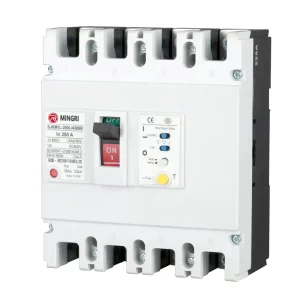
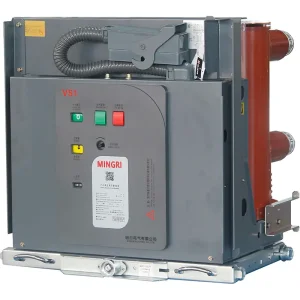
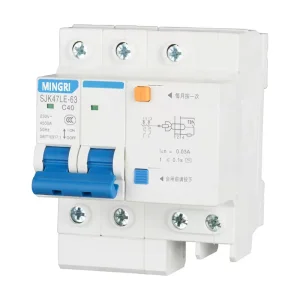
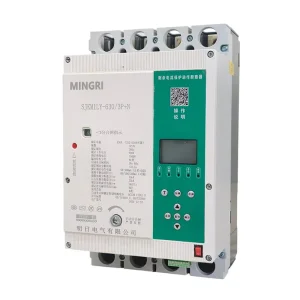
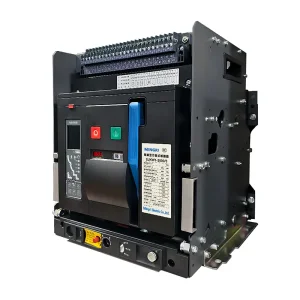
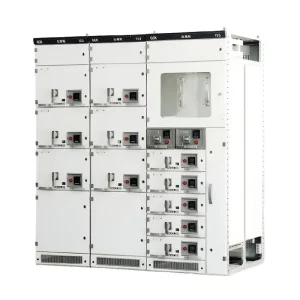
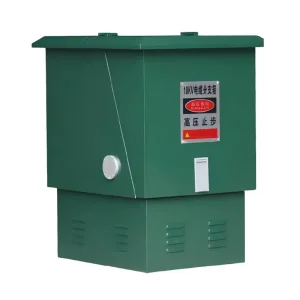
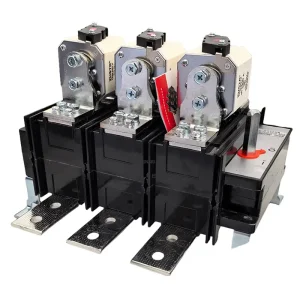
Fully certified vacuum circuit breakers, earth leakage devices, and withdrawable industrial switchgear engineered for holistic electrical plant coordination.