High-Efficiency Transformers Engineered for Bulgaria's Grid Modernization
Pre-engineered to comply with BDS EN 60076 standards, EU Ecodesign Directive 2019/1783 (Tier 2), and local utility specifications across Electrohold, EVN Bulgaria, and Energo-Pro operational zones.
-
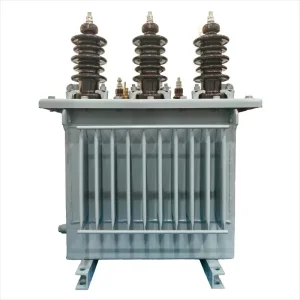
ODM S11-M Type 10kV / 20kV Bulgarian Utility Fully-Sealed Oil Transformer
-
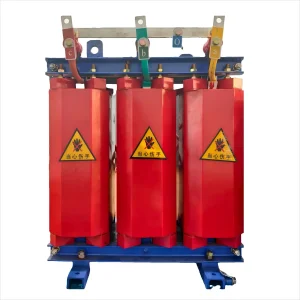
High-Quality SC(B)10 Type 10kV/20kV Cast Resin Dry Transformer for Sofia Metro & Commercial Centers
-
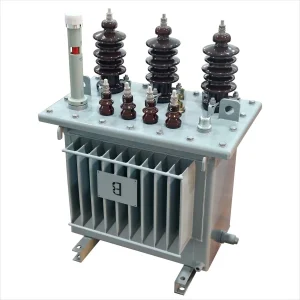
Wholesale S13-M Type 10kV/20kV Ultra-Low Loss Hermetically Sealed Transformer (EU Ecodesign Tier 2)
-
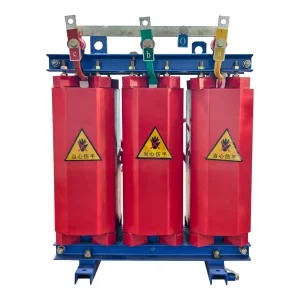
High-Quality SC(B)11 10kV/20kV F-Class Flame-Retardant Cast Resin Transformer for Solar & Wind Inverters
Bulgaria’s Power Grid Dynamics: Transformation, Decarbonization & Grid Reinforcement
An engineering assessment of how European transmission directives and Bulgaria's National Energy and Climate Plan (NECP) are driving equipment modernization across 110 kV, 20 kV, and 10 kV networks.
Bulgaria stands as a pivotal electrical transit corridor in Southeast Europe, synchronizing cross-border power flows among Romania, Greece, Serbia, North Macedonia, and Turkey. Governed at the transmission level by the Electricity System Operator (ESO EAD) and managed regionally by major Distribution System Operators (DSOs) including Electrohold Bulgaria (serving Western Bulgaria and Sofia Capital), EVN Bulgaria (serving South and Southeastern regions), and Energo-Pro (overseeing the Northern and Northeastern territory), the domestic electrical infrastructure is undergoing a decisive structural pivot.
Historically anchored by centralized baseloads—namely the Kozloduy Nuclear Power Plant and the Maritsa East lignite thermal basin—the Bulgarian network is transitioning in accordance with the European Green Deal and the phaseout timeline for coal assets. This transition has unlocked exponential growth in large-scale utility photovoltaic installations across the high-solar-irradiance plains of Thrace (Plovdiv, Pazardzhik, Stara Zagora, Haskovo) and substantial wind generation along the Dobrudzha corridor near the Black Sea coast. Consequently, medium- and high-voltage substations face acute challenges: bidirectional power flows, severe voltage fluctuations, elevated total harmonic distortion (THD) from power electronic inverters, and high short-circuit duty.
The 20 kV Standard and Dual-Voltage Infrastructure Demands
A distinctive technical characteristic of Bulgarian distribution networks is the coexistence and ongoing consolidation between legacy 10 kV municipal networks and modern standard 20 kV medium-voltage distribution feeders. As DSOs phase out aging 10 kV and 6 kV systems to reduce line transmission losses and accommodate surging industrial loads in hubs like the Trakia Economic Zone (TEZ), equipment specifiers require distribution and power transformers capable of either dual primary voltage switching (e.g., 20/10 kV reconfigurable primary windings via off-circuit tap changers) or dedicated 20 kV to 0.4 kV stepped conversion optimized for EU Ecodesign Tier 2 load and no-load losses.
Chinese transformer manufacturers have established a strategic edge by offering precision-engineered, custom-wound transformers specifically tailored to Bulgaria's dual-voltage specifications, seismic resistance standards (BDS EN 1998-1 Eurocode 8 for Balkan seismic zones), and extreme temperature ranges spanning continental winter freezes (-30°C in mountainous regions) to scorching summer peaks (+45°C ambient in the Thracian Valley).
Lead Time Compression
While European OEM transformer backlogs stretch past 100–140 weeks due to raw material and labor constraints, our Chinese automated winding and core stacking centers deliver 110 kV and MV units in 16 to 24 weeks.
Total Cost of Ownership (TCO)
Integrated supply chains—encompassing domestic laser-treated high-permeability CRGO steel and continuous transposed conductors (CTC)—yield a 25–35% capital cost reduction with Tier 2 lifecycle efficiency.
Certified European Compliance
Full type test certification from internationally accredited laboratories (CESI, KEMA, or ILAC-accredited centers) verifying lightning impulse withstand, thermal temperature rise, and dynamic short-circuit endurance.
Engineering Superiority: How China's Premier Transformer Plants Outperform
Leveraging state-of-the-art materials science, automated robotic fabrication, and ultra-rigorous cleanroom winding to meet and exceed EN / IEC standards.
The global energy landscape is constrained by an acute shortage of high-voltage substation apparatus. China's transformer manufacturing sector has transitioned from mass production to high-precision engineering leadership. Operating the world's most advanced ultra-high-voltage (UHV 1000 kV AC / ±1100 kV DC) transmission networks domestically, Chinese manufacturing plants have perfected magnetic core design, insulation drying techniques, and dynamic electrodynamic calculation models.
1. Advanced Core Lamination & Magnetic Material Metallurgy
The core of our transformers utilizes prime, domain-refined, laser-scribed Cold Rolled Grain-Oriented (CRGO) electrical steel with sheet thicknesses as thin as 0.20 mm – 0.23 mm (such as Baosteel B23R075 / B20R070 grades). Automatic computerized slitting lines and 45-degree full-mitred step-lap core stacking systems eliminate air gaps, minimize stray magnetic flux, and suppress magnetostriction noise. The result for Bulgarian grid operators is no-load loss figures substantially beneath the maximum thresholds established by Commission Regulation (EU) 2019/1783.
2. Class F / Class H Insulation & Vacuum Pressure Impregnation (VPI) / Resin Casting
For dry-type transformers serving Sofia's underground metro lines, data centers, hospitals, and enclosed industrial switchgear rooms, our cast resin transformers utilize vacuum thin-film potting technology. Under sub-millibar vacuum levels, aromatic epoxy resin filled with micron-scale silica flour completely encapsulates high-voltage aluminum or copper foil windings. This achieves a void-free, non-hygroscopic structure delivering partial discharge levels below 5 pC, rated to Climate Class C2, Environmental Class E2, and Fire Behavior Class F1 in accordance with IEC 60076-11.
3. Dynamic Electrodynamic Stability & Short-Circuit Withstand Capability
Transmission grid fault conditions in Bulgaria can subject transformer windings to mechanical radial burst and axial collapse forces measured in tens of metric tons within milliseconds. Our engineering teams employ 3D finite element method (FEM) magnetic-leakage field modeling. Windings are clamped with densified laminated wood pressure rings, pre-stressed under constant hydraulic pressure, and dried through vapor-phase kerosene drying systems (VPD), ensuring zero moisture residual (<0.5%) and permanent structural rigidity.
| Technical Characteristic | Conventional Market Standards | Our Engineered Solution for Bulgaria (Tier 2 Ready) | System Value to Bulgarian EPC / DSO |
|---|---|---|---|
| Core Steel Metallurgy | Standard M4/M5 CRGO (0.27-0.30mm) | Laser-scribed, domain-refined CRGO (≤0.23mm) | No-load losses reduced by 22% to 30% below baseline |
| EU Ecodesign Status | Tier 1 (2015 baseline) | Strict Tier 2 compliance (EU 2019/1783) | Exempt from regulatory rejection, eligible for EU subsidies |
| Partial Discharge (Dry-Type) | ≤ 10 pC – 20 pC | ≤ 5 pC (Thin-film vacuum resin casting) | Extended dielectric life (>35 yrs), zero micro-cracking risk |
| Ambient Operating Range | -10°C to +40°C | -30°C to +45°C (Outdoor hermetic tank) | Withstands extreme Balkan winter frost and summer heatwaves |
| Tap Changer Configuration | Off-Circuit Tap Changer (OCTC) ±2x2.5% | MR / Huaming vacuum OLTC with smart AVR controller | Autonomous dynamic voltage regulation on solar-saturated lines |
| Dielectric Fluid Options | Standard uninhibited mineral oil | Inhibited mineral oil or synthetic/natural ester fluid | High flash point (>300°C), biodegradable for protected river basins |
Localized Application Scenarios Across Bulgarian Industry & Infrastructure
Field-proven topologies configured for commercial manufacturing parks, renewable microgrids, heavy mining complexes, and regional DSO utility substations.
Utility-Scale Solar Step-Up (PV Skid)
Deployment: Thrace Plain, Yambol, and Pazardzhik solar clusters.
Configuration: 0.8 kV / 20 kV or 0.8 kV / 35 kV double-split low-voltage windings, electrostatic shielding between LV/HV, withstand against inverter pulse-width modulation (PWM) harmonic heating, integrated into pre-commissioned transformer kiosks.
Trakia Economic Zone (TEZ) Manufacturing
Deployment: Heavy automotive, chemical, and metal fabrication plants near Plovdiv.
Configuration: 20/0.4 kV high-reliability cast resin or hermetically sealed oil units equipped with PT100 thermal sensors, RS485 Modbus telemetry, and low acoustic noise emissions (≤55 dB) for indoor substation basements.
Black Sea Wind Turbines & Maritime Ports
Deployment: Dobrudzha wind farms, Varna and Burgas harbor logistical hubs.
Configuration: Marine C5-M anti-corrosion exterior coatings, synthetic ester fluid filling for fire containment and water-table bio-protection, reinforced vibration dampers resisting continuous structural tower oscillation.
NRIC Railway Traction & Intermodal Nodes
Deployment: National Railway Infrastructure Company (NRIC) electrified mainlines.
Configuration: High dynamic overcurrent endurance, single-phase or V-v / Scott-connected 110 kV to 27.5 kV traction transformers capable of absorbing rapid load swings, heavy regenerative braking feeds, and severe unbalance.
DSO Urban Grid Reinforcement (Electrohold / EVN)
Deployment: Municipal substations in Sofia, Plovdiv, Varna, and Ruse.
Configuration: Compact footprint hermetically sealed corrugated fin wall transformers (S13-M series), corrugated tanks with elastic thermal expansion, pressure relief valves with directional trip contacts, and IP54 terminal protection boxes.
Mining & Heavy Mineral Processing
Deployment: Asarel-Medet, Ellatzite-Med copper open pits and Maritsa basin.
Configuration: Heavy-duty harmonic filtering capabilities (K-factor up to K-20), heavy vibration ratings, non-encapsulated dry type (SG-B series) or reinforced conservator oil transformers with dual-float Buchholz protection.
Emerging Industry Trends: The Digital & Decarbonized Transformer Era
How the convergence of condition monitoring, alternative dielectric chemistry, and amorphous core alloys is reshaping utility asset management in Southeast Europe.
Transformer procurement is no longer simply buying an electro-mechanical piece of iron and copper; it has evolved into a strategic lifecycle investment. Across the European Union, grid equipment is expected to remain in active service for 35 to 50 years while interfacing with smart digital substation architectures. Several technological transformations dominate current utility and industrial tenders in Bulgaria:
1. Online Dissolved Gas Analysis (DGA) & Digital Twin Telemetry
For high-voltage units (110 kV and above) serving critical transmission nodes of ESO EAD, online multi-gas DGA monitors (measuring H2, CH4, C2H6, C2H4, C2H2, CO, and CO2) combined with fiber-optic winding temperature probes (GaAs technology) provide real-time condition assessment. These sensors integrate directly via IEC 61850 substation automation communication protocols, feeding operational data to SCADA control centers in Sofia, enabling predictive health indexing and condition-based maintenance long before incipient thermal or dielectric faults can cause outage events.
2. Biodegradable Ester Dielectrics: Synthetic and Natural Fluids
With stringent European environmental standards safeguarding Natura 2000 protected areas, river catchments (such as the Danube and Maritsa rivers), and dense urban environments, transformers filled with synthetic organic esters (Pentaerythritol esters) or natural vegetable esters are replacing mineral oil. Ester fluids deliver high fire points (>300°C vs. ~160°C for mineral oil), classing them as K-class fire-safe liquids according to IEC 61039. This eliminates the necessity for extensive concrete blast-deflection walls and deluge water spray firefighting systems in congested substation yards.
3. Amorphous Alloy Core Metal Technology
For distribution transformers experiencing fluctuating and low-capacity factors—such as rural agricultural pumping stations or suburban residential feeders—amorphous metal cores manufactured from Fe-Si-B alloys provide no-load losses up to 70% lower than the finest high-grade CRGO electrical steel. As electricity spot market prices on the IBEX (Independent Bulgarian Energy Exchange) fluctuate, shaving standby losses yields massive cumulative operational savings throughout the 40-year operational lifecycle.
International Procurement Standards, Testing Protocols & Direct Logistics to Bulgaria
Ensuring end-to-end transparency: From Factory Acceptance Testing (FAT) in China to customs clearance via Black Sea ports (Varna / Burgas) or direct rail-sea multimodal transit.
International procurement engineers and EPC directors require verifiable certainty that imported electrical assets fulfill all project criteria without risk of site rejection. Our manufacturing workflow adheres strictly to ISO 9001, ISO 14001, and ISO 45001 management systems, augmented by project-specific inspection test plans (ITP).
Factory Acceptance Testing (FAT) & Third-Party Witness Verification
Prior to dispatch, every single transformer undergoes comprehensive routine testing in our screened high-voltage testing bay in accordance with IEC 60076 standards. Clients and third-party inspectors (such as SGS, Bureau Veritas, or TÜV SÜD) are supported via on-site witnessing or multi-camera high-definition live interactive remote video inspection:
- Winding Resistance Measurement: Micro-ohmmeter testing across all tap positions for balanced phase resistance.
- Voltage Ratio & Vector Group Verification: Confirming precise step ratios and angular displacement (Dyn11, YNd11, Yzn11, etc.).
- Impedance & Load Loss Testing: Verified at rated frequency and converted to reference temperature (75°C or 120°C).
- No-Load Loss & No-Load Current: Tested under pure sinusoidal excitation at 100% and 110% rated voltage.
- Dielectric Routine Tests: Separate source AC withstand voltage and short-duration induced AC overvoltage (AV / IVW).
- Partial Discharge Evaluation: Background noise ≤ 2 pC; guaranteed dry-type PD value ≤ 5 pC.
- Type & Special Tests (Available on Request): Full-wave lightning impulse test (BIL up to 650 kV for 110 kV class), temperature rise test, acoustic sound level measurement, and external short-circuit withstand type certification.
Export Packaging & Bulgaria Route Logistical Execution
Shipping large high-voltage machinery overseas demands rugged engineering packaging. Power transformers are shipped inside reinforced, nitrogen-pressurized or dry-air-sealed transport tanks fitted with multi-axis 3D electronic impact recorders to monitor acceleration g-forces during intermodal transitions. Distribution units are secured in treated marine plywood seaworthy crates with desiccants and moisture-barrier vacuum foils.
We provide multiple reliable logistics channels to Bulgaria: direct ocean container and breakbulk chartering to the Black Sea ports of Varna and Burgas; fast container transit via Piraeus (Greece) with bonded truck transfer to Sofia or Plovdiv; or multimodal Eurasian rail corridors entering Bulgaria via Serbia or Turkey. Full CE declaration of conformity, Eur.1 documentation, BDS-aligned rating plates in Bulgarian and English, and detailed O&M manuals are supplied standard.
Frequently Asked Questions on Transformer Engineering & Sourcing for Bulgaria
Detailed technical answers to common queries raised by Bulgarian EPC contractors, procurement directors, and grid design institutes.
Do your transformers comply with EU Ecodesign Directive Tier 2 (Regulation 2019/1783)?
Yes. All of our oil-immersed and cast resin distribution transformers designed for the European Union market strictly meet or surpass Tier 2 maximum allowed load losses (Pk) and no-load losses (Po), enforced since July 2021. Detailed loss calculation sheets and certified test reports verifying Tier 2 compliance are submitted with every technical tender.
Can you supply dual-voltage 20 kV / 10 kV primary winding configurations for Bulgarian DSOs?
Yes. We frequently supply transformers configured for dual medium-voltage inputs. Reconfiguration is typically handled via an externally operated, de-energized off-circuit switch or through internal terminal link reconfiguration, allowing seamless transition from old 10 kV feeds to 20 kV standard distribution without replacing the transformer asset.
What tap changers are utilized for Bulgarian transmission-level (110 kV) transformers?
Our 110 kV power transformers can be integrated with either world-renowned Maschinenfabrik Reinhausen (MR) vacuum On-Load Tap Changers (OLTC) or high-grade Huaming vacuum OLTCs, paired with intelligent automatic voltage regulators (AVR) supporting IEC 61850 communications for automated DSO/TSO substation coordination.
How do you guarantee transformer survivability against seismic activity in Bulgaria?
In full compliance with Eurocode 8 (BDS EN 1998-1), our high-voltage transformers are designed with reinforced tank structural ribs, low-center-of-gravity anchor brackets, and solid porcelain or composite polymeric bushings qualified to withstand ground acceleration spectra exceeding 0.3g to 0.4g, representative of high-risk Balkan seismic zones.
What warranty terms and field support services are provided in Bulgaria?
We provide a comprehensive warranty period ranging from 24 to 60 months. We collaborate with authorized regional electrical engineering service partners across Southeast Europe to provide commissioning supervision, oil sampling, on-site testing, and rapid warranty support whenever required.
High-Voltage Transmission, Substation & Specialized Transformer Portfolio
Engineered for high-capacity grid tie-ins, heavy-duty voltage regulation, and specialized renewable applications across Bulgaria and neighboring European interconnectors.
-
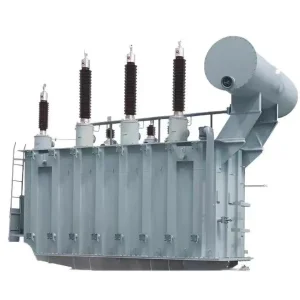
Wholesale 110kV / 20kV / 10kV Power Transformer with On-Load Tap Changer for ESO EAD Transmission Substations
-
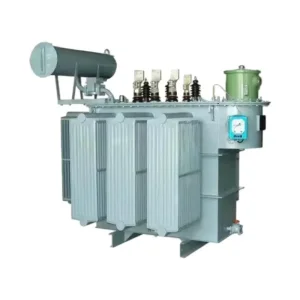
ODM SZ11 Type 10kV/20kV On-Load Voltage Regulating Transformer for Dynamic Network Load Balancing
-
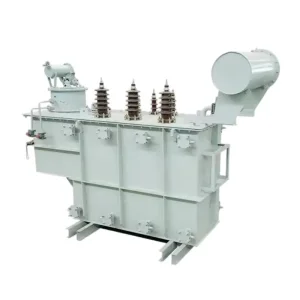
ODM SZ11/SFZ11 35kV Medium-Voltage Regulating Transformer for Dobrudzha Wind & Solar Parks
-
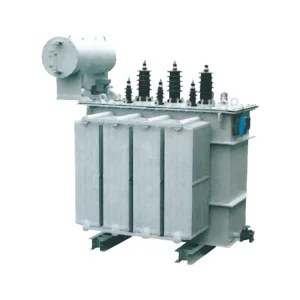
China S11 Type 35kV/6-10kV Series Stepped Power Transformer for Mining & Heavy Metallurgical Plants
-
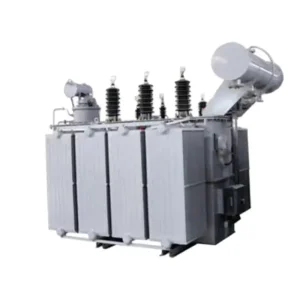
Wholesale S11 Type 35kV Sub-Transmission Distribution Transformer for Rural Feeder Grid Reinforcement
-
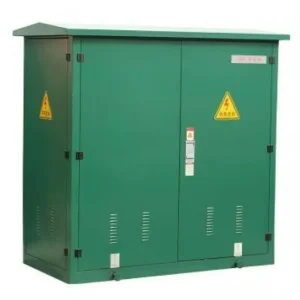
ODM ZGS11-H(Z) Integrated Pad-Mounted Compact Substation for Ground-Mounted Solar Utility Skids
-
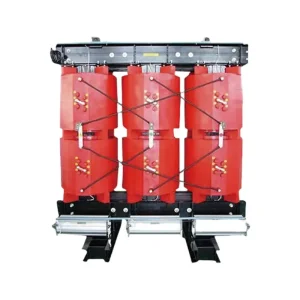
High-Quality SC(B)13 10kV/20kV Ultra-Low Loss Cast Resin Transformer for Sofia Data Centers & Hospitals
-
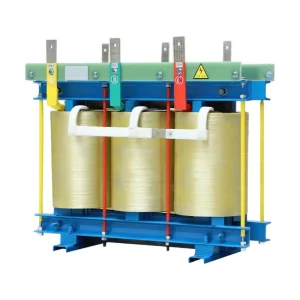
OEM SG(B)10 Type 10kV/20kV Non-Encapsulated VPI Class H Dry Transformer for Severe Industrial Corridors