Engineered Electrical Distribution & Control Solutions
Integrate Mingri Electric's certified power switching apparatus, vacuum breakers, and voltage regulators into demanding transmission and industrial automation networks.
Auxiliary Contact Mechanics, Physics & Signal Integrity
An authoritative analysis of secondary circuit switching mechanics, contact bounce suppression, and electro-mechanical performance criteria in mission-critical networks.
Kinematic Coupling & Contact Configurations
Auxiliary contact blocks are mechanically interlocked with primary power switching poles (such as vacuum contactors, MCCBs, and withdrawable air breakers). Whether arranged as Normally Open (NO / Form A), Normally Closed (NC / Form B), or Changeover (CO / Form C), their precise physical actuation is synchronized with main poles to verify circuit state within tolerances as fine as ±1.5 milliseconds, avoiding hazardous cross-conduction or false breaker status telemetry.
Contact Metallurgy: AgNi vs. AgSnO2
For high-duty inductive switching (AC-15 and DC-13 ratings), our contact tips utilize sintered silver nickel (AgNi90/10) or silver tin oxide (AgSnO2) alloys. This metallurgy resists material transfer, welding, and oxidation under persistent electrical micro-arcing. For delicate low-level instrumentation circuits interfaced with PLCs (5V DC to 24V DC at currents under 10mA), gold-flashed bifurcated serrated fingers guarantee low dynamic contact resistance (<15mΩ) and eliminate contact oxide film insulations.
Mechanical Life & Creepage Clearances
Designed to withstand up to 10,000,000 mechanical operations, modern auxiliary contact blocks conform rigorously to IEC/EN 60947-5-1 and UL 508 standards. Rated insulation voltages (Ui) reach 690V with an impulse withstand voltage (Uimp) of 6kV. Engineered thermoresistant polyamides (PA66 reinforced with 30% glass fiber) provide a UL 94-V0 flammability barrier and a Comparative Tracking Index (CTI) exceeding 600V, ensuring safety under extreme contamination.
Why Global Tier-1 Brands Source Auxiliary Assemblies in Yueqing, China
Yueqing houses the world's most concentrated low- and medium-voltage electrical manufacturing ecosystem. Here is how Mingri Electric delivers unbeatable economies of scale and technical precision.
Sub-kilometer Supply Supply Chain
Within a 15-minute radius in Yueqing, our production lines access cold-heading bimetal contact rivets, precision progressive stamping dies, high-speed plastic injection facilities, and automated spring winding suppliers, reducing procurement lead times by 65% compared to Western counterparts.
Automated Optical Inspection (AOI)
Manual assembly errors are eliminated through high-precision robotic workcells. Vision-guided camera systems conduct 100% in-line verification of contact travel, contact wipe distance, spring depression force, and terminal screw torque, yielding sub-10 PPM defect rates across wholesale production runs.
In-House Tooling & Mold Innovation
With CNC wire electrical discharge machining (EDM) and high-speed multi-cavity injection molds, our engineering workshop transitions from 3D CAD models to functional auxiliary switch prototypes in as little as 10 business days, drastically accelerating your time-to-market for custom designs.
Cost-to-Value Leadership
By combining high-volume raw material procurement (copper alloy sheets, fine silver, nylon pellets) with high-efficiency energy management and automated assembly, Mingri Electric delivers 25% to 40% cost savings for international switchgear and MCCB OEMs without sacrificing performance.
Industry Evolution: The Transition to Intelligent Telemetry
Auxiliary switches are no longer passive copper blades. Explore how digitized switchboards, IoT telemetry, and renewable energy mandates are transforming secondary contact components.
| Feature Dimension | Traditional Auxiliary Contact Architecture | Next-Gen Intelligent Auxiliary Blocks (Mingri Standard) |
|---|---|---|
| Signal Interface | High-energy AC/DC relays (110V/220V coils) with mechanical bounce. | Solid-state and micro-contact interfaces compatible with 3.3V/5V microcontroller and PLC bus logic. |
| Predictive Diagnostics | None; manual continuity testing during preventative maintenance cycles. | Integrated cycle-counters, contact wear estimation, and thermal impedance monitoring via embedded sensors. |
| Environmental Sealing | Standard IP20 finger-safe housing; prone to dust accumulation in severe sites. | Hermetically sealed micro-chambers (IP67 contact compartment) preventing sulfide oxidation in harsh environments. |
| Arc Suppression | Passive natural air gap cooling; prone to contact erosion under DC loads. | Magnetic blowout channeling tailored for high-voltage DC circuits in BESS and Photovoltaic strings up to 1500V DC. |
| Standard Harmonization | Generic domestic compliance (GB/T 14048.5). | Multi-standard dual compliance: IEC/EN 60947-5-1, UL 508, CSA C22.2, and CE Low Voltage Directive. |
Macro Solutions Across Critical Infrastructure & Industry
Engineered to integrate smoothly with primary medium- and low-voltage electrical switchboards across challenging operational environments.
1500V DC Photovoltaic & BESS Units
In utility-scale solar farms and battery energy storage containers, DC arcs are notoriously difficult to extinguish. Our auxiliary switches used alongside DC MCCBs provide fast break-trip indication and shunt-trip feedback under thermal overload, enabling instant isolation of damaged battery racks before thermal runaway propagates.
Mission-Critical Tier IV Data Centers
Dual-bus redundant power feeds (2N topology) require continuous switchgear coordination. Mingri auxiliary contacts installed on automatic transfer switches (ATS) and low-voltage air circuit breakers send reliable real-time position signals to Building Management Systems (BMS), ensuring zero-downtime transfers during grid interruptions.
Marine, Offshore & Heavy Metallurgy
Salt spray, severe vibration, and ambient temperatures exceeding 55°C degrade lesser contacts. Mingri contacts incorporate phosphor bronze leaf springs and captive stainless steel clamp screws that resist loosening under harmonic vibration, maintaining Class A operational readiness on cargo vessels and rolling mills.
Wholesale B2B Sourcing: Technical Auditing & Quality Control
A rigorous qualification framework for engineering leads, supply chain directors, and EPC procurement specialists vetting auxiliary switchgear manufacturers.
1. Dielectric & Impulse Withstand Testing
Every batch undergo rigorous hi-pot dielectric tests (2500V AC for 60 seconds between energized circuits and exposed metal frames) alongside 1.2/50μs lightning impulse waveform tests up to 6kV to ensure absolute galvanic isolation between control circuits and main power lines.
2. Temperature Rise & Contact Resistance
Subjected to 100% rated continuous conventional thermal current (Ith up to 10A) continuously until thermal equilibrium is established. Contact terminal temperature rises are verified via calibrated thermal imaging to stay well below the 65K ceiling established by IEC 60947-1.
3. Electrical & Mechanical Endurance
Using automated pneumatic test rigs, sample blocks undergo accelerated endurance testing at 1,200 operations per hour under AC-15 (electromagnetic load) and DC-13 duty cycles. Verification requires zero mechanical binding, contact sticking, or electrical drift over the entire test duration.
Frequently Asked Questions: Auxiliary Contacts & Switchgear Components
Clear, engineering-driven answers to frequent technical, logistical, and customization questions from electrical panel builders and EPC contractors.
An auxiliary contact reflects the physical position of the primary breaker or contactor mechanism (open or closed) regardless of how the state change occurred. In contrast, an alarm contact (or trip indicator contact) only triggers when the circuit breaker trips automatically due to a fault condition (such as thermal overload, short-circuit, or earth-fault via shunt/undervoltage release), remaining unchanged during manual switching operations.
Standard auxiliary contact tips rely on substantial electrical arc energy to burn off atmospheric oxidation and surface sulfides. In PLC circuits carrying 24V DC at low milliamp levels, insufficient energy exists to penetrate this non-conductive film, causing intermittent "dry contact" telemetry failure. Bifurcated contacts feature dual parallel flexible contact fingers with serrated gold-flashed tips, creating redundant physical contact points and high localized contact pressure to ensure reliable continuity.
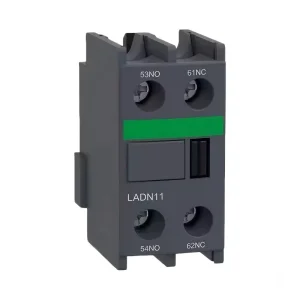
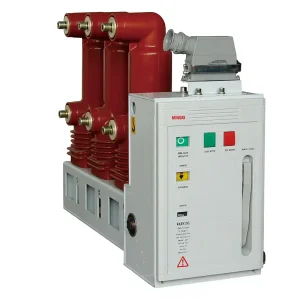
Yes. In addition to standard models such as our LADN series (compatible with TeSys D series contactors) and proprietary assemblies for SJKM and VS1 breaker mechanisms, our Yueqing R&D center provides complete OEM/ODM reverse-engineering and design-for-manufacture (DFM) services. We can adjust terminal screw pitch, mechanical clipping sliders, terminal styles (screw, spring-cage, or push-in), and housing profiles according to your physical envelope.
Our standard auxiliary contact units are rated for a conventional free air thermal current (Ith) of 10A up to 690V AC (50/60Hz). Operational current ratings in AC-15 applications span 6A at 120V, 3A at 240V, and 1.04A at 690V. For DC-13 inductive duty, our ratings range from 0.55A at 125V DC down to 0.15A at 600V DC. Custom heavy-duty auxiliary blocks for power substation disconnectors can be engineered up to 20A continuous thermal capacity.
Early-make contacts close a defined fraction of a cycle before the main power contacts engage, which is critical for pre-charging capacitive circuits or engaging interlocking holding coils. Late-break contacts maintain electrical continuity until after main poles have cleanly separated, preventing premature de-energization of critical sensor feedback loops or control interlocks during deliberate disconnection sequences.
For standard catalog auxiliary contact blocks (such as LADN-11, LADN-22, LADN-04), our MOQ starts at 500 units, with typical container orders dispatched within 15–20 working days. Custom branded OEM units (including private label laser engraving, specific spring tension calibrations, and custom terminal markings) require an initial batch run of 2,000 units with prototype delivery completed in 10-14 days.
Auxiliary Components, Switchgear Panels & Breakers
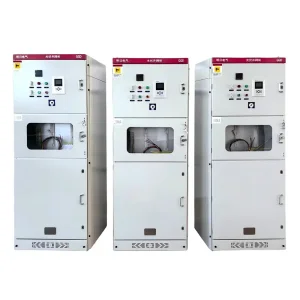
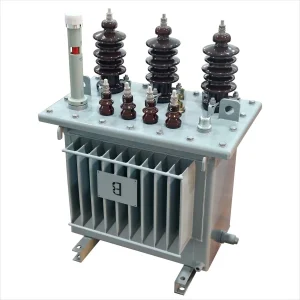
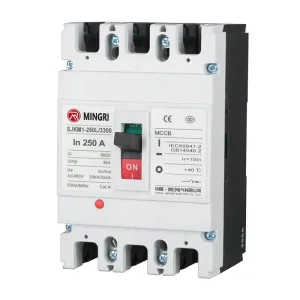
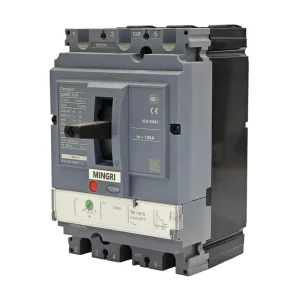
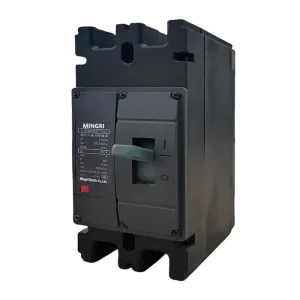
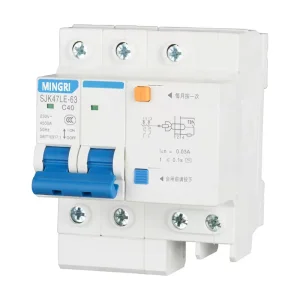
Explore our full line of low-voltage panels, molded case breakers, transformers, and dedicated auxiliary contact blocks manufactured to stringent global specifications.
Partner Directly with Mingri Electric Engineering Works
Equip your switchboards, distribution cabinets, and control stations with certified auxiliary contacts and medium-voltage switchgear direct from our Yueqing manufacturing hub. Request technical CAD drawings, full type-test certificates, or arrange a private technical audit with our engineering team today.
Contact Senior Engineering Team