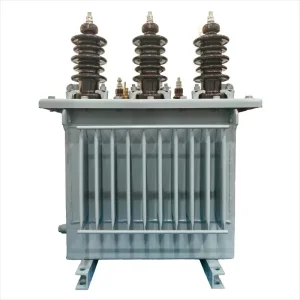
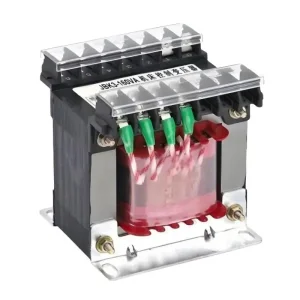
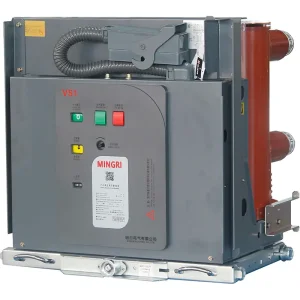
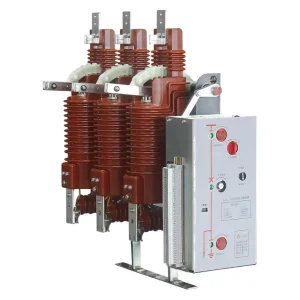
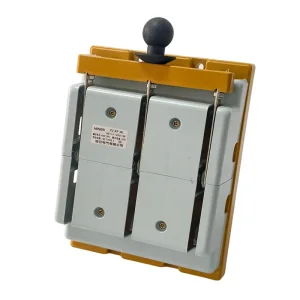
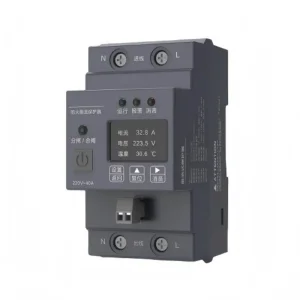
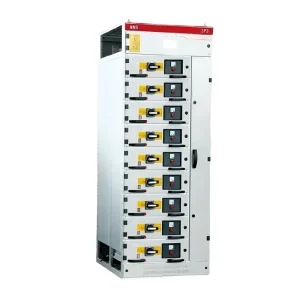
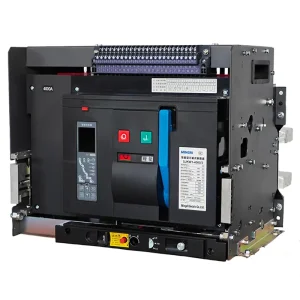
High-Voltage Resin Insulation & Power Control Products
Explore our certified range of dry-type cast resin distribution equipment, high-vacuum circuit breakers, and industrial step-down starting modules manufactured in ISO 9001/14001 facilities.
The Global Shift to Solid Resin Dielectric Insulation
A rigorous examination of medium-voltage grid modernization, phase-out of SF6 greenhouse gas, and elimination of liquid-filled transformer hazards across international power networks.
De-risking Urban Infrastructure
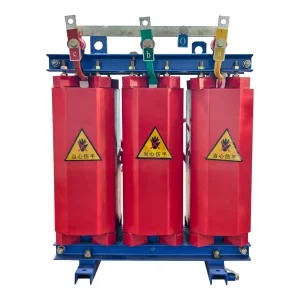
Traditional mineral oil transformers present substantial fire hazards, toxic spill liabilities, and require dedicated blast bunkers. OEM cast resin insulation provides self-extinguishing flame retardancy, meeting municipal building safety codes for basement substations and commercial towers.
- Elimination of oil catch basins and deluge water mist systems
- Class F & H flame retardance standard compliance (UL94 V-0)
Global F-Gas Phaseout Transition
With environmental directives tightening in the EU (F-gas Regulation) and North America, reliance on SF6 gas (GWP 23,500) is being aggressively curtailed. Solid resin insulation and vacuum interrupters represent the leading SF6-free medium-voltage alternative for switchgear and RMU architectures.
- Zero SF6 emissions throughout manufacture, operation, and disposal
- Reduced compliance reporting and gas handling verification overhead
Severe Environmental Immunity
Cast resin seals active conductive elements in an impenetrable epoxy matrix. This hermetic barrier delivers unmatched operational longevity in tropical moisture, chemical processing facilities, mine shafts, and salt-laden littoral environments where surface tracking destroys unshielded gear.
- Total imperviousness to high relative humidity (up to 98% non-condensing)
- Resistance to airborne saline, corrosive sulfur, and particulate buildup
Advanced Manufacturing Mechanics: The APG & Vacuum Casting Rigor
Inside the Yueqing industrial factory: Understanding how Automatic Pressure Gelation (APG) and thin-film vacuum degassing guarantee void-free insulation structures across 10kV to 40.5kV systems.
Epoxy Rheology & ATH Fillers
Our formulation incorporates bisphenol-A epoxy modified with precision-graded silanized quartz sand (SiO2) and aluminium trihydrate (ATH). This maximizes thermal conductivity while balancing the coefficient of thermal expansion (α) between the epoxy matrix and copper/aluminum windings, permanently averting thermal cycle delamination.
Differential Pressure Degassing
Before mold injection, resin pre-mixtures undergo multistage vacuum deaeration below 1 mbar at 65°C. This critical metallurgical-grade degassing removes micro-bubbles that trigger partial discharges under operational dielectric stress, guaranteeing field lifetime exceeding 30 operational years.
Automated Static/Dynamic Curing
Using PLC-controlled multi-zone heating chambers, molds progress through precision temperature gradients: initial cross-linking gelation at 90°C, followed by deep exothermic stabilization, and finished by post-cure baking at 135°C. The result is a homogenous, isotropic solid with glass transition temperatures (Tg) surpassing 140°C.
| Evaluation Parameter | OEM Cast Resin Solid Insulated | Traditional Mineral Oil Immersed | Gas Insulated (SF6 Switchgear) |
|---|---|---|---|
| Fire Safety & Combustibility | Non-flammable (Self-extinguishing) | High Flammability (Flash pt ~140°C) | Non-combustible |
| Dielectric Degradation / Aging | Near Zero (Solid monolithic barrier) | Moisture absorption, acidity rise, sludge | Moisture sensitivity, arcing byproducts |
| Environmental & GWP Footprint | Zero GWP, 100% Non-toxic | Groundwater contamination risk | Severe GWP (23,500x CO2) |
| Substation Footprint Required | Compact (No clearance/bunds required) | Expansive (Requires oil containment sump) | Ultra-compact |
| Periodic Maintenance Demand | Minimal (Routine visual inspection) | Frequent (DGA, oil filter, dielectric test) | Moderate (Pressure verification & leak tests) |
| Short-Circuit Mechanical Strength | Extremely High (Reinforced cast epoxy) | Moderate (Depends on pressboard bracing) | High (Sealed mechanical housing) |
Engineered Deployment Across Mission-Critical Industrial Environments
From underground rail hubs to hyperscale server halls and coastal industrial processing, our custom resin insulation designs adapt precisely to demanding localized operating conditions.
Hyperscale AI & Cloud Data Centers
Modern data infrastructure demands continuous 24/7/365 electrical feeds with high harmonic tolerance (K-Factor 13 to 20). Our resin-insulated transformers deliver exceptional thermal stability under nonlinear pulse-width modulated (PWM) inverter loads, eliminating harmonics-induced thermal runaway while fitting within tight indoor floor loadings.
Renewable Utility-Scale Generation
Integrated within prefabricated step-up substations (such as our ZGS11-Z.T series) in photovoltaic solar farms and wind turbine towers. Resin-insulated components comfortably withstand rapid thermal cycling driven by fluctuating generation, high overvoltage surges, and dusty desert or mountaintop sites.
Underground Transit & Metros
Passenger safety in subterranean rail transit excludes flammable liquids and halogen-generating compounds. Solid resin casting meets stringent EN 45545 fire and smoke toxicity directives, operating under vibration forces and braking regenerations typical of commuter rail trunk routes.
Technology Roadmap: The Next Decade of Solid Dielectrics
Pioneering advancements in sustainable bio-resins, nano-composite thermal transfer agents, and fiber-optic embedded smart diagnostic instrumentation.
Nano-SiO2 / AlN Dopants
Dispersion of nano-sized aluminium nitride particulates into epoxy polymers to double bulk thermal conductivity without compromising electrical tracking resistance.
Plant-Derived Epoxy Resins
Transitioning from petroleum-derived epoxies to up to 45% plant-derived bio-resins, reducing upstream carbon embodiment while maintaining Class H insulation properties.
Embedded Optical FBG Sensors
Factory-casting fiber-optic Bragg grating sensors directly adjacent to transformer low-voltage windings for immune, uncorrupted hot-spot tracking via SCADA systems.
Recyclable Cross-Link Polymers
Development of cleavable covalent adaptable network (CAN) resins allowing clean chemical reclaiming of pure copper conductors and mineral fillers at end-of-life.
OEM/ODM Turnkey Engineering: From SLD to Global Delivery
Mingri Electric pairs custom mechanical design, electromagnetic finite element analysis, and comprehensive routine dielectric testing into a lean, client-focused supply pipeline.
1. Computational Design & Co-Simulation
Our engineering division leverages 3D electromagnetic-thermal finite element analysis (FEA) to map flux distribution, dielectric stress concentrations, and thermal gradients across custom transformer windings, switchgear busbars, and circuit breaker interrupters.
2. Mold Tooling & Conductor Winding
High-precision automated foil-winding machines handle copper and aluminum strips with tension control and dual-edge deburring to eliminate localized field concentration. Custom aluminum and steel molds are precision CNC-machined to client cabinet dimensions.
3. Type & Routine Testing Protocols
Before factory departure, every unit passes rigorous verification: lightning impulse withstand (BIL up to 200kV), short-circuit thermal withstand, partial discharge measurement (≤ 5 pC), audio noise verification, and temperature rise verification under full synthetic load.
Frequently Asked Questions on Resin Insulation Systems
Authoritative, engineering-led answers addressing common technical queries from utility operators, EPC contractors, and electrical design consultants.
What is the practical impact of partial discharge ratings under 5 pC in cast resin transformers?
Partial discharge (PD) represents localized dielectric breakdown within voids or micro-fissures of an insulation system under electric stress. While standard international guidelines (such as IEC 60076-11) permit PD levels up to 10 pC, our automated vacuum pressure gelation casting consistently maintains PD levels below 5 pC at 1.3x rated voltage. This low threshold guarantees long-term dielectric integrity by stopping gradual micro-channel carbonization (electrical treeing), extending operating life beyond 30 years without insulation failure.
How does cast resin equipment handle sustained industrial overloads without liquid coolant?
Solid resin insulation transformers (e.g., our SC(B)11 and SC(B)13 series) utilize natural air convection (AN) as standard cooling, designed with thermal margins meeting Class F (155°C) or Class H (180°C) temperature rises. For peak demand periods, integrated cross-flow forced air (AF) blower systems can be automatically initiated via temperature controller relays (PT100 sensors). Forced air delivers a reliable 40% to 50% capacity boost without thermal damage to the vacuum-cast epoxy windings.
What documentation and technical data are required to initiate custom OEM/ODM manufacturing?
To prepare an exact engineering design and commercial proposal, our engineering team requires: single-line diagrams (SLD), nominal primary/secondary voltage ratings, BIL (basic impulse level) targets, vector group configuration (e.g., Dyn11), short-circuit impedance percentage, total feeder configuration, environmental parameters (ambient temperature extremes, seismic criteria, installation altitude above sea level), and enclosure ingress protection class (e.g., IP20, IP31, or IP54 for outdoor installations).
How do environmental classifications C2, E2, and F1 ensure reliability in coastal and sub-zero sites?
Our products are certified in accredited high-power test laboratories against IEC 60076-11 criteria: Class C2 proves mechanical and dielectric survival during thermal shock down to -25°C without surface cracking; Class E2 certifies uninterrupted operation under frequent heavy condensation and heavy saline pollution (>0.5 S/m conductivity); Class F1 confirms that materials are self-extinguishing, generate no toxic halogen fumes, and do not contribute calorific energy to an external fire.
Associated Power Distribution & Circuit Protection Systems
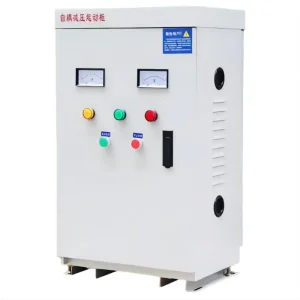
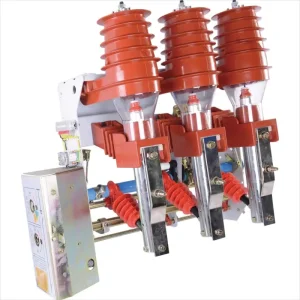
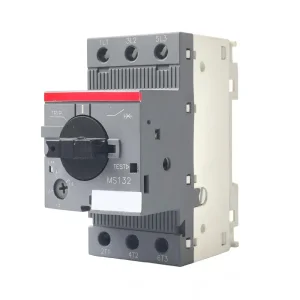
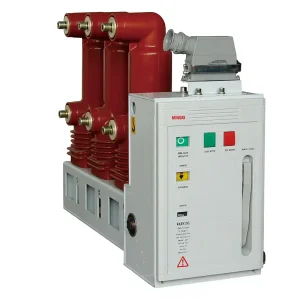
Explore our complementary medium- and low-voltage assemblies, vacuum switchgear modules, and smart circuit interruption devices engineered to round out complete substation architectures.