High-Power Industrial Electrical Ecosystem
Engineered for integration with utility grids, switchgear enclosures, and heavy continuous manufacturing setups requiring uninterruptible power conversion.
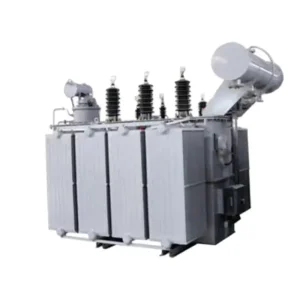
High-Quality China S11 Type 35kV Series Distribution Transformer - Reliable Factory Suppliers for Outdoor Applications Supplier, Factory
Technical Datasheet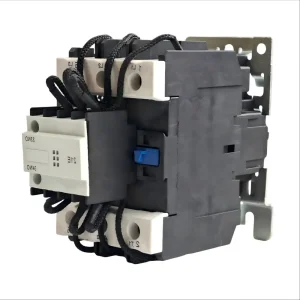
China CJ19 Series Capacitor Switching Contactors 380V 50/60Hz Suppliers, Supplier
Technical Datasheet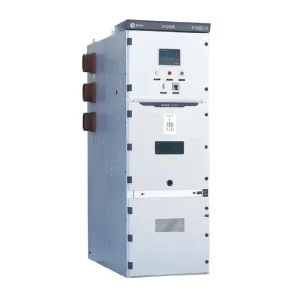
China KYN28-24 Withdrawable Armored Metal-Enclosed Switchgear - Low Current Industrial Grade from China Suppliers & Factory Manufacturers, Manufacturer
Technical Datasheet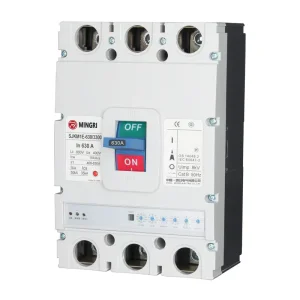
ODM SJKM1E Molded Case Circuit Breaker ECB Suppliers, Supplier
Technical Datasheet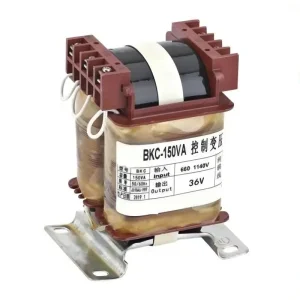
China BKC Series Control Transformers – Compact, Reliable Power Solutions Factory, Companies
Technical Datasheet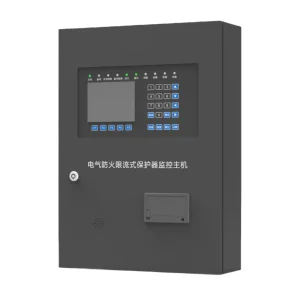
China China Current-limiting Protector System Main Unit - Reliable Suppliers and Factory Solutions for Power Data Management Supplier, Factory
Technical Datasheet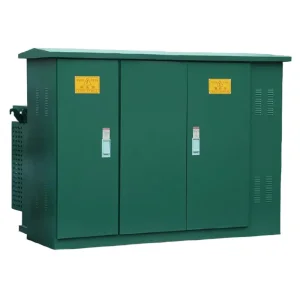
China China ZGS11-12 Combined American Prefabricated Substation - Efficient Power Solution from Reliable Suppliers & Factory Supplier, Factories
Technical Datasheet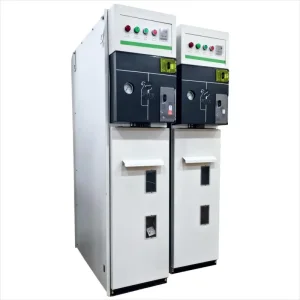
ODM XGN15-24 Medium Voltage Switchgear Sf6 Insulated Ring Main Unit Manufacturers, Companies
Technical DatasheetThe Engineering Foundation: Low-Frequency UPS Topology vs. High-Frequency Alternatives
Why mission-critical heavy industry and harsh electrical networks continue to mandate low-frequency double-conversion architectures built with robust galvanic isolation.
Built-In Galvanic Isolation
Unlike high-frequency (transformerless) systems that rely purely on electronic switching to synthesize the neutral, low-frequency UPS designs utilize a physical, heavy-duty low-frequency copper isolation transformer directly linked to the inverter output.
- Eliminates DC bus component injection into sensitive critical loads.
- Suppresses common-mode electrical noise and high-energy transient spikes.
- Complete phase-to-ground dielectric isolation protecting downstream instruments.
Extreme Inrush Capacity
Industrial loads such as induction motors, variable frequency drives, medical resonance coils, and high-intensity discharge systems generate massive inrush currents up to 500% of nominal rating.
- Inherent magnetic energy absorption prevents transfer-to-bypass trips.
- Robust SCR and silicon control rectifiers withstand high dynamic thermal loads.
- Ideal for inductive, capacitive, and highly un-balanced non-linear loads.
Operational Longevity (15-20 Yrs)
The thermal mass and lower operational frequencies (50Hz/60Hz magnetic circuits) dramatically diminish thermal wear and switching stress on internal components.
- Field-proven MTBF (Mean Time Between Failures) exceeding 250,000 hours.
- Lower sensitivity to ambient dust, thermal variations, and corrosive sulfur traces.
- Simplified modular maintenance with discrete power semiconductors.
Engineering Evaluation: Low Frequency vs. High Frequency UPS
Comprehensive comparative criteria for procurement committees, project managers, and utility distribution engineers.
| Evaluation Parameter | Industrial Low Frequency (Transformer-Based) | Commercial High Frequency (Transformerless) | Engineering Impact & Selection Criteria |
|---|---|---|---|
| Galvanic Isolation | Standard Physical Core Embedded low-frequency transformer on inverter output | None (Requires external auxiliary isolation transformer cabinet) | Prevents complete DC voltage leakage into the critical load during switch short-circuit failures. |
| Overload Tolerance | High: 125% for 10-60 min; 150% for 1-10 min; 300% surge absorption for cycles | Moderate: 110% for 10 min; 125% for 1 min; quick to bypass under surge | Industrial manufacturing sites with heavy pumps and motor starts necessitate LF architectures. |
| Short-Circuit Clearance | High sub-transient current delivery capable of tripping branch breakers directly | Relies instantly on static bypass transfer due to lower silicon fault tolerances | Low-frequency units clear local distribution faults without dropping entire bus voltage. |
| Harsh Environment Resistance | Heavy-duty lamination, Class H insulation, thick conformally-coated PCBs | Dense multi-layer boards, closely spaced traces vulnerable to dust & condensation | Excels in oil & gas refineries, maritime vessels, mining sites, and steel rolling mills. |
| Equipment Footprint & Weight | Heavier footprint due to laminated electrical steel core and copper windings | Lightweight, compact high-density design utilizing IGBT high-freq switches | LF UPS is preferred where mechanical room floor loading is adequate and durability is paramount. |
Global Commercial & Industrial Manufacturing Landscape
Meeting the escalating worldwide demand for resilient electrical power systems under volatile grid conditions and deep renewable integration.
Vertically Integrated Manufacturing
Modern OEM production lines integrate silicon steel lamination cutting, automated copper coil vacuum pressure impregnation (VPI), CNC sheet-metal stamping, and robotic surface coating within single-campus ecosystems. This full chain traceability ensures consistent impedance matching and low core hysteresis losses.
Automated In-Line Burn-In Testing
Reliability stems from rigorous stress-screening. Tier-1 factories implement 72-hour continuous 100% inductive/capacitive heat-run testing, dynamic transient load dump tests, and simulated dead-short clearance under elevated thermal conditions (up to 50°C ambient) before field dispatch.
Custom OEM / ODM Engineering
Global distribution demands bespoke design: from custom input/output voltages (208V, 380V, 400V, 415V, 480V, 600V) and specialized DC bus voltages to seismic-dampened shipboard enclosures, top-cable entry variants, and integrated bypass switchgear cubicles.
Macro-Industry Solutions & Localized Application Scenarios
Engineered resilience across industrial, petrochemical, healthcare, and civil power distribution environments.
Oil, Gas & Petrochemical
Refineries, LNG export terminals, and offshore drilling platforms operate under high concentrations of airborne corrosive compounds and extreme vibration.
Low frequency UPS platforms incorporate Class H VPI varnished transformers, conformal PCB coating, and dual-source redundant AC/DC inputs conforming to IEEE 519 harmonic mitigation criteria.
Healthcare & Precision Diagnostics
Hospitals and imaging centers require non-stop clean sinusoidal power for linear accelerators, MRI suites, and high-slice CT scanners.
The inherent galvanic isolation blocks RF leakage, minimizes phase shift during dynamic current surges, and eliminates zero-ground electrical noise that could degrade imaging clarity.
Transportation & Rail Electrification
Railway signaling, metro interlocking, highway tunneling, and airport tower air control demand uninterrupted switching without a single millisecond dropout.
Low-frequency systems endure wide DC battery input fluctuations, provide cold-start capabilities in sub-zero substations, and maintain robust protection against catenary high-voltage surges.
Microgrids & Remote Industrial Utilities
In developing regions and island microgrids powered by diesel generators and intermittent solar PV, grid frequency swings between 45Hz and 65Hz.
The low-frequency dual-conversion rectifier buffers drastic voltage sags, neutral drift, and phase imbalances without unnecessary fallback to battery discharge.
Global Standards, Certifications & Lifecycle Engineering
Ensuring frictionless procurement, international grid compliance, and swift commissioning across North America, EMEA, and Asia-Pacific.
International Regulatory Compliance
OEM factories engineer systems certified to IEC/EN 62040-1 (General Safety), IEC/EN 62040-2 (EMC Category C2/C3), and IEC/EN 62040-3 (Method of Specifying Performance and Test Requirements), alongside CE, UL 1778, and RoHS mandates.
Comprehensive FAT & SAT Documentation
Every industrial project receives exhaustive Factory Acceptance Testing (FAT) with witness testing options, video-verified full load profiles, thermal infrared imagery documentation, and on-site Site Acceptance Testing (SAT) guidelines for regional installation teams.
Spare-Part Kits & MTTR Reduction
To achieve Mean Time to Repair (MTTR) under 60 minutes, OEM manufacturing partners supply standardized modular drawer sub-assemblies, pre-tested driver boards, SCR modules, and DC bus electrolytic capacitor replacement assemblies with long shelf-life formulations.
Technology Roadmap: The Future of Low Frequency UPS Systems
Strategic convergence of robust magnetic engineering with modern wide bandgap semiconductors and AI-powered edge telematics.
Hybrid SiC & High-Flux Amorphous Cores
Next-generation designs are incorporating Silicon Carbide (SiC) auxiliary switching elements alongside low-loss amorphous metal nanocrystalline magnetic cores. This preserves full galvanic isolation while boosting overall operating efficiency from 94% to over 96.8% in online double-conversion mode.
Predictive AI-Telemetry & Edge Health Sensing
Embedding real-time neural network inference onto 32-bit DSP boards enables continuous monitoring of capacitor equivalent series resistance (ESR), transformer thermal hotspot progression, and contactor cycle count, issuing predictive warnings before catastrophic component degradation occurs.
Bidirectional Grid-Interactive Storage (BESS)
Modern low frequency UPS systems are evolving from passive backup emergency units into active virtual power plants (VPP). Dynamic software frameworks allow bidirectional peak-shaving, frequency regulation, and participation in automated demand-response markets using lithium iron phosphate (LiFePO4) storage chemistry.
Integrated Switchgear, Protection & Power Conversion Equipment
Critical auxiliary components ensuring downstream reliability, line protection, and synchronized transfer across entire industrial facility operations.
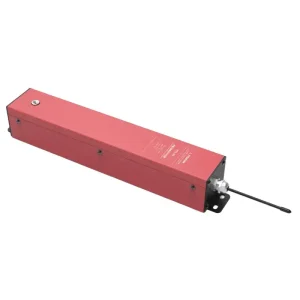
ODM Intelligent wireless automatic gas fire extinguishing device-Perfluorohexanone Series Factory, Companies
Technical Datasheet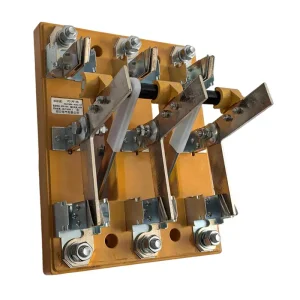
China HS13BX Double Throw Rotary Knife Disconnect Switch - Reliable Circuit Isolation from China Suppliers & Factory Factory, Company
Technical Datasheet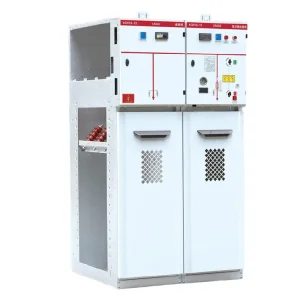
China China XGN15-12 Metal-Clad Fixed-Type Ring Main Unit Switchgear - Leading Suppliers and Factory for 12kV Distribution Solutions Suppliers, Supplier
Technical Datasheet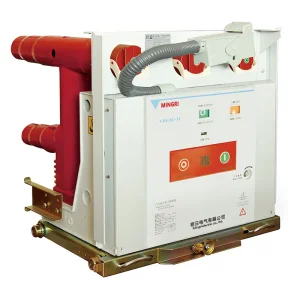
High-Quality China ZN63A(VS1)-12/24 Indoor High Voltage Vacuum Circuit Breaker - Reliable Suppliers & Factory Solutions Manufacturers, Factories
Technical Datasheet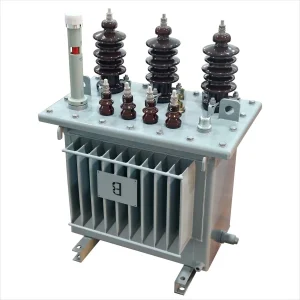
Wholesale S13-M Type 10kV Series Hermetically Sealed Distribution Transformer Supplier, Manufacturer
Technical Datasheet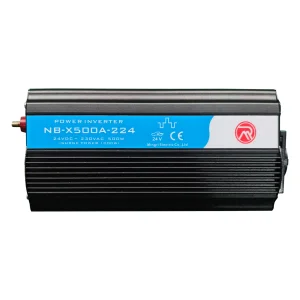
High-Quality 500W DC to AC Power Inverter X500 with EU Socket - China Suppliers & Factory for Efficient Power Conversion Manufacturers, Companies
Technical Datasheet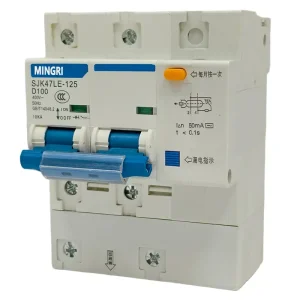
OEM SJK47LE-125 Residual Current Circuit Breaker (RCCB) Manufacturers, Companies
Technical Datasheet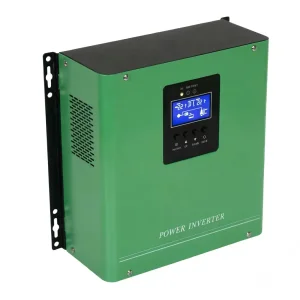
Wholesale MCS Series Hybrid Solar Inverter 300W-1500W Suppliers, Companies
Technical DatasheetFrequently Asked Technical & Sourcing Questions
Essential answers for system integrators, electrical procurement consultants, and facility engineering directors.
Low-frequency UPS systems feature a built-in heavy-duty isolation transformer that mechanically couples output power. This provides physical galvanic isolation, high thermal mass, superior resistance against short-circuit currents, and the ability to handle massive inductive inrush surges (e.g., motor starts, large transformers) that frequently trigger overcurrent shutdown in transformerless high-frequency UPS units.
The output isolation transformer completely isolates the DC bus and utility input from the downstream distribution circuit. In the event of an inverter semiconductor breakdown, dangerous high-voltage DC is prevented from flowing to critical operational machinery. Furthermore, it creates a clean, newly referenced neutral point, attenuating zero-sequence harmonics and ground common-mode interference.
OEM/ODM factories can engineer customized input/output voltage configurations (including split-phase, 208V, 380V, 415V, 480V, and 600V at 50Hz/60Hz), tailored DC bus architectures for specialized battery arrays (lead-acid, gel, or LiFePO4 with BMS communication), ingress enclosures rated from standard IP20 up to IP54 for dusty/outdoor setups, conformal PCB coatings, and integrated manual maintenance bypass switchgear.
Yes. Due to their 12-pulse SCR or IGBT rectifiers and selectable slow-walk-in ramp features, low-frequency systems limit generator frequency hunting and voltage fluctuations. The built-in magnetic buffering allows the UPS to smoothly sync with generator feeds exhibiting broad frequency swings (45Hz–65Hz) without dropping the downstream load or excessively draining storage batteries.
Industrial manufacturers offer 6-pulse or 12-pulse rectifier configurations combined with tuned passive harmonic filters or dynamic Active Power Filters (APF). These topologies reduce Total Harmonic Input Current Distortion (THDi) to under 3-5%, protecting upstream transformers, capacitor banks, and neighboring electrical equipment from overheating and line distortion.
Ensure you supply: single-line diagrams (SLD), total load rating (kVA/kW) with power factor, load type (capacitive, inductive, non-linear motor load ratio), primary input voltage and frequency tolerances, required output voltage, required battery autonomy duration at 100% load, environmental conditions (ambient temperature, humidity, altitude), and required enclosure IP rating.