Primary Motor Starting, Switching & Control Assemblies
Industrial-tier disconnects, pure sine wave power conditioning, electronic MCCBs, and dual-power ATS units engineered for continuous duty across demanding motor branch circuits.
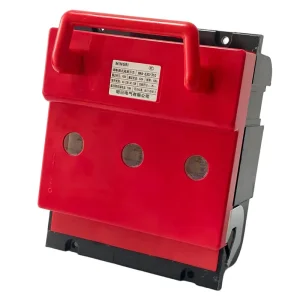
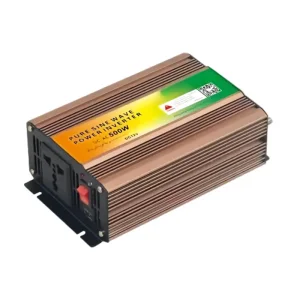
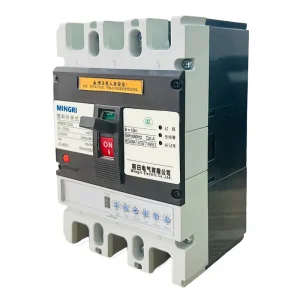
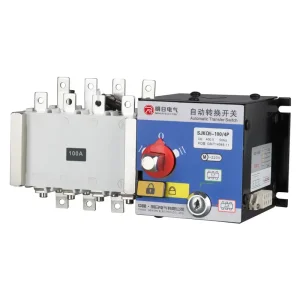
Wholesale SJKQ5 ATS Dual Power Automatic Transfer Switch Supplier, Manufacturers
Technical Specs & RFQ
Executive Engineering Whitepaper: Next-Gen Step-Down Motor Starting
An authoritative analysis of transient inrush dynamics, electro-mechanical thermal mitigation, and customized Original Design Manufacturer (ODM) architectures for large three-phase induction machinery.
The Transient Inrush Challenge
Direct-On-Line (DOL) starting of massive squirrel-cage induction motors introduces severe electrical transients. At the instant of energization, rotor slip is unity ($s = 1$), resulting in locked-rotor impedances that draw between 6 to 8 times the nominal full-load amperage ($I_n$).
This surge induces unacceptable upstream voltage drops ($\Delta V = I_{start} \cdot Z_{network}$), causing protective relay tripping, flickering in adjacent utility substations, and excessive thermal heating in stator windings.
Torsional Shock & Drivetrain Fatigue
Starting torque is proportional to the square of terminal voltage: $T_{start} \propto V_{terminal}^2$. An unmanaged DOL start delivers peak pulsating torque spikes that slam gearboxes, shear mechanical pins, cavitate impellers, and rupture pump fluid columns via destructive water hammer effects.
Step-down starters resolve mechanical shock by capping terminal voltage during acceleration, ensuring linear torque delivery that extends drivetrain life across mission-critical assets.
Global Grid Code Pressures
Regional electric transmission authorities (such as ENTSO-E, FERC, and regional grid operators across Asia and the Middle East) strictly enforce limits on voltage flicker (IEC 61000-3-7 / IEEE 1453). Point of Common Coupling (PCC) voltage sags must rarely exceed 3% to 5%.
Step-down starting solutions engineered by experienced ODM partners guarantee that heavy industrial plants maintain full compliance without incurring hefty utility non-conformance surcharges.
Step-Down Starting Topologies: Comparative Engineering Analysis
A rigorous architectural breakdown comparing autotransformer (Korndorfer), star-delta, solid-state soft starter, and primary reactance systems.
| Starting Topology | Voltage Taps / Control | Starting Current (% DOL) | Starting Torque (% DOL) | Transition Characteristics | Primary Industrial Use-Case |
|---|---|---|---|---|---|
| Autotransformer (Korndorfer) | 50%, 65%, 80% Selectable | 25% – 64% | 25% – 64% | Closed Transition (Zero Dropout) | High-inertia ball mills, heavy centrifugal compressors, mining crushers |
| Star-Delta (Wye-Delta) | Fixed $1/\sqrt{3}$ (58%) | 33% | 33% | Open or Closed Transition (Requires Resistors) | Centrifugal pumps, unloaded air compressors, machine tool spindles |
| Solid-State Soft Starter (SCR) | Stepless Voltage Ramp (0-100%) | Programmable (150% - 450% $I_n$) | Dynamically Controlled Ramp | Continuous Electronic Switching + Bypass | Water treatment booster pumps, overland conveyor belts, marine thrusters |
| Primary Reactor / Resistor | Fixed Dropping Impendance | 65% – 85% | 42% – 72% | Smooth Step Transition | Medium-voltage utility auxiliaries, high-dust cement fans |
The Superiority of Korndorfer Autotransformer Starting
For applications where load torque demands remain moderately high during startup, traditional open-transition Star-Delta starters suffer from severe transition current spikes. When transitioning from star to delta configuration, the motor disconnects for a fraction of a cycle; out-of-phase re-energization can draw instantaneous currents matching or exceeding direct locked-rotor levels.
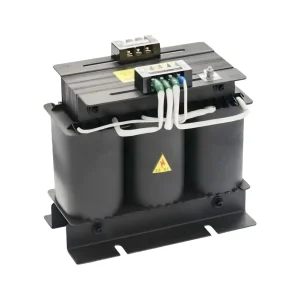
Our ODM Autotransformer panels leverage the closed-transition Korndorfer method. During acceleration, the neutral contactor opens first while the autotransformer windings momentarily act as series inductors, maintaining continuous excitation and preventing mechanical shockwaves throughout the drivetrain.
Intelligent Hybrid Solid-State Bypass Starters
While variable frequency drives (VFDs) provide exceptional speed regulation, their elevated thermal losses (2%–3% continuous power consumption), harmonic pollution, and capital expenditures make them inefficient solely for motor acceleration duty.
Our ODM hybrid soft starters deploy an intelligent back-to-back Silicon Controlled Rectifier (SCR) phase-angle firing matrix for continuous, millisecond-calibrated ramp-up. Once synchronous speed is achieved, an integrated vacuum or mechanical bypass contactor engages seamlessly, eliminating heat buildup, eliminating harmonic generation, and dropping standby operational power consumption to practically zero.
ODM Turnkey Customization: Engineering From Concept to Commissioning
Empowering global original equipment manufacturers, EPC contractors, and system integrators with fully bespoke motor control centers tailored to specific environmental, mechanical, and operational parameters.
Bespoke Enclosure Ergonomics
We tailor panel structures from compact Form 2b compartments up to heavy-duty Form 4b withdrawable multi-tier switchboards. Available in standard 2.0mm galvanized steel or marine-grade 316 stainless steel.
- Environmental sealing: IP31, IP54, IP65, NEMA 3R, 4X, and 12
- Seismic qualification certified up to Zone 4 per IEEE 693
- Internal arc classification (IAC AFLR) protection partitions
Custom Busbar & Magnetic Sizing
Every motor profile possesses unique thermal damage curves ($I^2t$). Our electrical engineering team calculates custom autotransformer core laminations (low-loss grain-oriented silicon steel) to avoid core saturation.
- 99.99% ETP electrolytic tin-plated or silver-plated copper bus
- Short-circuit withstand up to 100kA for 1s / 3s durations
- High-grade Class H / Class C vacuum pressure impregnated insulation
Digital Communications & SCADA
Seamlessly integrate edge telemetry into enterprise Distributed Control Systems (DCS). Panels can be built with modular programmable logic controllers (PLCs) and micro-relays from preferred global brands.
- Native protocols: Modbus-RTU/TCP, Profinet, EtherNet/IP, IEC 61850
- Real-time current signature monitoring for stator fault prevention
- Integrated 7-inch color touch HMI displays with event recording
Macro Industry Deployments & Mission-Critical Applications
Where direct starting is prohibited by physics, safety codes, or grid constraints, our customized step-down systems provide rock-solid operational continuity.
Municipal Water & Desalination Megaprojects
High-capacity intake and high-pressure reverse osmosis (SWRO) booster pumps represent massive inductive motor loads (often rated 250 kW to 5,000 kW). Starting these units across weak regional grids risks widespread tripping.
Our Korndorfer autotransformer panels and heavy solid-state units provide gradual torque ramp-up that completely prevents hydrodynamic shockwaves (water hammer) in long pipeline manifolds, safeguarding million-dollar membrane modules and check valves.
Heavy Mining & Bulk Materials Handling
Ball mills, SAG mills, gyratory crushers, and kilometer-long overland conveyors demand high breakaway torque but cannot withstand line voltage dips that plunge underground mines into darkness.
By tailoring custom 65% and 80% autotransformer tapping points with dynamic magnetic flux stabilization, our ODM starters overcome extreme static friction without exceeding mine substation transformer kVA limits or violating thermal trip parameters.
Petrochemical & Refinery Compressors
Explosive atmospheres and hydrocarbon processing require non-sparking, ultra-reliable starting assemblies for explosive gas transfer fans and hydrogen booster compressors. Starting cycles must strictly avoid motor thermal burnout under Class 1 Div 2 / Zone 2 environments.
Our solutions incorporate isolated pressurized cubicles, purge gas systems, explosion-proof disconnects, and certified Type 2 coordinated branch circuit protection to ensure plant compliance with API 541 / API 547 standards.
District Cooling & Industrial HVAC Plants
Centrifugal chillers installed in urban high-rises and data center campuses must comply with severe acoustic and electrical noise limitations. Rapid DOL current surges trip sensitive data server power supply filters.
Our compact Star-Delta and Soft-Start panels fit restricted mechanical basement rooms, providing whisper-quiet acceleration, ultra-low electromagnetic interference (EMI per CISPR 11), and seamless BACnet/IP integration.
Compliance Matrix & E-E-A-T Quality Governance
Demonstrated manufacturing authority backed by accredited third-party type test reports, certified ISO management workflows, and Type 2 coordination validation.
IEC 60947-4-1 & -4-2
Low-voltage switchgear and controlgear certification covering contactors, motor-starters, and solid-state controllers. Verified dielectric and creepage safety.
UL 508A / CSA C22.2
North American industrial control panel compliance, including complete short circuit current rating (SCCR) calculation and recognized component selection.
Type 2 Coordination
Under short-circuit fault conditions per IEC 60947-4-1, starter contactors and overload relays suffer no structural damage and remain safe for immediate service.
100% FAT Protocol
Every fabricated ODM panel undergoes routine factory acceptance testing: point-to-point insulation resistance, high-pot test, thermal imaging run, and simulated sequence logic.
Next-Gen Roadmap: AI Edge Diagnostics & Silicon Carbide (SiC)
The industrial motor control sector is transitioning from electromechanical assemblies to intelligent, self-optimizing cyber-physical power nodes.
Motor Current Signature Analysis (MCSA)
Our upcoming ODM starter range embeds high-speed micro-DSP modules that sample starting current waveforms at 20 kHz. By analyzing stator harmonic sidebands during the initial 3 seconds of rotation, the system predicts cracked rotor bars, eccentric air gaps, and bearing deterioration months before catastrophe.
Wide-Bandgap (SiC) Soft Starters
Traditional silicon thyristors generate substantial forward conduction losses, requiring bulky heat sinks and continuous forced cooling. We are pioneering Silicon Carbide (SiC) MOSFET architectures that cut switching losses by up to 70%, allowing dramatically reduced enclosure footprints and operation up to 65°C ambient without derating.
Autonomous Dynamic Tuning (Auto-Ramp)
Manual potentiometer calibration on job sites is prone to operator error. Future ODM control blocks utilize closed-loop load inertia sensing to automatically adjust initial voltage pedestal ($V_{pedestal}$) and ramp-up curve length ($t_{ramp}$) in real-time, matching dynamic load conditions across fluctuating processes.
Frequently Asked Questions (Technical & Procurement FAQ)
In-depth responses covering starting torque trade-offs, transition transients, altitude derating, and ODM production timelines.
Upstream/Downstream Distribution, Surge Protection & Switchgear
Essential components ensuring system coordination, transient overvoltage suppression, and medium/low voltage isolation across industrial installations.
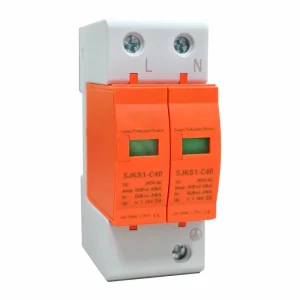
OEM Surge Protection Device SPD SJKS1-C Series 3/4P 25kA - Reliable Overvoltage Safety
Technical Specs & RFQ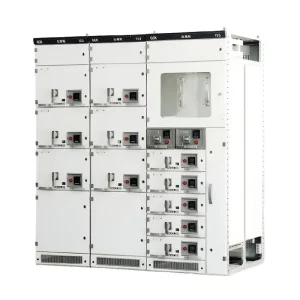
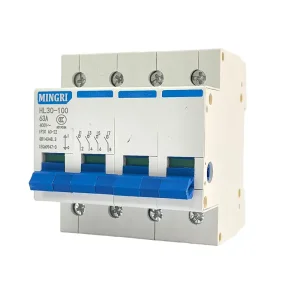
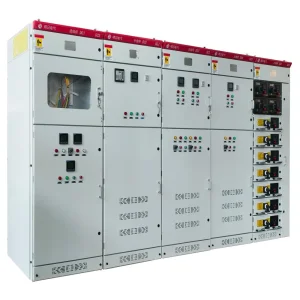
High-Quality GCS Low Voltage Withdrawable Switchgear Panel for Power Distribution
Technical Specs & RFQ
Initiate Your Custom ODM Motor Starter Specification
Connect directly with our senior electrical application engineering group. Send your single-line diagram (SLD), motor horsepower/kW ratings, supply voltage, and target acceleration profiles for an immediate technical evaluation and transparent commercial quote.
Request ODM Engineering Consultation