High-Voltage Distribution & Circuit Control
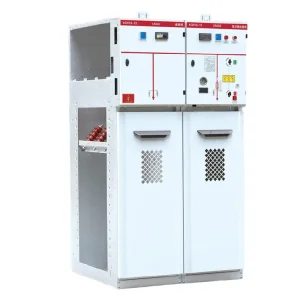
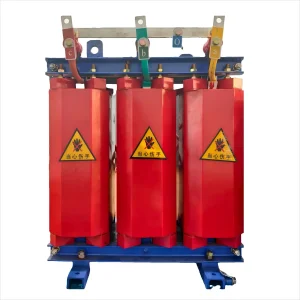
Fully compliant low-to-medium voltage switchgear, vacuum contactors, and integrated transformer units certified under IEC/EN 60947 and GB standards.
Next-Generation Self-Resetting Voltage Protection Architecture
Analyzing high-speed transient response, micro-controller algorithmic trip calibration, and automated recovery kinetics in terminal low-voltage distribution grids.
Transient Surge Clamping
Integrated metal-oxide varistors (MOV) coupled with dynamic micro-relay contact networks ensure immediate interruption of destructive lightning surges, inductive kickbacks, and load-shedding swells before delicate terminal appliances suffer dielectric breakdown.
Intelligent Auto-Reset Logic
Upon utility grid normalization, an internal timer prevents immediate reconnect loops caused by line oscillations. The device samples stability over a programmable 30s to 300s window before initiating seamless mechanical reclosure.
Severe Neutral Loss Defense
Zero-crossing detection algorithms continuously monitor phase-to-neutral offsets. In three-phase or split-phase topologies, accidental floating neutral faults trigger immediate tripping, defending against sustained catastrophic overvoltage.
Comprehensive Electrical & Mechanical Parametrics
Engineered for global switchboard assemblers, terminal consumer units, and OEM panel builders requiring stringent adherence to international low-voltage safety mandates.
| Parameter Metric | Residential Series (Single Phase) | Commercial Series (Heavy Duty) | Industrial Grade (Three-Phase 4-Wire) |
|---|---|---|---|
| Rated Voltage (Un) | AC 220V / 230V / 240V (50/60Hz) | AC 110V – 277V Wide Range | 3-Phase AC 380V / 400V / 415V |
| Current Rating Range (In) | 16A, 25A, 32A, 40A, 63A | 63A, 80A, 100A | 63A, 100A, 125A |
| Over-Voltage Cutoff (Uvo) | 275V ± 5V (Adjustable: 230V–300V) | 280V ± 5V (Adjustable: 220V–300V) | Phase-Neutral: 280V / Phase-Phase: 480V |
| Under-Voltage Cutoff (Uvu) | 165V ± 5V (Adjustable: 140V–210V) | 160V ± 5V (Adjustable: 120V–210V) | Phase-Neutral: 170V / Phase-Phase: 300V |
| Tripping Response Delay | < 0.1s (Overvoltage) / < 0.5s (Undervoltage) | Fast Reaction 0.05s to 0.3s | Sub-cycle cutoff (< 0.08s) |
| Auto-Reclose Delay Window | Default 30s – 60s (Customizable) | User Selectable: 5s – 600s | Intelligent Adaptive Sync (30s – 300s) |
| Dielectric Withstand Test | 2.0 kV AC at 50Hz for 1 min | 2.5 kV AC at 50Hz for 1 min | 3.0 kV AC at 50Hz for 1 min |
| Ingress / Enclosure Protection | IP20 (Modular DIN-Rail 35mm) | IP20 Enclosure / IP40 Terminal Covers | IP20 (Flame Retardant PA66 UL94-V0) |
Yueqing Manufacturing Depth & Mingri ODM Ecosystem
Harnessing the world's dense low-voltage component cluster in Yueqing, Zhejiang, to deliver uncompromised bill-of-materials traceability, agility, and cost-efficiency.
Hyper-Localized Vertical Integration
From precision silver-alloy contact sintering to flame-retardant molding and multi-layer PCBA wave soldering, every step occurs within a 5-kilometer industrial corridor. This minimizes lead times from weeks to days while insulating downstream procurement from maritime disruptions.
Automated Quality Assurance
Every batch of Mingri voltage protectors undergoes 100% automated automated optical inspection (AOI), automated calibration cycling, and high-temperature accelerated burn-in screening. This guarantees an initial failure rate below 150 PPM across multi-megawatt project deliveries.
Agile ODM Customization
Tailored firmware thresholds, private laser etching, dual-language graphical LCD interfaces, custom DIN footprints, and specialized current coils can be prototyped in under 10 business days. Our engineers work hand-in-hand with overseas brand owners to meet regional electrical codes.
Mission-Critical Use Cases Across Global Power Environments
Addressing erratic grid dynamics, renewable reverse power flows, and infrastructure sensitivities in urban and harsh environments worldwide.
Residential Consumer Units
Mounting directly into standard consumer distribution boards, preserving domestic refrigeration, smart home processors, and inverter HVAC compressors against recurring brownouts and distribution transformer taps.
Solar & ESS Combiner Boxes
Preventing bidirectional voltage creep caused by inverter cut-offs and intermittent grid disconnection in rooftop solar and commercial battery energy storage system installations.
EV Charging Terminals
Isolating high-current Level 2 and Level 3 AC chargers from inductive spikes and phase imbalances caused by rapid switching across municipal commercial vehicle feeder stations.
Telecom Base Stations
Delivering unattended autonomous operational protection for remote cellular transceivers operating on volatile rural grids or hybridized diesel-generator backup systems.
Macro Trends Transforming Self-Resetting Protective Tech
Transitioning from passive electro-mechanical relays to fully digitized, cloud-connected terminal energy management instruments.
IoT Protocol Convergence
Modern self-resetting protectors are integrating Tuya Wi-Fi, RS485 Modbus-RTU, and Zigbee 3.0 chipsets. Facilities managers can now monitor real-time RMS voltage, power factor, and cumulative energy consumption while tuning trip thresholds remotely.
Wide-Bandgap Solid-State Switching
While electromagnetic latching relays remain standard for heavy current loads, next-gen devices are adopting hybrid silicon-carbide (SiC) and gallium-nitride (GaN) bypass circuits, achieving sub-millisecond interruption without mechanical contact arcing.
Harmonic Disturbance Rejection
As decentralized non-linear loads (EV chargers, LED drivers, frequency inverters) inject total harmonic distortion (THD) into grid distribution, DSP chips now filter false transients, preventing nuisance tripping during non-damaging peak offsets.
Frequently Asked Questions for Global Buyers
Essential guidance on device selection, customization capabilities, and compliance standards for electrical distributors, EPC contractors, and OEM engineers.
What is the mechanical advantage of a self-resetting protector over an SPDs?
Surge Protection Devices (SPDs) shunt short microsecond transient overvoltages (e.g., lightning strikes) to ground via varistors. In contrast, self-resetting voltage protectors disconnect the circuit during sustained, long-duration power-frequency overvoltage or undervoltage (e.g., broken neutral, load-drop swell) and automatically restore power once the grid stabilizes.
Can voltage tripping thresholds and reset delays be customized in an ODM project?
Yes. Mingri Electric accommodates customized firmware settings. We can supply devices with fixed factory calibrations tailored to your local grid norms (e.g., UK 230V, Middle East 240V, or Latin America 110V/127V) or configurable models with external pushbuttons and LCD parameter setup.
What testing and certifications do Mingri low-voltage protectors carry?
Our manufacturing facilities are ISO 9001, ISO 14001, and ISO 45001 certified. Our modular protective devices are engineered and type-tested against IEC/EN 60947-2, IEC 60898, and CE LVD/EMC compliance, with full CB test certificates and third-party laboratory verification reports available upon request.
How does Mingri handle private labeling, branding, and customized packaging?
We provide full-spectrum OEM/ODM support, including precision laser engraving of client logos and circuit schematics directly onto the fireproof housing, customized polybags, retail color packaging boxes, barcodes, and master cartons suited for global distributor delivery.
What is the typical production lead time for full container orders?
Standard lead times for high-volume orders (10,000 to 50,000 units) are typically 15 to 25 calendar days, supported by our Yueqing industrial component cluster. Rapid prototyping for custom molded housings or unique PCB layouts is executed within 7 to 12 working days.
How does the device perform under severe ambient temperature conditions?
Using UL94-V0 non-flammable casing compounds and industrial-grade silicon ICs, our self-resetting protectors operate reliably within ambient temperature envelopes of -25°C to +70°C and relative humidity levels up to 95%, making them suited for demanding tropical and desert environments.
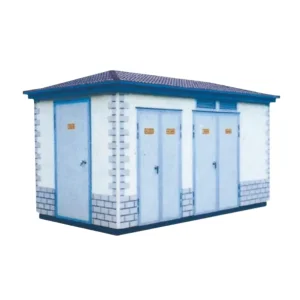
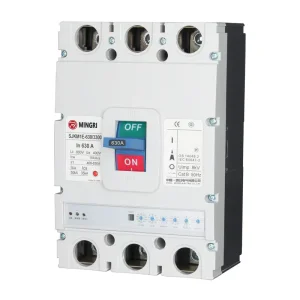
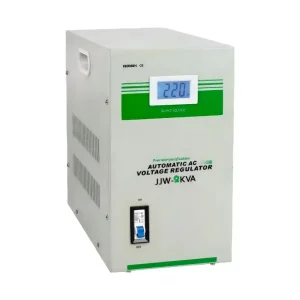
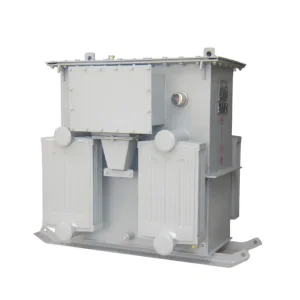
Secondary Power Distribution, Protection & Control
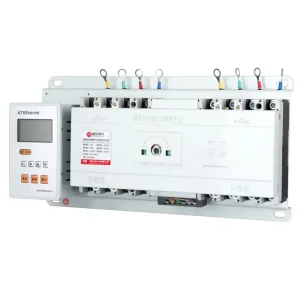
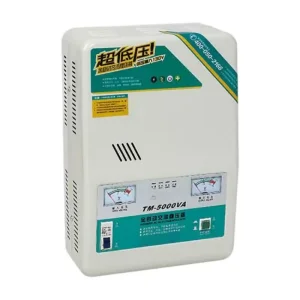
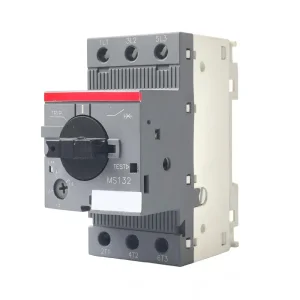
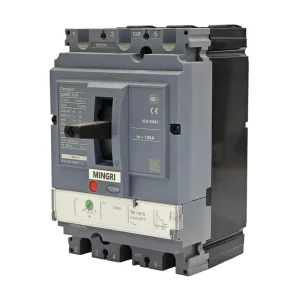
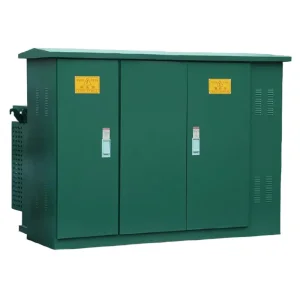
Industrial MCCBs, modular European/American substations, high-precision voltage regulators, and motor protection switches built for continuous heavy-duty service.