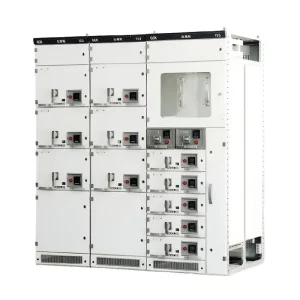
Featured Protective Assemblies & Complementary Switchgear
Industrial-grade power distribution hardware and transient suppression architectures configured for seamless synchronization with primary substation arresters and feeder lines.
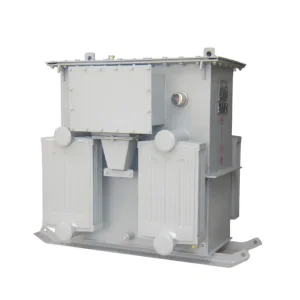
OEM KS9 Type 6-10kV Series Mining Oil-immerse Power Transformer Suppliers, Manufacturer
View Technical Specs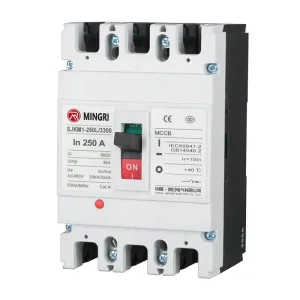
China China SJKM1 Moulded Case Circuit Breaker (MCCB) Factory | Reliable Power Protection from Leading Suppliers Manufacturer, Company
View Technical Specs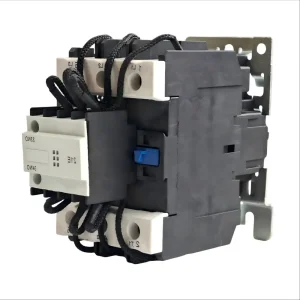
Wholesale CJ19 Series Capacitor Switching Contactor 380V 50/60Hz - Reliable China Suppliers & Factory for Power Factor Correction Supplier, Factory
View Technical Specs
China CJ19 Series Capacitor Switching Contactors 380V 50/60Hz Suppliers, Supplier
View Technical Specs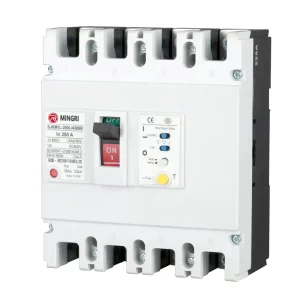
China SJKM1L Earth Leakage Circuit Breaker ELCB for Industrial Safety Factory, Companies
View Technical Specs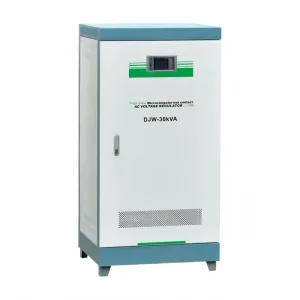
ODM DJW / SJW Series Microcomputer Non Contact AC Voltage Regulator Suppliers, Factories
View Technical Specs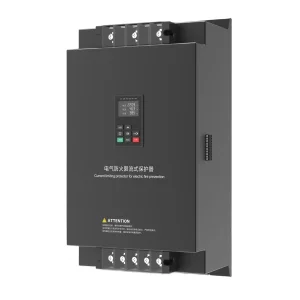
ODM 250A three phase electrical fire prevention current limiting protector Manufacturers, Factories
View Technical Specs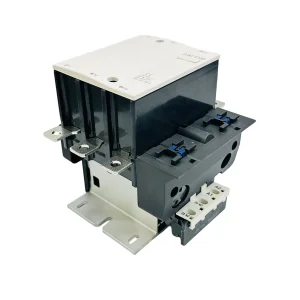
OEM CJX2 (LC1-D) Series AC Contactor 50/60Hz Suppliers, Manufacturers
View Technical SpecsPhysics of Surge Suppression: Advanced Metal-Oxide Varistor (MOV) Chemistry
High-performance surge arresters rely on microscopic electro-chemical grain boundaries to dissipate atmospheric lightning strokes and switching surges within microseconds.
In modern electrical transmission and distribution networks, the lightning arrester (specifically the metal-oxide gapless surge arrester, or MOSA) represents the single most critical device safeguarding capital-intensive assets such as power transformers, switchgear, and gas-insulated lines against destructive overvoltages. Unlike older silicon carbide (SiC) topologies that relied upon internal spark gaps with inconsistent sparkover voltages, contemporary gapless Zinc Oxide (ZnO) arresters utilize extreme non-linear current-voltage (I-V) characteristics governed by quantum mechanical conduction across bismuth-doped grain boundaries.
Under steady-state continuous operating voltage (Uc or MCOV), the metal-oxide blocks conduct only microamperes of capacitive leakage current. When high-voltage transient surges enter the terminal—whether precipitated by direct cloud-to-ground lightning discharge (1.2/50 μs voltage wave; 8/20 μs current wave) or internal power system phenomena such as inductive load switching or line dropped surges—the dynamic resistance collapses instantaneously toward near-zero. This action clamps the voltage to an absolute residual level (Up), diverting kiloamperes of impulse current safely to the subterranean grounding grid before returning dynamically to a non-conductive state without creating power-frequency follow current.
| Evaluation Parameter | Polymeric (Silicone HTV) Gapless MOSA | Porcelain-Housed Traditional Arrester | Solid-Insulated Compact Substation Type |
|---|---|---|---|
| Insulation & Housing Material | High-Temperature Vulcanized (HTV) Liquid Silicone | Glazed High-Strength Wet-Process Electrical Porcelain | Epoxy Resin Molded / Direct Solid Bus Shielded |
| Seismic & Mechanical Performance | Extreme vibration & cantilever flex resistance | Brittle; prone to microfractures and seismic snap | Ultra-rigid, compact switchgear modular footprint |
| Explosion-Proof & Safety | Tear-resistant pressure relief, non-shattering debris | High shrapnel risk under internal flashover overload | Flame retardant, integrated into internal arc chambers |
| Pollution & Creepage Index | Superior hydrophobic transfer (Class IV / Very Heavy) | Requires cyclic washing in coastal/industrial zones | Fully encapsulated from atmospheric pollutants |
| Applicable Utility Domains | Overhead MV/HV lines, wind turbines, mobile substations | Legacy transmission substations, fixed base stations | Compact RMUs, mining transformers, metro GIS systems |
The Strategic Edge: Sourcing ODM Surge Arresters from Yueqing, China
Combining vertically integrated metal-oxide synthesis, high-voltage testing laboratories, and complete switchgear compatibility under one localized manufacturing capital.
Vertically Integrated MOV Disc Sintering
Unlike downstream assemblers who outsource the core functional element, advanced Yueqing factories control electronic-grade ZnO micro-doping with Bi2O3, Sb2O3, Co2O3, and MnO2. In-house spray drying kilns, multi-axis isostatic presses, and automated tunnel furnaces assure high-density microstructures with uniform thermal conductivity.
Seamless Cross-Equipment Validation
Because Yueqing is the global hub for Ring Main Units (RMUs), vacuum circuit breakers, and oil-immersed transformers, our surge arresters are physically and electrically co-engineered to integrate with standard C-type separable connectors, DIN bushings, and low-voltage MCCBs without dimensional mismatch.
CNAS-Accredited Routine & Type Testing
Factories deploy automated multi-stage test benches: 100% residual voltage verification, partial discharge measurements (< 5 pC at 1.05 Uc), helium mass-spectrometer leak checks for gas-sealed interfaces, and 2-millisecond rectangular current impulse screening to guarantee zero early mortality.
Macro-Industry Solutions: Engineered for Critical Power Networks
Protecting continuous utility corridors, volatile offshore generation, and deep underground extraction systems from irreversible dielectric breakdown.
HV/MV Utility Substations
Station-class gapless arresters engineered with heavy-duty energy discharge classes (Class 2 to Class 4 per IEC 60099-4) defending core power transformers and KYN28/KYN61 switchgear bays against switching overvoltages and lightning strikes.
Photovoltaic & BESS Hubs
High-voltage DC arresters optimized for up to 1500V DC busbars and transformer step-up skids. Formulated to neutralize high-frequency inverter harmonics, bidirectional surges, and high continuous DC thermal biases without premature degradation.
Electrified High-Speed Rail
Specially braced trackside and locomotive roof surge arresters engineered to withstand relentless mechanical oscillations, aerodynamic drag up to 350 km/h, and high transient switching spikes from frequent pantograph contact bounce.
Underground Mining Complexes
Flame-resistant, explosion-isolated surge arresters deployed alongside KS9 mining oil-immersed transformers and compact mining substations, neutralizing volatile reflective wave surges occurring in lengthy confined trailing cables.
Localized Application Scenarios: Defending Grids Across Harsh Terrains
Atmospheric dielectric stress varies dramatically by geography. Discover how our ODM manufacturing addresses high salt fog, extreme altitudes, and sub-zero freeze cycles.
Coastal Marine & Salt-Spray Environments
Airborne chlorides deposit conductive salinity films across insulation sheds, generating partial dry-band arcing and flashover. We employ direct-molded HTV silicone rubber formulations with high trihydrate alumina (ATH) mineral filler, providing continuous hydrophobicity transfer and extending specific creepage distances beyond 31 mm/kV (Class IV Extra Heavy Pollution per IEC 60815).
High-Altitude Plateau Installations (>3000m)
Rarefied atmospheric conditions reduce air dielectric withstand voltages, increasing the risk of external corona discharge and flashover before MOV activation. Our ODM high-altitude arresters integrate enlarged shed profiles, aerodynamic aerodynamic grading rings, and extended strike clearances engineered for installations reaching 5,000 meters above sea level.
Sub-Zero Thermal Shock & Polar Regions
Rapid thermal swings between sunny operating loads and -40°C blizzard environments trigger differential contraction between metal terminal flanges, epoxy-fiberglass core tubes, and silicone housings. Our zero-gap vulcanization process eliminates internal air pockets, preventing condensation-driven internal tracking and catastrophic flashover.
Global Procurement Criteria: Verifying Type-Tests & Evaluating TCO
Strategic frameworks for substation design engineers, turnkey EPCs, and electrical asset managers evaluating Chinese ODM manufacturing partners.
Type-Test Dossier Validation
Always insist on third-party test verification from globally recognized institutions (such as KEMA, CESI, or accredited CNAS labs). Key reports must include short-circuit current withstand tests (up to 40kA/63kA for switchgear arresters), long-duration current impulse withstand, accelerated aging tests (1,000h salt spray & UV exposure), and seal leak validation.
Total Cost of Ownership (TCO) vs. Initial CapEx
An arresters purchase price is negligible compared to the capital replacement of a 50 MVA power transformer damaged by residual overvoltages. Evaluating TCO demands examining the arresters thermal reserve capacity, leakage current resistance degradation over 25+ years, and integrated condition monitoring accessories like surge counters and milliamp meters.
Flexible OEM/ODM Customization
Qualified ODM factories provide custom line terminal hardware (NEMA pad, stud, clamp), isolated disconnector mechanisms (thermal-explosive drop-out for rapid overhead fault clearance), specialized mounting brackets (insulating brackets for surge counters), and modular packing configurations that eliminate transport damage during long ocean transits.
Frequently Asked Questions (FAQ) for Grid Engineers & Purchasers
Detailed technical answers addressing line discharge calculations, polymer vs porcelain selection, aging indicators, and international logistics.
The Continuous Operating Voltage (Uc or MCOV) must exceed the maximum power-frequency phase-to-ground system voltage across all regular grid states, including temporary overvoltages (TOV) triggered by ground faults. For effectively grounded neutral systems (earth fault factor ≤ 1.4), Uc is typically calculated as: Uc ≥ 1.05 × (System Nominal Line Voltage / √3). However, in isolated neutral or resonant grounded networks where a single-phase-to-ground fault can sustain line-to-line voltage across healthy phases for hours, the arrester Uc must equal or exceed the full maximum system line-to-line voltage to prevent thermal overstress and destructive varistor puncture.
Polymer-housed arresters constructed with High-Temperature Vulcanized (HTV) silicone rubber eliminate the two primary failure risks of porcelain: explosive fragmentation and moisture ingress. Under severe internal short-circuit faults exceeding the design rating, silicone housings tear along specialized pressure-relief vents without propelling razor-sharp ceramic shrapnel into adjacent transformer bushings. Furthermore, silicone exhibits superior hydrophobicity transfer—migrating low-molecular-weight siloxanes to the surface of accumulated airborne pollution—preventing continuous conductive wet films, minimizing dry-band tracking, and rendering regular manual insulator washing obsolete.
An arrester disconnector is a pyrotechnic or thermal-mechanical device connected in series between the bottom arrester ground terminal and the station ground bus. When an arrester reaches end-of-life through varistor thermal runaway or severe mechanical fault, power-frequency fault current surges through the unit. The disconnector triggers within cycles, cleanly separating the grounded lead while allowing the overhead line to remain energized without sustaining a permanent dead ground fault. It also offers a vivid physical indicator for utility maintenance line crews patrolling overhead distribution feeders.
Because a healthy gapless MOSA conducts predominately capacitive leakage current (usually 0.5 to 2 mA), asset engineers focus on measuring the resistive leakage current component (Ir), which indicates varistor microstructural aging. Measurements are performed online using specialized harmonic analysis instruments that extract the 3rd harmonic resistive current component (compensated for voltage harmonic distortion). A significant escalation in resistive current (e.g., doubling from baseline commissioning readings) signals impending thermal collapse, prompting planned preventative replacement before an unscheduled trip occurs.
Each batch order is accompanied by a certified Quality Inspection Dossier comprising: 100% factory routine test certificates (measuring residual voltage at nominal discharge current, reference voltage Uref at 1mA DC, and partial discharge < 5pC), raw material material test reports (MTRs) for structural flanges, third-party type test reports (IEC 60099-4 / IEEE C62.11 issued by CNAS/ILAC-accredited laboratories), ISO 9001/14001/45001 compliance declarations, and customized engineering drawings detailing creeping distances, terminal threadings, and mounting centerlines.
Switchgear Assemblies, Transformers & Critical Protection Gear
Complete high-reliability medium and low voltage balance-of-plant distribution equipment manufactured in accordance with strict international safety protocols.
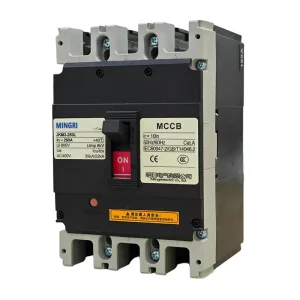
ODM China SJKM3 MCCB Moulded Case Circuit Breaker Supplier - Factory-Direct Overload Protection & Circuit Safety Supplier, Factories
View Technical Specs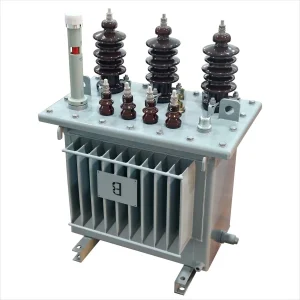
Wholesale S13-M 10kV Hermetically Sealed Distribution Transformer - High Efficiency from China Suppliers and Factory Manufacturers, Company
View Technical Specs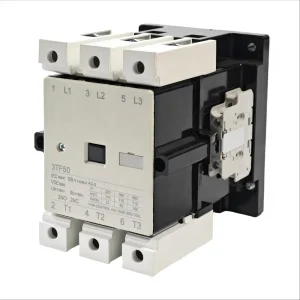
ODM CJX1 (3TF) Series AC Contactors 9-400A 690V Suppliers, Company
View Technical Specs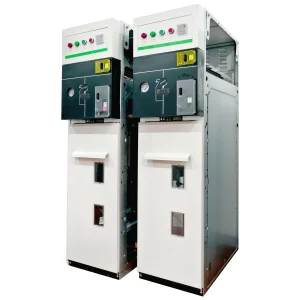
High-Quality XGN15-24 Medium Voltage Switchgear SF6 Insulated Ring Main Unit - China Suppliers Factory for Reliable Power Distribution Manufacturers, Factories
View Technical Specs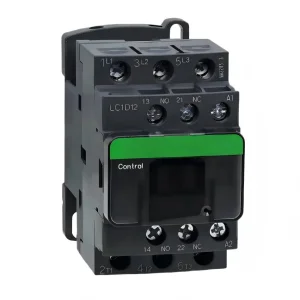
China China LC1D Series AC Contactor Suppliers - 50/60Hz, 660V, 300A Factory Direct for Industrial Applications Factories, Factory
View Technical Specs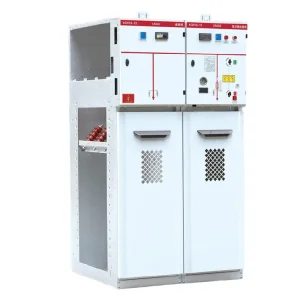
ODM China XGN15-12 Metal-Clad Fixed-Type RMU Switchgear Suppliers | Factory-Direct Solid Insulated Solutions Supplier, Manufacturers
View Technical Specs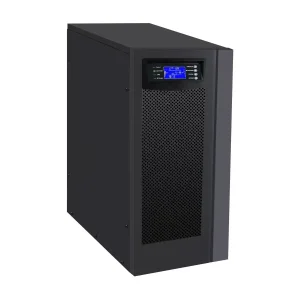
High-Quality MCL33 Series Industrial Frequency Online UPS Technical Manufacturer, Factories
View Technical Specs