Flagship Switchgear & Circuit Protection Systems
Engineered for extreme duty cycles, grid fault interruption, and integrated medium-to-low voltage industrial distribution networks.
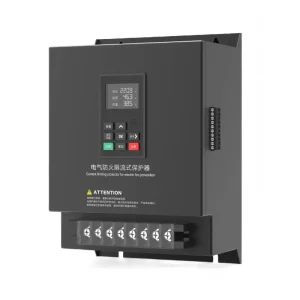
ODM 80A Three-Phase Intelligent Electrical Fire Current-Limiting Protector from China Suppliers & Factory for Enhanced Safety Factory, Companies
Inspect Technical Data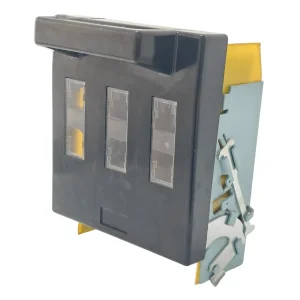
OEM HR5 Fused Disconnect Switch with Visible Contacts Supplier, Factory
Inspect Technical Data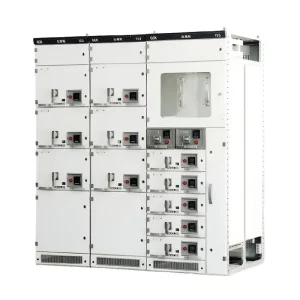
China China GCK Low Voltage Withdrawable Switchgear for Industrial Plants - Reliable Suppliers & Factory Solutions Supplier, Factory
Inspect Technical Data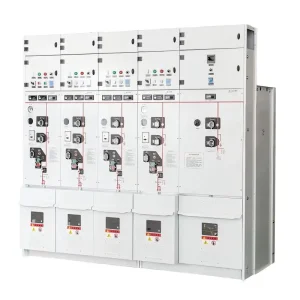
China HBXGN-12(F) Environment-friendly gas insulated metal enclosed switchgear Factories, Companies
Inspect Technical Data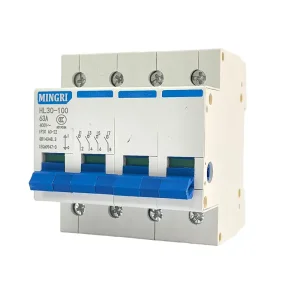
High-Quality High-Performance HL30-100 Miniature Disconnect Switch 1-4P 6-100A Suppliers, Supplier
Inspect Technical Data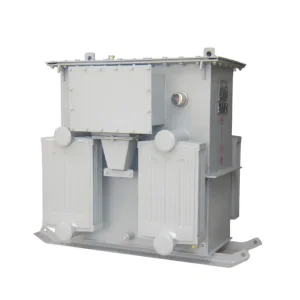
OEM KS9 Type 6-10kV Series Mining Oil-immerse Power Transformer Suppliers, Manufacturer
Inspect Technical Data
ODM HR5 Fused Disconnect Switch - Reliable Circuit Protection from China Suppliers & Factory for 100-630A Loads Manufacturer, Factory
Inspect Technical Data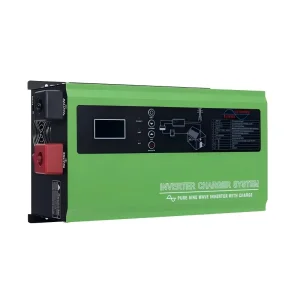
High-Quality MCS Series Hybrid Solar Inverter 1000W-12000W Factories, Factory
Inspect Technical DataState of Global Industrial Power Distribution & The SJW Series Standard
Evaluating the convergence of intelligent digital trip architectures, microgrid resilience, and high-breaking capacity switchgear infrastructure.
Microprocessor-Driven Protection
Modern industrial facilities can no longer tolerate the thermal drift and imprecise curves of conventional bi-metal tripping devices. The SJW / SJKW series incorporates digital signal processing (DSP) trip controllers featuring dual-core ARM architectures. This enables real-time True RMS current sampling up to the 31st harmonic, zero-crossing arc mitigation, and precise selective grading (ZSI) across sub-cycle time domains.
Dynamic Short-Circuit Interruption
Designed to withstand extreme electromechanical stresses, the contact systems utilize composite silver-tungsten-carbide (AgWC) sintering technology. When high-magnitude prospective faults occur, the electrodynamic repulsion mechanism triggers immediate contact separation prior to peak short-circuit current, venting ionized gases safely through deionizing splitter chutes equipped with multi-stage metallic flash grids.
SCADA & Edge Communication
Seamlessly bridging physical low-voltage switchboards with Industry 4.0 automation platforms, every SJW device features native RS-485 Modbus-RTU, Profibus-DP, and optional IEC 61850 protocol support. Plant supervisors obtain granular telemetry on active power, power factor, harmonic distortion, thermal wear on main contact pads, and remaining electrical service life without requiring external secondary transducers.
The Yueqing Manufacturing Ecosystem: Vertical Scale & Cost Engineering
How localized industrial clustering in Zhejiang delivers tier-one compliance, rigorous quality repeatability, and accelerated procurement timeframes.
Component Integration
Located at the world's epicenter of low- and medium-voltage electrical manufacturing, our factory operates with a sub-5-kilometer supply radius for electrolytic copper, thermosetting DMC/SMC plastics, precision stamping dies, and CNC-machined spring operating mechanisms.
Rigorous QA Metrology
Every circuit breaker, isolating switch, and switchgear enclosure is subjected to high-voltage dielectric tests, temperature rise assays under continuous rated load, mechanical endurance trials exceeding 20,000 operations, and laser-guided contact displacement calibration.
Custom OEM/ODM Agility
Whether your project requires custom primary busbar configurations, special shunt trips (AC 220V/380V, DC 24V/110V/220V), tropicalized marine-grade coatings, or specific brand badging, our engineering team executes prototyping and production runs within condensed lead times.
Global Logistics Readiness
Situated adjacent to the major maritime hubs of Ningbo and Shanghai ports, our factory ships seaworthy-packed, moisture-barrier protected equipment worldwide with complete type-test records, single-line schematics, and bilingual installation manuals.
SJW Series vs. Legacy Thermomagnetic Power Distribution Devices
Direct technical benchmarking illustrating electrical efficiency, fault selectivity, and operational security margins across industrial life-cycles.
| Performance Parameter | Legacy Thermomagnetic Systems | Standard Commercial Breakers | SJW Series Industrial Class |
|---|---|---|---|
| Tripping Accuracy | ±20% to ±30% (Ambient Dependent) | ±10% to ±15% | ±3% True RMS (Microprocessor) |
| Short-Circuit Service Ratio ($I_{cs}$ / $I_{cu}$) | 50% $I_{cu}$ Rated | 75% $I_{cu}$ Rated | 100% $I_{cs} = I_{cu}$ up to 120kA |
| Selective Interlocking (ZSI) | Not Supported (Time grading only) | Limited hardware options | Full Dual-Directional ZSI Supported |
| Thermal Memory & Modeling | Uncalibrated bimetallic cooling | Basic algorithmic estimation | Dynamic Microprocessor Thermal Curve |
| Harmonic Vulnerability | Prone to nuisance tripping on 3rd/5th | Analog filtering required | Immune: FFT Processing to 31st Harmonic |
| Predictive Contact Wear Monitoring | Requires manual physical teardown | Cycle counter only | Real-time $I^2t$ Accumulated Wear Telemetry |
Engineered for Harsh Industrial, Utility & Renewable Environments
Field-proven reliability across high-demand duty profiles, corrosive atmospheres, and ultra-critical continuous-power installations.
Renewable Step-Up Stations
Integrated within solar skid substations and wind turbine base towers, the SJW series operates flawlessly alongside YB prefabricated substations and MCS hybrid inverters. It reliably buffers extreme voltage fluctuations and withstands high DC ripple and inverter harmonics without derating.
Tier III/IV Data Centers
Mission-critical server racks demand seamless automatic transfer switch (ATS) integration and sub-cycle fault clearing. The SJW architecture provides ultra-fast selective discrimination, ensuring that downstream feeder shorts do not trip main incoming breakers, guaranteeing uptime integrity.
Heavy Manufacturing & Mining
In subterranean mining facilities and continuous-processing steel mills, electrical gear experiences severe vibration, coal dust ingress, and frequent motor-starting inrush spikes. Paired with KS9 mining transformers, the SJW breaker delivers robust mechanical endurance and dust immunity.
Chemical & Marine Sites
Offshore drilling platforms and petrochemical facilities require high salt-spray resistance and gas-tight sealing. Our tropicalized treatment coats all busbars, control transformers, and auxiliary mechanisms with anti-fungal, moisture-proof, and anti-corrosive polyurethane protection.
Future-Proofing Industrial Power: Technology Trends Shaping 2026–2030
Anticipating regulatory decarbonization, solid-state fault isolation, and the roll-out of predictive digital twin switchgear.
SF6-Free & Eco-Gas Transition
Global tightening of greenhouse gas regulations is accelerating the retirement of sulfur hexafluoride (SF6) in medium-voltage gas-insulated switchgear. Mingri Electric leads this transition with dry-air and eco-gas mixtures featured in our HBXGN-12(F) series, establishing zero global warming potential (GWP) baselines without sacrificing dielectric clearance.
Digital Twin & Edge Analytics
The next generation of SJW intelligence incorporates machine-learning edge nodes that measure mechanical release velocity, coil energization profiles, and micro-vibrations during tripping cycles. This data feeds cloud-based digital twin software, enabling maintenance crews to replace components before failures occur.
Hybrid Solid-State Interruption
As DC microgrids and battery energy storage systems (BESS) proliferate, traditional mechanical contacts struggle with pure DC inductive arc suppression. Our research roadmap is deploying hybrid solid-state circuit breaker (SSCB) topologies that combine IGBT/SiC semiconductors with mechanical galvanic air gaps to extinguish faults in under 2 milliseconds.
The EPC & Switchboard Builder Specification Framework
Key engineering inputs and verification criteria essential for sourcing high-reliability power equipment from Chinese manufacturing hubs.
1. Single-Line Diagram (SLD) Definition
Prior to RFQ finalization, project engineers must provide a comprehensive SLD detailing nominal operating voltage ($U_n$), rated current ($I_n$), prospective short-circuit breaking capacity ($I_{cu}$), short-time withstand current ($I_{cw}$ for 1s/3s), and incoming/outgoing busbar orientations.
2. Environmental Derating Parameters
Operating environments above 2,000 meters altitude require dielectric insulation correction factors and clearance increases due to reduced atmospheric pressure. Similarly, ambient operational temperatures exceeding 40°C necessitate specific thermal derating coefficients on copper busbars.
3. Secondary Wiring & Logic Schematics
Procurement packages should explicitly state control voltage levels for shunt releases, closing coils, undervoltage releases, and motor mechanisms. Requirements for auxiliary contact quantities (e.g., 4NO+4NC or 6NO+6NC) and micro-switch ratings must be clarified early.
Frequently Asked Technical & Procurement Questions
Clear, engineering-focused answers covering certifications, performance ratings, customization, and factory acceptance procedures.
What is the distinction between SJW and standard molded case circuit breakers (MCCBs)?
The SJW / SJKW series primarily functions as an intelligent universal air circuit breaker (ACB) or premium smart MCCB designed for incoming main feeds up to 6300A. Unlike basic MCCBs that rely on fixed thermal-magnetic strips, SJW units employ programmable electronic trip units (ETUs) capable of LSI/LSIG protection, harmonic analysis, network communications, and field-replaceable contact cassette assemblies.
What specific third-party test reports and certifications accompany export shipments?
All Mingri Electric equipment complies with IEC 60947-2 (Low-voltage switchgear and controlgear), IEC 62271-200 (Medium-voltage metal-enclosed switchgear), and GB/T 14048.2. Products carry CCC, CE marks, and are produced under audited ISO 9001 (Quality), ISO 14001 (Environmental), and ISO 45001 (Occupational Safety) certifications. Full type-test certificates from accredited test centers (such as KEMA, ASTA, or national high-voltage laboratories) can be furnished upon request.
Can the SJW series be integrated into drawout switchgear cabinets like GCK, GCS, or MNS?
Yes. We manufacture both fixed-type and drawout-type (withdrawable) configurations. The drawout variant includes a dedicated cradle chassis with high-conductivity safety shutter assemblies, mechanical position indicators (Connected, Test, Disconnected), and robust safety interlocks that prevent racking operations while the circuit breaker contacts are closed.
How does the electrical fire current-limiting protector function in industrial settings?
The ODM 80A three-phase intelligent current-limiting protector operates on solid-state microsecond fault diversion principles. When an arcing fault or ground puncture occurs, it limits peak fault energy ($I^2t$) within milliseconds before standard mechanical breakers can unlatch. This eliminates the thermal spark discharge responsible for combustible dust and chemical vapor ignitions.
What is the standard manufacturing lead time for customized switchgear panels?
Standard breaker units are stocked in knocked-down component formats, permitting assembly and calibration within 7 to 10 working days. Custom switchgear assemblies (such as KYN28-12, GCK, or European YB prefabricated substations) typically require 3 to 4 weeks depending on component approval and specialized secondary instrumentation configurations.
What remote support and Factory Acceptance Testing (FAT) options are offered?
We facilitate both physical on-site FAT at our Yueqing factory and high-definition remote video FAT. Remote FAT protocols include calibrated video inspections of mechanical interlocks, primary current injection tests, insulation resistance readings, and digital oscilloscope capture of trip release opening speeds.
Medium-Voltage Switchgear, Transformers & Machine Control Units
Engineered for upstream medium-voltage transformation, machine tool control, and primary distribution substations.
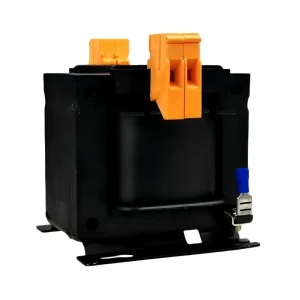
High-Quality JBK5 Series Machine Tool Control Transformers - Reliable China Suppliers and Factory Solutions Factory, Company
Inspect Technical Data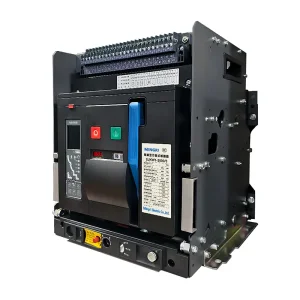
Wholesale Intelligent Universal Circuit Breaker SJKW1-2000 from China Suppliers and Factory for Reliable Power Protection Companies, Company
Inspect Technical Data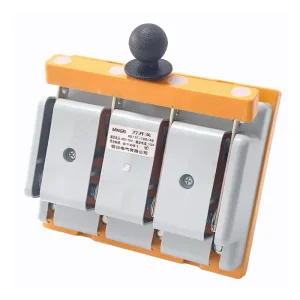
OEM HD11F Single Throw Anti-Error Knife Switch Suppliers, Factory
Inspect Technical Data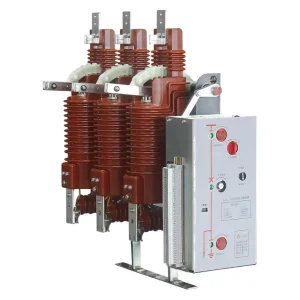
ODM VSY2-12GD Miniaturized Three-Position High Voltage Vacuum Circuit Breaker Manufacturers, Factory
Inspect Technical Data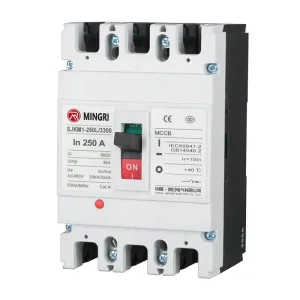
Wholesale SJKM1 Moulded Case Circuit Breaker (MCCB) - Reliable Power Protection from China Suppliers and Factory Factory, Company
Inspect Technical Data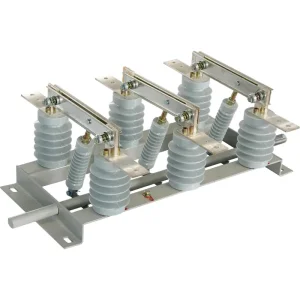
OEM China GN19-12 Indoor High-Voltage Isolating Switch Factory & Suppliers for Reliable Power Solutions Factories, Factory
Inspect Technical Data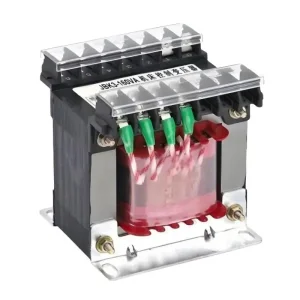
High-Quality JBK3 series machine tool control transformers Manufacturer, Factory
Inspect Technical Data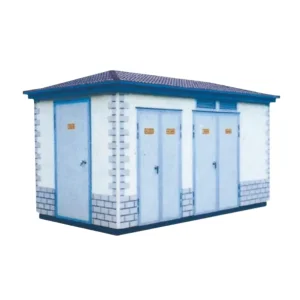
High-Quality YB□12-0.4 Series Prefabricated Substation (European Type Substation) Factory, Company
Inspect Technical DataAccelerate Your Power Infrastructure Delivery with Mingri Electric
Submit your single-line diagram, nominal ratings, or custom project specifications directly to our engineering division in Yueqing for rapid quote generation, CAD dimensions, and compliance validation.
Request Direct Technical Consultation