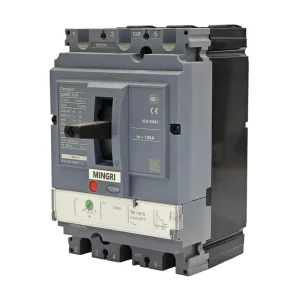
Featured Industrial Power & Medium-Voltage Systems
Complementing our flagship SBW compensation regulators, our manufacturing facilities produce a vertically integrated lineup of switchgear, load breakers, and specialized transformers engineered to IEC and ISO industrial benchmarks.
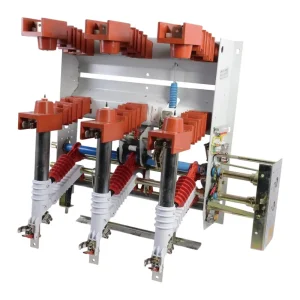
ODM High Voltage Load Breaker Switch FK(R)N12-24D - 24kV Solutions
View Technical Specs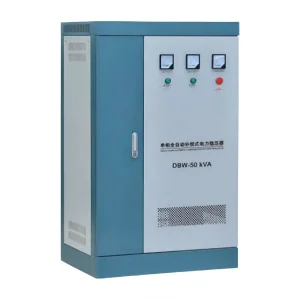
Wholesale DBW Single Phase Series Compensated Power Voltage Regulator
View Technical Specs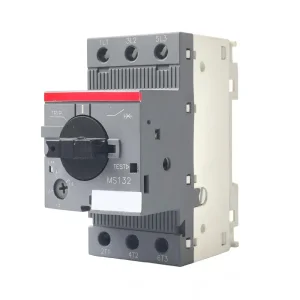
Wholesale MS132 Low Voltage Motor Protection Circuit Breaker
View Technical Specs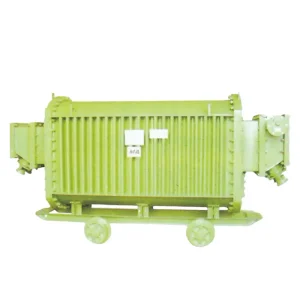
China KBSG9-50~1600/10 Mining Flameproof Dry Type Transformer
View Technical Specs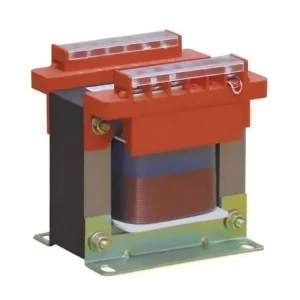
Wholesale BK Series Control Transformers – Reliable Solutions
View Technical Specs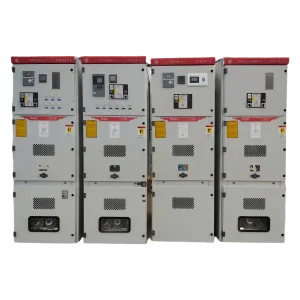
KYN28-12 Withdrawable Armored Metal-Enclosed Switchgear
View Technical Specs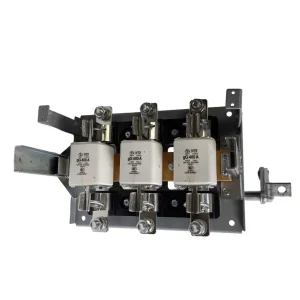
Wholesale HR3 Fuse Type Knife Switch for Motor Protection
View Technical Specs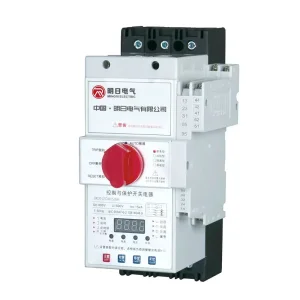
High-Quality SJKCPS Control and Protective Switching Device
View Technical SpecsPhysics & Topology of the Compensated SBW Voltage Regulator
Unlike standard direct-drive autotransformers that route entire load currents through carbon contact brushes, the SBW Series (Three-Phase Column-Type Compensated Automatic Voltage Regulator) leverages series-injected vector compensation. This fundamental topology prevents brush overheating, optimizes current density, and delivers unprecedented operational longevity in unforgiving industrial environments.
Compensated Buck-Boost Transformer
The core innovation of the SBW system resides in the isolation of the load line from the variac brush assembly. The secondary winding of a dedicated compensation transformer is linked in series with the main load line.
By altering the magnitude and phase polarity of the primary voltage delivered via the autotransformer, the secondary coil injects either an additive (boost) or subtractive (buck) potential vector into the load, normalizing terminal voltage instantaneously.
Cylindrical Column Winding Architecture
Unlike toroidal coils that face severe heat dissipation bottlenecks beyond 100kVA, our factory employs vertical cylindrical column transformers wound with electrolytic oxygen-free copper (CU-ETP1).
This layout accommodates massive cross-sectional surfaces for parallel carbon brushes, drastically lowering current density ($<0.45\text{ A/mm}^2$) and mitigating thermal degradation during sustained low-voltage grid sags.
True Sine Wave Transmission
Phase-angle electronic switching devices or tap changers frequently introduce harmonic notches and electromagnetic interference (EMI) that confuse downstream microprocessors and PLCs.
The SBW system operates on pure continuous inductive transformation, introducing strictly zero waveform distortion ($\text{THD} < 0.1\%$). It preserves clean sinusoidal geometry essential for medical MRI scanners, CNC machines, and telecom rectifiers.
Industrial AVR Selection Matrix: Comparing Core Technologies
Plant managers and electrical engineering directors frequently navigate trade-offs between dynamic response speeds, raw overload endurance, harmonic tolerance, and lifecycle expenditure. The table below delineates why SBW compensated column architecture dominates central plant engineering.
| Evaluation Parameter | SBW Compensated Column (Servo) | Static SCR / Thyristor Regulator | Ferroresonant (CVT) Stabilizer | Magnetic Induction Regulator |
|---|---|---|---|---|
| Capacity Scalability | Exceptional (20kVA to 3000kVA+) | Moderate (Limited >800kVA) | Restricted (<100kVA max) | High (Up to 2000kVA) |
| Overload Tolerance | 200% for 10 sec, 150% for 60 sec | 125% for 1 sec (Sensitive SCRs) | 110% (Immediate saturation) | 200% for 30 sec |
| Harmonic Distortion (THD) | Zero Harmonic Injection (<0.1%) | Noticeable (SCR switching noise) | High (Core saturation 3-5%) | Negligible (<0.5%) |
| Load Power Factor Sensitivity | Impervious (0.00 leading to lagging) | Sensitive to high inductive PF | Severely sensitive to low PF | Impervious |
| Operational Efficiency | 98.0% - 99.2% | 97.5% - 98.5% | 85.0% - 90.0% (Constant heat) | 92.0% - 95.0% |
| Capex to kVA Ratio | Most Economical for Heavy Loads | High Initial Capital Outlay | Very High per kVA | Moderate to High |
Sizing Formula for Inductive Starting
Direct-on-line (DOL) induction motors generate transient locked-rotor currents reaching 5× to 7× nominal ratings ($I_n$). To prevent upstream undervoltage trips:
S_regulator (kVA) ≥ (P_motor / (cosφ × η)) × K_start
Where $K_{start}$ is 2.5–3.0 for DOL, 1.5–1.8 for Star-Delta, and 1.2–1.3 for Soft Starters and Variable Frequency Drives (VFDs).
SBW vs. SBW-F: Split-Phase Architecture
Grid supply lines frequently suffer from uncoordinated single-phase distributed loads, yielding substantial phase-to-neutral voltage variations.
Standard SBW regulates 3 phases simultaneously based on average line sensing. For facilities with phase imbalance exceeding 10%, our SBW-F series incorporates three decoupled, independent servomotor transmissions to balance each phase independently.
Insulation & Core Metallurgy
Our manufacturing protocols prohibit low-grade recycled iron. Transformers utilize 0.30mm grain-oriented cold-rolled silicon steel laminations (30Q130) with core iron losses below 1.05 W/kg at 1.7T.
All coils undergo double-cycle Vacuum Pressure Impregnation (VPI) with Class H ($180^\circ\text{C}$) solventless epoxy resins, yielding dielectric breakdown resistance beyond 3500V AC.
Macro-Industry Voltage Stabilization Architectures
Across heavy manufacturing, petrochemical exploration, healthcare diagnostics, and automated infrastructure, voltage unbalance and sustained sags cause equipment lockouts, motor burnout, and astronomical downtime costs.
Precision CNC & Automation
Multi-axis milling machining centers rely on ultra-sensitive servodrives. Voltage deviations beyond ±7% precipitate optical encoder read-errors and spindle drive alarms.
SBW series systems establish a continuous, conditioned ±1.5% voltage envelope, eliminating scrap product generation during daytime grid peak transitions.
Medical Diagnostic Suites
Magnetic Resonance Imaging (MRI) and Computed Tomography (CT) scanners draw rapid, instantaneous pulsing current spikes during RF excitation sequences.
Our low-impedance copper-wound SBW-M series delivers immediate dynamic surge current without sagging, maintaining strict magnetic gradient field coherence and diagnostic artifact elimination.
Petrochemical & Refineries
Continuous pipeline delivery pumps and cracking plant compressors operate in corrosive, hydrocarbon-laden ambient air. Voltage dips trigger protection relays, forcing multi-day line flushes.
We build customized SBW-Ex configurations featuring pressurized NEMA 4X / IP65 enclosures, tropicalized anti-corrosion varnish, and isolated mechanical bypass switchboards.
Mining & Tunneling Works
Underground mining operations utilize extreme trailing cable lengths reaching several kilometers from the main portal substation, producing severe resistive-reactive line drops ($IR + IX$).
Our high-capacity SBW conditioning systems compensate for up to 30% drop at the portal, delivering stable, rated busbar potentials directly to tunnel boring machines.
Stringent Factory Validation Protocols & QA Benchmarks
Reliability is not an afterthought; it is structurally manufactured into every regulator. Our Yueqing modern assembly facility utilizes computerized multi-station load verification to ensure total adherence to international electrical codes.
Full-Load Thermal Profiling
Each SBW unit undergoes an unbroken 8-hour thermal heat run at 100% continuous rated resistive-inductive load before shipment.
Infrared radiometric imaging systematically verifies that contact brush interfaces do not exceed an 80K temperature rise over ambient, verifying optimal spring contact tension and low electrical resistivity.
Dielectric & Surge Immunity
All core assemblies undergo high-potential insulation testing at 2,500V AC RMS for 60 seconds across primary windings to ground, verifying total absence of insulation breakdown or tracking.
Integrated Type II / Class C transient surge suppression devices (SPDs) are impulse-tested up to 40kA (8/20µs waveform) to safeguard internal control logic against direct atmospheric lightning transients.
Brush Mechanics & Servo Longevity
Our proprietary roller and block carbon brushes are formulated with a specialized copper-graphite composite sintered matrix.
This formulation delivers self-lubricating characteristics that prevent track grooving on copper autotransformer columns, enabling service lifespans exceeding 100,000 traverse operations prior to mechanical inspection.
Global Compliance Standards & Environmental Customization
Navigating multinational electrical jurisdictions demands complete certification transparency. Mingri Electric engineers voltage stabilization infrastructure designed for seamless interconnection across all world grid topologies.
IEC & CE Harmony
Manufactured in full conformity with IEC 60076-11 (Dry-type power transformers), IEC 61000-6-2/4 (Industrial immunity and emissions), and Low Voltage Directive 2014/35/EU.
Universal Dual Frequency
Transformers wound with core flux density optimized to operate smoothly across both 50 Hz (Europe, Asia, Africa) and 60 Hz (Americas, Philippines, Saudi Arabia) grids without core saturation or audible hum.
Severe Climate Protection
Options for NEMA 3R / IP54 outdoor cabinetry, internal condensation space heaters, sand-trap louvers, and anti-fungal varnishing for high-humidity equatorial or desert deployment.
Bypass Interlocking
Equipped with mechanical and electrical interlocked manual/automatic bypass circuit systems. Allows routine preventive maintenance on variacs without interrupting primary plant productivity.
Technology Roadmap: Intelligent AVR Systems for Industry 4.0
As industrial facilities shift toward autonomous operations, power quality equipment must evolve beyond isolated electro-mechanical units into intelligent, telemetry-enabled assets.
Modbus-RTU & IoT Telemetry
Real-time digitization of input/output line currents, phase voltages, active power, ambient temperature, and harmonic indices over RS485 and Ethernet protocols for DCS network integration.
Predictive Brush Wear Sensing
Non-contact optical and micro-vibration sensors monitor carbon brush erosion rates and track surface health, forecasting maintenance windows months before operational degradation occurs.
Solid-State Hybrid Topology
Integrating IGBT static sub-cycle voltage injectors alongside servo-variacs. The static stage absorbs milliseconds-fast voltage dips, while the SBW column handles large continuous sustained sags.
Bidirectional Renewable Flow
Engineered for decentralized microgrids with high-penetration solar PV and wind. Optimizes regulation loops to mitigate reverse power flow voltage spikes caused by distributed renewable injection.
Frequently Asked Technical & Sourcing Questions (FAQ)
Essential answers covering design principles, installation sizing calculations, routine maintenance intervals, and operational troubleshooting for electrical project engineers and EPC contractors.
Q What is the primary operational difference between the SBW Series and standard SVC/TND automatic voltage regulators?
Q How do I choose between standard SBW and SBW-F (split-phase regulation)?
Q What response speed can I expect from an SBW stabilizer during abrupt grid sags?
Q What maintenance schedule is required to sustain a 15-20 year service life?
- Every 6 Months: De-energize the unit and clean away ambient industrial particulate dust with dry compressed air.
- Annually: Visually inspect the surface polish of the exposed transformer copper tracks and measure remaining brush wear length. Lubricate the servo drive mechanical chain, screw drives, and bearing journals using high-temperature synthetic grease.
- Every 3 to 5 Years: Replace carbon brush contacts if mechanical wear exceeds 60% of original volume.
Q Does the SBW regulator introduce harmonics or modify power factor?
Upstream Protection, Substations & Distribution Components
Complete electrical protection from high-voltage substation entry down to sub-distribution panels. Explore our verified switchgear, circuit breakers, and custom transformer lines.
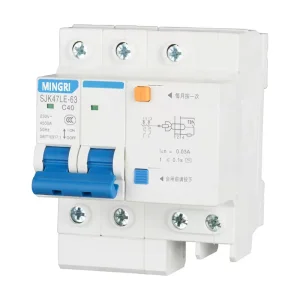
OEM SJK47LE-63 RCCB: Earth Leakage Protection for 230V/400V
View Technical Specs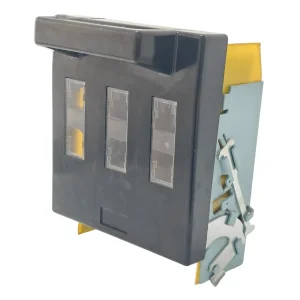
OEM HR5 Fused Disconnect Switch with Visible Contacts
View Technical Specs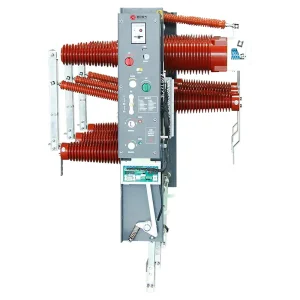
FZ(R)N21C-40.5D AC Indoor High-Voltage Vacuum Load Switch
View Technical Specs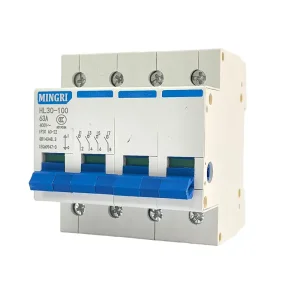
HL30-100 Miniature Disconnect Switch 1-4P 6-100A
View Technical Specs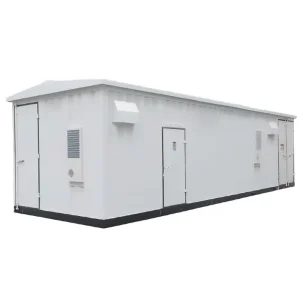
Smart Modular Prefabricated Cabin Substation for Modern Grids
View Technical Specs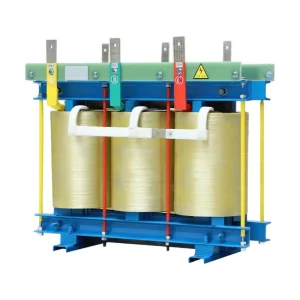
SG(B)10 Series 10kV Non-encapsulated Coil Dry Type Transformer
View Technical Specs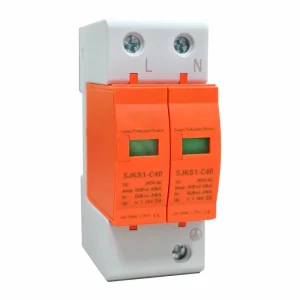
ODM SJKS1-C Series Surge Protection Device SPD 3/4P 25kA
View Technical Specs