Engineered Medium & Low-Voltage Power Equipment
Precision-manufactured in our automated facilities according to IEC 62271, IEC 61439, and ISO 9001 quality management benchmarks.
Global Energy Transitions & The Evolution of Electrical Manufacturing
Strategic insights into decentralized power, SF6 reduction mandates, smart grid automation, and heavy industrial electrification.
The international electrical transmission and primary distribution sector is undergoing the most consequential systemic restructuring since the advent of alternating current grids. Modern industry is caught between three intersecting vectors: the imperative to integrate erratic renewable energy sources, the sudden load escalation caused by hyperscale artificial intelligence compute centers, and stringent regional climate policies demanding the phased retirement of greenhouse dielectric media such as sulfur hexafluoride (SF6). Within this volatile operational theater, standard off-the-shelf industrial switchgear is no longer sufficient; global enterprises, engineering procurement and construction (EPC) conglomerates, and municipal utilities require integrated electrical architectures characterized by absolute operational reliability, sub-cycle transient containment, and seamless supervisory control.
Key Market Driver: The International Electrotechnical Commission (IEC) and regional environmental bodies are enforcing rigorous life-cycle emissions accountability on switchgear equipment. Equipment manufacturers must deliver non-SF6 gas alternatives, modular vacuum interrupters, and solid-dielectric insulations without compromising short-circuit breaking capacity, compact enclosure volume, or thermal stability under full load.
Eco-Friendly Dielectrics
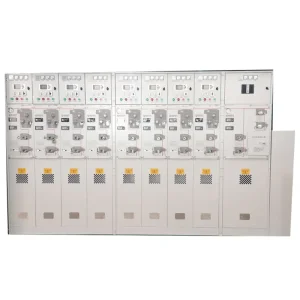
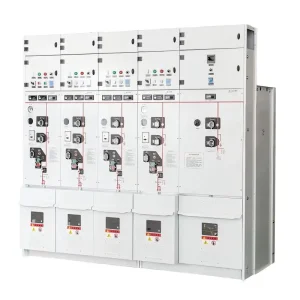
The phasing out of fluorinated greenhouse gases has catalyzed the development of clean-air, dry-air, and solid-insulated switchgear (SIS) architectures. Modern medium-voltage installations such as the MRHBXGN-12(F) series leverage environmentally neutral insulation gases while preserving footprint compactness and arc-fault containment ratings.
Edge-Intelligent Sensing
Contemporary switchgear is migrating from passive mechanical apparatus to active cyber-physical nodes. Integrated Rogowski coils, fiber-optic arc detection sensors, wireless temperature telemetry, and predictive health algorithm modules allow real-time condition assessment, transforming unscheduled outages into planned, low-impact maintenance intervals.
Microgrid Decentralization
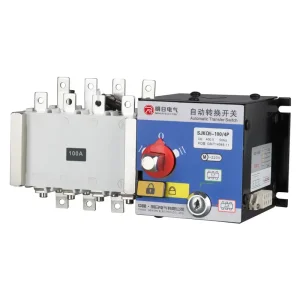
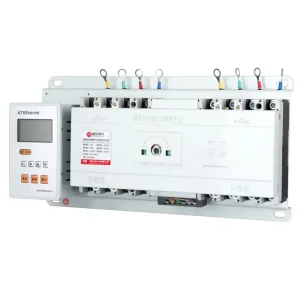
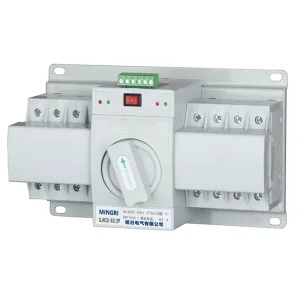
Decentralized photovoltaic arrays, commercial battery energy storage systems (BESS), and multi-generator feeds require bidirectional power switching. Dual-power automatic transfer switches (ATS) capable of transition speeds under 50ms, combined with intelligent universal breakers, guarantee operational continuity without compromising voltage stability.
Supply Chain Resilience & Precision Engineering from Yueqing
How localized supply chain density, automated robotics, and end-to-end vertical integration establish global cost and velocity benchmarks.
In the heart of Zhejiang's manufacturing epicenter, Yueqing, sits the world's most concentrated ecosystem for electrical transmission and distribution component manufacturing. This specialized cluster does not merely offer economies of scale; it creates an ultra-agile, vertically consolidated supply chain where raw copper processing, precision metal sheet stamping, injection tooling, thermosetting epoxy casting, vacuum interrupter production, and comprehensive high-voltage dielectric testing occur within a radius of mere miles.
Sub-Assembly Integration
By controlling every step from sheet-metal bending via CNC laser profiling to robotic welding of stainless-steel gas tanks, production lead times are compressed by up to 45% compared to Western counterparts, eliminating sub-tier component bottlenecks.
Digital Twin Quality Controls
Each switchgear enclosure and vacuum interrupter assembly is tracked through automated MES (Manufacturing Execution Systems). Helium mass spectrometer leak detectors ensure SF6 and eco-gas leakage rates remain below 0.1% per year, far exceeding standard IEC safety margins.
Customized OEM/ODM Adaptation
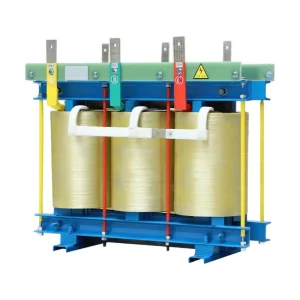
Engineers evaluate Single-Line Diagrams (SLDs) directly to build customized primary switchgear cubicles (KYN28, SM6, RM6), transformer integrations (SG(B)10, S11), and modular automated transfer switches tailored to seismic zones, high altitudes, or humid maritime climates.
Medium-Voltage & Low-Voltage Equipment Taxonomy
Comprehensive engineering benchmarks across primary apparatus, insulation mediums, breaking ratings, and deployment standards.
| Equipment Category | Primary Model Codes | Insulation Medium | Rated Voltage / Current | Breaking / Withstand Rating | Standard Compliance |
|---|---|---|---|---|---|
| Gas Insulated Switchgear (GIS) | RM6, MRHBXGN-12(F), SafeRing | SF6 / Fluoroketone Eco-Gas | 12 kV – 40.5 kV / 630A – 1250A | 20 kA to 31.5 kA (4s) | IEC 62271-200, GB/T 3906 |
| Air Insulated Switchgear (AIS) | KYN28-12, SM6, KYN61-40.5 | Atmospheric Air + Composite | 12 kV – 40.5 kV / up to 4000A | Up to 50 kA (3s) | IEC 62271-100, IEC 62271-200 |
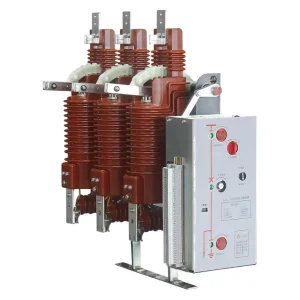
| Vacuum Circuit Breakers (VCB) | VSY2-12GD, VS1 Miniaturized | High-Grade Ceramic Vacuum | 12 kV / 630A – 3150A | 25 kA – 40 kA (O-0.3s-CO-180s-CO) | IEC 62271-100, DL/T 403 |
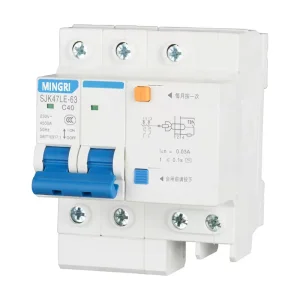
| Low Voltage Switchgear & ATS | SJKQ5, SJKQ2Z, SJKW1-2000 | Air De-ionization Arc Chute | 380V – 690V / 20A – 3200A | 50 kA – 100 kA Icu | IEC 60947-6-1, IEC 60947-2 |
| Dry & Oil Distribution Transformers | SG(B)10, S11 Series | Class H Non-encapsulated / Mineral Oil | 10 kV – 35 kV / 50 – 2500 kVA | Dyn11, Yyn0 Vector Groups | IEC 60076, ANSI C57.12 |
Engineered for High-Stress Industrial Environments
Tailored operational profiles delivering high availability across data centers, heavy chemical complexes, and utility-scale microgrids.
Hyperscale Data Centers
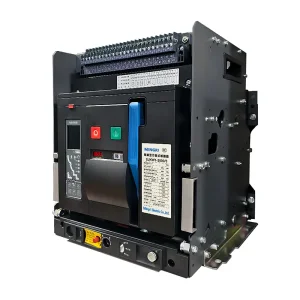
Featuring SJKQ5 ultra-fast dual-power automatic transfer switches and intelligent SJKW1 air circuit breakers ensuring zero compute downtime and harmonic distortion suppression.
Renewable PV & Storage
Compact step-up substations (ZGS11-Z.T) paired with SF6/eco-gas ring main units built to sustain harsh desert UV exposure, wide thermal swings (-30°C to +55°C), and sand ingress.
Petrochemical Refineries
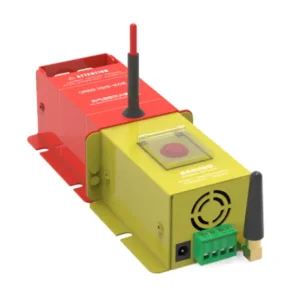
Hermetically sealed stainless steel RMUs (IP67 tank rating) impervious to corrosive airborne sulfides, volatile gases, and maritime salinity with wireless fire suppression integrations.
Heavy Rail & Metro Transit
VSY2-12GD vacuum circuit breakers designed for high mechanical switching endurance (up to 30,000 cycles), frequent traction shock loads, and stringent tunnel space constraints.
Commercial Smart Grids
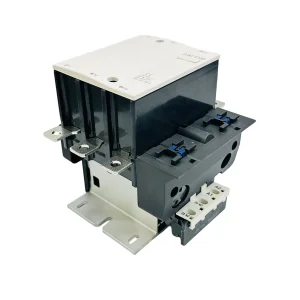
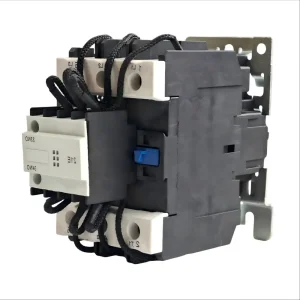
Integrated low-voltage motor control centers, CJ19 capacitor switching contactors, and residual current monitoring for LEED-certified commercial skyscrapers and industrial parks.
Industrial Protection, Isolation & Transformation
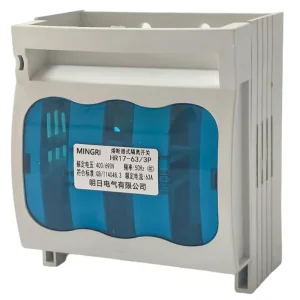
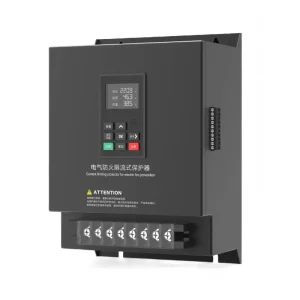
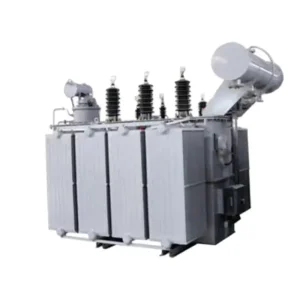
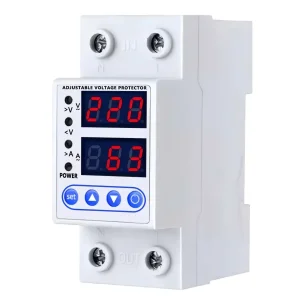
Advanced automatic transfer switches, non-encapsulated transformers, and reactive power compensation modules.
De-Risking MV/LV Capital Acquisitions for Global EPCs
Critical engineering criteria for selecting a Chinese manufacturing partner capable of meeting global contract standards.
For international Engineering, Procurement, and Construction (EPC) executives and utility directors, sourcing critical high- and medium-voltage assets is an exercise in rigorous risk mitigation. An unplanned outage or catastrophic dielectric failure does not merely disrupt energy distribution; it incurs crippling penalties, compromises worker safety, and jeopardizes multimillion-dollar commercial operations. When qualifying an original equipment manufacturer (OEM), forward-thinking procurement directors evaluate four foundational pillars:
Third-Party Type Certification
Switchgear equipment must possess comprehensive test reports from accredited international test bodies such as KEMA, ASTA, or national high-voltage apparatus testing institutions, verifying short-circuit withstand, internal arc fault classification (IAC AFLR), and temperature-rise limits under nominal full-load currents.
Complete Engineering Documentation
Transparent project execution requires rapid turnaround of schematic Single-Line Diagrams, 3D BIM/CAD dimensional models, secondary control wiring schematics, and detailed protection relay coordination matrices prior to metal cutting and busbar fabrication.
FAT and Remote Inspection Protocols
Global sourcing teams cannot always send engineers to Zhejiang for Factory Acceptance Tests (FAT). Advanced manufacturers supply comprehensive live-streamed, high-definition digital FAT procedures, power-frequency withstand video records, and mechanical operation cycle counters with verified serial calibration.
Frequently Answered Engineering Inquiries
Definitive technical and logistical clarifications for engineering consultants, EPC contractors, and procurement professionals.