Engineered Grid Infrastructure & Voltage Stabilizers
Explore OEM/ODM manufacturing standards built for extreme transients, unbalanced networks, and continuous industrial applications.
The Paradigm Shift in Automatic Voltage Stabilization
How volatile distributed generation, non-linear industrial loads, and modern microgrids have altered the technical benchmark for stabilizer factories and OEMs globally.
Static Solid-State Dominance
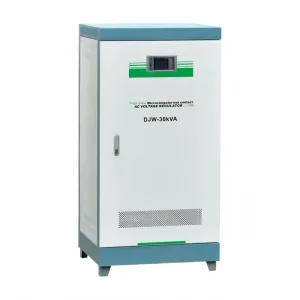
Traditional motorized carbon-brush regulators are steadily giving way to SCR/IGBT electronic voltage regulators (such as the DJW/SJW microcomputer series). By operating with non-contact sub-cycle solid-state switching, these units achieve response profiles below 10 milliseconds, totally eliminating mechanical brush erosion and reducing lifetime O&M overhead by over 70% in high-frequency harmonic facilities.
Thermal & Dielectric Innovation
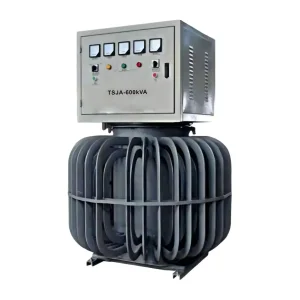
Heavy heavy-duty continuous processes demand robust isolation. Oil-immersed units like the TSJA utilize high-flashpoint biodegradable synthetic esters and mineral oils with advanced heat-dissipation radiators. This delivers uninterrupted operation across tropical, dusty, and mining sites where ambient temperatures climb beyond 50°C and forced air filtration regularly fails.
Edge Computing & IoT Telemetry
Modern stabilizer factories are no longer providing simple analogue buck-boost cabinets. Fully digitized automatic stabilizers feature embedded DSP boards supporting IEC 61850 and Modbus-TCP communication protocols. Engineers receive real-time voltage sag event logs, phase imbalance indices, total harmonic distortion (THD), and active thermal dissipation monitoring straight into central SCADA systems.
End-to-End System Integration Architecture
Stabilizers operate as the critical line of defense between volatile medium-voltage grids and delicate industrial machinery. Discover tailored architectures by sector.
Renewable Power & BESS Plants
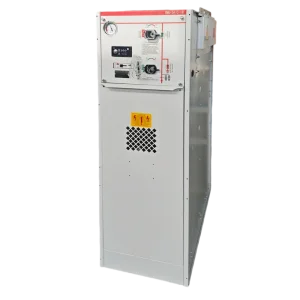
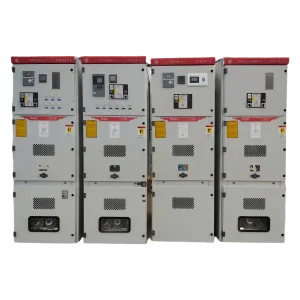
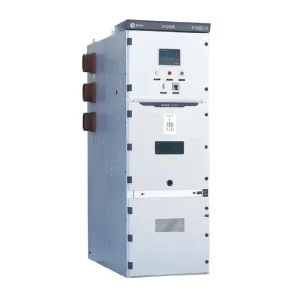
Grid feed-in points often face severe voltage fluctuation due to intermittent solar irradiation and wind shear. Pairing TSJA oil-cooled regulators with hybrid solar inverters and KYN28-24 armored switchgear stabilizes internal busbars, eliminates inverter tripping, and enforces voltage compliance at the point of common coupling (PCC).
Semiconductor & Automated CNC
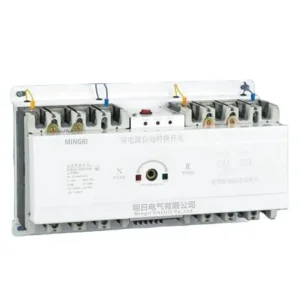
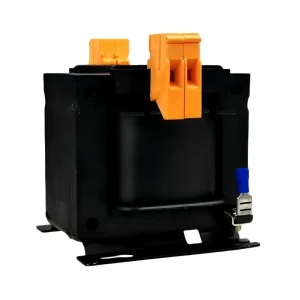
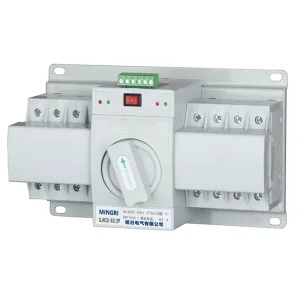
Micro-sags lasting mere milliseconds can ruin silicon wafer production or disengage precision robotics. Non-contact SJW regulators integrated with JBK5 control transformers and ultra-fast SJKQ2 automatic transfer switches ensure instantaneous correction, protecting CNC spindle drivers, servo loops, and cleanroom HVACs without injecting THD.
Heavy Petrochemical & Mining Grids
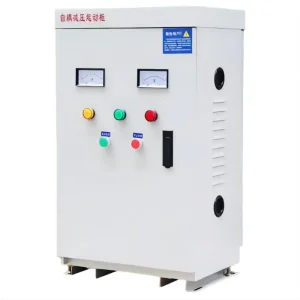
Direct-on-line motor starts introduce deep voltage depressions across long transmission runs. Combining QZB/MCX01 auto-coupling step-down starting cabinets with high-capacity TSJA stabilizers and flame-retardant gas-insulated RM6 switchgear ensures smooth motor starting without browning out auxiliary control circuits.
Stabilizer Technology Evaluation Matrix
A comparative engineering baseline for EPC project managers, procurement directors, and chief electrical engineers specifying voltage regulation hardware.
| Stabilizer Topology | Correction Speed | Efficiency | Overload Resilience | Maintenance Cycle | Optimal Deployment Environment |
|---|---|---|---|---|---|
| TSJA Oil-Immersed Induction | 1.5 – 3.0 s | >96% | 300% for 10 sec | 3–5 Years (Dielectric Test) | Outdoor mining, steel mills, foundries, extreme humidity/dust |
| DJW/SJW Static Non-Contact | < 20 ms | >98% | 150% for 60 sec | Maintenance-Free (Solid State) | Data centers, medical imaging, precision lab instrumentation |
| Servo-Electromechanical Buck-Boost | 20 – 40 V/s | >97% | 200% for 30 sec | Annual (Carbon Brushes) | Commercial complexes, light manufacturing, elevator bank mains |
| Magnetic Induction Regulators | 0.5 – 1.2 s | >95% | 250% for 10 sec | 2 Years (Bushing & Lube) | Electrochemical plants, electroplating, chemical electrolysis |
International Compliance & Field Support Framework
Mitigating global supply risk with third-party testing, regional service partnerships, and strict conformance to international electrical mandates.
Harmonized IEC & IEEE Design
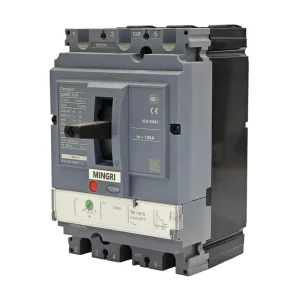
Every automatic stabilizer, medium-voltage switchgear cabinet, and safety breaker is fabricated under certified ISO 9001, ISO 14001, and ISO 45001 production processes. Full compliance with IEC 60076 (Power Transformers), IEC 62271-200 (MV Switchgear), and IEEE C57 standards guarantees seamless utility interconnect approval worldwide.
Factory Acceptance Testing (FAT)
Global clients benefit from exhaustive FAT protocols prior to shipment. Testing regimes include short-circuit endurance, partial discharge monitoring, lightning impulse testing up to standard BIL ratings, dielectric breakdown evaluations, and high-temperature full-load heat runs witnessed directly on-site or via secure multi-angle digital streaming.
Commissioning & Local Engineering
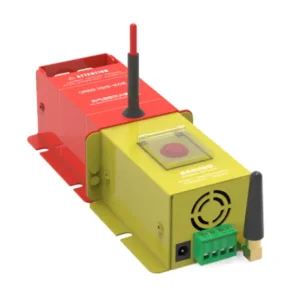
Cross-border supply requires ongoing local assurance. We supply comprehensive schematic documentation, single-line diagrams (SLD), remote engineering oversight for primary wiring, and hot aerosol fire suppression modules (such as our wireless fire safety device series) to safeguard switchboards against catastrophic electrical fire hazards in unmonitored enclosures.
Technological Roadmap: The Autonomous Grid Future
Next-generation innovations emerging from our state-of-the-art power electronics laboratory and switchgear manufacturing bays.
Wide-Bandgap Semiconductors
Next-generation static voltage regulators are integrating Silicon Carbide (SiC) and Gallium Nitride (GaN) power transistors. This migration enables thermal resistance enhancements up to 200°C, increases switching frequencies above 50kHz, and slashes magnetic core volume by 40%, delivering ultra-compact designs for space-constrained containerized energy rooms.
SF6-Free Eco-Gas Interrupters
Aligning with aggressive global F-gas phaseouts and emissions directives, our MV switchgear lines (RM6 and KYN28 families) are transitioning to environmental synthetic dry air, clean nitrogen matrices, and vacuum interrupters, achieving zero global warming potential (GWP < 1) without sacrificing lightning impulse ratings or short-circuit withstand performance.
AI Predictive Health Analytics
By sampling electrical stress signatures at kHz frequencies, our oncoming embedded controllers apply edge neural networks to predict winding degradation, capacitor drying, contact ablation, and insulation dielectric tracking before catastrophic flashover occurs, enabling true condition-based proactive maintenance paradigms.
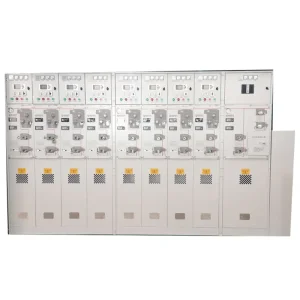
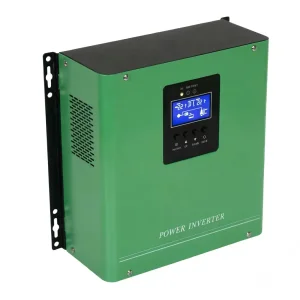
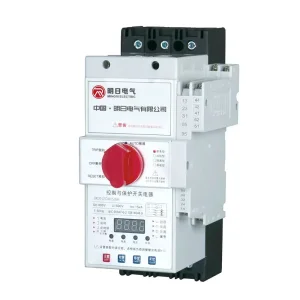
Switchgear, Protective Devices & Intelligent Regulators
Factory-direct OEM manufacturing for utilities, EPC contractors, switchboard builders, and industrial automation facilities worldwide.
Frequently Asked Questions: Engineering & Sourcing
Clear, authoritative technical answers addressing common deployment challenges, selection formulas, and factory custom manufacturing.
How do I accurately calculate the required kVA capacity for an industrial automatic stabilizer?
Industrial loads feature significant inrush currents (especially inductive electric motors, chillers, and hydraulic pumps, which typically draw 5 to 7 times their full-load amperage upon starting). Sizing must account for total continuous kVA, starting power factor, ambient derating, and future expansion. As a benchmark formula: Total Stabilizer kVA = (Base Operating kVA + [Highest Motor kW × Inrush Multiplier]) × 1.25 Safety Margin. For non-linear loads with high harmonic content (THD > 15%), an additional K-factor derating must be applied to prevent core saturation and localized transformer overheating.
What makes oil-immersed stabilizers (TSJA) superior to dry-type air-cooled units in heavy industry?
Oil-immersed regulators utilize transformer oil as both a high-efficiency convective cooling medium and a high-grade dielectric insulation liquid. Unlike air-cooled units that rely on continuous intake of ambient air (drawing in conductive dust, chemical particulates, sulfur fumes, and humidity), TSJA tanks are hermetically sealed or equipped with nitrogen breathers. This completely shields internal coils, rollers, and mechanical mechanisms from atmospheric corrosion, making them indispensable in coastal processing facilities, cement production, mining concessions, and outdoor oil refineries.
How do electronic non-contact voltage regulators (DJW/SJW) eliminate voltage waveform distortion?
Conventional ferroresonant or relay-switched tap changers create significant voltage spikes and harmonic notches whenever they adjust under heavy load. In contrast, modern microcomputer-controlled non-contact regulators use intelligent zero-crossing SCR (Silicon Controlled Rectifier) switching matrixes. The DSP controller monitors the AC sine wave and triggers switching precisely at the instantaneous zero-voltage point, completely eliminating arcing, mechanical bouncing, transient switching spikes, and secondary harmonic injection.
Can Mingri Electric customize stabilizers and switchboards for international grid voltages and frequencies?
Yes. As a primary OEM and ODM manufacturer based in Yueqing, China, all equipment can be engineered to match local regional grid codes: 380V/400V/415V/440V/480V for 3-phase systems, and 110V/120V/220V/230V/240V for single-phase networks, operating at either 50 Hz or 60 Hz. Medium-voltage switchgear can be tailored for 10kV, 11kV, 12kV, 24kV, 33kV, up to 40.5kV systems, fully engineered with bespoke busbar dimensions, customized CT/PT ratios, and specialized protection relays (Schneider, ABB, Siemens, or localized microcomputer relay modules).
What warranty, technical documentation, and spare parts support are guaranteed for export orders?
All exported equipment comes standard with an 18 to 24-month comprehensive manufacturing warranty, extending up to 5 years via comprehensive service contracts. Every shipment includes comprehensive mechanical drawings, single-line diagrams, schematic diagrams, factory test certificates (FAT report), and installation operation manuals (IOM). For mission-critical sites, modular plug-and-play replacement electronic boards, control modules, backup SCR sets, and auxiliary coils are readily bundled for zero-downtime maintenance programs.