Industrial Phase Protection & Switchgear Architecture
Precision-tested medium and low voltage hardware engineered for dual-phase balancing, high-fault current suppression, and substation automation in compliance with IEC 62271, IEC 60947, and GB standards.
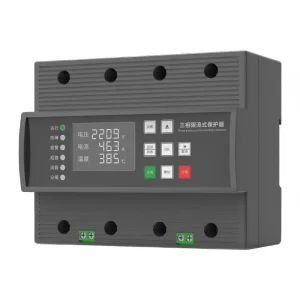
High-Quality China Economic Three-phase Current-limiting Protector 80/125A - Safety Monitoring Device
View Specifications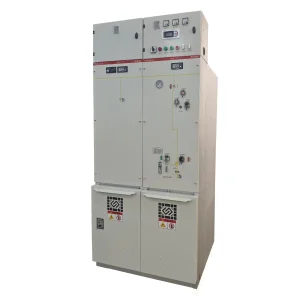
OEM SafeRing-40.5 Gas Insulated Ring Main Unit (RMU) - SF6 Sealed Switchgear
View Specifications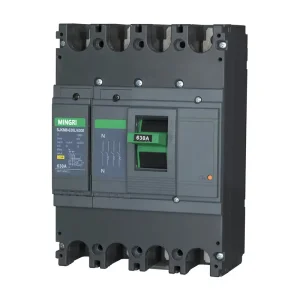
High-Quality China SJKM8 MCCB Suppliers | 100A to 630A Moulded Case Circuit Breaker Factory
View Specifications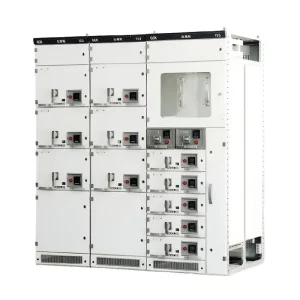
Wholesale GCK Low Voltage Withdrawable Switchgear for Industrial Plants
View Specifications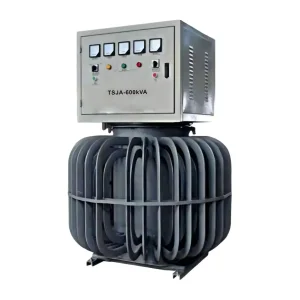
OEM TSJA Three/Single Phase Series Oil-Immersed Voltage Stabilizer
View Specifications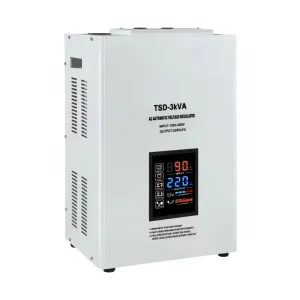
Wholesale TSD Single Phase Series Servo Type AC Voltage Regulator
View Specifications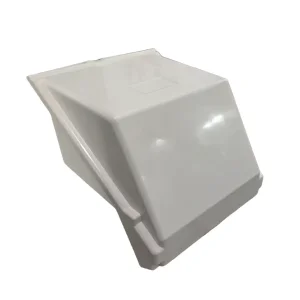
Wholesale D165T LV Moulded Case Pole Mounted Breaker Digital Trip Unit
View Specifications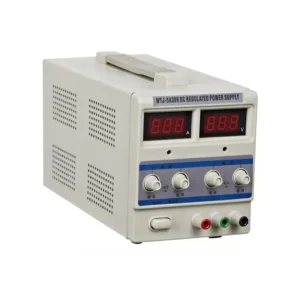
OEM WYJ Series High Precision DC Regulated Power Supply System
View SpecificationsProcurement Demands of Global Enterprises for Dual-Phase & Specialized Switchgear
Engineering procurement teams require severe electrical tolerances, zero-drift voltage balancing, and robust localized compliance when integrating dual-phase loads into modern three-phase grids.
Phase Imbalance Elimination
Unbalanced single- and two-phase loads cause excessive negative-sequence currents, overheating utility generators and triggering spurious tripping. Industrial buyers rely on Chinese OEM Scott-T and balanced transformer configurations to distribute dual-phase induction and traction loads uniformly across primary three-phase networks.
Severe Fault Ride-Through (FRT)
Global rail electrification and metallurgical plants subject switchgear to recurring inrush surges up to 12x rated continuous current. Yueqing manufacturers deliver solid-state and vacuum-interrupter assemblies validated to clear asymmetrical short-circuits within 3 to 5 cycles, protecting upstream transformers and substation busbars.
Total Cost of Ownership (TCO)
Through deep vertical integration in Zhejiang’s electromechanical clusters—incorporating localized copper rod drawing, vacuum interrupter synthesis, and automated laser fabrication—OEMs offer 30% to 45% CAPEX advantages without compromising Mean Time Between Failures (MTBF > 120,000 hours).
Technological Architecture of Dual-Phase & Multi-Phase Power Systems
An authoritative analysis of phase conversion mechanisms, dielectric medium evolution, and integration protocols for mission-critical electrical networks.
1. Electromagnetic Topologies: Converting Three-Phase Grids to Balanced Two-Phase Outputs
In industrial power distribution, the term two-phase encompasses two primary operational paradigms: orthogonal 90-degree systems (historically prevalent in precision induction heating and legacy drives) and split-phase / dual-phase 180-degree architectures utilized in light industrial, railway traction, and telecommunications DC-link rectifiers. Supplying massive single- or two-phase loads directly from a standard three-phase utility feeder creates catastrophic phase-angle skew, leading to negative sequence components that destabilize turbine generators and saturate distribution transformers.
To mitigate this, China’s specialized transformer manufacturers engineer advanced Scott-T, Le Blanc, and Woodbridge transformer connections. The classical Scott-T configuration couples a "main" transformer connected phase-to-phase across two legs of a 3-phase line with a "teaser" transformer connected between the third phase and the center tap of the main transformer. When turns ratios are precisely computed at 1 : (√3 / 2), the secondary produces two mutually perpendicular single-phase voltages equal in magnitude (90° electrical phase displacement). This yields a balanced symmetrical draw on the primary three-phase utility feed under matched secondary loading conditions.
Critical Engineering Principle: Under balanced two-phase secondary load (P1 = P2, PF1 = PF2), a Scott-T connection draws perfectly balanced real currents from the three-phase transmission network, achieving a negative phase sequence current (I2) theoretically approaching zero. This is essential for EPC projects interfacing with strict utility grid codes like IEEE 519 and IEC 61000-3-6.
2. Dielectric Evolution: SF6, Solid Insulation, and Eco-Gas Alternatives
For switchgear and Ring Main Units (RMU) deployed in harsh, contaminated, or space-constrained substations, selecting the dielectric medium represents the single most important lifecycle decision. While sulfur hexafluoride (SF6) offers unmatched arc-quenching capability and a dielectric breakdown strength roughly 2.5 times that of atmospheric air, global environmental regulations (such as EU F-gas regulations and corporate ESG mandates) are pushing the market toward low-GWP alternatives.
Leading manufacturers like Mingri Electric offer modular configurations across three major insulation categories:
| Insulation Topology | Dielectric Medium | GWP Index | Standard Ratings (kV) | Primary Use Cases | Regulatory Status |
|---|---|---|---|---|---|
| Gas-Insulated (GIS/RMU) | SF6 (Sealed-for-life Stainless) | 23,500 | 12 / 24 / 40.5 kV | Coastal, High-dust, Mining, Underground Compact Substation | Universal Standard |
| Solid-Insulated (SIS) | Cycloaliphatic Epoxy Resin / Silicon | 0 | 12 / 24 kV | SF6-Restricted Municipalities, High-Moisture Tunnels | 100% Eco-Compliant |
| Eco-Gas Air/C4-FN | Fluoronitrile Mixture + Dry Air | < 1 | 12 / 24 kV | Next-Gen Smart Urban Grids, Renewable Microgrids | EU 2026/2030 Ready |
| Air-Insulated (AIS) | Atmospheric Air + Phase Barriers | 0 | 12 / 24 / 40.5 kV | Indoor Industrial Switchgear Rooms (KYN28 / GCK / KYN61) | Field Serviceable |
3. Dynamic Current Limiting & Ultra-Fast Interruption
Single- and two-phase short circuits typically exhibit significantly higher peak asymmetrical currents than three-phase bolted faults due to low zero-sequence impedance in grounded wye systems. As a result, low-voltage current-limiting protectors and high-voltage vacuum circuit breakers (VCBs) must feature precision-calibrated electromagnetic repulsion mechanisms (Thomson coils) and optimized silver-tungsten-carbide contact matrices.
Modern Chinese manufacturing facilities implement automated robotic helium mass-spectrometer leak detection (guaranteeing leakage rates < 0.1% per annum) and vacuum interrupter contact conditioning. This achieves sub-millisecond arc quenching and ensures that peak let-through current (I²t energy) is kept far below downstream conductor thermal withstand limits.
Macro-Industry Solutions & Turnkey Utility Integration
Engineered electrical systems powering heavy transport, utility networks, industrial automation, and microgrid infrastructure across five continents.
High-Speed Rail & Metro Traction
Supplying 25 kV and 2×25 kV autotransformer (AT) railway electrification networks. Custom Scott-T transformers and GIS switchgear balance fluctuating train pantograph loads, preventing harmonic pollution back onto utility interconnects.
Renewable Microgrids & BESS
Integrating dual-phase inverter configurations with utility storage step-up substations (ZGS11-Z.T series). Our prefabricated substations deliver seamless PV-to-grid synchronization and mitigate solar-generation cloud-passing surges.
Induction Heating & Metallurgy
Dedicated TSJA oil-immersed dynamic regulators and heavy-duty contactors designed to absorb extreme thermal cycling, electromagnetic vibrations, and continuous harmonic feedback characteristic of electric arc and induction smelting.
ANSI 120/240V Split-Phase Grids
Custom low-voltage distribution panels (GCK, GCS, and MNS withdrawable switchboards) engineered specifically for North American, Latin American, and Caribbean center-tapped secondary distribution topologies.
Technical Roadmap: Intelligent Power Apparatus (2025–2035)
How Chinese power equipment manufacturers are integrating Silicon Carbide (SiC) semiconductors, IoT edge analytics, and zero-carbon manufacturing lines into standard distribution hardware.
Solid-State Transformers (SST)
Migrating from heavy electromagnetic steel cores to high-frequency SiC-based power electronic transformers. These systems dynamically synthesize arbitrary output phase angles (single, dual, or polyphase) with instantaneous active power factor correction and complete galvanic isolation.
Predictive Health Edge IoT
Embedding ultra-high-frequency (UHF) partial discharge sensors, fiber-optic busbar temperature probes, and MEMS vibration analyzers inside GIS tanks and VCB mechanisms. Telemetric data connects to SCADA via IEC 61850 protocol to prevent catastrophic arc flash incidents.
Decarbonized Circular Supply Chains
Implementing 100% recycled electrolytic copper busbars, low-loss amorphous alloy transformer cores (< 0.2 W/kg core loss), and cradle-to-grave digital product passports (DPP) to comply with international carbon border adjustment mechanisms (CBAM).
Quality Verification, Testing Regimes & Regulatory Compliance
Strict quality assurance protocols executed across Yueqing automated cleanroom manufacturing facilities to exceed international utility tender requirements.
International Type Testing
Equipment models are independently verified by accredited third-party laboratories (including KEMA-Keuring, ASTA, and China National Quality Supervision and Inspection Centers) for short-time withstand current (Ik up to 31.5 kA / 4s), peak withstand current (Ip up to 80 kA), internal arc classification (IAC AFLR), and mechanical endurance (M2 class ≥ 10,000 operations).
Standards Harmonization
All switchgear panels and protective apparatus are constructed in strict alignment with IEC 62271-200 (MV metal-enclosed), IEC 61439-1/2 (LV switchgear assemblies), IEEE C37.20, and UL 489 / UL 891 guidelines, enabling smooth permitting with local AHJs (Authorities Having Jurisdiction) globally.
FAT Witnessing & Digital Traceability
Factory Acceptance Testing (FAT) protocols feature real-time secure multi-angle HD video streaming for remote engineering witness inspections. Routine tests include power-frequency withstand voltage (dry/wet), main circuit resistance measurement (micro-ohm drop), and millisecond-accurate opening/closing timing synchrony.
Medium & Low Voltage Grid Distribution Hardware
Armored switchgear, vacuum breakers, step-up transformers, and automatic safety suppression apparatus built to withstand demanding utility environments.
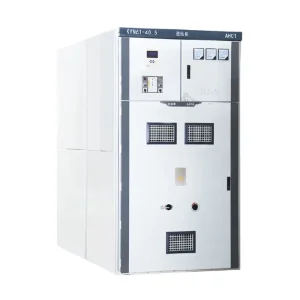
OEM KYN61-40.5 Armoured Moving Type AC Metal Enclosed Switchgear
View Specifications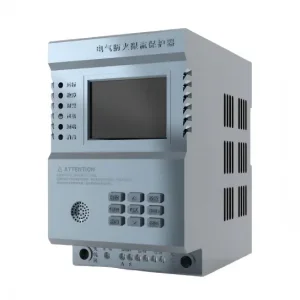
Wholesale Single Phase Current Limiting Protector 20-80A 220VAC Safety Unit
View Specifications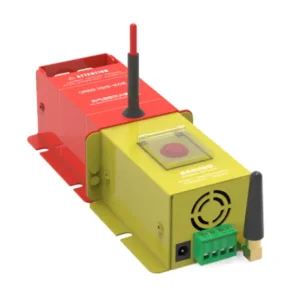
China Intelligent Wireless Automatic Gas Fire Extinguishing Device - Hot Aerosol Series
View Specifications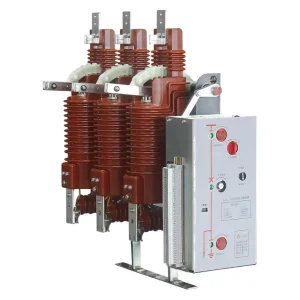
Wholesale Compact VSY2-12GD High Voltage Vacuum Circuit Breaker - 12kV Power Distribution
View Specifications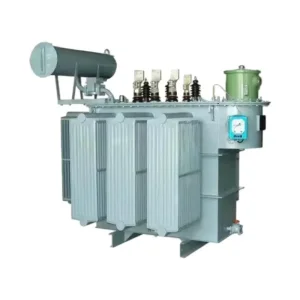
ODM SZ11 Type 10kV Series On-Load Voltage Regulator Power Transformer
View Specifications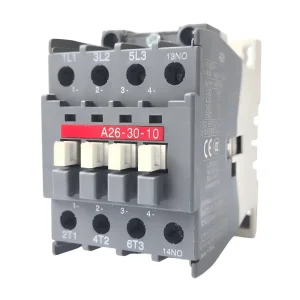
Wholesale A9~300 Series AC Contactors 50/60Hz 380V - High Performance Switching
View Specifications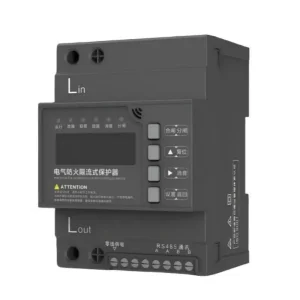
Wholesale China Suppliers Factory: Single Phase Current-Limiting Protector for Electrical Fire Safety
View Specifications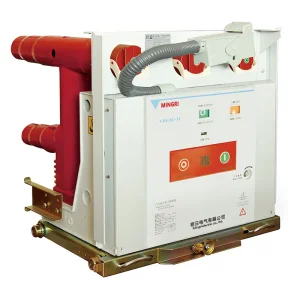
High-Quality China ZN63A(VS1)-12/24 Indoor High Voltage Vacuum Circuit Breaker
View SpecificationsFrequently Asked Questions: Technical Engineering & Global Procurement
Key clarifications on phase transformation mechanisms, factory acceptance protocols, export packaging, and international grid compatibility.