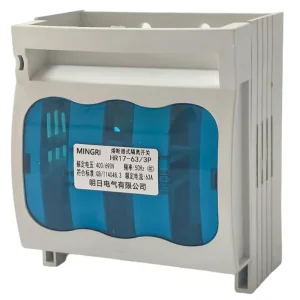
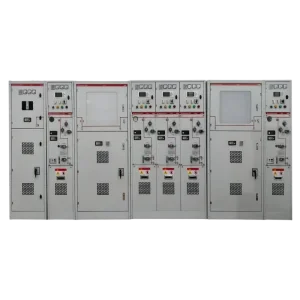
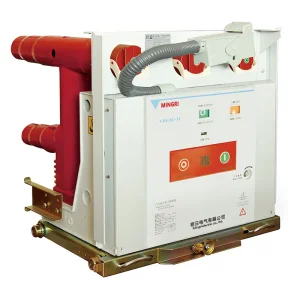
Primary Voltage Regulating & Switching Switchgear
Explore field-tested medium and high-voltage equipment configured for continuous operational duty and precise tap-changing insulation stability.
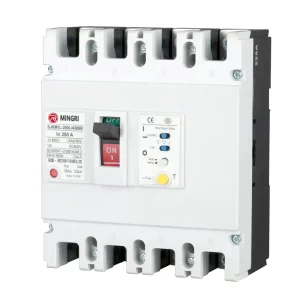
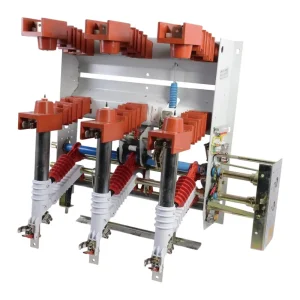
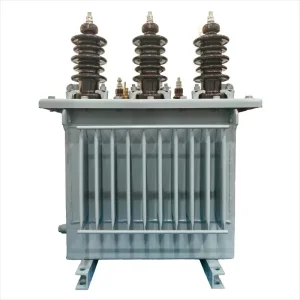
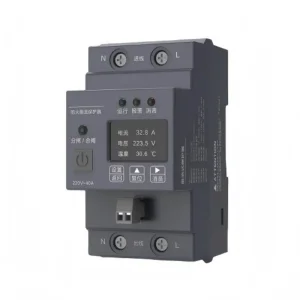
Global Commercial & Industrial Status of Oil Regulators
The convergence of renewable grid expansion, electrification of heavy process industries, and aging distribution networks has intensified the demand for closed-loop oil regulation and dielectric insulation systems.
Critical Role of Oil-Immersed Regulators in Modern Grid Infrastructure
In modern electrical power transmission and distribution (T&D), the oil regulator—whether operating as an on-load tap changer (OLTC) voltage regulating unit, an oil-immersed step-voltage stabilizer, or an integrated fluid-management module in sealed distribution transformers—represents the bedrock of operational reliability. Dynamic loads induced by volatile solar photovoltaic feed-ins, bidirectional energy transfers from electric vehicle charging infrastructure, and severe cyclic burdens from arc-furnace metallurgy mandate precise physical voltage compensation under intense thermal stresses.
Mineral-oil and ester-based dielectric fluids serve dual functions: extinguishing arc currents across contacts within milliseconds and providing uniform convective dissipation of thermal flux generated inside magnetic laminations. Modern China oil regulator manufacturers have engineered sophisticated electromechanical control loops that isolate switching transients while eliminating localized hot-spot phenomena, maintaining line voltage within a nominal tolerance of ±0.5% over thousands of continuous duty cycles.
Thermal & Dielectric Optimization
Integration of high-grade, vacuum-degassed naphthenic oils and biodegradable synthetic esters capable of withstanding breakdown voltages exceeding 70 kV across standard spherical gaps.
Hermetic Nitrogen Sealing
Advanced S11-M core designs leverage corrugated tank walls that flex with oil expansion, totally isolating the dielectric fluid from atmospheric oxygen, humidity, and sludge oxidation.
Arc Quenching Architecture
Precision-machined tungsten-copper transition contacts suppress transient arc erosion during tap-change commutation, extending switch longevity past 500,000 mechanical operations.
China Factory Efficiency & Supply Chain Resilience
Why leading global utilities, EPC contractors, and project developers consolidate procurement within China's specialized electrical industrial clusters.
Vertical Supply Integration
Yueqing industrial clusters host complete upstream-to-downstream manufacturing within a 30-km radius: high-permeability cold-rolled silicon steel, continuous transposed copper conductors, and CNC tank fabrication.
Automated Quality Control
Automated vacuum drying chambers, robotic precision-winding machines, and automated impulse voltage testing guarantee zero gas void bubbles and minimize partial discharge below 5 pC.
Economies of Scale
High-volume manufacturing plants yield an average of 25% to 40% total procurement cost reduction relative to European or North American counterparts, without sacrificing IEC or IEEE compliance.
Rapid Prototype to Delivery
Streamlined engineering change management (ECM) facilitates customized bushing arrangements, sensor port machining, and short lead-time production within 4 to 6 weeks for critical infrastructure.
Mission-Critical Installation & Operating Environments
Engineered to excel across hostile industrial environments where electrical stability directly dictates operational throughput and life safety.
Solar & Wind Generation Fields
Step-up substations in utility-scale PV plants experience heavy diurnal thermal swings. Hermetically sealed oil-regulated units counteract rapid thermal fluid contraction while sustaining harmonics generated by central solar inverters.
Heavy Petrochemical & Mining Plants
Explosion-proof enclosures and sealed fluid designs prevent volatile atmospheric gases or coal dust from penetrating internal electrical arc paths, maintaining smooth voltage feeds to high-torque drive pumps and crushers.
Municipal Underground Networks
Compact European (YB series) and American (ZGS series) substations house oil regulators in public metropolitan corridors. Noise containment, fire-resistant synthetic ester fluids, and space-optimized footprints are paramount.
Industry Trends & International Procurement Frameworks
Decarbonization, predictive maintenance via IoT, and rigorous E-E-A-T factory qualification standards dictate the future of electrical supply chain management.
Technological Evolution: Smart Grids and Natural Esters
The oil regulator sector is transitioning rapidly toward eco-friendly ester dielectric fluids with high fire points (>300°C) and fast biodegradability. Simultaneously, next-generation regulators integrate embedded fiber-optic temperature sensors, dissolved gas analysis (DGA) monitoring probes, and microcomputer controllers linked to SCADA through IEC 61850 protocols. This shifts substation maintenance from scheduled inspections to predictive, real-time telemetry.
For international buyers—including utility networks, independent power producers (IPPs), and EPC conglomerates—sourcing from China factories requires rigorous adherence to type-test validations. Certified laboratory documentation from third-party bodies (such as KEMA, ASTA, or CNAS-accredited centers) confirms short-circuit withstand withstand capability, lightning impulse endurance, and temperature-rise limits under nominal full-load continuous service.
Single-Line Diagram (SLD) Precision
Global procurement requires complete technical schedules including feeder configurations, transformation ratios, BIL (basic insulation level) values, and physical conduit termination designs.
Quality System Auditing
Tier-1 factories maintain ISO 9001, ISO 14001, and ISO 45001 compliance, supported by in-process traceability for copper purity, core iron loss validation, and seal hermeticity tests.
Heavy Freight & Seaworthy Packing
Regulator cores and transformer tanks undergo moisture-resistant vacuum crating, nitrogen blanket pressurization during transit, and internal shock indicator monitoring for trans-oceanic voyages.
Technical FAQ: Specifying & Sourcing Oil Regulators
Answers to complex engineering, material, and regulatory inquiries commonly raised by procurement directors and substation designers.
What primary advantages do oil-immersed regulators hold over dry-type designs?
Oil-immersed regulators provide superior dielectric cooling and self-healing insulation properties, making them compact, durable, and cost-effective for medium to high voltages (10 kV to 40.5 kV) and outdoor installations prone to severe atmospheric exposure, moisture, and chemical contamination.
How does an S11-M fully-sealed distribution design prevent oil degradation?
The S11-M features an elastic corrugated plate oil tank that contracts and expands to absorb dynamic oil volume fluctuations driven by ambient and operational temperature swings. Because the tank is vacuum-filled and hermetically welded, oxygen and atmospheric moisture never contact the fluid, completely arresting insulation oil oxidation.
Can Chinese manufacturers adapt tap-changing regulators to custom grid standards?
Yes. Chinese engineering factories support custom tap switch configurations (such as ±2×2.5% off-circuit tap changers or multi-step on-load tap changers), frequency variations (50 Hz or 60 Hz), and international compliance frameworks including IEC 60076, IEEE C57, and ANSI standards.
What factory routine tests are conducted before equipment leaves the manufacturing line?
Standard quality protocols include winding resistance measurement, voltage ratio and phase displacement verification, short-circuit impedance and load-loss testing, no-load loss and no-load current checks, dielectric routine tests (applied and induced overvoltage withstand), and helium leak detection for tanks.
Substation Control, Protection & Contact Distribution
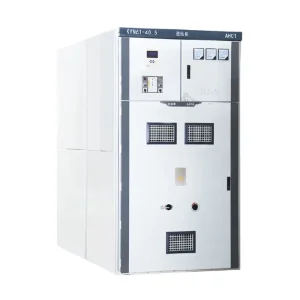
Complementary switchgear units, machine control transformers, and vacuum interruption systems engineered for balanced industrial deployment.