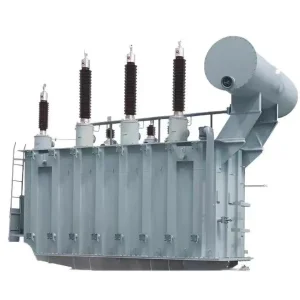
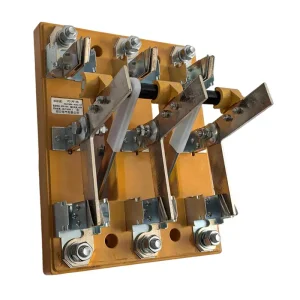
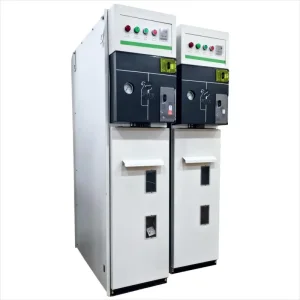
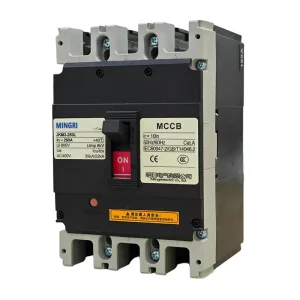
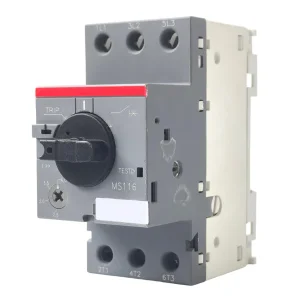
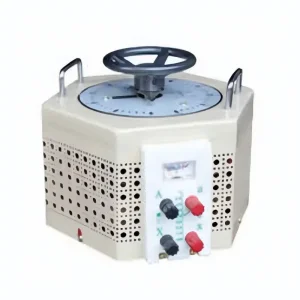
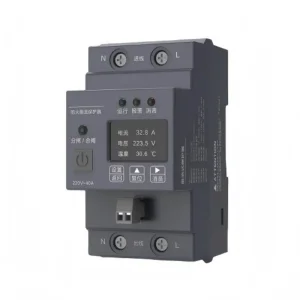
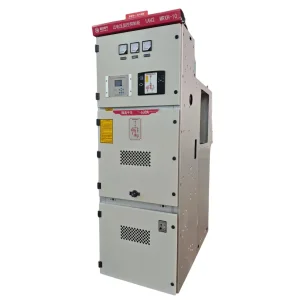
Featured Grid Distribution & Protection Solutions
Factory-direct intelligent switchgear, automated transfer systems, and precision circuit breakers engineered for high-density landscape enclosures and municipal power grids.
The Paradigm Shift: From Monolithic Substation Buildings to Landscape-Type Compact Nodes
Unpacking how advanced Chinese electrical engineering clusters solve high-density municipal land scarcity, aesthetic harmony constraints, and extreme environmental challenges.
In 21st-century power distribution architecture, the physical interface between the electrical grid and the urban ecosystem has undergone a fundamental transformation. Historically, medium-voltage (12kV to 40.5kV) stepped-down electrical substations were massive, brick-and-mortar facilities requiring extensive land zoning, costly civil engineering, and substantial architectural buffers to obscure their intrusive presence. As metropolitan land values surged and public scrutiny concerning electromagnetic radiation, acoustic emissions, and environmental aesthetics intensified, the power industry demanded an entirely new topology.
Enter the Landscape-Type Prefabricated Compact Substation (commonly categorized under the YBD series in standard industrial nomenclature). Designed with an architectural dual-nature, these systems seamlessly fuse semi-buried or fully underground high-voltage transformer chambers with above-ground, environmentally blended consoles. Rather than marring municipal greenbelts, historical conservation corridors, upscale residential quarters, or botanical parks, landscape-type substations integrate external claddings—such as stone composites, brushed fluorocarbon architectural metals, living green plant walls, or integrated public digital billboards—while confining high-voltage hazard zones beneath grade.
China has established unquestioned global leadership in this specialized discipline. Driven by the world's most aggressive urbanization and smart-grid modernization initiatives over the past two decades, Chinese electrical manufacturers centered in technological epicenters like Yueqing, Zhejiang, have mastered the complete engineering lifecycle of landscape-type enclosures. By harmonizing advanced heat dissipation fluid dynamics, submersion-proof IP68 seals, arc-resistant venting labyrinths, and solid/eco-gas dielectric insulation, Chinese suppliers now deliver turnkey, pre-commissioned, modular landscape solutions that reduce substation physical footprints by up to 72% and slash site civil engineering schedules by 60%.
China Factory 4.0: Supply Chain Resilience & Vertical Synergy
Why Tier-1 international EPC contractors and power utilities source landscape-type switchgear and substations directly from China’s hyper-integrated manufacturing ecosystems.
Sub-Zero Cluster Distance
In Yueqing, Zhejiang—the undisputed electrical capital of China—the entire value chain operates within a 20-kilometer radius. From high-conductivity electrolytic copper extrusion, vacuum interrupter manufacturing, and epoxy resin casting to CNC laser metal stamping, every component is vertically synchronized, reducing production lead-times from months to mere weeks.
Ecosystem ProximityRobotic Automation & Digital QA
State-of-the-art Chinese plants deploy 6-axis robotic welding cells, fully automated busbar punching lines, and automated vacuum leakage testing utilizing helium mass spectrometry. Every medium-voltage ring main unit (RMU) and transformer core undergoes rigorous partial discharge (PD) testing below <5pC at rated power frequency voltage.
Zero-Defect ProtocolCustomized Engineering (ODM/OEM)
Chinese manufacturers excel in agile prototyping. Whether designing a subterranean vault with hydraulic lifting mechanisms for flood protection, or configuring low-profile exterior cabinets with local native wood finishes or solar photovoltaic canopies, engineering teams adapt CAD/BIM specifications with remarkable turnaround agility.
Adaptive ModularityMacro-Industry Solutions: Where Landscape-Type Engineering Excels
Engineered to overcome strict geographical, spatial, environmental, and municipal zoning limitations across major global sectors.
High-Density Urban Municipalities
In mega-cities where real estate costs exceed $10,000 per square meter, dedicating land to a traditional substation is financially non-viable. Semi-buried landscape substations utilize the subsurface domain, with surface profiles disguised as park benches, landscaped flower beds, or decorative light pillars, liberating valuable surface acreage for civic use.
Scenic Parks & Eco-Tourism Resorts
Protected UNESCO heritage zones, national parks, and luxury eco-resorts prohibit industrial equipment that disrupts pristine natural views. Landscape-type enclosures blend into topography with simulated stone textures, low structural profiles, and sound attenuation systems that suppress operational transformer hum to ambient forest levels (<38 dB).
EV Supercharger Microgrid Hubs
Megawatt-scale DC fast-charging stations demand dedicated localized step-down transformers capable of handling massive, dynamic load fluctuations. Landscape-type substations integrate step-up/step-down transformers, harmonic-filtering capacitor banks, and smart load-balancing breakers in a pre-tested, plug-and-play kiosk installed directly within highway parking islands.
Coastal, Marine & Corrosive Zones
Offshore wind terminal landings, port facilities, and coastal resorts face severe salt-fog aerosol attacks. Chinese landscape enclosures utilize 316L marine-grade stainless steel or hot-dip galvanized composite shells with epoxy fluorocarbon coatings rated for ISO 12944 C5-M extreme marine corrosion categories, guaranteeing 30+ year service lives without structural degradation.
Technical Roadmap & Future Outlook: Toward Zero-Carbon & Autonomous Grids
How Chinese research institutions and manufacturers are driving the transition from SF6 greenhouse gas dependence to eco-friendly solid dielectric and digital twin networks.
| Performance Dimension | Traditional Brick Substation | Standard Box-Type (European/American) | Advanced China Landscape-Type (YBD) |
|---|---|---|---|
| Site Land Footprint (m²) | 120 - 250 m² | 25 - 45 m² | 6 - 15 m² (Up to 72% Savings) |
| Visual & Aesthetic Impact | Severe (Industrial concrete building) | Moderate (Industrial sheet-metal box) | Zero (Fully customized to surroundings) |
| On-Site Civil Construction Time | 3 - 6 Months | 2 - 4 Weeks | 2 - 5 Days (Turnkey Modular Prefab) |
| Acoustic Level at 1 Meter | 55 - 65 dB | 50 - 58 dB | < 42 dB (Acoustic baffling + underground burial) |
| Internal Arc Containment | Varies by design | IAC AFL 16kA 1s | IAC AFLR 20kA 1s (Chamber venting design) |
| Total Cost of Ownership (TCO) | High (High land, civil, maintenance costs) | Moderate (Subject to external weathering) | Lowest (Zero land purchase cost, 30+ yr shell) |
Localization Support, Testing Protocols & Global Compliance
Navigating international utility standards: Full alignment with IEC, IEEE, ANSI, and CE norms ensures flawless commissioning across all continents.
IEC 62271-202 Certified
All landscape-type prefabricated substations comply rigorously with IEC 62271-202 (High-voltage/low-voltage prefabricated substation) standards. Units undergo type testing in accredited laboratories (such as KEMA, CESI, and National High Voltage Apparatus Testing Centers) covering temperature-rise tests, dielectric ratings, short-circuit withstand, and mechanical endurance.
Standard ComplianceSeismic & Environmental Stress
Engineered to resist Zone 4 seismic acceleration profiles (0.4g peak ground acceleration) in accordance with IEEE 693 standards. Cabinets withstand severe mechanical shocks, vibration during maritime transit, and operating temperatures spanning Arctic extremes of -45°C to blistering desert peaks of +55°C without dielectric breakdown.
Harsh Environment ProofGlobal Engineering Dossier
Every export shipment is backed by exhaustive documentation: Bilingual CAD/BIM layout drawings, electrical schematic diagrams, Foundation Installation Drawings (civil engineering pit templates), FAT (Factory Acceptance Test) sign-off sheets, routine test reports, and 24/7 remote engineering support during site SAT and commissioning.
Turnkey DocumentationGlobal Enterprise Procurement Insights: Specifying Landscape Substations
To accelerate tender approvals and eliminate costly mid-project revisions, international procurement teams must communicate six essential technical parameters during preliminary inquiry.
1. Single Line Diagram (SLD)
Provide the complete medium-to-low voltage single-line diagram detailing the incoming MV feeder style (loop feed or radial), vacuum circuit breaker rating, current transformer (CT) ratios, and the low-voltage branch circuit breakout (outfeed MCCBs, power meters, and surge arresters).
2. Transformer Medium & Losses
Specify either dry-type cast resin (F-class insulation, preferred for urban centers with strict fire regulations) or oil-immersed hermetically sealed transformers (mineral oil or biodegradable natural ester, with Tier-2/Tier-3 eco-design no-load and load loss compliance).
3. Environmental & Seismic Criteria
State site installation elevation (derating required above 1000m ASL), maximum ambient air temperature, 24-hour humidity averages, corrosive category (C3, C4, or C5-M), and maximum water table depth for determining subterranean drainage sizing.
4. Architectural Integration Cladding
Select external above-ground decorative housing finishes: Brushed anodized aluminum, wood-grain composite paneling, anti-graffiti ceramic tile cladding, or public advertising LED interactive boards to achieve harmonious planning approval.
5. Automation & Communication
Clarify the RTU (Remote Terminal Unit) specification, power supply backups (DC UPS), and telecommunication protocol requirements—Modbus TCP/IP, IEC 60870-5-104, or IEC 61850 MMS—for direct integration into central utility SCADA platforms.
6. Shipping, Lifting & Site Logistics
Confirm maximum permissible shipping footprint (40ft High-Cube container compatibility vs Breakbulk), gross crane-rigging weights, and subterranean base pit excavation parameters to guarantee rapid offloading and seamless drop-in placement.
Frequently Asked Technical Questions
Addressing real-world engineering, installation, environmental, and financial questions from EPC managers, utility planners, and procurement directors.
High-Voltage Substations, Transformers & Protection Apparatus
Complementary medium-to-low voltage apparatus: Heavy power transformers, disconnect switches, MV switchgear, and intelligent safety controllers manufactured under ISO 9001 quality systems.