Flagship Industrial Switching Solutions
Factory-certified low-voltage switching devices engineered to IEC 60947-6-1 and UL 1008 international standards, delivering seamless failover, high dielectric withstand, and positive galvanic isolation.
The Global Landscape of Industrial Power Switching
Examining structural transformations across low-voltage and medium-voltage distribution systems amidst rapid decarbonization, electrification, and microgrid decentralization.
Macro Paradigm Shift: From Passive Interruption to Autonomous Grid Resiliency
In modern industrial facilities, the role of electrical switches has transformed from basic manual isolation into intelligent, autonomous protection and power diversion architectures. The convergence of edge-computing power quality sensors, high-speed electromechanical solenoids, and microprocessor-based logic units has positioned automatic transfer switches (ATS) and motorized load isolation switches at the center of energy security. With the rise of intermittent renewable generation, on-site energy storage systems (BESS), and hyperscale data computing clusters, transient faults and micro-interruptions represent severe financial and operational vulnerabilities. Contemporary switch manufacturers must deliver ultra-high short-circuit withstand ratings (Icw), advanced arc suppression mechanisms, and dual-source synchronizing capability that seamlessly balance load transfers without inducing downstream harmonic distortion or busbar mechanical collapse.
Grid Edge Electrification
The global shift toward high-power density electric vehicle (EV) fleet hubs, renewable step-up stations, and industrial heat pumps demands robust switching gear capable of enduring rapid inrush currents and continuous cycling without contact welding or dielectric breakdown.
Safety & Anti-Error Interlocks
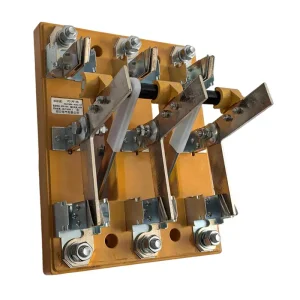
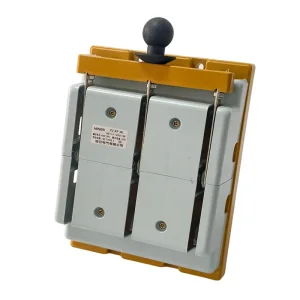
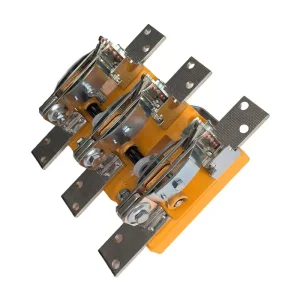
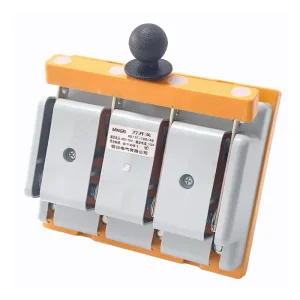
Personnel safety requires fail-safe mechanics. Modern knife switches like the HD11F and HS11F integrate physical transparent viewing windows, positive air-gap break points, and key-interlock systems that strictly prevent accidental operator engagement under heavy load.
Digital Asset Telemetry
Factory-built switchgear now natively embeds RS-485 Modbus and Ethernet communication protocols into automatic transfer switches, transmitting instantaneous voltage, phase angle, and contact life metrics directly to central supervisory control systems (SCADA).
Switch Classification & Specification Benchmarks
A comprehensive technical comparison of switching mechanisms for power distribution engineers, EPC procurement directors, and substation designers.
| Equipment Category | Core Functionality | Standards Compliance | Arc Quenching Media | Target Criticality Tier |
|---|---|---|---|---|
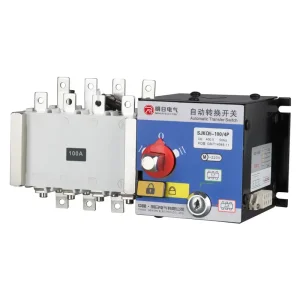
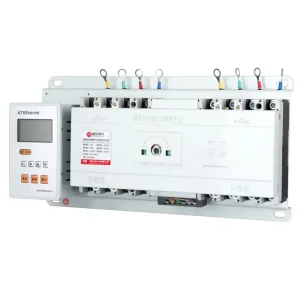
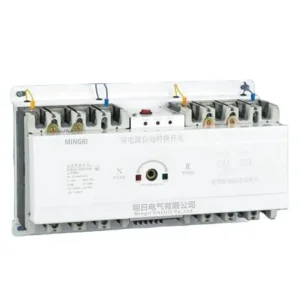
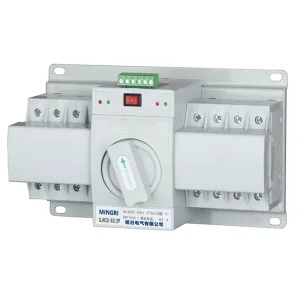
| Class PC Automatic Transfer Switch (ATS) (e.g., SJKQ5 / SJKQ2 Series) |
Dedicated double-throw switching without integral overcurrent trips; designed exclusively for high-reliability transfer. | IEC 60947-6-1 GB/T 14048.11 |
Multi-plate de-ionizing splitter chambers in open air. | Mission Critical Tier III/IV Data Centers, Hospitals |
| Class CB Automatic Transfer Switch (Integrated Breaker Architecture) |
Equipped with integral overcurrent release mechanisms to isolate overloads while enabling automated line transfer. | IEC 60947-2 UL 489 |
Molded-case air breakers or vacuum interrupters. | Commercial / Industrial Manufacturing, Logistics Hubs |
| Rotary & Knife Disconnect Switches (e.g., HD13BX / HS13BX Series) |
Visible air break galvanic isolation with anti-error interlock mechanism for line de-energization during maintenance. | IEC 60947-3 GB/T 14048.3 |
Atmospheric air break gap; optional arc chutes. | Maintenance Safety MCC Incomers, Machine Drives |
| Fused Knife Isolation Switches (e.g., HH15 / QSA Series) |
Combines rapid manual line disconnection with high-rupturing-capacity (HRC) fuse links for instantaneous short-circuit protection. | IEC 60269 IEC 60947-3 |
Enclosed ceramic fuse sand matrix + air break contacts. | Branch Protection Transformer Secondaries, Feeder Drops |
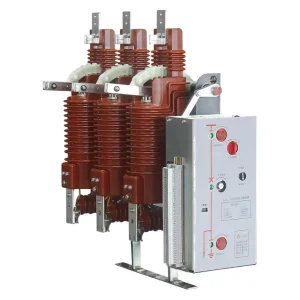
| Vacuum Circuit Breakers (VCB) (e.g., VSY2-12GD Series) |
High-voltage load switching, line fault interruption, and three-position grounding within primary distribution networks. | IEC 62271-100 IEC 62271-102 |
Hermetic ceramic vacuum interrupter bottle. | Primary MV Grid 12kV–40.5kV Substations, Solar Step-up |
Factory Insight on Contact Metallurgy: High-amperage switches produced in Yueqing manufacturing clusters utilize copper-tungsten and silver-nickel alloy tip compositions. This specialized metallurgical matrix prevents micro-fretting corrosion, limits thermal expansion differentials, and withstands peak short-time currents (Icw) up to 100kA without physical deformation or contact bridging.
Next-Generation Power Switching Innovations
How pioneering manufacturers are overcoming legacy thermal and mechanical constraints through solid-state semiconductors, eco-dielectric mediums, and AI-driven predictive health algorithms.
Solid-State & Hybrid Switching
Mechanical transfer delays of 30–80ms are unacceptable for advanced semiconductor fabs and AI server racks. Hybrid switching blends Silicon Carbide (SiC) solid-state transistors with fast mechanical contacts to achieve sub-quarter-cycle transfers (< 4ms) with zero physical arcing.
SF6-Free Eco-Gas Insulation
Medium-voltage switchgear is phasing out sulfur hexafluoride (SF6) due to its high GWP of 24,300. Modern factories are pioneering high-dielectric fluoronitrile gas blends and clean synthetic dry-air insulated compartments, preserving compact footprints with zero ozone or greenhouse liabilities.
Predictive Contact Analytics
Embedded infrared thermal probes and acoustic discharge sensors continuously gauge contact erosion, mechanical travel speed, and spring tension degradation. Real-time predictive maintenance algorithms proactively alert facility managers weeks before a mechanical latch failure occurs.
Internal Arc Flash Mitigation
Ultrafast optical arc detection links with optical pressure transducers to initiate current diversion within 2 milliseconds. This limits mechanical panel deformation, extinguishes hazardous plasma vapor, and shields surrounding technicians from catastrophic arc-flash explosive blast pressure.
Localized Scenarios & Turnkey Macro Solutions
From extreme desert solar collector arrays to hyperscale data infrastructure, our factory-built switching lineups are tailored to distinct operational environments.
Hyperscale Data Centers (Tier III / IV)
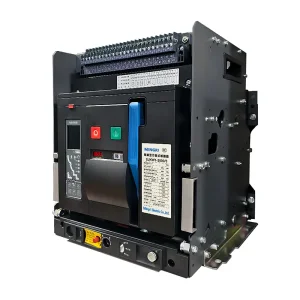
Utilizing high-speed closed-transition PC-Class ATS units (SJKQ series) coupled with intelligent universal circuit breakers (SJKW1). Delivers seamless zero-break synchronous transfers between dual primary grid feeders and standby diesel/gas rotary generators, safeguarding computational continuity.
Photovoltaic & BESS Step-Up Substations
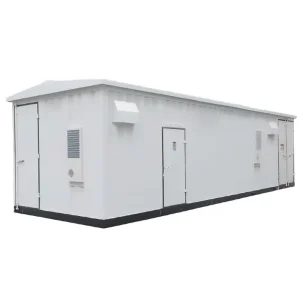
Deploying smart modular prefabricated cabin substations and vacuum circuit breakers (VSY2-12GD) paired with load isolation switches (HGL). Engineered for wide operating ranges (-30°C to +55°C), high altitude derating resistance, and multi-inverter array high DC/AC harmonic isolation.
Heavy Metallurgical & Chemical Processing
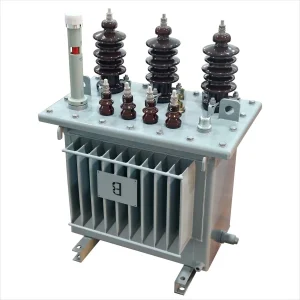
Severe corrosive environments contaminated with sulfur dioxide, humidity, and fine dust require IP65-sealed rotary knife disconnectors (HS13BX / HD13BX) and hermetically sealed oil-immersed transformers (S13-M). Features tin-plated busbars and specialized conformal coating on terminal blocks.
Integrated High & Low Voltage Switchgear Assemblies
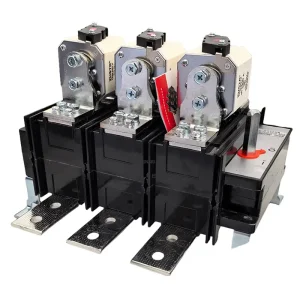
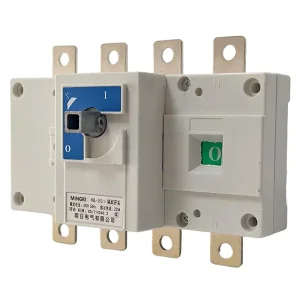
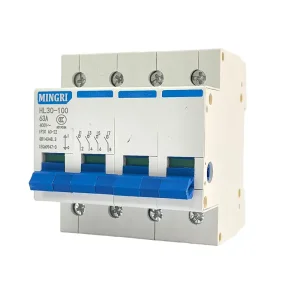
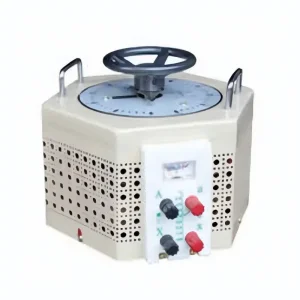
Comprehensive primary distribution apparatus engineered for seamless OEM/ODM integration, global grid interconnection, and robust heavy-industry electrification.
Frequently Asked Questions: Technical & Procurement Insights
Direct answers addressing complex engineering parameters, selection methodologies, and international compliance requirements for switchgear assemblies.