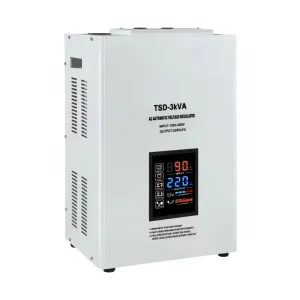
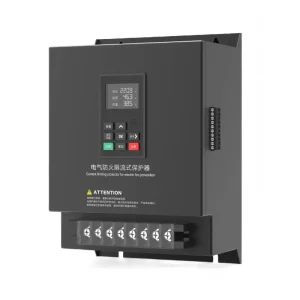
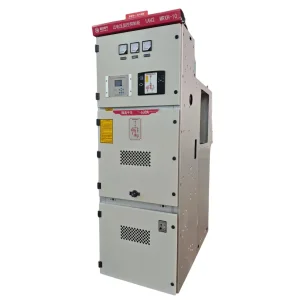
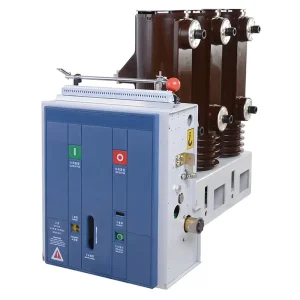
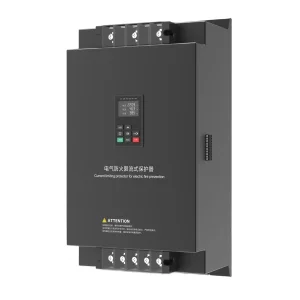
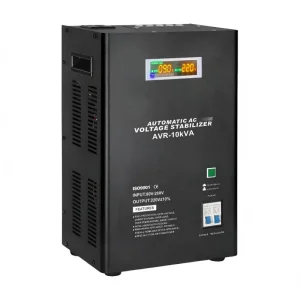
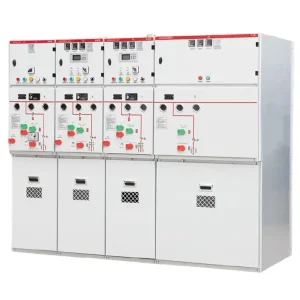
Featured Conversion & Switchgear Portfolio (Tier-1 Solutions)
Engineered for high-duty continuous operation across residential microgrids, industrial step-up substations, and critical facility distribution networks.
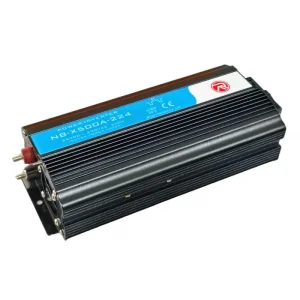
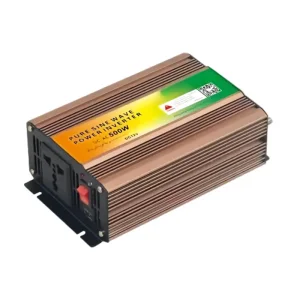
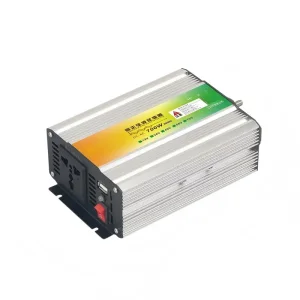
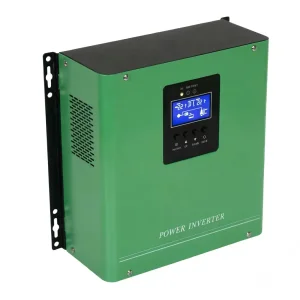
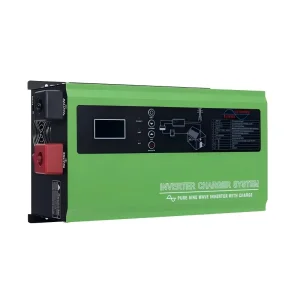
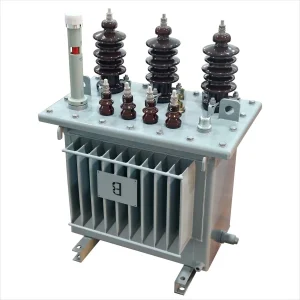
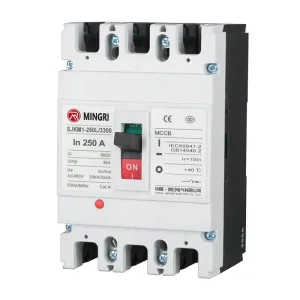
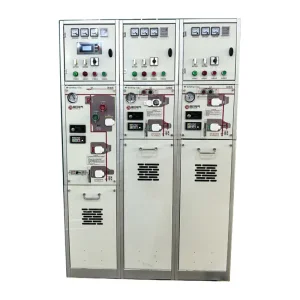
The Global Power Conversion Macro-Landscape
Decarbonization mandates, distributed energy resource management (DERMS), and the expansion of microgrids are accelerating demand for cutting-edge power inverters worldwide.
Global corporations face stringent environmental compliance alongside rising peak demand utility tariffs. Modern C&I installations demand multi-megawatt string topologies and hybrid energy storage system (BESS) inverters. These architectures bridge the gap between volatile renewable generation profiles and high-uptime production machinery, securing power continuity while lowering the Levelized Cost of Storage (LCOS).
Remote communities, islands, mining districts, and mission-critical data processing hubs are departing from monolithic centralized grids. Advanced bidirectional pure sine wave inverters with seamless grid-forming (GFM) control allow autonomous black-start capabilities, virtual inertia emulation, and sub-10ms transfer speeds between grid-tied and islanded modes without process interruption.
The paradigm shift from legacy Silicon IGBT switches to Wide-Bandgap (WBG) Silicon Carbide (SiC) and Gallium Nitride (GaN) MOSFETs enables switching frequencies exceeding 100 kHz. This leap shrinks the volumetric footprint of magnetics and passive filter components by 45%, decreases heat dissipation requirements, and lifts system conversion efficiencies beyond the 99% boundary.
The Yueqing Industrial Cluster & Chinese Factory Efficiency
How hyper-localized vertical integration, automated Surface Mount Technology (SMT), and rigorous environmental burn-in screening create world-class equipment economics.
Known as China's capital of electrical apparatus, Yueqing concentrates the entire supply chain within a 15-kilometer radius. From high-grade electrical steel laminations for distribution transformers to CNC precision-stamped enclosures, silver alloy contact points, toroidal copper coil winding, and multilayer printed circuit board fabrication, every sub-tier supplier operates in synchrony. This geographic concentration slashes component logistics lead times from weeks to hours, allowing rapid prototyping, streamlined custom modifications, and resilient production schedules immune to global shipping bottlenecks.
Modern Chinese power electronics factories employ automated high-speed Panasonic and Yamaha SMT placement lines capable of mounting components down to 0201 imperial sizing with 3D Optical and X-ray Inspection (AXI) for BGA solder joint validation. Following assembly, automated conformal coating guards against salt spray and industrial moisture. Crucially, 100% of manufactured inverters undergo full-load burn-in screening inside elevated-temperature environmental chambers (50°C for 4 to 24 hours) with cyclical dynamic load steps to induce early infant mortality failures before shipment.
| Evaluation Parameter | Western OEM Assembly | Standard Global Importers | Yueqing Integrated Factory (Mingri Paradigm) |
|---|---|---|---|
| NPI Engineering Prototyping | 16 – 26 Weeks | 12 – 18 Weeks | 3 – 5 Weeks |
| BOM Sourcing Redundancy | Single/Dual Western Sources | Fragmented Global Procurement | Deep Tier-3 Domestic Supply Cluster |
| Burn-In & Stress Screening | Sample Testing (AQL 1.0) | Spot Checking (Batch) | 100% Multi-Hour Elevated Temp Dynamic Screening |
| System Level Customization (ODM) | High Engineering Change Order Fees | Rigid Off-The-Shelf SKU Only | Agile Modular PCB & Firmware Modification |
| Comprehensive System Parity | Inverter Only; Switchgear Outsourced | Limited Cross-Category Synergy | Integrated Inverters, RMUs, MCCBs & Transformers |
Localized Application Scenarios & Engineering Implementations
Deploying tailored power conversion topologies across challenging climate conditions, mission-critical infrastructure, and industrial utility corridors.
Utility-scale generation relies on high DC bus configurations (up to 1500V DC) paired with central or multi-MPPT string inverters. These units interface directly with step-up transformers (such as the S13-M 10kV hermetically sealed models) and MV ring main switchgear, minimizing transmission losses across large spatial layouts while meeting strict power curtailment and low-voltage ride-through (LVRT) grid requirements.
Harsh installations demand heavy-duty IP65 or IP66 enclosures with isolated heatsink air tunnels preventing abrasive conductive dust, sulfur, and salt-laden humidity from touching sensitive internal gate drivers. Solid-insulated ring main units (such as GXGN-12) coupled with heavy-duty modified or pure sine wave units provide robust resilience against frequent motor-starting inrush currents.
Critical telecommunication base stations and compute clusters require pure sine wave outputs with Total Harmonic Distortion (THD) under 2%. Hybrid inverter architectures provide zero-millisecond transfers via solid-state static transfer switches (STS) and intelligent electrical fire current-limiting protectors, ensuring clean AC sinewaves to sensitive IT power supply units.
Emerging Trends Shaping the Power Electronics Sector
Architectural shifts toward bidirectional four-quadrant operation, edge telemetry, and digital twins are redefining reliability metrics.
As conventional synchronous turbines retire, inverter-based resources must supply active voltage and frequency support. Grid-forming inverters emulate the physical inertia of heavy rotor machinery via Virtual Synchronous Generator (VSG) algorithms, delivering instantaneous damping torque and short-circuit current injection during transient utility disturbances.
Traditional Perturb and Observe (P&O) and Incremental Conductance algorithms exhibit tracking latency during dynamic cloud coverage or partial array shading. Next-generation hybrid inverters utilize embedded neural networks to predict global maximum power points within milliseconds, unlocking an additional 3.5% to 6.2% annual energy yield.
Vehicle-to-Grid (V2G) and smart commercial energy storage demand unified bi-directional power conversion systems. Modern dual-active-bridge (DAB) topologies and high-frequency resonant LLC converters facilitate bidirectional power flow, allowing seamless discharge from EV fleets into commercial facilities during expensive peak tariff windows.
Real-time high-speed DSP sampling monitors electrolytic capacitor ripple currents, IGBT junction temperatures, and gate-drive voltage degradation. By projecting Remaining Useful Life (RUL) through edge-computed algorithms, maintenance teams can schedule service interventions before thermal runaway or catastrophic flashover occurs.
System integrators are pairing power inverters with SF6-free distribution gear to comply with stringent EU F-gas regulations. Dry-air insulated ring main units and solid-dielectric switchgear protect high-voltage step-up nodes while completely eliminating greenhouse gas leakage risks over a 30-year operational lifecycle.
Distributed module-level power electronics (MLPE) leverage Gallium Nitride FETs operating at multi-megahertz frequencies. This design eliminates heavy transformers, achieving power densities above 2.5 W/cm³ with micro-form-factors directly integrated into commercial PV mounting rails.
Global B2B Procurement Specifications & RFQ Engineering Guidelines
A rigorous checklist for EPC contractors, utility engineers, and procurement directors auditing power conversion apparatus and switchgear manufacturers.
- Continuous vs. Surge Power Capability: Define duration parameters (e.g., 150% overload for 10 seconds; 200% surge for 2 seconds) for inductive inductive load starting (HVAC compressors, hydraulic pumps).
- Total Harmonic Distortion (THD-V & THD-I): Demand linear load THD < 2.5% and non-linear load THD < 4.0% compliant with IEEE 519 standards to protect sensitive industrial PLCs.
- Galvanic Isolation vs. Transformerless Topologies: Identify whether site regulations mandate high-frequency ferrite isolation or low-frequency copper galvanic isolation for common-mode DC ground-fault mitigation.
- Thermal Derating Curves: Request verified output capacity curves up to 60°C ambient temperatures. Ensure full rated capacity is maintained without thermal throttling up to at least 45°C.
- International Testing Reports: Request third-party type test certifications (TÜV Rheinland, Intertek, UL) for IEC 62109-1/2, UL 1741-SB, IEEE 1547-2018, and CE Low Voltage / EMC Directives.
- Switchgear & Protection Coordination: Verify compatibility between the inverter’s internal DC/AC breaker settings and the downstream MCCB / Ring Main Unit clearing curves to prevent nuisance tripping.
- Manufacturing Quality Systems: Require documented ISO 9001 (Quality), ISO 14001 (Environmental), and ISO 45001 (Occupational Health) credentials covering both SMT and final integration lines.
- Warranty Reserves & Spare Parts Availability: Require clear factory warranty terms (standard 5-year or 10-year extended) backed by localized component buffer stocks for rapid spare part dispatch.
Frequently Asked Questions (Industrial & Technical Q&A)
Addressing engineering inquiries regarding harmonic mitigation, topologies, certifications, and procurement procedures.
Distribution Transformers, Protection Devices & Compact Substations
Complementary medium- and low-voltage switchgear engineered to integrate with industrial inverter banks, solar fields, and commercial facilities.