Primary Low-Voltage Circuit Breakers & Fire Prevention
Engineered to IEC/EN 60898-1 and IEC 60947-2 international standards, covering DIN-rail MCBs, electronic trip units, motor protectors, and air circuit breakers.
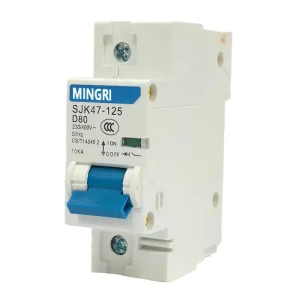
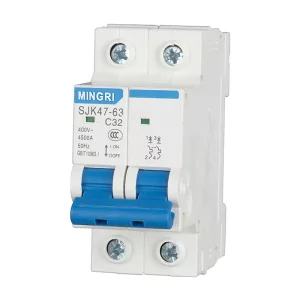
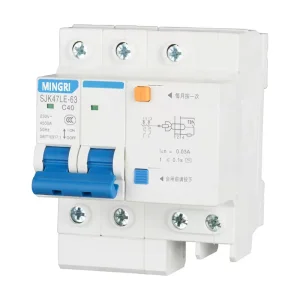
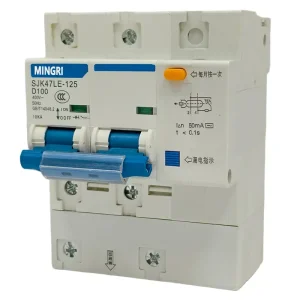
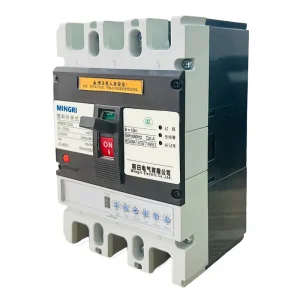
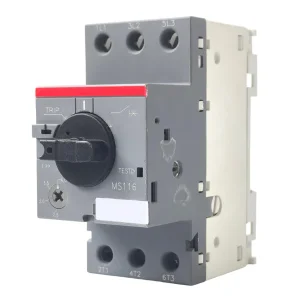
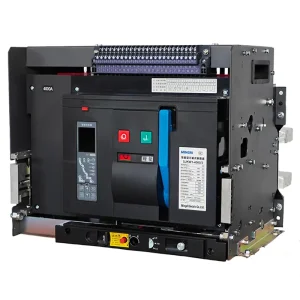
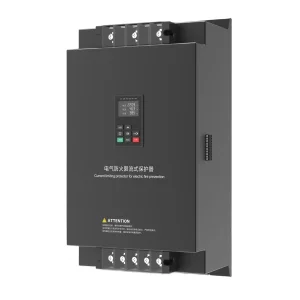
Miniature Circuit Breaker (MCB) Operational Mechanics
A rigorous examination of thermo-magnetic tripping characteristics, arc-quenching chute hydrodynamics, and electrodynamic contact opening kinetics essential for project engineering specifications.
Inverse-Time Thermal Overload
Thermal protection utilizes a calibrated bimetallic strip composed of two bonded alloys with disparate thermal expansion coefficients. Continuous current overloads generate resistive Joule heating (I²t), triggering mechanical deflection that releases the operating catch mechanism with inverse-time delay behavior.
- Calibrated ambient temperature: 30°C to 40°C
- Non-tripping current: 1.13 In (t > 1h)
- Tripping current: 1.45 In (t < 1h)
Instantaneous Magnetic Short-Circuit
Short-circuit currents trigger an electromagnetic solenoid cylinder where instantaneous high ampere-turns displace a ferromagnetic armature plunger. This drives rapid contact parting within milliseconds, extinguishing fault currents long before they reach catastrophic peak thermal magnitudes.
- Response velocity: 2.5 ms to 4.0 ms
- Magnetic core: High-permeability silicon steel
- Class 3 energy-limiting performance
De-ion Arc Extinction Matrix
During separation, the electric arc is driven by Lorentz electromagnetic forces along copper arc runners into a multi-plate de-ionizing chamber (11 to 13 nickel-plated steel plates). The arc splits into mini-arcs, cooling gas rapidly, elevating total arc voltage above source voltage, and ensuring safe zero-crossing extinction.
- Arc chute splitter: 0.8 mm cold-rolled steel
- Exhaust deflector with gas cooling mesh
- Zero external flashover risk
Standard Trip Curves & International Selection Criteria
Selection of the appropriate instantaneous trip curve is vital to prevent nuisance tripping during transient inrush currents while ensuring rapid fault clearing within loop impedance requirements (IEC 60364-4-41).
| Trip Curve Type | Magnetic Trip Range | Typical Transient Inrush Ratio | Standard Applications | Engineering Recommendation |
|---|---|---|---|---|
| Type B | 3 In to 5 In | Low or negligible surge currents | Resistive loads, domestic lighting, long cable runs, electric heaters | Prevents high touch voltage on long distribution circuits with high earth loop impedance. |
| Type C | 5 In to 10 In | Moderate inductive switching surge | General commercial illumination, fluorescent banks, small electric motors, IT power units | The global benchmark specification for general sub-circuit branch protection. |
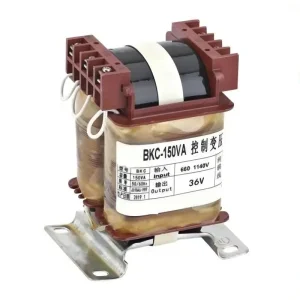
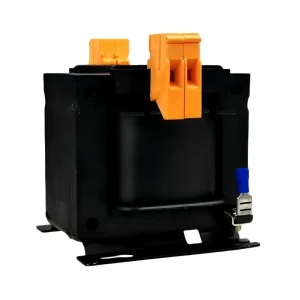
| Type D | 10 In to 20 In | High inductive or capacitive surges | Heavy industrial motors, MV/LV control transformers, X-ray apparatus, large compressors | Tolerates high start-up currents without tripping while clearing true short-circuits. |
| Type K / Z | 8 In to 12 In / 2 In to 3 In | Specialized micro-surge & sensitive circuits | Semiconductor rectifiers, PLC input/output cards, delicate electronic instrumentation | Ultra-fast magnetic responsiveness protecting sensitive silicon power components. |
Sourcing Advantages from China's Industrial Electrical Hub
Why Tier-1 global EPC contractors, switchboard builders, and OEM brands concentrate their procurement in China's Yueqing (Liushi) electrical cluster.
Hyper-Concentrated Supply Cluster
Located in Yueqing, Zhejiang—the globally recognized "Capital of China's Electrical Apparatus"—our facilities operate within a complete, self-sustaining industrial supply chain within a 20-kilometer radius.
- Instant raw material sourcing (AgCdO contacts)
- In-house precision tool & die tooling
- Lead times compressed by 40% vs. regional peers
Fully Automated Assembly Lines
Transitioned from manual assembly to high-speed robotic riveting, laser calibration of bimetallic elements, and multi-station computer vision quality inspection stations operating with sub-millimeter precision.
- Robotic terminal torque calibration
- Automated CCD optical polarity validation
- Defect rates reduced below 15 PPM
CNAS Accredited Testing Labs
Our direct manufacturing facilities feature high-power test stations capable of testing prospective short-circuit breaking currents up to 20 kA, temperature rise racks, endurance rigs, and glow-wire fire testers.
- Routine 100% thermal/magnetic trip screening
- Dielectric withstand up to 2,500V
- Third-party testing support (TUV, KEMA, CE)
Flexible OEM & ODM Customization
Complete flexibility for multi-national brands and switchgear manufacturers requiring custom branding, pad printing, tailored pole configurations (1P+N, 3P+N, 4P), and custom trip characteristics.
- Bespoke enclosure color matching (RAL shades)
- Integrated auxiliary & shunt trip modules
- Private label packaging & QR traceability
By integrating upstream copper rod drawing, silver alloy contact stamping, and in-house engineering thermoplastic injection (PA66 reinforced with 25% glass fiber), Chinese manufacturers maintain tight cost structures while mitigating cross-border raw material volatility. This backward integration provides international importers with predictable unit pricing and guaranteed delivery timelines during volatile market periods.
Industry Trends: The Next Generation of Circuit Protection
From passive mechanical interrupting devices to active digital energy management nodes designed for smart grids, renewable energy, and microgrid deployments.
Smart IoT & Microprocessor Breakers
Traditional thermal bimetals are being paired with micro-electromechanical sensors and embedded ARM microcontrollers. Modern smart MCBs continuously capture Class 1.0 energy metering, voltage spikes, current waveforms, and contact temperature.
- Modbus-RTU, RS485, Wi-Fi & Zigbee protocols
- Motorized remote actuation (Open/Close)
- Predictive failure analytics via thermal telemetry
High-Voltage DC Breakers for PV & BESS
With direct current lacking a natural periodic zero-crossing point, extinguishing a DC arc poses severe challenges. Next-generation DC MCBs incorporate permanent magnetic blowout magnets that force DC arcs into specialized wide-gap splitters.
- Rated DC voltage up to 1000V / 1500V DC
- Non-polarized wiring designs for safety
- Certified to IEC 60947-2 Annex P requirements
Sustainable & Halogen-Free Materials
Environmental regulations (RoHS, REACH, and circular economy directives) require elimination of toxic halogens, red phosphorus, and heavy metal plating. Breaker housings now employ bio-based polyamides with UL94 V-0 flame-retardant chemistry.
- 100% recyclable thermoplastic casing parts
- Cadmium-free silver alloy contacts (AgSnO2)
- Reduced carbon footprint throughout product lifecycle
Localized Application Scenarios & Field Configurations
Tailored protection strategies configured for diverse electrical distribution environments, ensuring safety and compliance across global jurisdictions.
Residential Consumer Units
Protection of household final sub-circuits against sustained thermal overload and direct short circuits. Seamlessly paired with Residual Current Devices (RCCB/RCBO) to protect against electrocution and earth fault fires.
- Trip curve: Type B or C (4.5 kA / 6 kA)
- Configurations: 1P, 1P+N (DPN 18mm)
- Standard DIN-rail TS-35 mounting
Commercial & Data Infrastructure
Designed for mission-critical uninterrupted environments including data server racks, modern hospitals, and corporate office parks where high breaking capacity and selective discrimination are paramount.
- Trip curve: Type C (10 kA breaking Icn)
- Selectivity coordination with main ACBs
- Auxiliary contacts for BMS alarm integration
Industrial Automation & Motors
Motor control centers (MCC) and production machinery facing continuous motor starting currents. Eliminates nuisance tripping during rotor inrush while maintaining tight protection for induction windings.
- Trip curve: Type D or specialized MS116
- High inrush capacity: 10 In to 14 In
- Direct motor starter combination setups
Renewable PV & EV Fast Charging
Solar string combiner boxes, energy storage battery systems (BESS), and electric vehicle charging points. Designed to extinguish stubborn DC arcs and tolerate harsh outdoor ambient temperatures.
- Rated DC voltages: 250V up to 1000V DC
- Temperature de-rating performance to +70°C
- IP65 external distribution box integration
Holistic MV/LV Grid Solutions: From Substation to Terminal Branch
Reliable circuit protection extends beyond isolated components. Our comprehensive manufacturing portfolio integrates medium-voltage ring main units (RMU), transformers, and low-voltage switchboards.
Cascade Discrimination Engineering
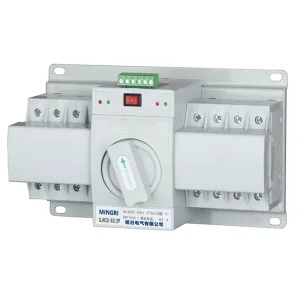
Ensuring complete selectivity between Air Circuit Breakers (ACB) in main intake panels, Molded Case Circuit Breakers (MCCB) in distribution boards, and terminal MCBs. During downstream sub-circuit faults, only the immediate upstream breaker trips, isolating the faulted branch while maintaining continuous operation for adjacent circuits.
- Total selectivity curves plotted with verified software
- Optimized let-through energy (I²t) coordination
- Elimination of costly building-wide outages
Integrated Electrical Fire Prevention
Traditional overcurrent breakers cannot detect low-magnitude series arcing or slow insulation degradation that generate localized heat and fire. By coupling MCBs with three-phase current limiting protectors and electronic residual protection (RCCB/RCBO), our system suppresses fire threats at the microscopic initiation phase.
- High-speed current limiting interruption (<10ms)
- Real-time residual leakage current detection
- Compliance with NFPA 70 and IEC 60364 fire standards
Complete Turnkey Substation Architecture
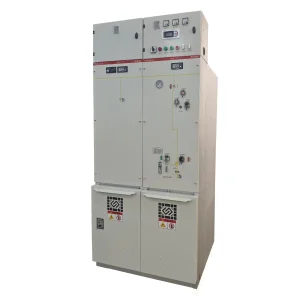
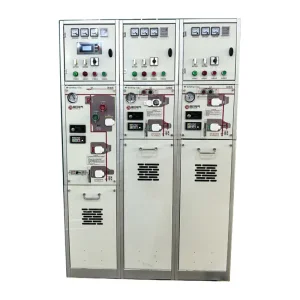
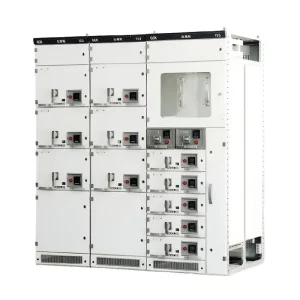
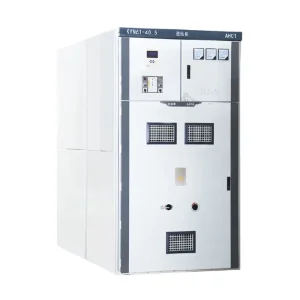
Mingri Electric delivers complete power solutions from high-voltage grid interfaces (KYN61-40.5, KYN28-12 switchgear) and gas-insulated ring main units (SafeRing-12/40.5) to step-down oil/dry transformers and low-voltage distribution assemblies (GCK, GCS, MNS), terminating at DIN-rail MCB distribution points.
- Unified design warranty from MV to final LV branch
- Single-source accountability for EPC contractors
- Direct factory engineering technical support
Global Enterprise Procurement: Sourcing & Compliance Framework
A systematic audit guide for international buyers, EPC purchasing managers, and electrical equipment importers evaluating factory partners in China.
1. Standards & Type Testing Validation
Ensure that prospective suppliers provide valid, unexpired third-party type test certificates from ILAC-MRA recognized bodies (e.g., DEKRA, KEMA, TUV, ASTA, or CEPREI). Key test reports must include short-circuit breaking capacity (Icn/Icu), electrical endurance under load, dielectric withstand, and glow-wire flammability.
- IEC/EN 60898-1 (Household / Domestic)
- IEC/EN 60947-2 (Industrial applications)
- CE, CB, RoHS, and REACH verification
2. Factory On-Site Quality Assurance
Verify that the manufacturing site strictly operates under ISO 9001, ISO 14001, and ISO 45001 management systems. Conduct deep audits into incoming raw material inspection (IQC), in-process quality control (IPQC), and end-of-line 100% routine automated calibration testing for thermal and instantaneous magnetic trip mechanisms.
- Silver contact alloy thickness spectrometry
- Automatic trip current calibration test benches
- Traceable batch serialization & barcode tracking
3. Logistics & Lifecycle Support
Evaluate packing integrity (reinforced seaworthy corrugated export cartons, vacuum moisture barrier bagging for ocean freight) and logistical proximity to international deep-water ports (Ningbo and Shanghai). Establish clear Service Level Agreements (SLAs) for engineering technical support and replacement parts delivery.
- Direct container loading from factory floor
- Export documentation (CO, Form E, SASO support)
- Comprehensive 24 to 36 month warranty policies
Frequently Asked Questions on MCB Sourcing & Engineering
In-depth answers addressing key technical specifications, standard compliance, curve selection, and procurement procedures.
Medium-Voltage Switchgear, RMUs & Substation Infrastructure
Complementing our low-voltage MCB lines with medium-voltage gas-insulated switchgear, compact secondary substations, and industrial power distribution transformers.