Industrial & Enterprise UPS Systems for Southern Africa
Precision-engineered Uninterruptible Power Supply (UPS) units engineered for severe grid voltage fluctuations, extended battery runtime requirements, and harsh sub-Saharan environmental parameters.
-
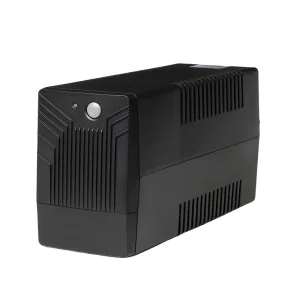
Wholesale MCEX/MCTA Series Standby UPS Power Supply for South Africa Retail & Branch Stations
View Specifications › -
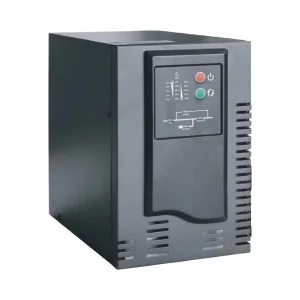
High-Quality MCHF Series High Frequency Online UPS for South Africa Edge Computing & IT Data Racks
View Specifications › -
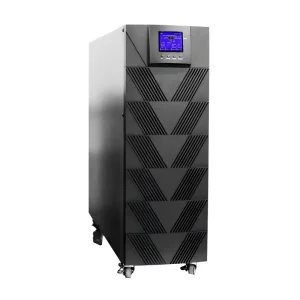
ODM MCL31 Series Low Frequency UPS with Built-In Isolation Transformer for High-Surge African Grids
View Specifications › -
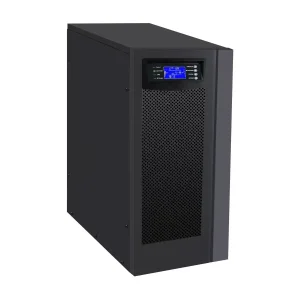
High-Quality MCL33 Series 3-Phase Industrial Frequency Online UPS for Heavy Industry & Mining Operations
View Specifications ›
The South African Grid Landscape: Engineering Past Load-Shedding Constraints
South African industrial and commercial operators face operational hurdles unlike any other developed manufacturing hub. Continuous load shedding, erratic transient voltages, and aggressive grid reconnect spikes necessitate a complete rethink of UPS hardware engineering.
Stage 1–8 Load Shedding Cycling
Standard global UPS units are engineered for brief utility drops (10–15 minutes) before backup diesel gensets stabilize. In South Africa, industrial facilities endure scheduled power outages spanning 2 to 4.5 hours up to three times daily. This punishing duty cycle accelerates VRLA battery dry-out, thermal runaway, and premature component fatigue in consumer-grade equipment.
Switching Sags & Inrush Spikes
Upon feeder reconnection after a load-shedding block, distribution lines experience massive transient overvoltages (reaching 300V+ on single-phase lines) alongside deep harmonic resonance. Without industrial-grade input filters, MOV surge arrestors, and heavy-duty galvanic isolation, standard UPS rectifiers suffer catastrophic semi-conductor puncture.
Sub-Saharan Atmospheric Extremes
From the high-altitude, thin atmosphere of Gauteng (1,700m+ above sea level leading to thermal derating) to the corrosive coastal humidity of Durban and Cape Town, equipment must be designed with conformal PCB coatings, oversized thermal heatsinks, and optimized IP31 to IP54 ingress protection ratings.
Strategic Procurement: Optimizing TCO via Next-Gen Battery & Inverter Topologies
For procurement directors, engineering heads, and EPC contractors operating in South Africa, CapEx represents merely 20% of an industrial power solution’s true lifecycle cost. Energy conversion losses, battery replacement intervals, and unbudgeted plant downtime form the bulk of the TCO iceberg.
The Lithium Iron Phosphate (LiFePO4) Paradigm Shift
Traditional Valve-Regulated Lead-Acid (VRLA) batteries fail within 6 to 9 months under daily stage 4 to 6 load-shedding schedules due to chronic incomplete recharging states (PSoC) and chemical degradation. Industrial procurement standards in Southern Africa now mandate Lithium Iron Phosphate (LFP) energy storage:
- Cycle Life Superiority: 5,000 to 8,000 cycles at 80% Depth of Discharge (DoD) vs. 300 to 500 cycles for standard lead-acid.
- High-Rate Charging Capabilities: 0.5C to 1C rapid recharge rates replenish the entire battery bank in under 2 hours, fully ready for the next scheduled load-shedding slot.
- Thermal Resilience: Operating range up to 45°C without active air conditioning, saving significant HVAC parasitic loads.
- Integrated Smart BMS: Real-time Cell-level telemetry over CAN bus, RS485, and Modbus-TCP directly into plant DCS and SCADA networks.
Total Cost of Ownership (TCO) Architectural Comparison
When evaluated over a 10-year operational horizon in Johannesburg or Richards Bay, our Online Industrial Frequency topologies combined with LFP energy storage deliver up to 52% TCO savings compared to standard commercial UPS platforms paired with lead-acid arrays:
| Metric | Legacy Commercial UPS | Industrial LFP System |
|---|---|---|
| Battery Replacement | Every 12–18 Months | Zero (10+ Year Design Life) |
| Conversion Efficiency | 90%–92% (High Heat Loss) | 95.5%–99% (ECO Mode) |
| Grid Reconnect Tolerance | High Component Failure | Galvanic Isolation Protection |
| Mean Time Between Failure | 120,000 Hours | > 450,000 Hours |
Tailored Power Protection Across High-Value South African Industries
No two operational plants share the same electrical signature. We deploy modular, hot-swappable, and ruggedized transformer-based topologies configured to isolate distinct load anomalies.
Deep Mining & Metallurgy
In the platinum, gold, and diamond belts of the Bushveld Igneous Complex and Witwatersrand basin, ventilation fans, dewatering pumps, and hoisting machinery demand zero micro-cuts. Our industrial MCL33 series incorporates internal isolation transformers to suppress massive ground potential rises and handle heavy motor starting inrushes without switching to bypass.
Tier III/IV Hyperscale Data Centers
Johannesburg, Cape Town, and Durban have emerged as cloud hubs for multinational providers. We manufacture modular, high-density high-frequency online UPS architectures offering 2N and distributed redundancy, sub-millisecond static transfer switching, and zero-break energy transition conforming to Uptime Institute certifications.
Healthcare & Precision Manufacturing
Private hospital networks and continuous automotive assembly plants (e.g., Eastern Cape and Rosslyn hubs) require pure sine wave voltage purity. Our systems eliminate harmonic distortion (THDi < 3%), suppress common-mode electrical noise, and guarantee SANS 10142-1-7 medical facility compliance for imaging and life-support nodes.
Technical Roadmap: The Convergence of SiC Semiconductors & Grid-Interactive UPS
The future of critical energy infrastructure lies beyond reactive backup. We are actively incorporating advanced wide-bandgap semiconductors, bidirectional grid integration, and AI-powered predictive diagnostics into every industrial power core.
Silicon Carbide (SiC) Topologies
By transitioning from silicon IGBTs to Silicon Carbide (SiC) power MOSFETs, our latest generation inverters achieve switching frequencies up to 100 kHz. This slashes system heat dissipation by 45%, increases double-conversion efficiency up to 97.5%, and reduces equipment footprint by over 30%—critical for containerized edge installations.
Grid-Interactive & VPP Monetization
Our UPS architectures are designed with bidirectional rectifiers capable of Virtual Power Plant (VPP) integration. Commercial users can shave peak loads during Eskom Megaflex high-demand tariff periods and participate in future demand response programs by feeding stored clean solar energy back into the internal plant bus.
AI Predictive Diagnostics & Digital Twins
Integrated IoT sensors continuously monitor capacitor Equivalent Series Resistance (ESR), semiconductor thermal dissipation profiles, and fan vibration harmonics. Machine learning algorithms predict potential component wear 90 days before failure occurs, enabling scheduled, proactive maintenance without downtime.
South African Electrical Compliance & Engineering Standards
Deployment of mission-critical power systems within South Africa requires rigorous adherence to statutory safety frameworks, utility interconnect codes, and EMC emission limits. All our manufacturing processes are certified to international and national standards:
| Regulatory Standard | Governing Scope | Engineering Compliance Strategy |
|---|---|---|
| SANS / IEC 62040-1 | General & Safety Requirements for UPS | Complete electrical safety isolation, fire-retardant enclosures, anti-arcing busbar isolation, and touch-safe IP20/IP31 barrier protections. |
| SANS / IEC 62040-2 | Electromagnetic Compatibility (EMC) | Category C2/C3 certified filters prevent harmonic interference with sensitive instrumentation, PLCs, telecommunication backbones, and radios. |
| SANS / IEC 62040-3 | Performance & Test Methods | Verified VFI-SS-111 classification (Voltage and Frequency Independent) ensuring zero phase discontinuity and seamless double-conversion delivery. |
| NRS 048-2 / NRS 097-2-1 | South African Power Quality & Grid-Tie | Fault Ride-Through (FRT) capabilities, total harmonic distortion mitigation (THD < 3%), and certified rapid anti-islanding switchgears. |
| OHS Act (Occupational Health & Safety) | South African Plant Safety Mandates | Emergency Power Off (EPO) integration, battery string ground fault detection, and arc flash mitigations compliant with local electrical inspections. |
Switchgear, Distribution Panels & Isolation Systems
A UPS does not operate in a vacuum. True plant uptime requires a synchronized electrical distribution ecosystem, from low-voltage distribution boards to robust transfer contactors, high-voltage tap changers, and fail-safe isolating knife switches.
-
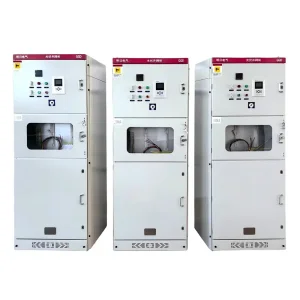
China GGD AC Low Voltage Distribution Cabinet 380V/50Hz for South Africa Utility Sub-Distribution & UPS Bypass
View Specifications › -
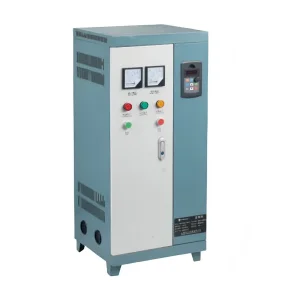
ODM MC3000 Series Variable Frequency Drive Cabinets for Industrial Pumping & Ventilation Drives
View Specifications › -
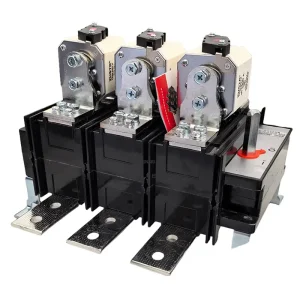
HH15(QSA) Knife Melt Isolation Switch with Fuse for Plant UPS Maintenance Bypass Protection
View Specifications › -
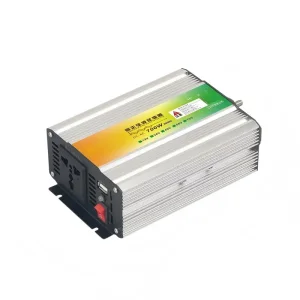
MCC Series Modified Sine Wave Inverters for Commercial Load-Shedding Standby Auxiliary Units
View Specifications › -
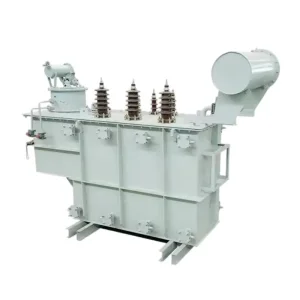
ODM SZ11/SFZ11 35kV On-Load Tap Changing (OLTC) Regulator Transformers for Substation Voltage Stability
View Specifications › -
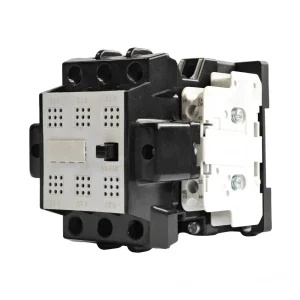
OEM CJX1 (3TB) Series Industrial AC Contactors 9–400A (380V AC-3) for ATS & Inverter Switching
View Specifications › -
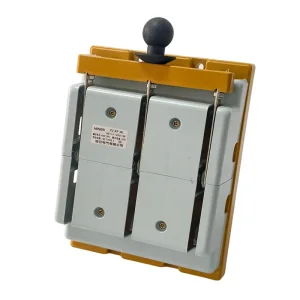
ODM HD11F Double-Throw Anti-Error Changeover Knife Switch (200A–1500A) for Mains/UPS/Gen Changeovers
View Specifications › -
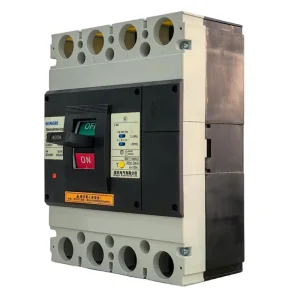
OEM SJKM3L Earth Leakage Circuit Breaker (ELCB/RCCB 230V/415V) for South African Electrical Safety
View Specifications ›
Frequently Asked Technical Questions (FAQ)
Authoritative answers to common engineering, procurement, and operational questions regarding UPS deployment within the South African power grid.
Consult Our Critical Power Engineering Team
Need custom single-line diagrams, tender-grade compliance datasheets, or a comprehensive TCO proposal for your industrial, commercial, or mining infrastructure project in South Africa?
Send Inquiry Now