Specialized Circuit Breakers & Disconnectors for Osaka Regional Deployments
Engineered for high-density industrial switchboards, robotic manufacturing cells in Higashiosaka, and coastal utility lines across Osaka Bay.
Osaka’s Industrial Infrastructure & Western Japan’s 60Hz Synchronous Architecture
Supplying specialized electrical breakers and secondary distribution protection to the Kansai economic sphere requires more than catalog distribution; it necessitates deep synchronization with Osaka's distinct mechanical density and Western Japan's 60Hz utility framework.
Unlike Eastern Japan operating at 50Hz, the Kansai Electric Power Company (KEPCO) transmission umbrella functions strictly at 60Hz. While seemingly incremental, this higher operational frequency induces faster thermal cycling, altered magnetic flux densities in solenoid trip coils, and accelerated contact erosion rates during arc quenching across alternating current zero-crossings. OEM manufacturers delivering non-standard or "other" breakers (beyond conventional domestic consumer miniature breakers) must engineer their arc splitters, blow-out coils, and digital trip parameters specifically for 60Hz short-circuit waveforms.
Furthermore, the Osaka prefectural territory combines two extreme industrial topographies: the dense, high-vibration precision engineering workshops of Higashiosaka, and the hyper-saline, petrochemical marine belt extending from Sakai-Senboku to Osaka Bay and Yumeshima. These operating environments demand galvanic isolation, high interruption capacities (up to 100kA Icu), and mechanical linkages verified against regional seismic wave accelerations (Nankai Trough mitigation criteria).
| Parameters | Osaka / Kansai Grid (KEPCO) | Engineering Implications |
|---|---|---|
| Rated System Frequency | 60 Hz (±0.2 Hz tolerance) | Higher $di/dt$ slope at zero crossing; requires tuned arc runners. |
| Atmospheric Corrosivity | ISO 9223 C3 to C5 (Bay Zone) | Nickel/silver plated bus connections; anti-sulfuration treatment. |
| Seismic Spectrum | JIS C 0040 / 0.6g ZPA Response | Reinforced latching assemblies; zero false trips under shear forces. |
| Short-Circuit Stress | High Fault Density (Substation level) | Electrodynamic repulsion compensation in rotary disconnectors. |
| Standards Baseline | JIS C 8201 / IEC 60947 Series | Dual-rated compliance for local installation and global export OEM. |
Engineering Taxonomy of "Other Breakers" & Custom Switching Apparatus
Moving beyond generic consumer branch breakers into mission-critical industrial interruption, motor branch protection, and high-voltage physical isolation.
Motor Protection Breakers (MPCB)
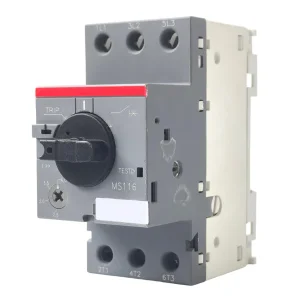
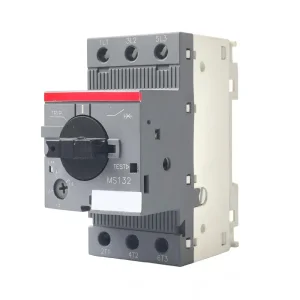
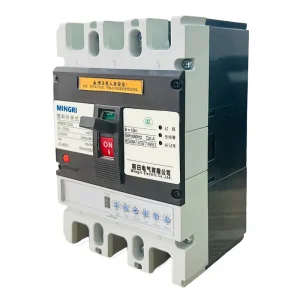
Unlike standard thermal-magnetic breakers configured solely for cable safety, MPCBs like the MS116 and MS132 incorporate Phase Failure Sensitivity and adjustable Class 10/20 thermal overload curves. They sustain inductive inrush currents up to $14 \times I_n$ without nuisance tripping while providing sub-millisecond magnetic trip execution during locked rotor conditions.
Medium-Voltage Vacuum Interrupters (VCB)
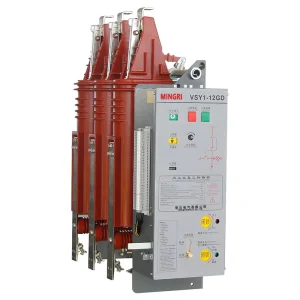
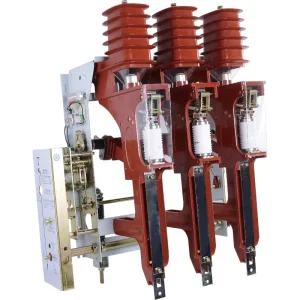
For primary 6.6kV to 12kV distribution in Japanese commercial complexes and manufacturing plants, our VSY1 vacuum circuit breakers utilize hermetically sealed ceramic vacuum bottles. Dielectric recovery occurs in microseconds following current zero, completely eliminating open-air fire hazards and hazardous arc byproduct venting.
Rotary & Double-Throw Disconnectors
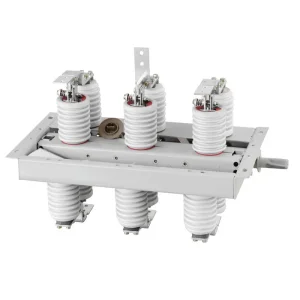
High-voltage rotary isolating switches (such as GN30-12D) provide positive, visible air-gap isolation required by Japanese occupational electrical safety codes during maintenance. Equipped with integrated dual-interlocking earthing mechanisms, they prevent manual re-energization while grounding personnel are active.
Electronic Trip Units (ETU / ECB)
Advanced digital circuit breakers like SJKM3E utilize microprocessor cores with Rogowski coil sensors to implement 4-stage selective protection: Long-time ($L$), Short-time delay ($S$), Instantaneous ($I$), and Ground fault ($G$). This guarantees tight selective tripping without interrupting the entire Osaka plant branch.
Capacitive Inrush Switching Devices
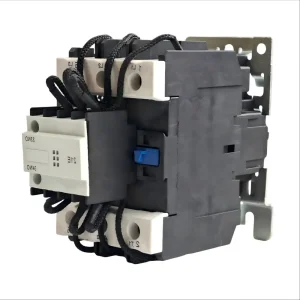
Capacitor bank switching contactors (CJ19 series) feature specialized early-make damping resistors that attenuate dangerous inrush currents—frequently exceeding 180 times rated current—preventing severe contact welding and harmonic degradation on inductive Kansai utility networks.
Manual & Motorized Bypass Knife Switches
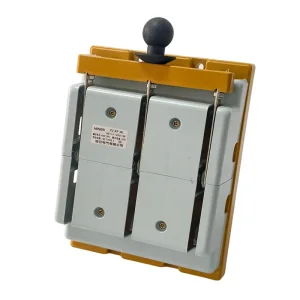
For industrial dual-feed changeover systems, emergency generator links, and heavy-duty battery banks, the HD11F series offers positive mechanical detents, anti-arcing shields, and high withstand current ($I_{cw}$) capabilities ranging up to 1500A continuous service.
Technical Roadmap: Next-Generation Circuit Interruption & Digitalization (2025–2035)
Strategic advancements aligned with Japan's Green Growth Strategy, the decarbonization of Osaka Bay, and AI-managed industrial power grids.
| Phase | Core Technology Architecture | Deployment Vector in Kansai |
|---|---|---|
| Phase I: Smart Telemetry (2025-2027) | Integrated IoT sensors, edge thermal monitoring, Modbus/RS485 and IEC 61850 protocol stacks. | Higashiosaka smart automated CNC cells and robotic machining clusters. |
| Phase II: SF6 Free Transition (2027-2030) | Dry-air insulation, vacuum quenching canisters, solid-dielectric encapsulation (HBXGN series). | Osaka municipal decarbonization zones and net-zero corporate microgrids. |
| Phase III: Solid-State DC Breakers (2030-2035) | SiC/GaN semiconductor topology, sub-microsecond zero-arc fault clearing for 1500V DC. | Battery Energy Storage Systems (BESS) and high-speed port charging at Sakishima. |
Decarbonization, Zero-SF6 & Predictive Maintenance
The global electrical manufacturing landscape is undergoing a permanent shift away from potent greenhouse gases. In accordance with Japan's METI guidelines, our technical roadmap prioritizes solid-dielectric and eco-gas vacuum systems that completely eliminate sulfur hexafluoride ($SF_6$) without compromising insulation ratings.
Concurrently, traditional maintenance schedules based on elapsed calendar time are being replaced by Condition-Based Maintenance (CBM). Our next-generation electronic breakers and high-voltage vacuum apparatus feature integrated non-contact optical temperature monitors embedded directly within the primary disconnect jaws, transmitting continuous thermal and contact resistance diagnostics to local SCADA servers.
Engineered Power Solutions Across Osaka’s Premier Economic Sectors
Customized switchgear architectures addressing operational environments from high-precision robotics to heavy chemical processing.
Precision Tooling & Robotics (Higashiosaka)
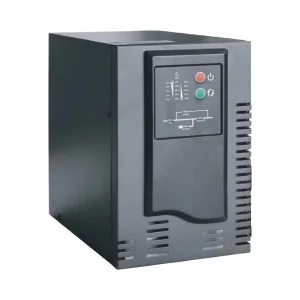
High-speed automated production equipment cannot tolerate momentary voltage sags or unbalanced phase currents. We deploy MS116 and MS132 motor breakers paired with MCHF Series UPS supplies to eliminate harmonic transients and safeguard sensitive multi-axis servo drives from grid disturbances.
Petrochemical & Maritime (Sakai-Senboku & Port)
Harsh marine environments with high humidity and ambient salt spray cause rapid galvanic corrosion. We equip circuit isolation switches with 316-grade stainless internal linkages, marine-rated IP65 enclosures, and silver-tin-oxide contacts certified to withstand severe oxidative atmospheres.
Urban Substations & Smart Complexes (Umeda / Namba)
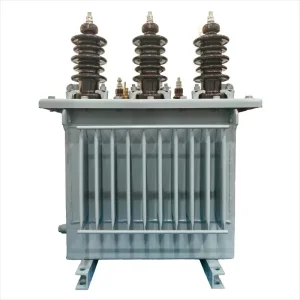
For high-rise commercial installations, our compact VSY1-12 VCBs and S11-M sealed distribution transformers provide maximum electrical capacity within minimal footprint, minimizing fire risk and acoustic noise while meeting Tokyo and Osaka municipal building codes.
Collaborating with an Osaka Engineering or Procurement Team?
Our OEM/ODM application engineers can evaluate your electrical single-line diagrams (SLD) and build custom breaker enclosures, trip unit calibrations, and busbar adapters matched precisely to Kansai utility specifications.
Send Inquiry Now & Connect with EngineeringLocalization, JIS Standards & METI Regulatory Assurance
Exporting and deploying industrial circuit breakers to Japan requires strict adherence to technical and procedural requirements overseen by the Ministry of Economy, Trade and Industry (METI).
Our complete apparatus line is engineered to harmonize the international IEC 60947 (Low-Voltage) and IEC 62271 (High-Voltage) standards with domestic JIS C 8201 specifications. From creepage distances across terminal barriers to insulation clearances under high humidity, our switchgear meets rigorous Japanese commercial building and industrial criteria.
For component integration into Japanese machinery destined for internal domestic deployment or overseas turnkey export, our manufacturing lines hold ISO 9001:2015, ISO 14001:2015, and ISO 45001:2018 certifications, backed by accredited type-test reports from international testing bodies including ASTA, KEMA, and CE-notified laboratories.
| Standard Code | Regulatory Scope | Mingri Verification Status |
|---|---|---|
| JIS C 8201-2-1 | Low-voltage circuit-breakers | Full Type-Test Compliance ($I_{cu}$, $I_{cs}$, dielectric) |
| JIS C 8201-4-1 | Electromechanical contactors/starters | MS116 / MS132 / CJ19 Certified |
| JEC-2300 / IEC 62271 | AC High-Voltage Circuit-Breakers | VSY1 Series Vacuum Interrupters Verified |
| METI Denan Law | Electrical Appliance & Material Safety (PSE) | Factory Audited Quality Assurance Process |
| RoHS / REACH | Hazardous Material Elimination | 100% Heavy Metal / Lead-Free Solder Process |
China Industry 4.0: Supply Chain Agility Serving Western Japan
Combining the high-precision automated manufacturing base of Yueqing Electric Valley with fast multimodal logistics directly into Osaka Port.
Automated Precision Assembly
Our smart factory floors deploy high-speed robotic stamping, automated laser welding of oxygen-free copper busbars, and automated SMT assembly for electronic trip controllers. This eliminates human assembly tolerances and ensures uniform trip curve accuracy across high-volume production batches.
100% Quality & Discharge Screening
Every medium-voltage vacuum breaker and rotary disconnect switch undergoes automated partial discharge testing (<5 pC at 1.2 Ur), high-voltage withstand verifications, and robotic contact resistance measurement before palletizing, guaranteeing immediate plug-and-play field reliability.
3–4 Day Maritime Lead Times to Osaka
Situated within rapid logistics proximity to the major seaports of Ningbo and Shanghai, our scheduled container shipments reach the Port of Osaka within 72 to 96 hours of sailing. This offers Japanese OEMs an agile, cost-effective alternative to protracted European supply chains.
Technical & Commercial FAQ for Osaka Engineering Teams
Key considerations when sourcing custom low and medium voltage switchgear components for Kansai installations.
We test and calibrate all magnetic trip mechanisms, solenoid closing/opening coils, and microchip algorithm sampling clocks against a stabilized 60Hz reference source. This prevents coil overheating, eliminates inductive reactance variations, and guarantees accurate inverse-time delay behavior across Japanese distribution frequencies.
Yes. We specialize in custom OEM engineering for legacy replacements where original switchgear brands (e.g., historical units from domestic manufacturers) are obsolete. We provide customized terminal extension kits, drop-in adapter plates, and flexible copper linkages matching existing panel footprints.
For equipment operating within coastal or reclaimed areas (such as Sakishima and Yumeshima), we apply minimum 5μm nickel-silver electroplating on all primary copper conductors, use corrosion-resistant passivated zinc-nickel fasteners, and offer polyester powder-coated galvanized enclosures tested to 1,000+ hours of neutral salt spray exposure (ASTM B117).
Shipments can be provided with full Factory Acceptance Test (FAT) data records, Certificate of Origin (COO), mill test certificates for conductors, routine dielectric flashover reports, and third-party type-test certificates from ASTA, KEMA, or equivalent recognized international laboratories confirming JIS/IEC equivalence.
For standard motor protection breakers and disconnectors, we maintain flexible MOQ policies (starting from trial batch runs of 5–10 units). Prototype modifications for custom mechanical interlocks or specialized electronic trip units typically ship within 15–20 business days via express air courier direct to Kansai International Airport (KIX).
Yes. Our VSY1 vacuum circuit breakers and SJKM3E electronic units can be configured with integrated RS-485 Modbus-RTU communication ports or dual-redundant Ethernet modules supporting the IEC 61850 protocol stack, enabling direct telemetry streaming to plant DCS and energy management dashboards.
Comprehensive Electrical Infrastructure & Switchgear Components
High-voltage vacuum interruption, power regulation, capacitor protection, and solid distribution hardware engineered for industrial facilities.
Need custom current ratings, Japanese bilingual documentation, or specialized testing certifications for your electrical project in Osaka?
Send Inquiry Now - Technical Sales Direct Desk