Primary Ring Main Unit Deployments for Nigerian Feeder Automation
Engineered to handle sudden voltage fluctuations, high harmonic distortion, and ambient heat loads typical in Nigerian 11kV and 33kV urban and rural substations.
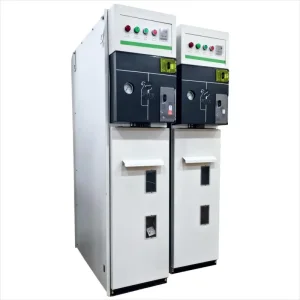
ODM XGN15-24 Medium Voltage Switchgear SF6 Insulated Ring Main Unit for Nigeria Feeder Loops
View Technical Specs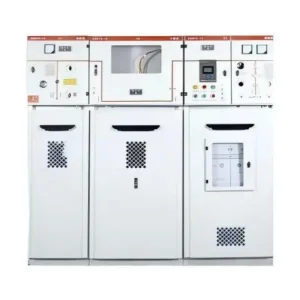
China XGN15-12 Metal-Clad Fixed-Type Ring Main Unit Switchgear in Cubicle Design for Nigeria Utilities
View Technical Specs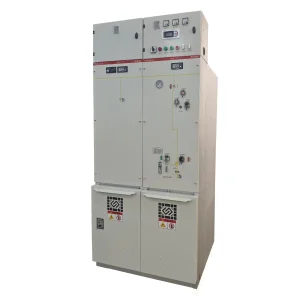
OEM SafeRing-40.5 Gas Insulated Ring Main Unit (RMU) - SF6 Sealed Switchgear for Nigeria 33kV Networks
View Technical Specs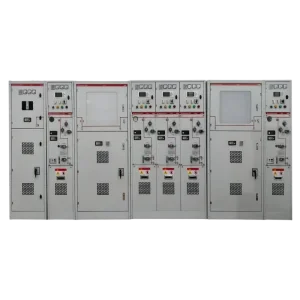
Wholesale SafeRing-12 Fully Insulated Inflatable Ring Switchgear with Harsh Climate Protection for Nigeria
View Technical SpecsNavigating Nigeria's Medium-Voltage Distribution Landscape
Nigeria's power infrastructure is undergoing a pivotal transformation spearheaded by the Presidential Power Initiative (PPI) alongside private capital investments from the eleven Distribution Companies (DisCos)—including Ikeja Electric, Eko DisCo, Abuja Electricity Distribution Company (AEDC), and Kano Electricity Distribution Company (KEDCO). The core bottleneck across these networks resides in medium-voltage (11kV and 33kV) distribution loops, where aging open-terminal switchgear and non-extensible overhead links suffer from chronic fault cascading.
Modernization initiatives under the Nigeria Electricity Market Stabilization Facility (NEMSF) necessitate a decisive shift toward hermetically sealed, modular Ring Main Units (RMUs). These units provide automated fault isolation, ring-topology redundancy, and high-speed feeder restoration without causing system-wide collapse across high-density commercial zones such as Victoria Island, Ikeja Industrial Estate, and the Lekki Free Trade Zone.
- Mitigation of Frequent Feeder Tripping: Ring topologies allow bidirectional power flow, enabling faulted segments to be isolated while maintaining power to upstream and downstream loads.
- Reduction in Non-Technical Aggregated Technical, Commercial, and Collection (ATC&C) Losses: Tamper-proof, fully enclosed internal arc-classified (IAC AFLR) designs protect critical metering and switching components.
- Seamless Integration with Embedded Generation: Facilitating rapid interconnectivity with captive gas power plants and commercial solar PV microgrids across industrial parks.
Sub-Saharan Climatic & Grid Resilience Engineering
Standard off-the-shelf European or North American switchboards frequently encounter premature insulation breakdown when deployed across West Africa. Our specialized ODM manufacturing platform designs switchgear explicitly tailored to resist Nigeria’s three dominant environmental threats:
Relative humidity frequently surpasses 95% in coastal delta regions. We deploy robotically laser-welded 3.0mm AISI 304/316L stainless steel hermetic enclosures with C5-M marine-grade external epoxy powder coatings, completely sealing high-voltage components from saline moisture infiltration.
The seasonal north-easterly trade winds carry microscopic quartz dust, causing tracking along open busbar insulators. Our RMUs leverage fully enclosed busbar compartments, touch-proof EPDM/silicone rubber cable terminations, and IP67-rated primary gas tanks.
Prefabricated outdoor kiosk substations endure intense heat absorption. Our busbar systems are engineered with upgraded cross-sectional copper ratings (99.99% E-Cu) to ensure continuous operation at full rated amperage without thermal de-rating.
Strategic Manufacturing Advantages of Our Chinese ODM Factory
Combining world-class production precision, deep electrical supply-chain clusters in Yueqing, and agile customization for African utilities and international EPC contractors.
Full-Chain Vertical ODM Manufacturing
Unlike simple assembly houses, our Yueqing plant integrates automatic sheet metal CNC punching, laser profiling, automated robot helium-leak detection vacuum chambers, vacuum interrupter production, and comprehensive high-voltage impulse test bays. This vertically integrated control cuts lead times by 40% compared to Western counterparts.
Custom Single-Line Diagram (SLD) Flexibility
Whether your Nigerian utility project calls for non-extensible 3-way units (CCC), extensible 4-way systems (CCVV / CCFF), or metering cubicles with specific CT/VT ratios complying with Nigerian Electricity Regulatory Commission (NERC) metering codes, our engineering team supplies complete CAD/BIM shop drawings within 48 hours.
Rigorous KEMA / ASTA / CNAS Type Testing
All switchgear cubicles undergo stringent third-party type tests in accredited high-power laboratories. Key certified benchmarks include 50Hz withstand voltage up to 95kV BIL, 3-second short-time withstand current tests up to 25kA, temperature rise verification, and internal arc classification (IAC AFLR 20kA 1s) safeguarding operator survival.
Engineering Specifications: Comparing RMU Insulation Technologies for Nigeria
A deep technical assessment to help utility procurement engineers and EPC consultants select the optimal insulation topology based on total cost of ownership (TCO) and operational context.
| Evaluation Parameter | Gas-Insulated Switchgear (SF6 GIS) | Solid-Insulated Switchgear (SIS / GXGN) | Air-Insulated Switchgear (AIS / SM6) | Eco-Gas Switchgear (Dry Air / HBXGN) |
|---|---|---|---|---|
| Target Nigerian Voltage Class | 11kV, 24kV, 33kV, 40.5kV | 11kV, 12kV, 24kV | 11kV, 12kV, 24kV | 11kV, 12kV |
| Enclosure Protection Class | IP67 Stainless Tank | IP67 Epoxy Module | IP3X / IP4X Cubicle | IP67 Sealed Tank |
| Resistance to Humidity & Flood | Exceptional (Immersion tolerant) | Superior (Phase isolated) | Moderate (Demands A/C rooms) | Exceptional (Immersion tolerant) |
| Environmental & Carbon Footprint | SF6 gas management required | 100% SF6-Free, zero GWP | Green, zero chemical greenhouse | Zero Fluorinated gas, 100% Green |
| Footprint / Substation Space | Ultra-compact (~0.45m² per unit) | Ultra-compact (~0.48m² per unit) | Standard (~1.1m² per unit) | Compact (~0.52m² per unit) |
| Recommended Nigerian Application | Coastal DisCo rings (Lagos/PH), Oil & Gas | Harsh northern dusty belts (Kano), Mining | Indoor industrial plants, commercial towers | Green hydrogen, solar plants, ESG initiatives |
High-Impact RMU Application Scenarios Across Nigerian Industry
Real-world integration schemes tailored to the high operational stress, diesel generator synchronization, and rapid urbanization patterns in Nigeria.
Urban Underground DisCo Feeder Reticulation
In congested commercial districts like Victoria Island, Ikoyi, and Abuja Central Business District, overhead medium-voltage lines are increasingly converted into buried underground cable rings. Our SafeRing-12 and XGN15-12 units fit inside compact sidewalk substations, providing automated sectioning with SCADA-ready RTU/FTU motor mechanisms.
Lekki Free Zone & Heavy Manufacturing Enclaves
Export processing zones and giant refining hubs (petrochemicals, fertilizer complexes, steel mills) demand continuous 33kV power continuity. Our SafeRing-40.5 gas-insulated switchgear handles heavy duty motor switching and high prospective fault levels while occupying less than one third the floor area of conventional metal-clad switchgear.
Utility-Scale Solar PV & Captive Hybrid Plants
With Nigeria's drive toward commercial captive solar installations across agro-allied industries in Ogun, Oyo, and Kaduna states, our modular switchboards interface easily with step-up transformer skids, equipped with directional overcurrent, earth fault, and reverse power relays for grid synchronization.
Distribution Automation: Smart RMUs & SCADA Integration
The foremost modern trend in Nigerian utility operations is transitioning from manually operated switches to intelligent Ring Main Units integrated with Distribution Management Systems (DMS). When an earth fault or short circuit occurs along an extended 33kV radial feeder, traditional manual tracing can take up to 12 hours.
Our intelligent ODM RMUs are pre-wired with 24VDC motor operators, feeder terminal units (FTU), and microcomputer protection relays that support open industry protocols: IEC 60870-5-104, IEC 61850, and DNP3.0 over 4G LTE or optical fiber networks.
- Self-Healing Grid Loop Automation: Fault detection, isolation, and service restoration (FLISR) accomplished within 45 seconds.
- Online SF6 Gas Density & Temperature Telemetry: Real-time wireless pressure sensors prevent catastrophic flashovers before dielectric strength drops.
- Fiber-Optic Online Busbar Temperature Monitoring: Early warning systems against contact degradation during heavy tropical peak load cycles.
Procurement & Logistics Workflow for Nigerian EPCs
Sourcing medium-voltage electrical infrastructure from China requires structured logistics governance to prevent delays at Lagos ports (Apapa and Tin Can Island) and ensure swift compliance with local documentation mandates.
We work directly alongside Nigerian project managers, providing comprehensive support that eliminates customs delays:
We supply accredited SONCAP test reports, Product Certificates (PC), and SONCAP Certificates (SC) required for rapid Form M and PAAR customs clearance in Nigeria.
All switchboards are vacuum-foil sealed with active desiccant packs inside reinforced IP54 fumigated wooden crates, preventing salt moisture ingress during ocean transit via the Atlantic shipping corridor.
Every project is backed by guaranteed availability of critical spares (operating coils, vacuum interrupter assemblies, auxiliary switches) and comprehensive remote video commissioning assistance.
Extended Switchgear & Substation Solutions for Nigerian Industrial Projects
A full portfolio of primary and secondary distribution systems, arc suppression cubicles, motor control centers, and eco-friendly gas-free switchgear built to IEC standards.
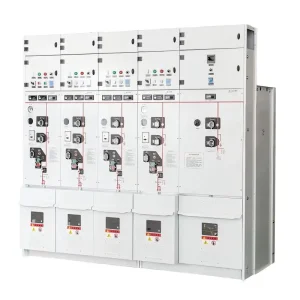
China HBXGN-12(F) Eco-Friendly Gas-Insulated Metal-Enclosed Switchgear for Nigeria
View Technical Specs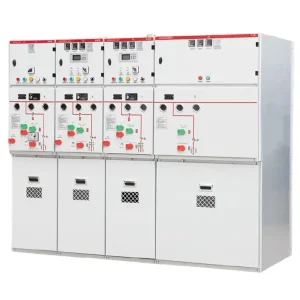
ODM GXGN-12 Solid-Insulated Fully Enclosed Ring Main Unit Switchgear for Nigeria Projects
View Technical Specs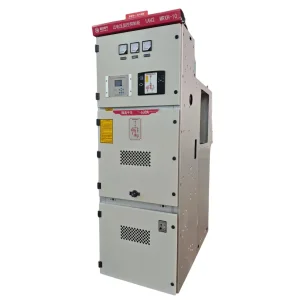
High-Quality MRXH-10 Arc Suppression & Resonance Elimination Cabinet for Nigeria Grids
View Technical Specs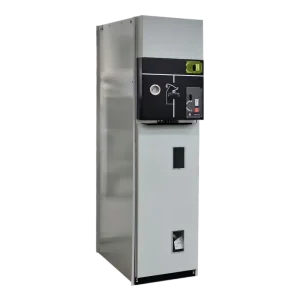
SM6 Modular Air-Insulated Medium Voltage Ring Main Unit (RMU) for Nigeria Substations
View Technical Specs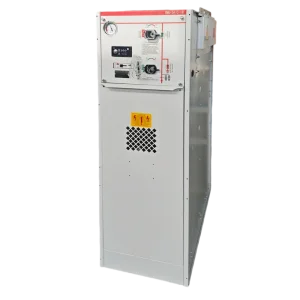
ODM RM6 Fully Enclosed & Fully Insulated Gas-Insulated Switchgear for Nigeria Network Loops
View Technical Specs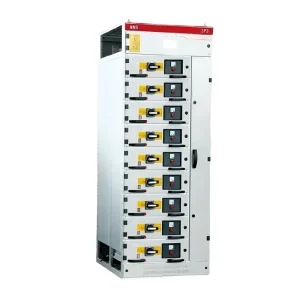
China MNS Low-Voltage Withdrawable Switchgear for Nigeria Industrial Power Distribution
View Technical Specs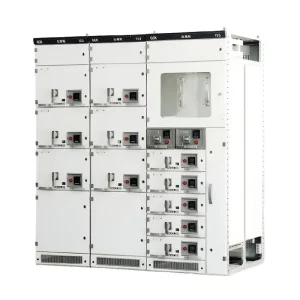
China GCK Low-Voltage Withdrawable Switchgear Solutions for Nigerian Industrial Plants
View Technical Specs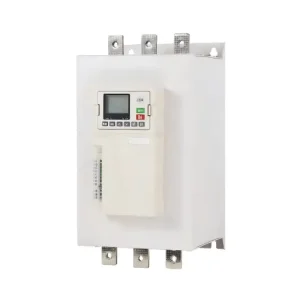
China MCR8 Series Digital Intelligent Motor Soft Starter for Heavy Equipment in Nigeria
View Technical SpecsFrequently Asked Questions: Ring Main Units for the Nigerian Market
In-depth engineering, operational, and commercial insights addressing key challenges faced by Nigerian utilities, consultants, and contractors.
What is the typical lead time for custom ODM RMUs shipped to Nigeria?
Standard modular configurations (such as standard CCF or CCC 12kV units) are manufactured and tested within 15 to 20 working days. Fully customized projects involving non-standard metering transformers, motor automation mechanisms, or specialized NERC-compliant SCADA telemetry require 25 to 30 days. Ocean freight from Ningbo/Shanghai port to Lagos (Apapa/Tin Can) typically spans 35 to 42 sailing days.
How do your SF6 gas-insulated tanks prevent leakage in high ambient temperatures?
Our tanks are fabricated from robotically laser-welded 3.0mm thickness 304 stainless steel. Each sealed tank undergoes precise helium mass spectrometry testing to guarantee an annual leakage rate strictly below 0.1% per year—far exceeding IEC 62271-1 guidelines. The switchgear maintains complete rated dielectric insulation throughout its 30-year design lifecycle without needing SF6 gas refilling.
Can your RMUs withstand frequent lightning surges in West Africa?
Yes. Nigeria experiences intense isokeraunic levels (frequent lightning strikes). Our units for the 11kV network provide a Basic Insulation Level (BIL) of 75kV or 95kV impulse withstand, and our 33kV class RMUs provide up to 170kV/200kV BIL impulse withstand. Furthermore, our cable connection bushings accommodate direct plug-in zinc oxide (ZnO) surge arresters to clamp traveling line surges safely.
Are your Ring Main Units compatible with existing Nigerian DisCo SCADA systems?
Fully compatible. Our automation modules integrate seamlessly with SCADA systems deployed across Nigerian DisCos. The auxiliary systems incorporate modern RTU/FTU units supporting standard DNP3.0 and IEC 60870-5-104 communication over RS-485, Ethernet RJ45, or cellular Modbus gateways, providing real-time circuit breaker position status, earth switch interlock alarms, and remote trip/close functionality.
What is the difference between CCF and CCC schemes in ring topologies?
A 'C' module designates a Load Break Switch (LBS) feeder commonly used for incoming and outgoing ring connections. An 'F' module designates a Fuse-Switch Combination unit, while a 'V' module designates a Vacuum Circuit Breaker (VCB) with protection relays used to feed and protect distribution transformers. A CCF or CCV configuration is standard for 2-in/1-out transformer substations, while a CCC unit acts as a 3-way sectionalizing node.
What documentation do you provide for Nigerian Form M and SONCAP clearance?
We furnish complete engineering submittal dossiers: certified ISO 9001, ISO 14001, and ISO 45001 certificates, official KEMA/CNAS type-test reports, factory routine test reports, product nameplate drawings, and Product Certificates (PC) requisite for obtaining the SONCAP Certificate from designated inspection agencies prior to vessel discharge.
Accelerate Your Nigerian Electrical Infrastructure Projects
Partner with an experienced Chinese ODM Ring Main Unit manufacturer that understands the technical rigors, regulatory landscape, and harsh climatic challenges of the West African grid.
Send Inquiry Now