Featured Low-Voltage Protection Supplied for Turkish Projects
Our core DIN-rail miniature circuit breakers and residual current solutions are engineered to withstand extreme thermal ambient shifts and harmonic loads across Istanbul, Gebze, Bursa, and Izmir industrial facilities.
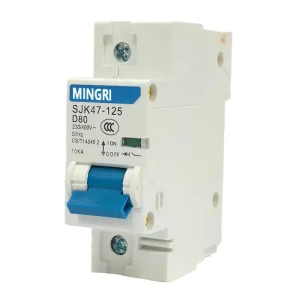
SJK47-125 High-Current Miniature Circuit Breaker
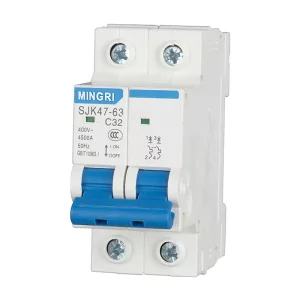
SJK47-63 Miniature Circuit Breaker (MCB / DPN)
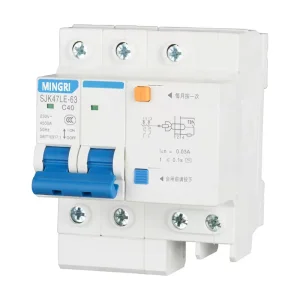
SJK47LE-63 Residual Current Circuit Breaker (RCCB)
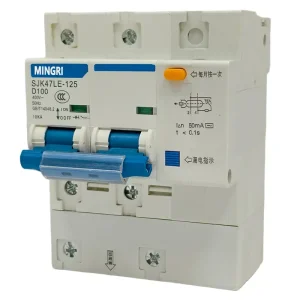
SJK47LE-125 High-Ampere Residual Current Device
Turkey’s Industrial Growth & Electrical Infrastructure Demands
Turkey represents one of the world's most dynamic bridges between Eurasian energy corridors, European industrial supply chains, and Middle Eastern construction markets. As an elite manufacturer of low-voltage switchgear, we address Turkey’s stringent technical parameters.
Organized Industrial Zones (OSB)
With over 350 Organized Industrial Zones across Kocaeli, Gebze, Bursa, Manisa, and Gaziantep, Turkish manufacturing demands robust DIN-rail MCBs capable of handling intermittent inductive motor kickbacks, high duty cycles, and volatile harmonics without nuisance tripping.
Renewable Energy Expansion
Driven by Turkey’s National Energy Plan and YEKA tenders, utility and C&I rooftop photovoltaic installations across Central Anatolia (Konya, Kayseri) and the Aegean coast require DC and AC circuit breakers rated for high DC voltages, bidirectional fault currents, and ambient temperatures exceeding 45°C.
Urban Transformation & Seismic Safety
Istanbul’s intensive urban renewal and mega-hospital campuses enforce zero-compromise electrical safety codes. Our MCBs feature self-extinguishing polyamides (UL94 V-0) and high mechanical shock resistance to maintain circuit integrity under seismic micro-vibrations.
Physics-Driven Circuit Protection: Tripping Physics & Materials
A miniature circuit breaker must execute two distinct physical tasks: sustained bimetallic thermal deflection under persistent overloads, and instantaneous electromagnetic plunger release under prospective short-circuits.
Thermal-Magnetic Deflection Mechanics
The thermal tripping mechanism utilizes a precision calibrated bi-metal strip composed of two bonded alloys with disparate coefficients of thermal expansion. Under continuous overload conditions ($1.13 \times I_n$ non-tripping current up to $1.45 \times I_n$ conventional tripping current according to IEC 60898-1), differential expansion bends the bimetal strip, triggering the release latch.
For short-circuit protection, a low-resistance copper coil encloses a spring-loaded magnetic plunger. High fault currents induce an instantaneous electromagnetic field that drives the plunger directly against the primary contact arm within under 2.5 milliseconds, decoupling the contact before thermal damage occurs to downstream wiring.
Arc De-Ionization & Contact Metallurgy
When contacts separate under full short-circuit current, an electric arc of plasma exceeding 4,000°C is formed. Our MCBs incorporate an integrated arc runner that pulls the arc into a 12-to-14 plate de-ionization arc chute.
The plates split, cool, and extinguish the arc within a fraction of a half-cycle, drastically attenuating the let-through energy ($I^2t$). Moving and stationary contacts are engineered with a proprietary silver-graphite alloy ($AgC$), eliminating contact welding under peak inrush surges up to 10kA and 15kA breaking thresholds.
Standardized MCB Tripping Curves: Selection Matrix for Turkey
| Tripping Characteristic | Magnetic Trip Threshold | Response Time | Recommended Applications in Turkish Industry | IEC / TS EN Reference |
|---|---|---|---|---|
| B-Curve | $3 \text{ to } 5 \times I_n$ | 0.1 to 45 seconds | Resistive loads, domestic heating, residential branch circuits without motor surges. | TS EN 60898-1 |
| C-Curve | $5 \text{ to } 10 \times I_n$ | 0.1 to 15 seconds | General commercial lighting, small motors, air conditioning compressors, IT infrastructure. | TS EN 60898-1 / TS EN 60947-2 |
| D-Curve | $10 \text{ to } 20 \times I_n$ | 0.1 to 4 seconds | High inductive inrush equipment: welding machinery, transformers, industrial cranes, injection molding. | TS EN 60947-2 |
| K-Curve | $8 \text{ to } 12 \times I_n$ | < 0.1 second | Semiconductor drive protection, industrial automation systems, sensitive control circuits. | IEC 60947-2 |
Macro-Sector Engineering Solutions Across Turkish Key Industries
Turnkey low-voltage protection systems engineered to resolve the distinct operational hurdles of Turkey’s leading economic sectors.
Automotive & Machinery Manufacturing
Centers like Bursa and Kocaeli require miniature circuit breakers capable of operating flawlessly in the presence of continuous vibrations and pulse frequencies. Our high-grade DIN-rail housings resist micro-fretting and fatigue, preventing unwanted trip interruptions on automated assembly lines.
Solar PV Combiner Boxes (Central Anatolia)
In desert-like continental climates with daytime thermal spikes up to 45°C and night plunges to below freezing, our circuit protection units feature advanced thermal compensation tables and UV-stabilized, halogen-free housings to safeguard multi-string combiner arrays.
Steel, Metallurgical & Heavy Foundries
Operating across İskenderun, Karabük, and Dilovası, heavy foundries experience massive voltage dips and electromagnetic noise. Our D-curve MCBs and paired surge protection devices isolate sensitive PLCs from electric arc furnace transients.
China Factory 4.0: Supply Chain Resilience & Yueqing Cluster
Operating out of Yueqing, Zhejiang—the world’s undisputed epicenter of low- and medium-voltage electrical manufacturing—we merge vertically integrated component production with Industry 4.0 automated quality verification.
Automated Robotic Assembly & Optical Calibration
Every SJK-series miniature circuit breaker is assembled on closed-loop, automated robotic lines. High-speed optical CCD cameras inspect rivet clearances, terminal torque profiles, and internal contact clearances with zero-defect tolerances.
Thermal calibration is 100% computerized: breakers pass through multi-station automated test ovens where constant current calibration guarantees precise tripping thresholds according to TS EN 60898-1 parameters.
Direct Sea & Middle Corridor Rail Logistics
Our direct proximity to Ningbo-Zhoushan and Shanghai ports ensures scheduled maritime container shipping to Turkish container hubs including Ambarlı (Istanbul), Aliağa (Izmir), and Mersin Port within 22–28 days.
For expedited project timelines, our logistics dispatch utilizes the Trans-Caspian International Transport Route (Middle Corridor rail connectivity), ensuring rapid replenishment for Turkish panel builders facing strict EPC commissioning deadlines.
TSE, CE & Customs Union: Frictionless Turkish Market Access
Full regulatory conformity eliminates customs blockages and ensures straightforward acceptance by Turkish distribution network operators (Dicle, Toroslar, Boğaziçi EDAŞ) and engineering consultants.
TSE & IEC Harmonization
Our devices comply comprehensively with TS EN 60898-1 (circuit breakers for overcurrent protection in household and similar installations) and TS EN 60947-2 (low-voltage switchgear and controlgear - circuit breakers for industrial installations).
EU-Turkey Customs Union Facilitation
Leveraging Turkey's Customs Union with the European Union, our products arrive with verified CE declarations of conformity, full Low Voltage Directive (LVD 2014/35/EU) documentation, and RoHS 3 / REACH laboratory test reports to streamline ATR customs clearance.
Bilingual Technical Collateral
We equip our Turkish distribution partners and switchgear fabricators with complete bilingual (Turkish / English) product documentation, wiring schematics, CAD/EPLAN macros, and customized laser-printed OEM branding options.
Integrated Power & Automation Portfolio for Turkish Engineering
Beyond miniature circuit breakers, our Yueqing smart manufacturing campus supplies a comprehensive lineup of transformers, variable frequency drives, soft starters, and automatic transfer switches for end-to-end industrial protection.
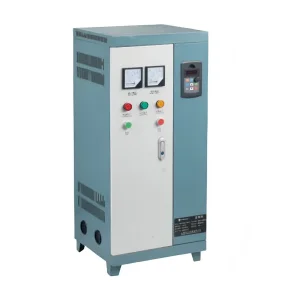
MC3000 Series Variable Frequency Drive Cabinet
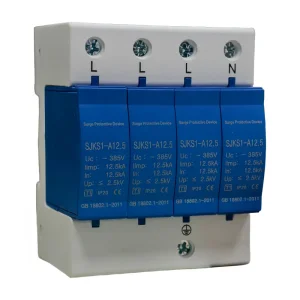
SJKS1D Series Surge Protection Device (SPD 1P-4P)
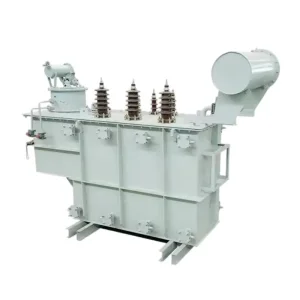
SZ11 / SFZ11 35kV On-Load Tap Changing Transformer
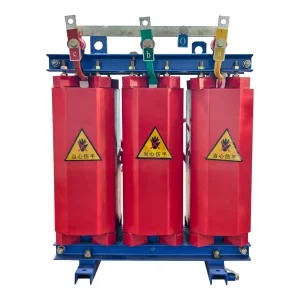
SC(B)11 10kV Cast Resin Dry-Type Transformer
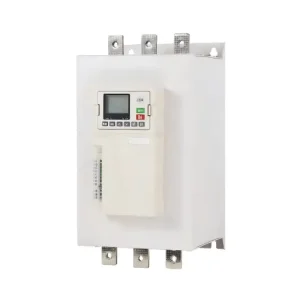
MCR8 Series Digital Microprocessor Soft Starter
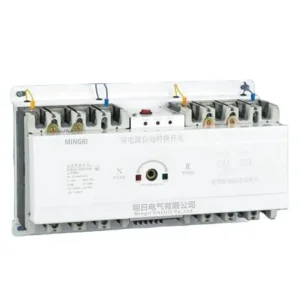
SJKQ2 Dual Power Automatic Transfer Switch (ATS)
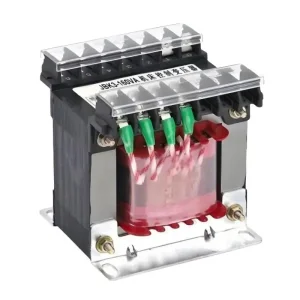
JBK3 Series Machine Tool Control Transformer
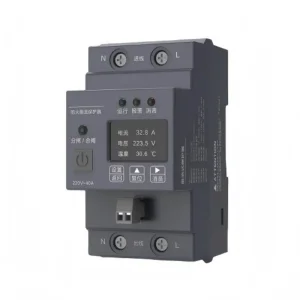
Single-Phase Current-Limiting Protector with LCD
Global Procurement Checklist: Engineering Parameters for Panel Builders
When evaluating miniature circuit breaker tenders for Turkish panel fabrication projects, consulting electrical engineers must cross-reference five foundational technical criteria.
1. Prospective Short-Circuit Fault Current ($I_{cn}$ vs $I_{cu}$)
Verify whether the breaker meets $I_{cn}$ (Service Breaking Capacity under IEC 60898-1) or $I_{cu}$ (Ultimate Breaking Capacity under IEC 60947-2). For primary low-voltage distribution boards situated adjacent to distribution transformers (e.g., 1000kVA 34.5/0.4kV transformers standard in Turkish OSB networks), prospective short-circuit currents frequently surpass 10kA, mandating high-breaking MCBs (such as our 15kA SJK47-125 line).
2. Ambient Temperature Calibration & Thermal Derating
Standard circuit breakers are calibrated at an ambient reference of 30°C. In high-density Turkish switchboards exposed to summer ambient temperatures reaching 40°C in Southeast Anatolia, internal enclosure temperatures often hit 55°C. In these environments, bimetallic elements require coefficient derating factors ($K_t \approx 0.88 - 0.92$) to prevent spurious tripping without compromising line safety.
3. Terminal Clamp Pressure & Connection Integrity
Loose connections in industrial environments cause excessive localized $I^2R$ heat buildup, which is the primary cause of electrical cabinet fires. Our MCBs feature zinc-plated box terminals with high-tensile steel screws delivering tightening torques up to 3.5 N·m, accommodating copper cables up to $50\text{ mm}^2$ or comb busbars.
4. Energy Limiting Class 3 Certification
Under short-circuit incidents, the breaker must limit let-through energy ($I^2t$) to protect downstream cabling insulation. All our SJK-series units achieve Energy Limiting Class 3, the strictest classification under IEC 60898-1, delivering the shortest clearing time and maximum downstream cable protection.
Frequently Asked Questions: Technical & Sourcing Insights for Turkey
Direct answers to technical, commercial, and logistics inquiries commonly raised by Turkish engineering firms, switchgear panel builders, and procurement officers.