Core Control Transformers Engineered for Australian Switchboards
High-saturation-resistant silicon steel cores and vacuum pressure impregnated (VPI) coils engineered specifically to handle continuous voltage regulation in Australian motor control centers (MCC) and automation panels.
-
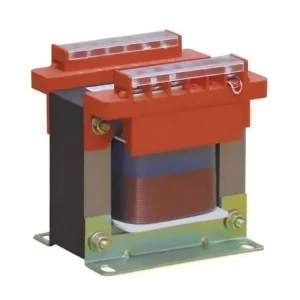
Wholesale BK Series Control Transformers – Reliable Power Solutions Factory, Company
-
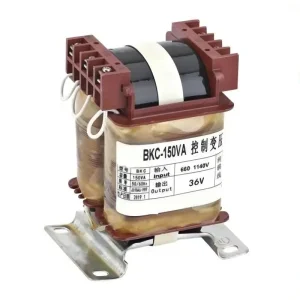
China BKC Series Control Transformers – Compact, Reliable Power Solutions Factory, Companies
-
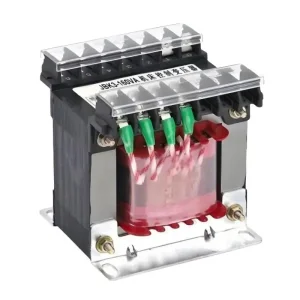
High-Quality JBK3 series machine tool control transformers Manufacturer, Factory
-
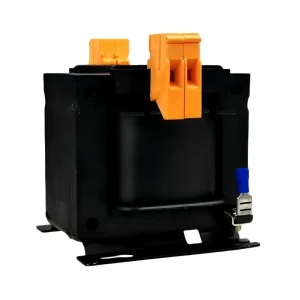
High-Quality JBK5 Series Machine Tool Control Transformer Factories, Companies
Navigating Australia’s Demanding Electrical Infrastructure
From the extreme ambient heat of the Western Australian outback to the coastal humidity of Queensland and high-density manufacturing hubs in Victoria and New South Wales, the Australian operational landscape places distinct demands on electromagnetic components.
Extreme Thermal De-Rating
Standard global control transformers assume a reference ambient of 25°C to 40°C. In the Pilbara and Goldfields-Esperance regions, internal enclosure switchboard temperatures frequently surge past 55°C to 65°C. Without high-grade Class H (180°C) or Class R (220°C) insulation systems and low copper losses, conventional units suffer premature insulation breakdown, winding partial discharge, and catastrophic thermal runaways.
AS/NZS 61558 & RCM Mandates
Equipment deployed across the Commonwealth must comply strictly with AS/NZS 3000 (the Australian/New Zealand Wiring Rules) and AS/NZS 61558.2.2 for isolating and control transformers. Compliance requires certified dielectric insulation resistance, strict creepage and clearance distances across multi-tap terminals, and registration under the Electrical Regulatory Authorities Council (ERAC) Regulatory Compliance Mark (RCM).
Mining-Grade Airborne Particulates
Australian open-cut iron ore and bauxite operations expose electrical enclosures to hyper-fine, conductive hematite and magnetite dust. Vacuum Pressure Impregnation (VPI) with solventless epoxy resin is critical. It fills micro-voids in winding layers, preventing the ingress of conductive particulate matter and resisting sustained cyclic mechanical vibration from heavy industrial haulers, conveyors, and ball mills.
Localized Application Scenarios Across Key Australian Sectors
How Chinese OEM/ODM engineering integration empowers Tier-1 Australian contractors, switchboard builders, and system integrators with application-specific electrical isolation.
Mining Automation & Heavy Materials Handling
In bulk material handling terminals such as Port Hedland, Newcastle, and Gladstone, stackers, reclaimers, and multi-kilometer overland conveyors operate under continuous dynamic load shifts. Control transformers such as the JBK5 and BK Series provide stable galvanic isolation for 24VDC power supplies, safety relay loops, PLC I/O racks, and pilot solenoids.
Key Engineering Factor: Exceptional inrush volt-ampere (VA) capability. When multiple heavy contactors pull in simultaneously, our low-impedance copper winding prevents supply voltage dip below the 85% dropout threshold, avoiding nuisance tripping and multimillion-dollar conveyor stoppages.
Utility-Scale Solar Farms & BESS Facilities
Australia leads the world in per-capita solar generation. Vast photovoltaic farms and Battery Energy Storage Systems (BESS) spanning the Renewable Energy Zones (REZ) in regional NSW, Queensland, and South Australia require dedicated auxiliary power for tracker motor drives, SCADA RTUs, environmental monitors, and fire suppression systems.
Key Engineering Factor: Mitigation of severe high-frequency switching transients and harmonic distortion originating from central inverter PWM carrier frequencies. Integrated electrostatic Faraday shields dissipate high dV/dt noise to earth, protecting sensitive microprocessor controllers.
Commercial Switchboard & MCC Manufacturing (OEM)
Australian switchboard manufacturers building custom Type-Tested switchboards under AS/NZS 61439 demand space-optimized form factors. Our BKC Series and low-profile JBK3 Series fit into standardized modular Tier-1 and Tier-2 enclosures (such as Elsteel, Cubic, and B&R).
Key Engineering Factor: Multi-tap primary inputs (e.g., 415V - 380V - 240V) paired with multi-tap secondary outputs (110V - 24V - 12V), enabling domestic switchboard builders to standardize inventory while delivering bespoke configurations for variable industrial client specifications.
Desalination, Water Treatment & Harsh Chemical Processing
Desalination plants across Sydney, Melbourne, and Perth, along with critical regional wastewater networks, expose control circuitry to high concentrations of saline aerosols, chlorine fumes, and chemical corrosive vapours.
Key Engineering Factor: Dual vacuum impregnation combined with marine-grade anti-corrosive coatings on all laminations, brackets, and terminal fasteners. Stainless steel hardware options eliminate corrosion-induced grounding failures and thermal hot-spots.
Technical Roadmap: Next-Generation Magnetic & Thermal Engineering
High-performance control transformers rely on core metallurgical discipline, winding precision, and thermal dissipation modeling to surpass basic compliance standards.
| Engineering Dimension | Legacy Market Standard | Our Advanced China-Engineered Benchmark | Direct Benefit to Australian End-Users |
|---|---|---|---|
| Core Metallurgy | Standard non-oriented electrical steel (50WW800) | Cold-Rolled Grain-Oriented (CRGO) M4 / 0.27mm | Reduces no-load magnetic losses by 42%; minimizes parasitic heat load within enclosed IP66 panels. |
| Conductor Material | Grade 1 enameled round wire / CCA | 99.99% Electrolytic Oxygen-Free Copper (OFHC) | Maximizes electrical conductivity; ensures high thermal overload withstand during heavy motor start cycles. |
| Insulation Class | Class B (130°C) or Class F (155°C) | Class H (180°C) Standard / Class R (220°C) Optional | Eliminates need for aggressive de-rating in hot inland mining sites (Kalgoorlie, Olympic Dam, Mt Isa). |
| Varnish Impregnation | Dip and bake dip-varnish process | Multi-Cycle Automated VPI (Vacuum Pressure Impregnation) | 100% void-free solid fill; withstands high shock, vibration, and eliminates internal air-gap ionization. |
| Regulation Factor (%VR) | 8% – 12% across load steps | ≤ 3.5% (Full Load to No Load dynamic response) | Prevents logic controller lockups and contactor chatter during heavy peak circuit switching. |
Electrostatic Faraday Shielding
To decouple high-frequency capacitive noise induced by Variable Speed Drives (VSDs) and SCR rectifiers, an insulated copper foil Faraday shield is positioned between primary and secondary windings. Connected directly to earth, it diverts common-mode electrical noise, delivering pure, clean auxiliary sine waves to mission-critical microcontrollers.
Touch-Safe Terminals to IP20
In compliance with strict Australian occupational health and safety (WHS) laws, our control transformers incorporate shrouded, finger-safe terminal blocks (IP20 rating). Features include self-lifting clamping plates, vibration-proof screw fixtures, and integrated test probes to facilitate streamlined commissioning and routine safety audits.
Digital Thermal Telemetry (Smart Ready)
For critical industrial infrastructure, our JBK5 and SG units can be configured with embedded PT100 RTD resistance sensors or PTC thermistors embedded directly inside the center core winding phase. This enables real-time temperature reporting to local SCADA systems, preventing unexpected overheating failures before they occur.
Supply Chain Resilience: The Yueqing Manufacturing Advantage
How our advanced Chinese production cluster solves long lead-time bottlenecks for the Australian electrical sector through deep vertical integration, scale, and strategic logistics.
Compressed Lead Times vs Domestic Scarcity
Domestic transformer manufacturing in Australia often faces lead times of 16 to 28 weeks due to limited local copper drawing and silicon steel processing infrastructure. Located in Yueqing—the world capital of low-voltage electrical apparatus—our facilities operate with immediate upstream access to raw materials, delivering customized transformer prototypes within 7 to 10 days and container-level production batches within 3 to 4 weeks.
End-to-End Vertical Manufacturing
Unlike trading companies or assembly shops, our factory controls every stage of transformer creation: precision core stamping with progressive high-speed dies, computerized layer-to-layer foil and round wire winding, automatic core stacking, robotic welding, dual-stage vacuum varnish baking, and full-spectrum automated testing racks. Vertical control ensures consistent quality and eliminates redundant middleman costs.
Direct Sea Freight Corridors to Australia
With direct shipping routes originating from Ningbo and Shanghai ports, transit times to major Australian industrial ports (Fremantle, Melbourne, Sydney Port Botany, and Brisbane) average between 14 and 22 days. Combined with China-Australia Free Trade Agreement (ChAFTA) documentation, our partners benefit from zero-tariff treatment and streamlined customs clearance.
Need Custom Engineering Specifications for an Upcoming Australian Tender?
Our senior electrical engineering team provides single-line diagram (SLD) reviews, custom winding ratios, and AS/NZS thermal calculation reports tailored to your specific project needs.
Send Inquiry Now – Connect With Engineering TeamGlobal Regulatory Mapping & Compliance Frameworks
How Chinese engineering design cross-references Australian requirements with North American, European, and International Electrotechnical Commission standards for international equipment integration.
| Testing / Quality Parameter | Australian Standards (AS/NZS) | European Standards (IEC/EN) | North American Standards (UL/CSA) | Our Yueqing Factory Benchmark |
|---|---|---|---|---|
| Safety of Transformers | AS/NZS 61558.1 / 61558.2.2 | IEC/EN 61558-1 / 61558-2-2 | UL 5085-1 / UL 5085-2 | Dual Certified AS/NZS & IEC Compatible |
| Industrial Machinery Integration | AS 60204.1 | EN 60204-1 | NFPA 79 | Full Galvanic Control Separation Certified |
| Primary Dielectric Test (Hipot) | 3500V - 4000V AC (1 min) | 3750V AC (1 min) | 2500V AC (1 min) | 4000V AC 100% Factory Routine Tested |
| Partial Discharge Limits | < 10 pC at 1.1 Um | < 10 pC at 1.1 Um | Not routinely mandated | < 5 pC High-Sensitivity Measured |
| Environmental & Regulatory Labeling | RCM / ERAC Database | CE / RoHS / WEEE | cURus Listed Recognized Mark | RCM Ready & CE Marking Standard |
Routine Factory Acceptance Testing (FAT)
Every unit produced undergo a rigorous automated routine testing sequence: winding resistance balance, transformation ratio verification across all voltage taps, phase displacement, excitation current, no-load losses, load losses, and short-circuit impedance verification. Test certificates are archived digitally and supplied with every batch dispatch.
Type-Test Verification Reports
To satisfy tier-one mining houses (BHP, Rio Tinto, Fortescue) and utility operators, our flagship families are verified through accredited independent laboratory testing (including CNAS and ILAC-MRA recognized bodies), including full temperature-rise tests under simulated peak ambient conditions, short-circuit withstand capabilities, and acoustic noise emissions testing.
Environmentally Conscious Construction
In compliance with international environmental commitments and RoHS directives, our manufacturing eliminates heavy metal stabilizers, leaded solders, and hazardous halogenated flame retardants. Coils are finished with low-VOC solventless varnishes that reduce carbon footprint during curing while maintaining high thermal endurance.
Heavy Industrial Dry-Type Transformers, Reactors & Switching Solutions
Complementing our single-phase control range, explore our three-phase power transformers, harmonic filter reactors, and automatic transfer switches engineered for robust Australian electrical installations.
-
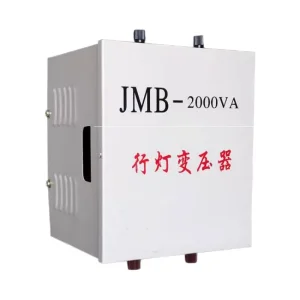
ODM JMB/BJZ/DG/BZ(DM) Series Lighting & Hand Lamp Control Transformer Suppliers, Company
-
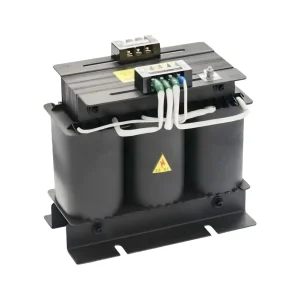
Wholesale JSG Series Three-phase Dry-type Transformer (Servo Transformer) Supplier, Manufacturers
-
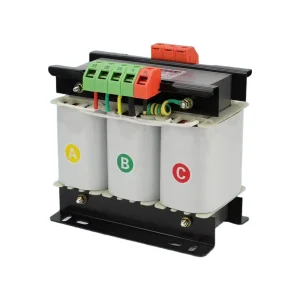
China QZB Series Auto-coupling Reduced-voltage Starting Transformer Factory, Companies
-
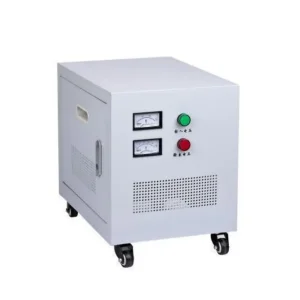
ODM SG/ZSG/SBK Series Three-Phase Dry-Type (Rectifier) Transformer Supplier, Manufacturers
-
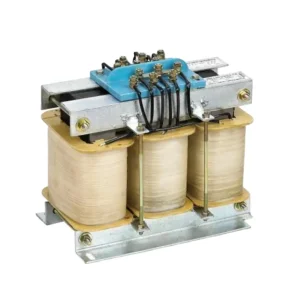
ODM Mining Transformer /Integrated Protection Transformer Companies, Company
-
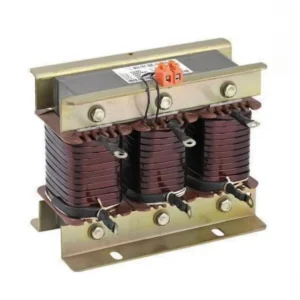
High-Quality CKSG Series Low Voltage Series Reactor Manufacturers, Manufacturer
-
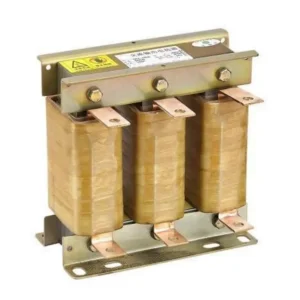
OEM Three-phase incoming and outgoing lines Reactor Factories, Factory
-
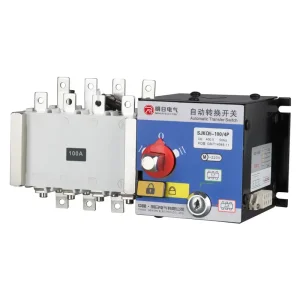
China China SJKQ5 ATS Dual Power Automatic Transfer Switch - 20A-3200A Suppliers & Factory for Reliable Power Solutions Manufacturers, Companies
Frequently Asked Questions for Australian Electrical Engineers
Practical answers concerning standard voltages, de-rating factors, inrush current calculation, and regulatory compliance when sourcing industrial transformers from China.
While Australia's nominal statutory voltages are aligned with international 400V/230V specifications under AS 60038, real-world utility distribution networks—especially in older commercial infrastructure and rural mining grids—frequently maintain legacy 415V line-to-line and 240V line-to-neutral levels, sometimes fluctuating upwards to 250V+. Our BK, JBK, and SG transformers are wound with multi-tap primary configurations (e.g., 440V - 415V - 380V - 240V - 230V - 220V) allowing switchboard technicians to adjust tapping on-site to achieve exact target secondary control voltages (such as 110V AC, 24V AC, or 24V DC post-rectification) without risking over-excitation.
To prevent contactor drop-out during start-up, a control transformer must be sized based on total sealed continuous VA plus the maximum instantaneous inrush VA of the largest inductive load. The formula used is: Total Inrush VA = √ [ (∑ Sealed VA + Inrush VA_surge × cosφ)^2 + (Inrush VA_surge × sinφ)^2 ]. If power factor is unmeasured, a practical industrial rule-of-thumb is taking the continuous sealed VA of all components, adding the inrush VA of the largest contactor or solenoid, and selecting a transformer rating whose regulated output at that peak VA stays above 90% of nominal voltage according to our published regulation curves.
Standard transformers are rated for a 40°C ambient environment. For sealed IP56/IP66 enclosures deployed in northwest Western Australia where internal enclosure temperatures can reach 60°C, a standard Class B or F unit must be severely de-rated to between 60% and 70% of its nameplate kVA to avoid exceeding maximum insulation hot-spot limits. By utilizing high-temperature Class H (180°C) Nomex insulation alongside premium low-loss CRGO silicon cores, our custom transformers can operate up to 60°C internal enclosure ambient with minimal de-rating (≤ 10%), drastically reducing enclosure footprint requirements.
Yes. Modern motor control centers incorporate numerous pulse-width-modulated (PWM) VSDs which inject substantial common-mode radio frequency noise and harmonics back into auxiliary circuits. We fabricate control transformers with dual insulated copper Faraday shields placed between the primary and secondary windings. These shields are bonded directly to the low-impedance switchboard earth bar, attenuating common-mode voltage spikes by up to 60dB and protecting sensitive safety relays, PLC power modules, and analog measurement instrumentation.
We supply comprehensive technical documentation packs with our shipments to ensure seamless verification by Australian accredited auditors and certifiers. This includes ISO 9001 factory quality audit certificates, comprehensive routine test reports (insulation resistance, winding resistance, voltage ratio, dielectric high-potential test), type test reports verified by CNAS accredited laboratories, detailed electrical single-line diagrams, and material declarations certifying compliance with AS/NZS 61558 and RoHS requirements.
Sea freight transit times from our departure ports (Ningbo or Shanghai) typically take 14 to 18 days to Fremantle (Western Australia) and 16 to 22 days to Sydney (Port Botany), Melbourne, or Brisbane. For expedited engineering sample evaluation, prototyping, or urgent shutdown maintenance replacements, air freight courier consignments arrive across Australia within 4 to 7 business days.
Accelerate Your Switchboard & Power Automation Engineering
Whether you are engineering heavy-duty Motor Control Centers (MCC) for a Western Australian lithium refinery, auxiliary power skids for a Queensland solar farm, or high-volume standard machinery panels in Victoria, our team delivers the speed, precision, and certification compliance your operations demand.