Engineered Current Limiting & Distribution Apparatus
Discover our flagship range of ultra-fast current limiting devices, modular MV switchgear, and robust circuit breakers designed to satisfy rigorous utility and industrial safety criteria.
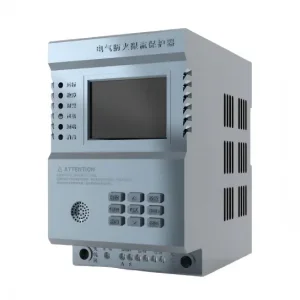
Wholesale Single phase current limiting protector 20-80A 220VAC Manufacturer, Company
View Technical Specs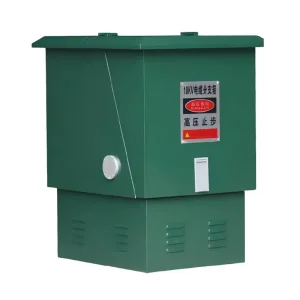
OEM China DFW Cable Branch Box - Outdoor Intelligent Power Distribution from Leading Suppliers & Factory Supplier, Manufacturers
View Technical Specs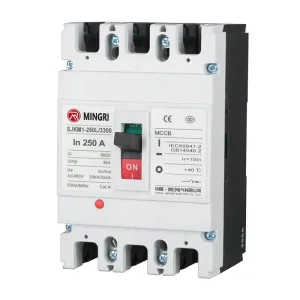
OEM SJKM1 Moulded Case Circuit Breaker (MCCB) for Power Systems Supplier, Manufacturer
View Technical Specs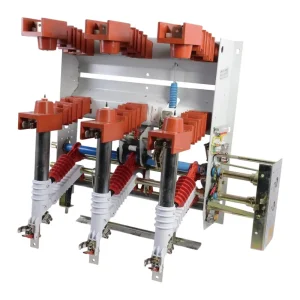
China FK(R)N12-24D High Voltage Load Breaker Switch Factory, Company
View Technical Specs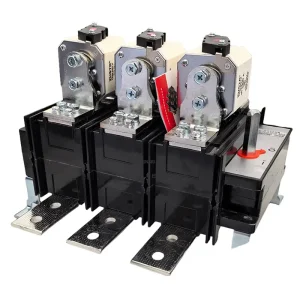
China HH15(QSA) Knife Melt Isolation Switch with Fuse Supplier, Company
View Technical Specs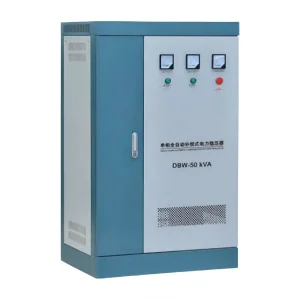
Wholesale DBW Single Phase Series Compensated Power Voltage Regulator Manufacturer, Company
View Technical Specs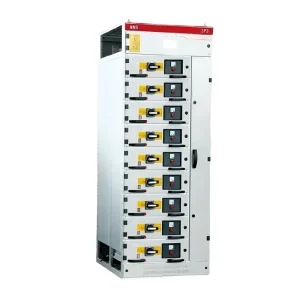
China MNS Low Voltage Withdrawable Switchgear for Power Control Factory, Companies
View Technical Specs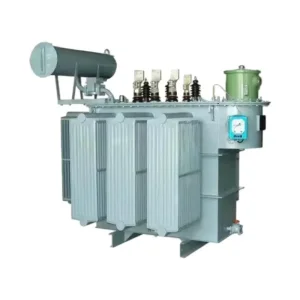
ODM SZ11 Type 10kV Series On-Load Voltage Regulator Power Transformer Factories, Company
View Technical SpecsPrinciples of Modern Current Limiting Protection
Conventional overcurrent mitigation relies on downstream circuit breakers clearing faults after 1 to 3 full sinusoidal cycles (20–60 milliseconds). Modern industrial infrastructure demands autonomous current-limiting protection that intercepts prospective peaks within the first quarter-cycle.
Electrodynamic Repulsion
Current-limiting protectors implement high-speed magnetic repulsion loops. Under dead-short-circuit conditions, opposing electromagnetic flux induces contact separation within micro-seconds, establishing an intense stabilizing arc voltage ($V_{arc}$) exceeding system voltage ($V_{sys}$), driving $di/dt$ negative prior to the mechanical trip latch unseating.
Thermal Stress & I²t Clamping
Short circuits generate catastrophic thermal destruction governed by Joule heating integral $\int i^2 dt$. By limiting peak fault currents from reaching unconstrained prospective peaks (e.g., stopping an 80 kA peak at 22 kA cut-off), thermal shock on switchboards, cable insulation, and transformer windings is suppressed by up to 85%.
Cascaded Coordination (Back-Up)
Integrating certified current limiters directly enables cost-effective cascading architectures (IEC 60947-2 Annex A). Upstream current limiters absorb the primary fault impulse, allowing downstream miniature and molded case breakers with lower breaking capacities (e.g., 6kA or 10kA) to safely isolate without destructive blast vulnerability.
Sector-Specific Current Limiting Solutions
Industrial buyers and EPC engineering leaders across four continents deploy our engineered protection assemblies to secure high-density electrical networks.
Hyperscale Data Centers & Critical Power
High fault levels caused by parallel UPS banks and localized medium-voltage generation demand sub-cycle fault clearance. Our protectors prevent localized branch faults from triggering upstream main feeder trips, safeguarding tier-IV uptime guarantees and preventing busway collapse.
Renewable Energy: Utility PV & BESS Plants
Solar inverter arrays and Lithium-ion Battery Energy Storage Systems (BESS) display steep rate-of-rise prospective fault currents ($di/dt$) with near-zero source impedance. Current limiters decouple sections dynamically, extinguishing DC and AC arcing events before inverter bridges suffer thermal puncture.
Heavy Industrial, Mining & Metallurgical Hubs
Underground extraction facilities, arc furnaces, and rolling mills impose aggressive harmonic distortions and heavy inductive surges. Certified flameproof transformers (KBSG9 series) paired with heavy-duty current limiters resist cyclic mechanical shock while containing explosive arcing energy.
Municipal Smart Grids & Dense Commercial Distribution
Rapid urban expansion frequently increases utility transformer capacities, inadvertently elevating short-circuit levels beyond existing switchgear ratings. Installing modular current-limiting protection devices eliminates the multimillion-dollar expense of replacing legacy switchgear assemblies.
| Equipment Category | Rated Voltage (Un) | Rated Current (In) | Ultimate Breaking Capacity (Icu) | Limitation Mechanism | Primary Industrial Use-Case |
|---|---|---|---|---|---|
| Single-Phase Electronic CLP | 220 VAC | 20 A – 80 A | 10 kA (Instant Cut-off) | Solid-State / Magnetic Arc | Commercial Branch & Sensitive Facility Sub-Circuits |
| Moulded Case Breaker (SJKM1) | 400 V / 690 VAC | 16 A – 800 A | 35 kA – 85 kA | De-ion De-energizing Grid | Main Motor Feeder & Substation LV Panels |
| Miniature Breakers (SJK47-63) | 230 V / 400 VAC | 1 A – 63 A | 6 kA / 10 kA (Class 3 Energy) | Fast Arc Chute Matrix | OEM Machinery & Din-Rail Control Architecture |
| High-Voltage Fuse Switch FK(R)N | 12 kV – 24 kV | 630 A – 1250 A | 31.5 kA – 50 kA Peak Limit | High-Interrupt Sand Fuse Core | Distribution Transformers & Compact Substations |
| Integrated PV Substation ZGS11 | 10 kV – 35 kV | Up to 3150 kVA | Coordinated Comprehensive | Multi-Tier CLP Integration | Utility Scale Solar Plants & Wind Collectors |
Technology Roadmap: Next-Gen Fault Interruption
Electrical distribution engineering is shifting from passive thermal-magnetic physics toward intelligent, telemetry-driven, and solid-state fault limiting topologies.
Wide-Bandgap Solid-State Current Limiters (SSCL)
Transitioning from mechanical arcs to Silicon Carbide (SiC) and Gallium Nitride (GaN) power electronics capable of sub-microsecond current clamping without mechanical arc degradation, enabling virtually infinite interruption lifespans.
Edge AI & Predictive Waveform Analysis
Embedding neural processors directly into current limiter trip computers to sample current derivate ($di/dt$) at 100 kHz. Systems distinguish between harmless motor inrush current spikes and genuine dead-short fault signatures in microseconds.
Eco-Friendly, SF6-Free Medium Voltage Interruption
Aligning with global decarbonization agreements and European F-Gas regulations, our research centers are pioneering pure clean-air insulation coupled with high-speed vacuum current interrupters to obsolete greenhouse gas switchgear.
Comprehensive System Compatibility
Current limiters do not operate in isolation. Our factory engineers coordinate each unit with upstream transformers (such as the SC(B)10 dry-type or SZ11 on-load series), primary withdrawable switchgear (MNS), and outdoor branch cable boxes (DFW). This turnkey methodology guarantees that total system impedance, prospective short-circuit levels, and selective coordination curves align flawlessly across your single-line electrical diagram.
International Quality Standards & Compliance Guarantee
Operating within high-voltage and high-energy fault interruption requires uncompromising quality control. Every single assembly leaves our Yueqing manufacturing hub with authenticated testing compliance.
IEC 60947-2 & IEC 60898-1
Full type-test certifications verifying service breaking capacity ($I_{cs}$), ultimate breaking capacity ($I_{cu}$), and energy limitation class 3 thresholds for global low-voltage distribution deployment.
ISO Integrated Management
Audited certification under ISO 9001:2015 (Quality), ISO 14001:2015 (Environmental Stewardship), and ISO 45001:2018 (Occupational Health & Safety), enforcing rigorous traceability from raw copper ingots to finished apparatus.
Seismic & Environmental Testing
Subjected to rigorous vibration, seismic shock (IEEE 693), extreme temperature cycling (-40°C to +70°C), and high-humidity salt-spray corrosion tests for coastal and offshore substation resilience.
Frequently Asked Questions: Current Limiting Protection
Detailed technical answers addressing fault coordination, selection criteria, and deployment architectures for consulting electrical engineers and procurement directors.
A standard circuit breaker typically clears faults within 1 to 3 full cycles (20–60 ms), allowing the full theoretical peak fault current to manifest across the electrical system. In contrast, a true Current Limiting Protector introduces rapid arc resistance in under 2.5 milliseconds (sub-cycle), curtailing the prospective peak current long before it reaches its first natural waveform crest.
Joule heating stress is proportional to the let-through energy integral ($I^2t$). By reducing this thermal energy by up to 85%, current limiters prevent annealing of copper busbars, degradation of insulation cross-linking, and welding of switch contacts. Consequently, design engineers can avoid oversizing secondary cabling purely for short-circuit withstand capabilities.
Yes. Under the cascading (series rating) methodology established by IEC 60947-2, an upstream current limiter allows downstream miniature circuit breakers (such as the SJK47-63) with standard 6kA or 10kA ratings to be installed in network locations with prospective fault currents reaching 35kA or 50kA, significantly reducing overall project capital expenditures.
To configure custom parameters, our engineering team requires: Single-Line Electrical Diagram (SLD), nominal operational voltage ($U_e$), continuous current rating ($I_n$), maximum prospective symmetrical short-circuit current ($I_{cp}$), operational ambient temperature bounds, and targeted tripping curve characteristics (Class B, C, D, or customized electronic curves).
Complementary Transformers, Drives & Protective Devices
Explore our full manufacturing spectrum, including heavy industrial dry-type transformers, flameproof mining substations, variable frequency converters, and miniature breakers.
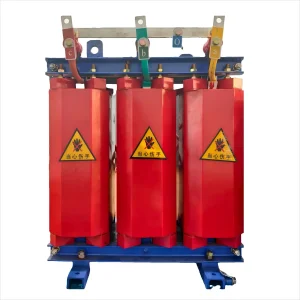
China SC(B)10 Type 10kV Resin Insulation Dry Type Power Transformer - Reliable Solution from China Suppliers and Factory Manufacturers, Company
View Technical Specs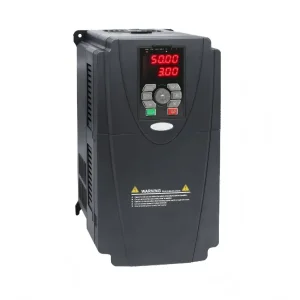
ODM MC9001 Series High Performance Frequency Converter Supplier, Manufacturer
View Technical Specs
Wholesale SJKM1 Moulded Case Circuit Breaker (MCCB) from China Suppliers for Reliable Power Protection in Factories Manufacturers, Manufacturer
View Technical Specs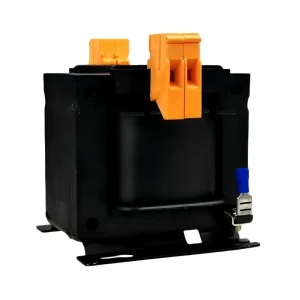
High-Quality JBK5 Series Machine Tool Control Transformers - Reliable China Suppliers and Factory Solutions Factory, Company
View Technical Specs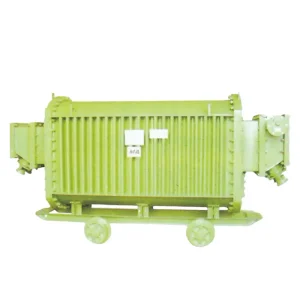
China KBSG9-50~1600/10 Mining Flameproof Dry Type Transformer Factory, Companies
View Technical Specs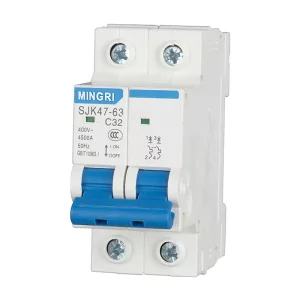
High-Quality SJK47-63 Miniature Circuit Breaker MCB - Premium Quality from China Suppliers & Factory for Reliable Electrical Protection Factories, Factory
View Technical Specs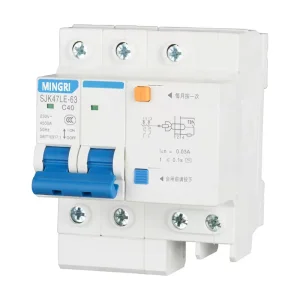
OEM SJK47LE-63 RCCB: Reliable Earth Leakage Protection from China Suppliers and Factory for 230V/400V AC Systems Supplier, Factories
View Technical Specs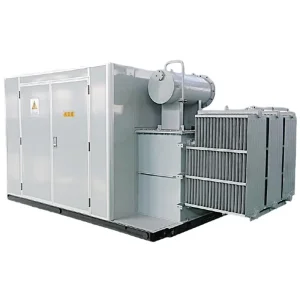
ODM ZGS11-Z.T Integrated Photovoltaic Step-up Substation Manufacturer, Companies
View Technical SpecsCollaborate with our Electrical Application Specialists
Whether configuring customized trip curve thresholds for an offshore microgrid or procuring containerized MV switchgear for large utility substations, Mingri Electric provides complete engineering appraisal, simulation test data, and competitive wholesale trade contracts.
Technical Procurement Checklist
Forward your single-line diagram and tender schedules to our Yueqing engineering office for comprehensive appraisal:
- Grid prospective short-circuit levels ($I_k''$ and $I_p$)
- Coordinated thermal dissipation and ambient environment ratings
- Specific auxiliary contacts, shunt releases, or motorized mechanisms
- Compliance specifications (IEC, GB, ANSI/IEEE, or CE marking)