Primary Switching & Medium-Voltage Distribution Portfolio
Industrial-grade circuit protection, high-efficiency dry transformers, and modular medium-voltage units direct from China's primary high-voltage manufacturing hub in Yueqing.
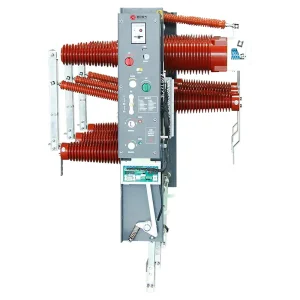
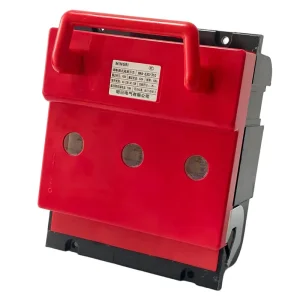
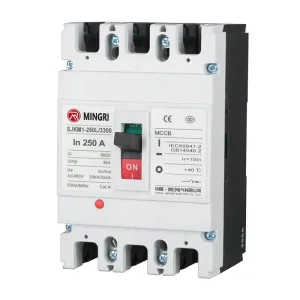
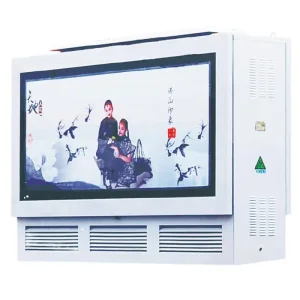
Industrial Anatomy of ZGS11 Combined Transformer Substations
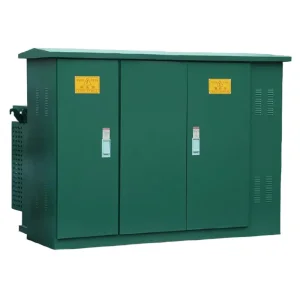
The ZGS11 series American-type combined pad-mounted transformer represents an integrated breakthrough in medium-voltage distribution engineering, blending transformer tanks, high-voltage load switches, and multi-tier protection in a hermetic enclosure.
Hermetically Sealed Core & Coil Assembly
The active core of the ZGS11 utilizes cold-rolled grain-oriented (CRGO) silicon steel laminations with step-lap miter-cut technology. By immersing the 10kV–35kV load switch, tap changer, and high-voltage expulsion/current-limiting fuses within the transformer cooling oil itself, the entire unit achieves an exceptionally compact structural footprint with zero live-part exposure to external atmosphere.
Dual-Protection Fusing Architecture
Engineered for mission-critical reliability, ZGS11 units integrate a coordinated two-tier fusing philosophy: an oil-immersed Bay-O-Net expulsion fuse sensitive to ambient oil temperature and sustained overloads, paired in series with a full-range backup current-limiting fuse (ELSP). This mitigates catastrophic arc energy, isolating high fault currents (up to 50kA symmetrical) within milliseconds.
Eco-Fluid Compatibility & Cooling
Standard builds run on high-refined uninhibited mineral dielectric oil (IEC 60296). For urban commercial hubs, high fire hazard sites, and environmental catchments, the ZGS11 enclosure supports natural synthetic ester fluids (FR3/K-Class). High flashpoint formulations (>300°C) enhance thermal overload ceilings while preventing soil contamination vulnerabilities.
Strategic Procurement Analysis: Total Cost of Ownership (TCO) in Modern Grids
Purchasing decision-makers evaluating ZGS11 wholesale quotes must balance initial Capex against structural lifecycle Opex. Traditional European-style prefabricated substations (e.g., YB series) mandate segregated masonry or walk-in metal enclosures, separate MV switchgear panels, and standalone air/cast-resin transformers. This setup consumes extensive real estate and requires complex civil foundation works.
The ZGS11 American-style combined substation integrates the primary switching apparatus directly into the cooling fluid reservoir. By doing so, it eliminates external MV interconnecting busbars, reduces field cabling labor by 70%, and prevents moisture/vermin ingress. When calculating no-load losses (P0) and load losses (Pk) governed by national level-11 efficiency benchmarks, a verified ZGS11 unit reduces lifetime thermal dissipation overheads by an estimated 18.4% compared to legacy S9/S10 equipment.
| Performance Characteristic | ZGS11 Series Combined Unit | European Substation (YB Series) | Traditional Open-Air Substation |
|---|---|---|---|
| Structural Footprint | Ultra-Compact (approx. 3.5 m² for 630kVA) | Moderate (approx. 8–12 m² for 630kVA) | Expansive (>35 m² footprint + safety fence) |
| High-Voltage Interrupter Medium | Dielectric Fluid Immersed (Mineral/Ester) | Air / SF6 / Solid-Insulated Switchgear | Air-Insulated Disconnectors & Vacuum Breakers |
| Civil Foundation Requirement | Simple reinforced concrete slab pad | Excavated cable trench + pad structure | Deep subterranean vault + structural towers |
| Tamper & Arc Resistance | Dead-front, hooded access, tamper-resistant | Compartmentalized metal-clad locking | Perimeter boundary dependency |
| Ingress Protection | Hermetic Tank: IP68; Cabinet: IP54/NEMA 4 | IP33 to IP54 Enclosure | Direct environmental exposure |
China's Yueqing Electrical Cluster: Manufacturing & Supply Chain Sovereignty
A deep manufacturing ecosystem translates directly into reduced lead times, granular customization capabilities, and rigorous quality assurance protocols for international utilities and EPC contractors.
Full Tier-1 Raw Material Integration
Yueqing's specialized industrial corridor gives manufacturers immediate access to top-grade laser-treated electrical steels (Baosteel/Wisco), high-purity oxygen-free copper rods, and precision insulating pressboards. This eliminates multi-week tier-2 procurement bottlenecks, keeping production agile.
Precision Automated Fabrication
Modern ZGS11 facilities deploy CNC multi-station punching, robotic CNC fiber-laser cutting, and automated continuous corrugated fin fold welding lines. Tank fabrication undergoes automated dual-sided submerged arc welding, ensuring 100% hermetic tightness and leak-free lifespans.
Stringent Surface Treatment Protocols
Corrosion mitigation is critical for coastal and desert installations. Substation shells undergo an eight-stage zinc-phosphate immersion or shot-blasting process, followed by electrostatic thermosetting polyester powder coatings (120–160 μm thickness) tested to withstand 1,000+ hours of ASTM B117 salt-spray exposure.
Scalable Factory Acceptance Testing (FAT)
Complete in-house testing laboratories deliver full routine and type validation: winding resistance measurement, voltage ratio/phase check, short-circuit impedance verification, dielectric insulation power factor testing, and applied/induced overvoltage withstand testing with full documentation.
Localized Engineering Compliance & Critical Application Scenarios
Engineering ZGS11 pad-mounted transformers for international markets requires rigorous alignment with utility connection standards, environmental safety codes, and operational demands.
Renewable Energy & Solar PV Farms
Engineered for solar step-up duty (ZGS11-Z.T series), our substations link multi-inverter array clusters (690V/800V) directly to 10kV, 24kV, or 35kV transmission grids. Units are reinforced against harmonic saturation (K-factor ratings up to K-13) and equipped with high-efficiency oil cooling to resist extreme solar thermal loading.
Commercial Infrastructure & Urban Grids
Compact footprint and low operational noise make ZGS11 transformers well-suited for high-density public hubs, multi-family residential zones, and EV charging corridors. Dead-front terminations ensure full shielding, isolating pedestrians and utility operators from high-voltage contact risks.
Industrial Mines & Heavy Processing Plants
Severe industrial settings demand mechanical resilience. Custom ZGS11 variants can be fabricated with 304 or 316 stainless-steel tanks, tropicalized anti-fungal internal varnishes, and custom pressure relief valves designed to withstand vibration, corrosive dust, and continuous mechanical shock.
Navigating International Standards: ANSI/IEEE vs. IEC Harmonization
When wholesale overseas procurement is initiated, technical specifications frequently present diverging requirements between American standards (IEEE C57.12.00, C57.12.28, ANSI C37) and International Electrotechnical Commission norms (IEC 60076, IEC 62271). A capable factory bridges these engineering frameworks seamlessly.
Under IEEE paradigms, dead-front elbow connectors (loadbreak/non-loadbreak, 200A/600A), loop-feed or radial configurations, and tamper-resistant cabinet latching mechanisms take priority. Conversely, IEC-centric bids mandate strict partial discharge thresholds (<10 pC at 1.3 Um), distinct insulation coordination tables, and standardized Buchholz relay configurations for gas-detection monitoring. Our technical engineering division handles these specification conversions directly, guaranteeing regional interconnection compliance without costly on-site modifications.
Future Trends: Digitalization, Smart Sensor Hubs & SF6 Alternatives
The medium-voltage transformer sector is evolving beyond static copper-and-iron components into intelligent, telemetry-enabled assets for next-generation smart distribution networks.
IoT-Enabled Predictive Health Monitoring
Modern ZGS11 transformers integrate fiber-optic thermal probes into internal winding hotspots. Optical sensors continuously report real-time oil temperatures, dissolved gas analysis (DGA) indicators, and acoustic signatures via Modbus/IEC 61850 protocols, allowing asset managers to perform preventative maintenance prior to dielectric failure.
Decarbonization Through Eco-Gas & Ester Fluids
Global net-zero regulations like the European F-gas directive are accelerating the phase-out of SF6 gas insulation. In parallel, ZGS11 designs are transitioning toward high fire-point natural esters derived from agricultural seeds, offering rapid biodegradability and carbon-neutral lifecycle footprints.
Integration with Solid-State Breakers & Microgrids
As decentralized distributed energy resources (DERs) multiply, ZGS11 substations are serving as bidirectional microgrid connection hubs. Interfacing with solid-state circuit interrupters and programmable intelligent electronic devices (IEDs), they execute sub-cycle fault isolation and autonomous islanding protection.
Frequently Asked Technical Questions (FAQ)
Essential guidance for electrical project managers, EPC engineering departments, and industrial supply procurement specialists.
What is the structural distinction between a ZGS11 American-type substation and a European-type (YB) substation?
The ZGS11 combines the transformer core, windings, multi-position oil-immersed load switch, and fusing elements inside a single sealed oil tank. A European-type substation (such as the YB series) houses three separate, independent compartments for the high-voltage switchgear, the dry or liquid transformer, and the low-voltage distribution board inside an external walk-in or non-walk-in structural enclosure.
How does the dual-fuse protection system function within the ZGS11 oil reservoir?
The system connects a Bay-O-Net expulsion fuse in series with an ELSP back-up current-limiting fuse. The Bay-O-Net fuse protects against secondary distribution circuit faults, internal partial breakdowns, and sustained thermal overload conditions. The high-interrupting-capacity ELSP fuse trips only under catastrophic high-current primary internal faults, limiting let-through current and preventing tank rupture.
Can the ZGS11 accommodate both radial and loop-feed distribution systems?
Yes. By outfitting the transformer with a four-position oil-immersed load switch (Loop A, Loop B, Loop A&B open, Loop A&B closed), the unit supports loop-feed distribution networks. This allows field crews to isolate fault segments or switch supply paths without taking downstream customers offline.
What documents and test reports are delivered with wholesale containerized shipments?
Every commercial order is accompanied by Factory Acceptance Test (FAT) reports, material mill certificates for core steel and windings, calibration certificates for pressure/temperature gauges, structural CAD/BIM dimensional drawings, single-line schematics, and an Operations & Maintenance Manual with ISO 9001/14001 certification records.
Industrial Substation, Switchgear & LV Control Infrastructure
Complete medium- and low-voltage electrical distribution hardware engineered for industrial plants, municipal installations, and energy generation sites.