Factory Direct Equipment & High-Voltage Component Portfolio
Verified medium and low-voltage protection units, incoming feeder panels, branch enclosures, and power protection assemblies direct from Yueqing electrical manufacturing hub.
-
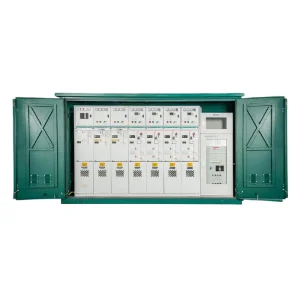
ODM DFW Outdoor High Voltage Cable Branch Box (Cabinet)
Explore Specifications -
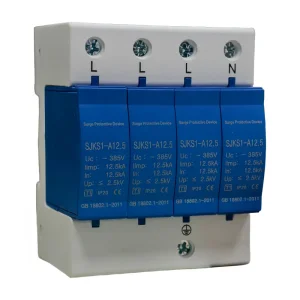
ODM SJKS1D Series Surge Protection Device 1P-4P 50Hz
Explore Specifications -
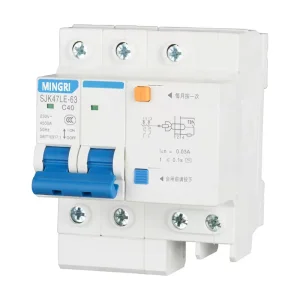
High-Quality SJK47LE-63 Residual Current Circuit Breaker RCCB
Explore Specifications -
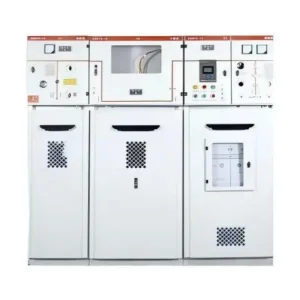
China XGN15-12 Metal-Clad Fixed RMU Switchgear Cubicle Design
Explore Specifications -
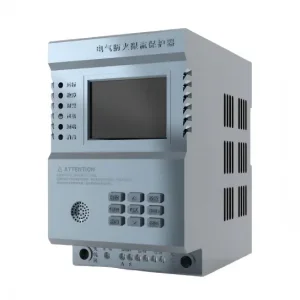
Wholesale Single Phase Current Limiting Protector 20-80A 220VAC
Explore Specifications -
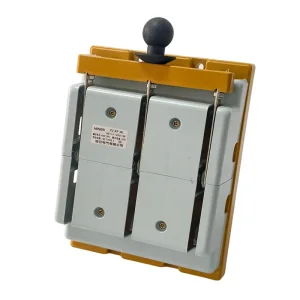
ODM HD11F Double Throw Anti-Error Knife Switch 200A to 1500A
Explore Specifications -
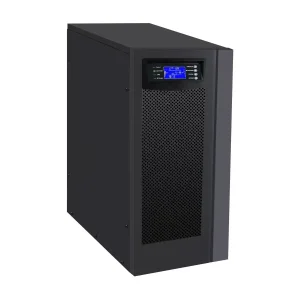
High-Quality MCL33 Series Industrial Frequency Online UPS
Explore Specifications -
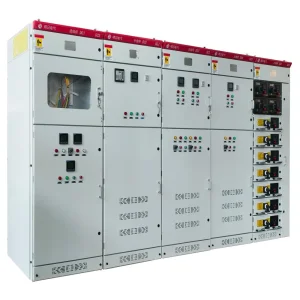
High-Quality Low Voltage Withdrawable Switchgear Panel for Power Distribution
Explore Specifications
Engineering Architecture of SM6 Air-Insulated Ring Main Units
Bridging modular flexibility and operational safety through decoupled switch-disconnector enclosures and optimized metal-enclosed architectures.
Modular Compartmentalization
The SM6 modular family operates on an air-insulated cubicle architecture coupled with a maintenance-free, sealed-for-life SF6 rotary switch-disconnector or vacuum interrupter. Each cubicle acts as a standalone autonomous module, allowing limitless busbar extensions on site.
- Independent Low-Voltage Box: Isolated auxiliary wiring compartment housing microprocessor protection relays, RTU, and revenue-grade metering.
- Separate Busbar Compartment: Air-insulated mainline busbar segregated by metallic or insulating barriers preventing multi-phase flashovers.
- Cable Connection Chamber: Front-accessible connection points supporting standard cold-shrink and separable connector terminations up to 630mm².
Internal Arc Classification (IAC)
Personnel safety is the quintessential design mandate of contemporary medium-voltage networks. Mingri Electric engineers the SM6 cubicle to exceed IEC 62271-200 IAC AFLR standards up to 20kA and 25kA for 1.0 second durations.
- Integrated Gas Exhaust Ducts: Directional upward or bottom decompression tunnels guide destructive arc gases away from operating staff.
- Reinforced Door Interlocks: Five-point mechanical locks inhibit access while busbars are energized or earthing switches remain disengaged.
- Continuous Pressure Relief Vents: Calibrated rupture discs release internal overpressure within milliseconds to maintain outer shell integrity.
Intelligent SCADA & Grid Automation
Modern power distribution requires continuous situational awareness. SM6 units incorporate smart sensor technology and remote terminal units (RTUs), transmuting standard passive switchgear into decentralized intelligent power nodes.
- Dual Motorized Actuators: Remote open/close execution for isolator and breaker mechanisms with millisecond feedback.
- Smart Fault Passage Indicators (FPI): Directional earth-fault and short-circuit monitoring compliant with IEC 60870-5-104 and DNP3.
- Continuous Thermal Tracking: Non-contact infrared or wireless SAW surface sensors continuously tracking busbar contact temperatures.
Standard SM6 Functional Cubicle Matrix
A breakdown of industry-standard SM6 functional units manufactured for wholesale EPC contractors, panel builders, and regional energy concessionaires.
| Cubicle Code | Primary Designation | Core Switching Apparatus | Rated Current (Ir) | Short-Time Withstand (Ik) | Typical Industrial Application |
|---|---|---|---|---|---|
| IM | Incomer / Outgoing Feeder | 3-Position Switch-Disconnector (SF6) | 630 A / 1250 A | 20 kA / 25 kA (1s/3s) | Network loop sectionalizing, secondary ring cable switching |
| QM | Transformer Protection Switch | Switch-Disconnector with DIN HV Fuse Base | 200 A | 20 kA / 25 kA (fuse limited) | Distribution transformers up to 2500 kVA rating |
| DM1-A | Single-Isolation Circuit Breaker | SF6 or Vacuum Interrupter + Disconnector | 630 A / 1250 A | 25 kA (3s) | Heavy industrial feeders, selective protection, renewable infeed |
| CM | Voltage Metering Unit | Fixed Busbar + Cast-Resin PTs & Fuses | 630 A | 20 kA / 25 kA (1s) | Substation revenue tariff metering, busbar voltage sensing |
| NSM | Auto-Transfer System (ATS) | Dual Interlocked IM / DM1 Units | 630 A | 20 kA / 25 kA (1s) | Data centers, hospitals, automated dual-source transfer |
| GAM | Incoming Cable Connection | Direct Busbar Termination Studs | 630 A / 1250 A | 20 kA / 25 kA (1s/3s) | Cable entry cubicle without switching equipment |
SM6 RMU Market Dynamics Across Continents
Analyzing procurement standards, environmental requirements, and decentralized deployment patterns across key geographical territories.
Asia-Pacific (APAC) Urbanization
APAC remains the largest regional market for SM6 switchgear, driven by monumental urbanization, megacity grid reinforcements, and rural electrification programs. China, Vietnam, Indonesia, and the Philippines require highly compact, anti-humidity, and seismic-resistant medium-voltage switchgear capable of installation in basement vaults and package substations.
EMEA: F-Gas & Renewable Integration
In Europe and the Middle East, the transition toward decentralized microgrids and strict European Union F-gas mandates drives the demand for mixed solutions. While the Middle East prioritizes high ambient temperature resilience (50°C continuous operation), Europe emphasizes digital retrofitting, low carbon footprint, and SF6-free eco-gas switchgear upgrades.
The Americas & Industrial Reshoring
Throughout Latin America and specialized industrial segments in North America, wholesale buyers choose SM6 switchboards for mining, petrochemical facilities, and private power infrastructure. The ability to deploy modular units within standard containerized E-houses reduces civil construction overhead by up to 45%.
Macro-Industry Deployment Scenarios
Engineered to ensure uninterrupted power flow and selective fault isolation in demanding electrical topologies.
Mission-Critical Data Centers
Tier III and Tier IV server campuses require fault clearance in less than 50ms. Modular SM6 DM1 units combined with NSM auto-transfer stations ensure zero bus dead-time during primary feeder failure.
Solar PV & Wind Substation
Utility-scale inverters and wind turbine towers feed directly into SM6 collector circuits. Units withstand harmonic distortion, rapid load ramping, and harsh coastal salinity ratings without dielectric degradation.
Railway Traction Sub-Feeders
Urban mass rapid transit (MRT) and light rail distribution substations rely on SM6 for trackside auxiliary step-down stations, handling continuous vibrational stress and aggressive switching duty cycles.
Underground Metro Substations
Compact prefabricated European and American-style transformer substations integrate SM6 incoming ring gear due to its small footprint and reduced clearance demands compared to bulky AIS switchboards.
Technological Roadmap & Future Outlook (2025–2030)
Transitioning from traditional gas insulation towards net-zero eco-alternatives and digital twin diagnostics.
Clean Air & SF6-Free Switchgear
Environmental regulations demand alternatives to high Global Warming Potential (GWP) gases. Mingri Electric's engineering roadmap incorporates pure dry-air insulation coupled with solid-dielectric vacuum breaking chambers (HBXGN & GXGN series), maintaining identical physical dimensions to ease one-to-one field replacements.
Condition-Based Predictive Maintenance
Moving away from scheduled manual shutdowns, next-generation SM6 smart panels integrate Edge AI edge gateways. Algorithms analyze partial discharge (PD) signals, acoustic emission signatures during switching, and contact erosion indexes to alert grid dispatchers well before catastrophic insulation failure occurs.
Interoperable IEC 61850 Substation Bus
Full integration of Goose messaging and Process Bus protocols eliminates thousands of discrete copper control wires inside substation trenches. Standard fiber-optic links directly connect SM6 protection relays to top-tier SCADA management platforms with sub-millisecond precision time synchronization (IEEE 1588).
Frequently Asked Questions (Technical & Commercial)
Comprehensive engineering clarifications for electrical consultants, procurement managers, and utility distribution planners.
The fundamental distinction lies in insulation architecture. SM6 is an air-insulated modular cubicle (AIS) with an integrated sealed SF6 switch-disconnector or vacuum breaker enclosure. The main busbar and connections reside in air compartments. Conversely, RM6 or SafeRing are gas-insulated switchgear (GIS) where all live high-voltage components, including the continuous busbar, are sealed within a stainless steel tank filled with SF6. SM6 offers greater modular flexibility for extension and component replacement, while GIS delivers extreme compactness for harsh environments.
Yes. The lateral busbar design of SM6 cubicles allows for rapid sectional additions. By opening the incoming switch-disconnector and utilizing proper busbar earthing switches in the section being extended, technicians can mount and connect new functional cubicles (such as additional QM transformer feeders or DM1-A breaker panels) to either side of the existing switchboard with minimal downtime.
Mingri Electric manufactures all SM6 cubicles in strict adherence to IEC 62271-200 (AC metal-enclosed switchgear), IEC 62271-102 (disconnectors and earthing switches), and IEC 62271-100 (high-voltage circuit-breakers). Official third-party type-test reports verify temperature-rise limits, short-time withstand current (up to 25kA/3s), impulse withstand voltage (BIL up to 170kV for 36kV equipment), mechanical endurance (M2 class – 10,000 cycles), and Internal Arc Classification (IAC AFLR).
The QM cubicle uses high-rupturing-capacity (HRC) current-limiting fuses fitted with a striker pin mechanism. When selecting fuse ratings, engineers calculate the transformer rated primary current, inrush current multiplier (typically 10-12x for 100ms), and thermal withstand capacity. In the event of a fuse blowing, the mechanical striker trips the 3-phase switch mechanism simultaneously, eliminating single-phasing conditions and protecting both dry-type resin and oil-filled distribution transformers.
To deliver an exact technical proposal and factory wholesale pricing, our engineering division requires: 1) The Substation Single Line Diagram (SLD); 2) Operating system voltage (e.g., 11kV, 13.8kV, 24kV, 33kV) and frequency (50/60 Hz); 3) Required busbar continuous current (630A or 1250A) and fault level (e.g., 20kA/3s); 4) Auxiliary control voltage (e.g., 110VDC, 220VAC); and 5) Specific protection relay brand/model preferences or communication protocols.
Standard OEM/ODM supply agreements include an 18 to 24-month comprehensive manufacturing warranty from dispatch date. We offer high-definition video-assisted site acceptance testing (SAT), comprehensive factory acceptance test (FAT) documentation, complete secondary wiring schematics, and on-site engineering supervision upon client request for large-scale utility and industrial infrastructure deployments.
Complementary Medium & Low-Voltage Distribution Equipment
Complete power chain integration: from cast resin power transformers and withdrawable switchboards to industrial motor control and surge suppression devices.
-
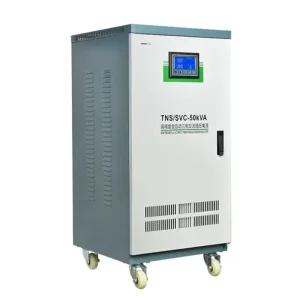
High-Quality TNS 3-Phase Fully Automatic AC Voltage Regulator
Explore Specifications -
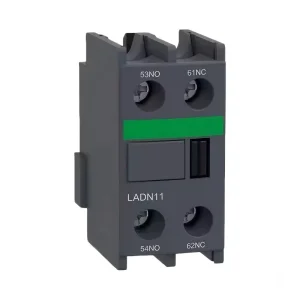
ODM LADN 1NO 1NC Auxiliary Contact For AC Contactor
Explore Specifications -
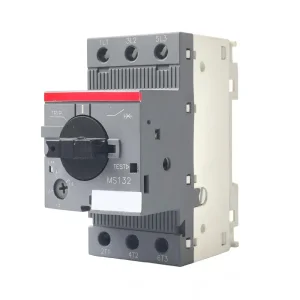
OEM MS132 Low Voltage Motor Protection Breaker 25A 15kW 100kA
Explore Specifications -
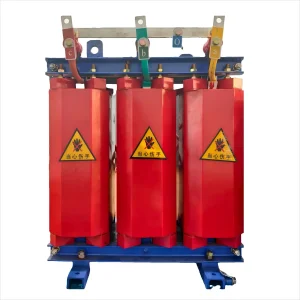
SC(B)10 Type 10kV Resin Insulation Dry Type Power Transformer
Explore Specifications -
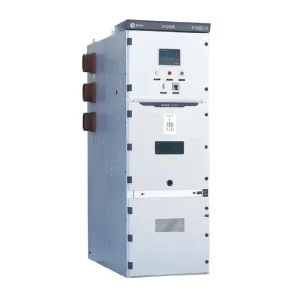
KYN28-24 Withdrawable Armored Metal-Enclosed Switchgear
Explore Specifications -
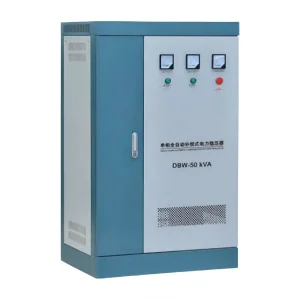
DBW Single Phase Series Compensated Power Voltage Regulator
Explore Specifications -
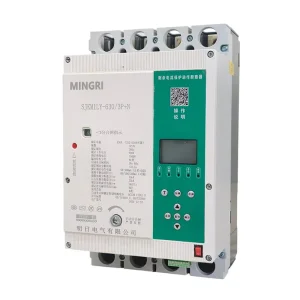
SJKM1LY Auto Reclosing Molded Case Circuit Breaker MCCB
Explore Specifications -
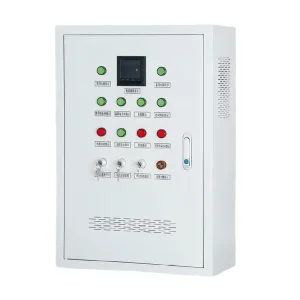
JXF Industrial Control Box - 500V Three-Phase Power Solutions
Explore Specifications