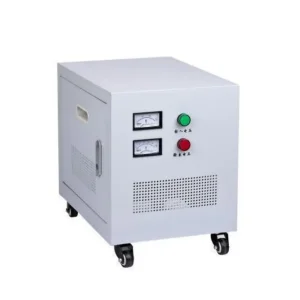
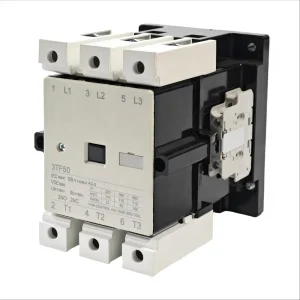
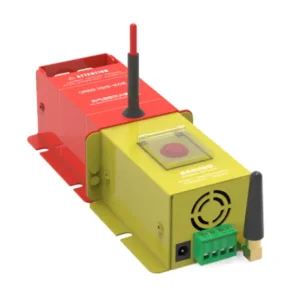
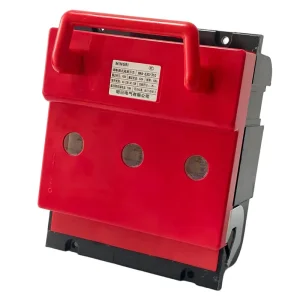
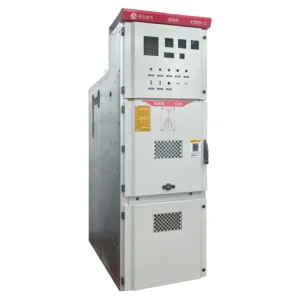
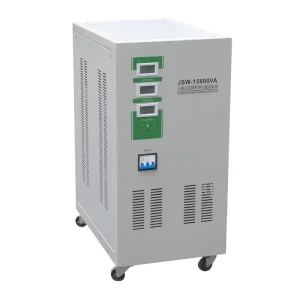
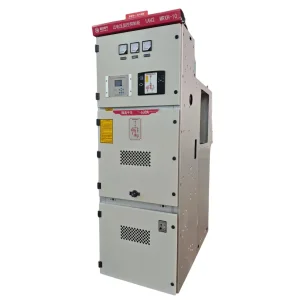
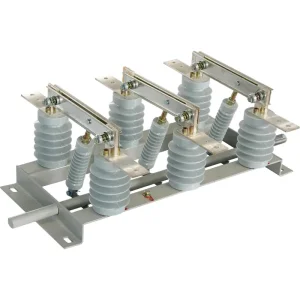
Featured Grid Switching & Power Regulation Systems
Enterprise-grade switching and regulation components tested for mission-critical industrial, mining, and sub-transmission installations.
Macro Industrial Dynamics & Global Procurement Strategic Intent
Decarbonization, distributed renewable integration, and high-frequency manufacturing demand an advanced taxonomy of industrial relay systems.
Modern international procurement for industrial relay-type assemblies has migrated from commoditized part replenishment to systems-level reliability verification. In high-stakes manufacturing, distributed generation, and high-voltage transmission sectors, switching failures introduce massive operational liability, down-time losses, and critical equipment damage. Sourcing managers and EPC engineering directors need wholesale relay type suppliers that maintain rigorous mechanical integrity, verified microsecond signal integrity, and absolute climatic survivability.
Grid Resilience Under Transient Surges
Sudden current inrushes and high di/dt spikes necessitate heavy-duty contact configurations made from silver-nickel (AgNi) or silver-tin-oxide (AgSnO2) alloys to resist contact welding, dielectric erosion, and thermal runaway under short-circuit stresses.
Harmonic Distortions & Solid-State Regimes
Variable frequency drives (VFDs) and non-linear switching topologies create heavy harmonic resonance. Procurement managers select protective switching arrays equipped with tuned RC snubbers, zero-crossing control, and galvanically isolated optical paths.
IoT Integration & Predictive Maintenance
Wholesale distribution networks prioritize intelligent relay architectures integrated with real-time coil parameter monitoring, dynamic contact bounce assessment, and fieldbus protocol support (Modbus RTU, Profinet, IEC 61850) for proactive operational warnings.
Relay Topology Comparison: Electromechanical, SSR, & Smart Hybrid Systems
Detailed technical classification helping system integrators match switching characteristics to their exact application parameters.
Electromechanical Relays (EMR)
Primary Function: Absolute physical air-gap galvanic isolation, low contact resistance, high surge current endurance.
Ideal Workloads: High-power mains switching, motor starting systems, railway traction circuits, and high-voltage disconnect interlocks where mechanical fail-safe states are mandated by safety codes.
Solid-State Relays (SSR)
Primary Function: Pure semiconductor-based switching utilizing optocouplers, Triacs, SCRs, or MOSFETs without moving mechanical contacts.
Ideal Workloads: Ultra-fast response speeds (<100 microseconds), high-duty-cycle heating control, clean-room environments, and spark-free hazardous chemical process lines.
Digital Microprocessor Relays
Primary Function: Numeric algorithm execution for directional overcurrent, differential, phase loss, ground leakage, and under/over-frequency alarms.
Ideal Workloads: Medium-voltage and high-voltage substations, automated transfer switch (ATS) networks, wind-farm step-up units, and industrial primary distribution panels.
Technical Roadmap: Next-Generation Switching Architectures
Evolutionary milestones guiding international electrical design and medium-voltage substation engineering.
Wide-Bandgap (SiC/GaN) Matrices
Integration of Silicon Carbide (SiC) and Gallium Nitride (GaN) power stages into SSR architectures, slashing on-state resistance by 60% and enabling switching frequencies beyond 200 kHz with minimal thermal dissipation.
Eco-Gas & SF6-Free Switchgear
Strict European F-gas directives and worldwide net-zero mandates are accelerating the phase-out of SF6 gas. Advanced medium-voltage RMUs and circuit relays are deploying solid insulation or specialized fluoronitrile-based gas mixtures.
Self-Powered Solid-State Breakers
Emergence of hybrid solid-state circuit breakers (SSCB) executing microsecond interruption without mechanical arcing, powered directly from the primary busbar through ultra-fast parasitic inductive tapping.
Edge Computing In Protective Relays
Decentralized AI inference embedded directly onto DSP modules within relay units to execute microsecond wave-shape anomaly detection, isolating high-impedance faults before catastrophic fire propagation occur.
Localized Supply Chains, Quality Assurance & Compliance Standards
Stringent adherence to international electrotechnical mandates guarantees seamless integration and zero-defect deployments.
Global Certification Frameworks
Every industrial relay, contactor, and automated switchgear package is certified against IEC 60947 (Low-voltage switchgear and controlgear), IEC 62271 (High-voltage switchgear), UL 508 / UL 61010, and CE-LVD/EMC compliance, ensuring trouble-free grid interconnection across EMEA, the Americas, and APAC markets.
Stress Testing & Climatic Validation
Products undergo type-testing within CNAS-accredited laboratory settings: severe thermal cycling (-40°C to +85°C), high relative humidity (95% at 40°C), salt-mist atmospheric corrosion, seismic vibration resistance up to 9 on the Richter scale, and high-energy lightning impulse withstand tests (BIL up to 125kV).
Dedicated Engineering Field Support
Our global engineering teams provide direct support across the entire project lifecycle—from single-line diagram (SLD) engineering reviews and protective relay coordination curves to real-time remote FAT (Factory Acceptance Testing), on-site commissioning guidance, and local emergency parts warehousing.
Frequently Asked Technical & Sourcing Questions
Clear, unvarnished engineering answers regarding relay procurement, custom specifications, and system lifespan.
How do you resolve contact bounce and arcing in high-frequency DC inductive loads?
In DC circuits, the absence of a natural AC zero-crossing voltage makes arcs significantly more persistent. We engineer solutions that combine magnetic arc blowout coils, integrated flyback freewheeling diodes, and advanced silver-tin-oxide (AgSnO2) contacts. Alternatively, for ultra-high duty cycles, our engineers implement hybrid relay structures where a solid-state element handles the initial make/break transition to prevent arcing entirely, while mechanical contacts carry continuous running currents to eliminate thermal dissipation.
What parameters are required to generate an exact quote and technical drawing for custom switchgear panels?
To produce an authoritative engineering schedule and production timeline, our technical sales team requires: 1) The Single Line Diagram (SLD) or comprehensive schematic; 2) System nominal voltage, operating frequency (50/60 Hz), and required rated busbar current; 3) Short-circuit breaking and short-time withstand currents (kA / duration); 4) Environmental conditions including elevation above sea level, ambient temperatures, and seismic rating; and 5) Protection relay make/model preferences and primary communication protocols.
Can your protection relays and switchgear interface with third-party SCADA and distributed energy networks?
Yes. Interoperability is a cornerstone of our switchgear and automated control topologies. Equipment interfaces support standard industrial Ethernet and serial communication protocols including IEC 61850 (GOOSE messaging and sampled values), Modbus TCP/RTU, Profibus-DP, and DNP3. This guarantees seamless integration into existing substation supervisory systems, utility remote terminal units (RTUs), and modern energy management software suites.
What is the standard production lead time for bulk wholesale orders and customized OEM assemblies?
Standard catalog components (standard contactors, control relays, isolation switches, and standard LV circuit breakers) ship within 7 to 15 business days. Engineered-to-order medium-voltage equipment (such as customized KYN28 switchgear, RMU arrays, or specialized mining-grade transformers) typically follows a 4 to 8-week manufacturing window including full routine factory acceptance testing (FAT), dielectric validation, and international ocean-freight packaging.
Substation, Transformation & Modular Protection Assemblies
Heavy-duty industrial infrastructure engineered for demanding utility, commercial distribution, and critical facility architectures.