Primary Voltage Distribution & Over-Voltage Protective Switchgear
Industrial-scale primary power routing units engineered to mitigate transient overvoltage, lightning strikes, and harmonic grid anomalies across distribution networks.
Industrial Surge Trends & Modern Grid Procurement Dynamics
Evaluating macro-level shifts in transient surge suppression, electrification, and renewable integration for global procurement teams and electrical system architects.
The decentralization of electrical grids driven by utility-scale solar farms and onshore wind corridors introduces severe harmonic distortion and rapid switching over-voltages. Modern wholesale suppliers must deliver high-energy Metal Oxide Varistors (MOVs) and hybrid spark-gap assemblies capable of absorbing continuous micro-surges without thermal breakdown.
Global EPC enterprises, heavy industrial operators, and utility concessionaires require complete traceability. Sourcing criteria have shifted from generic component matching to verifiable supplier pedigrees, including type test certification, certified short-circuit withstand capabilities, and seamless integration into automated SCADA architectures.
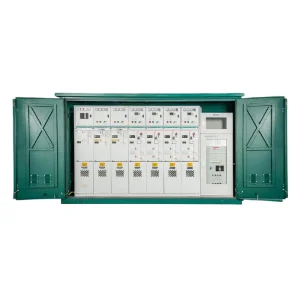
With strict international limits on fluorinated gases, the transition away from sulfur hexafluoride (SF6) toward eco-gas mixtures and solid dielectric matrices represents a significant industry evolution. Next-generation Ring Main Units and fused circuit isolators combine non-toxic arc-quenching mechanisms with high-performance integrated surge arresters.
Full-Spectrum System Protection Frameworks
Comprehensive engineering strategies designed to address transient events, inductive switching surges, and direct atmospheric discharges across the power value chain.
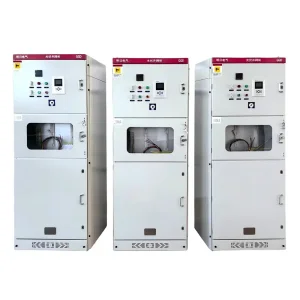
Achieving true electrical resilience requires cascade-coordinated over-voltage suppression. Upstream installations use high-energy Type 1 surge protective devices (SPDs) based on heavy-duty spark gaps to dissipate high-current lightning impulses (10/350 μs waveform). Downstream distribution switchboards, including GGD and MNS cabinets, employ Type 2 MOV arrays to clamp residual over-voltages down to equipment tolerance thresholds.
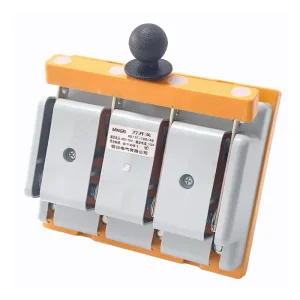
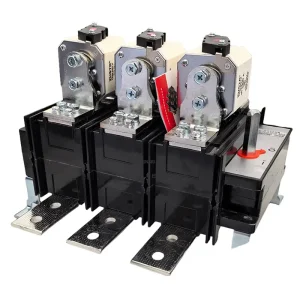
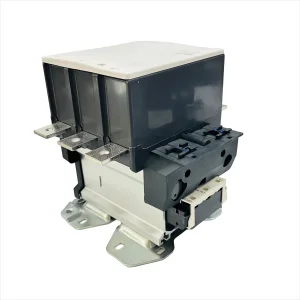
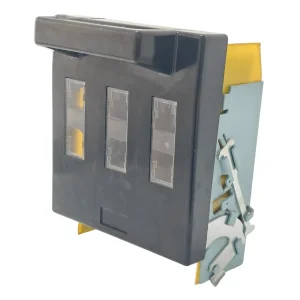
Heavy inductive switching from high-capacity induction motors, mining step-up units, and high-frequency soft starters generates sustained back-EMF spikes. Implementing coordinated fused isolation switches like the OEM HH15(QSA) with rapid-response AC contactors mitigates insulation breakdown, eliminates contact pitting, and limits phase-to-phase over-voltage events.
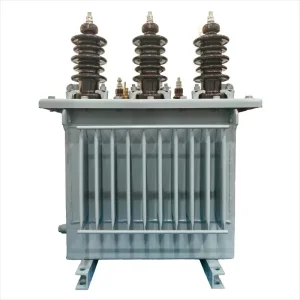
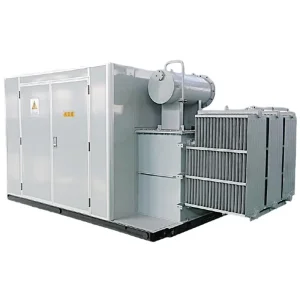
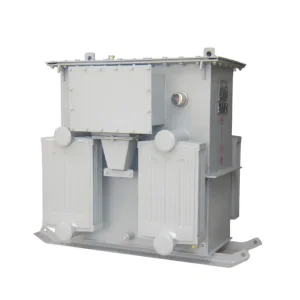
In step-up substations such as the ODM ZGS11-Z.T, over-voltage protection relies on balanced low-impedance grounding paths. Integrating heavy-duty oil-immersed transformers with primary arrester banks channels lightning and earth-fault surges safely to the grounding grid, preventing dangerous ground potential rise (GPR) across low-voltage control circuits.
Compliance Standards & Factory Assurance Architecture
Stringent production controls, third-party laboratory verification, and global compliance certifications safeguard operational integrity across medium- and low-voltage installations.
All over-voltage mitigation switchgear, circuit breakers, and arresters undergo rigorous type testing in accordance with IEC 61643-11 (Surge protective devices connected to low-voltage power systems), IEC 62271-200 (AC metal-enclosed switchgear for rated voltages above 1 kV up to and including 52 kV), and IEEE C62.41 surge environment standards.
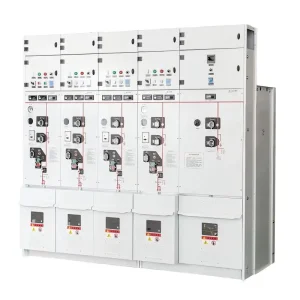
Industrial protection gear must withstand harsh site conditions. Our fully sealed distribution transformers, outdoor intelligent switch boxes, and gas-insulated ring network cabinets pass accelerated salt spray, seismic acceleration, high humidity, and extreme temperature thermal shock tests (-40°C to +65°C), ensuring operational reliability in demanding environments.
Supplying international infrastructure requires rapid-response technical support. Our dedicated engineering team provides end-to-end guidance from single-line diagram (SLD) reviews and insulation coordination analysis to factory acceptance testing (FAT) via high-definition live feeds and on-site commissioning validation.
Protection Technology Roadmap: The Next Decade
Pioneering active transient neutralization, intelligent predictive health monitoring, and environmentally safe medium-voltage power distribution infrastructure.
Integrating micro-sensor arrays within medium-voltage switchgear to transmit real-time surge count, leakage current, and thermal dissipation metrics directly to predictive cloud dashboards, enabling maintenance before flashovers occur.
Pioneering hybrid solid-state circuit breaking mechanisms that achieve sub-millisecond trip times, effectively neutralizing lightning over-voltages before downstream sensitive microelectronics experience transient stresses.
Accelerating the mass deployment of eco-gas HBXGN switchgear and solid-insulated modular units, achieving zero global warming potential (GWP) switchgear platforms without compromising dielectric withstand strength.
Developing self-diagnosing, autonomous reclosing distribution sub-stations that dynamically adjust Var compensation, surge absorption paths, and isolation parameters based on real-time grid disturbance modeling.
Frequently Asked Questions (FAQ)
Direct technical answers addressing system configurations, specification standards, and wholesale deployment parameters for professional buyers.
Type 1 SPDs are designed for direct lightning discharge currents evaluated under the 10/350 μs waveform, positioned at the main electrical intake. Type 2 SPDs are engineered for switching surges and indirect strikes tested under the 8/20 μs waveform, located inside main and sub-distribution switchboards. Type 3 devices offer localized point-of-use clamping for terminal electronic equipment.
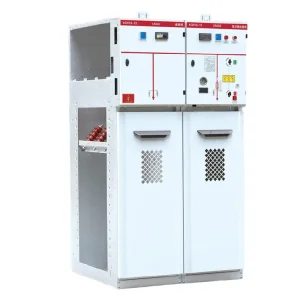
Our medium-voltage switchgear (such as the XGN15-12 and HBXGN-12F) incorporates factory-coordinated metal-oxide surge arresters directly behind the cable termination bushings. Combined with SF6 or vacuum arc-quenching interrupters, these units equalize high dv/dt voltage fronts produced by line reflections and load re-strikes.
Every delivery includes comprehensive type test certificates from accredited national laboratories, factory routine test reports (measuring power frequency withstand voltage, lightning impulse withstand, contact resistance, and gas tightness), mill test certificates for conductors, and full schematics.
Yes. We specialize in custom OEM and ODM manufacturing. Our mechanical and electrical engineering departments tailor busbar dimensions, trip unit curve configurations, integrated metering instruments, and auxiliary contacts to match the exact requirements of your project single-line diagram.
Integrated Power Conversion, Substation & Switching Solutions
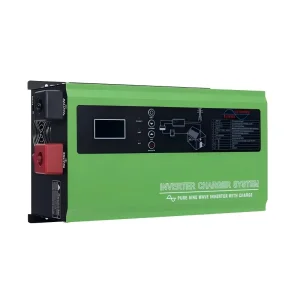
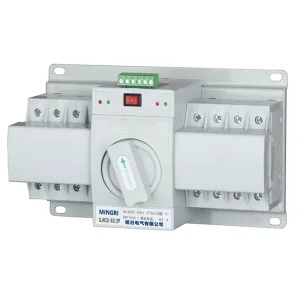
Explore our integrated transformers, automatic transfer systems, and intelligent switchgear engineered for uninterrupted power continuity and surge safety.