Featured Industrial Grid & Low Frequency Switching Equipment
Certified wholesale solutions engineered for standard nominal frequencies (50Hz/60Hz), offering robust protection against transient surges, system overloads, and earth leakage faults.
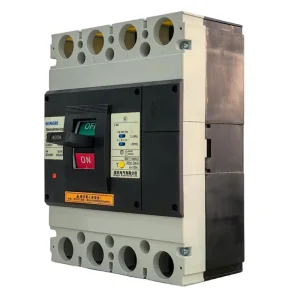
OEM High Sensitivity SJKM3L ELCB Earth Leakage Circuit Breaker - Reliable China Suppliers & Factory for 230V/415V AC Systems Factory, Company
View Specifications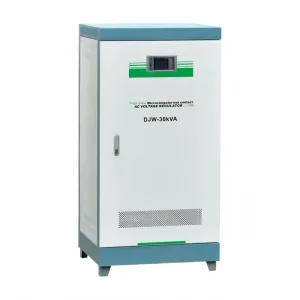
ODM DJW / SJW Series Microcomputer Non Contact AC Voltage Regulator Suppliers, Factories
View Specifications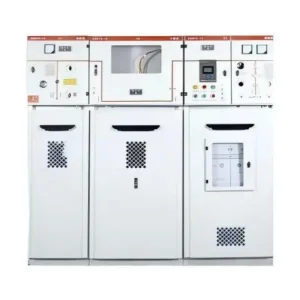
China XGN15-12 Metal-Clad Fixed-Type Ring Main Unit Switchgear in Cubicle Design Supplier, Manufacturer
View Specifications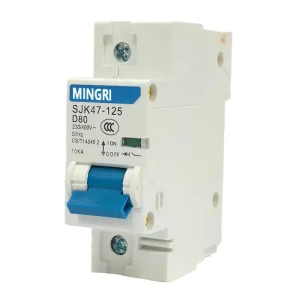
Wholesale SJK47-125 MCB Miniature circuit breaker DIN Rail Mountable Factories, Company
View Specifications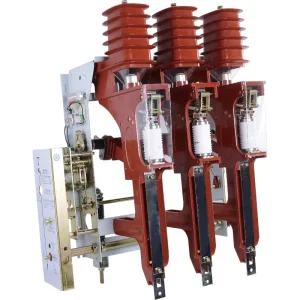
China China FZN25-12 Indoor AC High-Voltage Vacuum Load Switch - 12kV, 630A, Reliable Factory Supplier Manufacturers, Manufacturer
View Specifications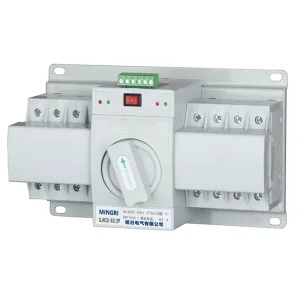
ODM SJKQ1 ATS Automatic Transfer Switch - Reliable Power Solution from China Suppliers and Factory for Seamless Power Management Suppliers, Manufacturer
View Specifications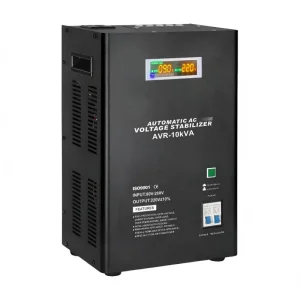
Wholesale AVR Single Phase Series Fully Automatic AC Voltage Regulator Manufacturers, Companies
View Specifications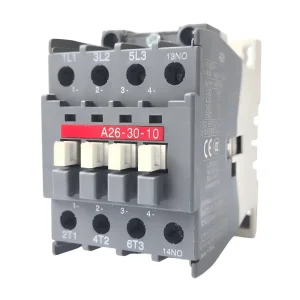
Wholesale A9~300 Series AC Contactors 50/60Hz 380V - Reliable China Suppliers & Factory for High Performance Manufacturers, Companies
View SpecificationsWhy Global EPCs & Utilities Source Low Frequency Infrastructure in China
From raw grain-oriented electrical steel (CRGO) processing to microcomputer-controlled vacuum circuit breaker assemblies, China’s specialized electrical manufacturing belt delivers unparalleled economies of scale, component availability, and rigorous standard compliance.
Yueqing Industrial Hub Agglomeration
Located at the epicenter of China's electrical capital, factories benefit from a complete Tier-1 to Tier-3 supplier network within a 30-kilometer radius. Copper busbars, epoxy casting molds, vacuum interrupters, and microcomputer relay chips are sourced instantly, reducing lead times by up to 45% compared to European or North American assembly yards.
End-to-End Vertical Quality Control
Modern Chinese low-frequency power manufacturers do not simply assemble; they execute CNC sheet metal stamping, automatic CNC foil winding, vacuum pressure impregnation (VPI), and laser welding under clean-room conditions. Every unit undergoes automated dielectric insulation withstand tests, contact resistance tests, and temperature-rise calculations before leaving the dock.
Dual IEC / IEEE Standard Interoperability
Whether your project requires IEC 62271-200 for metal-enclosed switchgear, IEC 60076 for power transformers, or IEEE C37 compliance for substation circuit protection, top-tier Chinese manufacturers engineer low frequency (50/60Hz) apparatus with international export certifications, including CE, CB, KEMA type tests, and ISO 9001/14001/45001 compliance.
Low Frequency (50Hz / 60Hz) Power Engineering & Grid Topology
An authoritative engineering exploration into magnetic flux density, core losses, insulation coordination, and transient stability in industrial power networks.
In global alternating current (AC) infrastructure, the designation of low frequency primarily governs commercial and utility transmission operating at standard 50 Hz and 60 Hz, as well as specialized fractional frequency applications such as 16.7 Hz or 20 Hz used in heavy traction railways and offshore AC transmission networks. For bulk transmission and industrial plant distribution, electrical engineers face intricate electromagnetic trade-offs between core material permeability, reactive impedance, and thermal dissipation.
When selecting wholesale switchgear, cast-resin transformers, and automatic transfer switches (ATS) from original equipment manufacturers (OEMs), operating frequency dictates core cross-sectional geometry. Transformers designed for 50Hz networks necessitate approximately 20% more core iron than equivalent 60Hz units to maintain core flux density below the saturation threshold (typically 1.6 to 1.75 Tesla for high-grade silicon steel). Failure to account for nominal frequency tolerances leads to excessive magnetizing current, harmonic distortion, thermal runaways, and dielectric breakdown.
To combat hysteresis and eddy current losses in low-frequency high-power switchboards and step-down substations, modern Chinese factories utilize laser-scribed, high-permeability grain-oriented (CRGO) steel sheets (e.g., 23ZH090 or 27ZH100). When combined with precision step-lap miter-cut stacking cores, no-load losses are diminished by 25% to 35%, ensuring full compliance with European EcoDesign Tier 2 and global green building efficiency mandates.
| System Class | Nominal Frequency | Insulation Medium | Rated Withstand (1 min / BIL) | Primary Application Matrix |
|---|---|---|---|---|
| 12 kV Switchgear (KYN28/XGN15) | 50 / 60 Hz | Air / SF6 / Solid Encapsulation | 42 kV / 75 kV | Municipal Distribution, Secondary Substations, Industrial MCC |
| 24 kV Ring Main Unit (RMU) | 50 / 60 Hz | Eco-Gas / Dry Air / Solid Epoxy | 50 kV / 125 kV | Renewable Energy Feeders, Commercial High-Rise, Petrochemical |
| 40.5 kV Prefabricated Substation | 50 / 60 Hz | Mineral Oil / Ester Fluid / Vacuum | 95 kV / 185 kV | Solar PV Farms, Wind Turbine Step-Up, Heavy Mining Operations |
| 0.4 kV Low Voltage Panels (MNS/GGD) | 50 / 60 Hz | Air Breakers / Molded Case (MCCB) | 2.5 kV / 8 kV | Data Centers, Manufacturing Floors, Motor Control Centers |
Future Directions in Low Frequency Power Distribution
How digitalization, environmental decarbonization regulations, and decentralized renewables are redefining wholesale apparatus manufacturing.
SF6-Free & Eco-Gas RMU Development
With the European Union F-gas Regulation and North American climate mandates phasing out sulfur hexafluoride (GWP = 23,500), factory R&D is rapidly pivoting to clean air, fluoronitrile gas mixtures, and solid-dielectric resin shielding (such as GXGN-12). These systems deliver identical 12kV–24kV withstand safety margins with zero global warming footprint.
Integrated IoT Predictive Telemetry
Legacy analog switchgear is transitioning to AI-assisted digital cubicles. Smart wireless surface-acoustic-wave (SAW) temperature sensors on copper busbar joints, partial discharge (PD) ultra-high frequency antennas, and cloud-connected Feeder Terminal Units (FTUs) allow plant operators to forecast insulation degradation months prior to catastrophic failure.
Fractional Frequency AC Transmission (FFTS)
For multi-gigawatt offshore wind farms located beyond 80km from coastline substations, low-frequency transmission (20Hz or 50/3Hz) dramatically reduces underwater cable capacitive charging current compared to standard 50Hz/60Hz, cutting reactive compensation overhead without the prohibitive expense of full HVDC converter valves.
Localized Application Scenarios & Sector Solutions
Engineered apparatus configurations adapted to harsh environmental extremes, mission-critical uptimes, and distinct industrial operational requirements.
Utility Renewable Farms (Solar PV & BESS)
Pre-engineered compact European-type (YB) or American-type (ZGS) step-up kiosks combining 0.69kV/0.8kV inverter-duty dry transformers up to 35kV ring main units. Integrated with fast-acting automatic transfer switches and vacuum circuit breakers capable of enduring extreme diurnal thermal cycling.
Tier III & IV Data Center Infrastructures
Zero-break seamless power distribution networks featuring intelligent microcomputer non-contact AC voltage regulators (SJW/DJW) and sub-cycle ATS units. Dual-mains synchronization guarantees continuous sine-wave power delivery to sensitive AI GPU server racks without harmonic voltage clipping.
Mining, Marine & Corrosive Environments
Hermetically sealed distribution transformers (S13-M) and IP67 stainless-steel gas-insulated switchgear treated with C5-M marine-grade epoxy coatings. Complete protection against ambient hydrogen sulfide, saline fog, and conductive coal dust ingress in subterranean shafts.
Global Enterprise Procurement & Auditing Protocol
Essential technical prerequisites and audit guidelines when qualifying medium and low frequency electrical equipment suppliers.
Procuring heavy low-frequency electrical apparatus directly from Chinese manufacturers necessitates a systematic vetting framework to ensure field durability, electrical safety, and regulatory alignment. Global project directors must insist on full verification of three core dimensions: physical component traceability, factory routine test data records, and modular design consistency.
1. Single-Line Diagram (SLD) Precision
Ensure that breaker interrupting capacities (Icu/Ics), rated short-circuit withstand currents (Icw for 1s–3s), protection CT ratios, and auxiliary control voltages (24VDC, 110VDC, or 220VAC) are explicitly mapped before factory panel fabrication commences.
2. FAT (Factory Acceptance Test) Witnessing
Contract terms must authorize either in-person or high-definition remote video FAT procedures covering power frequency withstand voltage testing, mechanical interlock operations (5-prevention safety locks), and primary current injection verification.
3. Environmental Derating Compliance
For installations situated above 1,000 meters altitude or in high-ambient tropical zones (>40°C), verify that the manufacturer has engineered adequate clearance expansion and derated thermal current capacities to prevent premature insulation failure.
Transformers, Regulators & Intelligent Protection Solutions
Heavy-duty power transformers, resin dry-casting distribution units, smart fire-suppression systems, and precision circuit interruption equipment.
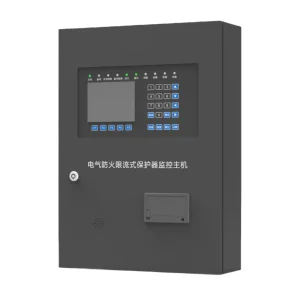
China China Current-limiting Protector System Main Unit - Reliable Suppliers and Factory Solutions for Power Data Management Supplier, Factory
View Specifications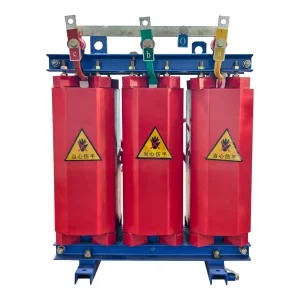
Wholesale China SC(B)11 10kv Resin-Insulated Dry Casting Transformer - Reliable Suppliers & Factory Solutions Suppliers, Supplier
View Specifications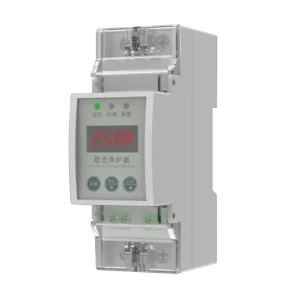
China Electrical Fire Current-Limiting Protector - Economical Type Manufacturer, Companies
View Specifications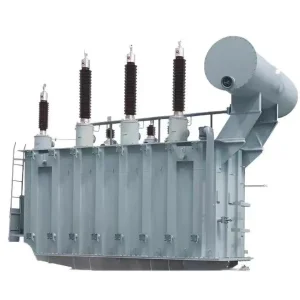
Wholesale 110kV Series Power Transformer with On-Load Tap Changer Suppliers, Factory
View Specifications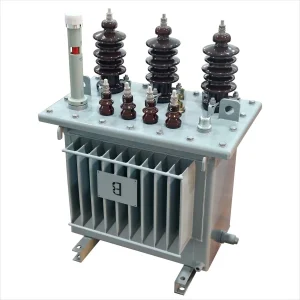
Wholesale S13-M Type 10kV Series Hermetically Sealed Distribution Transformer Supplier, Manufacturer
View Specifications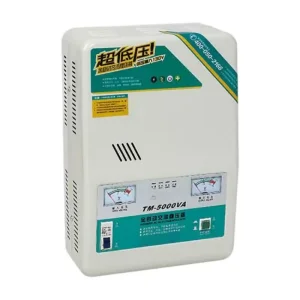
OEM TM Single-Phase Series Relay Type Fully Automatic AC Voltage Regulator Manufacturers, Factory
View Specifications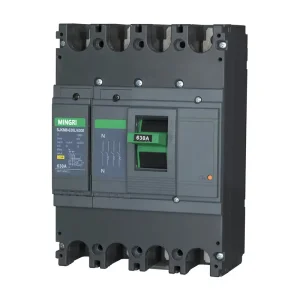
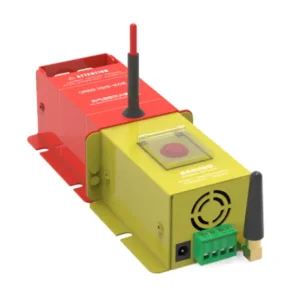
China Intelligent Wireless Automatic Gas Fire Extinguishing Device - Hot Aerosol Series by China Suppliers & Factory Supplier, Manufacturer
View SpecificationsFrequently Asked Technical & Sourcing Questions (FAQ)
Clear, engineering-backed answers addressing wholesale purchasing, certifications, voltage tolerances, and delivery times.
What is meant by "low frequency" in wholesale electrical equipment manufacturing?
In heavy power distribution and grid engineering, "low frequency" refers to commercial base power frequencies (50Hz and 60Hz AC) in contrast to high-frequency converters (kHz or MHz). It also encompasses specialized fractional frequency AC systems (such as 16.7Hz for rail traction or 20Hz for subsea power cabling). Wholesale manufacturers build core electrical apparatus—including transformers, switchgear, busway systems, and circuit breakers—optimized for these frequencies.
Can 50Hz rated transformers and switchgear run on 60Hz systems safely?
Generally yes, provided the rated voltage is kept constant. Operating a 50Hz transformer at 60Hz lowers the internal magnetic flux density, which actually reduces core losses and operating temperature. However, the reverse is NOT true: running a 60Hz designed unit on a 50Hz system increases core flux density by 20%, risking magnetic saturation, overheating, and insulation destruction unless the input voltage is derated proportionally.
How does an OEM manage international custom single-line diagram (SLD) requests?
The engineering process begins with the client submitting their project SLD, utility interconnect specifications, and dimensional constraints. Factory design teams generate primary schematics, secondary wiring protection circuits, and 3D structural general arrangements (GA) in CAD/SolidWorks for client sign-off. Production only starts once all relay coordination curves and component lists are mutually approved.
What are the distinct advantages of cast-resin dry transformers (SCB series) over oil-immersed units?
Dry-type cast resin transformers (e.g., SCB11 series) utilize epoxy resin to encapsulate the copper or aluminum windings. They are non-flammable, self-extinguishing, and environmentally safe, eliminating oil-leakage hazards. This makes them the mandatory choice for indoor commercial installations, hospital basements, underground transit hubs, and data centers where fire-code compliance is paramount.
What quality certifications are supplied with wholesale shipments?
Standard documentation includes comprehensive ISO 9001/14001/45001 certificates, CE conformity declarations, complete factory routine test certificates (dielectric withstand, insulation resistance, winding resistance, turns ratio), and accredited third-party type test reports (such as KEMA, ASTA, or national high-voltage apparatus testing centers).
What is the standard production lead time and export packaging protocol?
Standard lead times range between 20 to 35 business days for modular switchgear (KYN28, XGN15) and dry/oil distribution transformers up to 2,500 kVA. Extra-high voltage power transformers (110kV class) typically require 45 to 60 days. All equipment is secured inside ISPM-15 compliant fumigated seaworthy wooden crates, sealed with moisture-barrier vacuum packaging and desiccant packs for overseas transit.