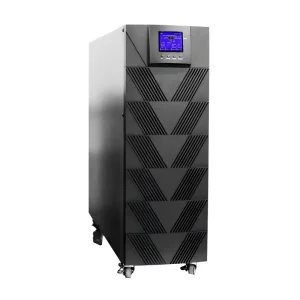
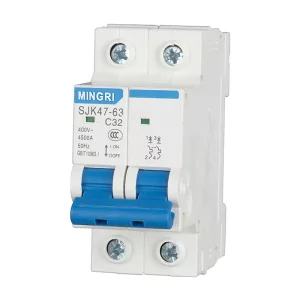
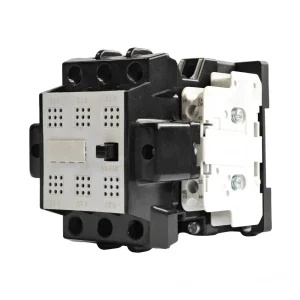
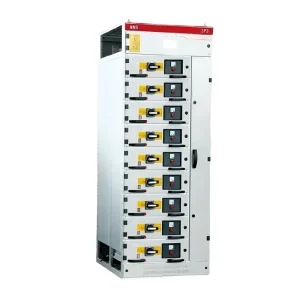
Primary Wholesale Equipment & High-Reliability Components
Industrial-grade circuit protection devices, step-down control transformers, and heavy-duty knife switch disconnectors manufactured under strict ISO 9001 quality supervision.
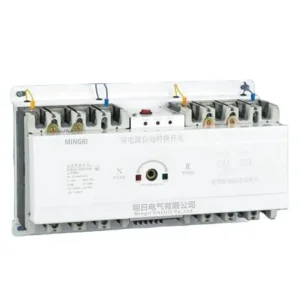
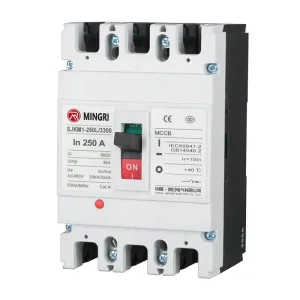
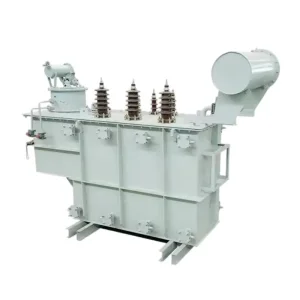
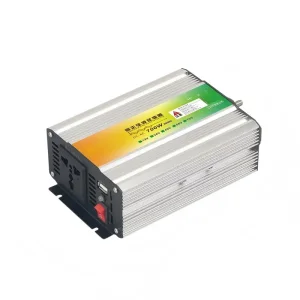
Next-Generation Fuse Switch Disconnector Architecture
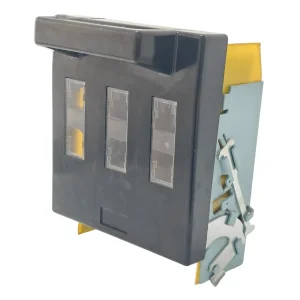
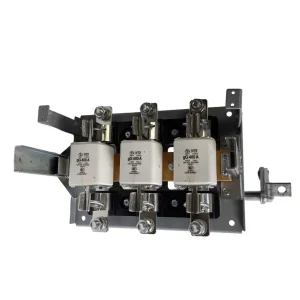
In contemporary industrial electrical architecture, a Fuse Switch Disconnector (FSD) serves as a pivotal dual-function safety apparatus: delivering galvano-mechanical positive circuit isolation while integrating High-Rupturing-Capacity (HRC) fuse elements (such as NH00, NH1, NH2, NH3, and NH4 DIN knife links). Mingri Electric manufactures fuse disconnectors engineered for rigorous heavy-industrial plants, solar PV step-up combiner stations, and utility secondary distribution substations.
Absolute Visible Physical Isolation
Unlike encapsulated solid-state or sealed moulded-case assemblies, fuse disconnectors such as the HR3 and HR5 provide visible contact separation. Maintenance crews can verify circuit detachment with zero residual capacitance risk.
- Visible dielectric air gap eliminates accidental restrike
- Mechanical interlocks lock the cover in active states
- Padlockable rotary handles up to 3 individual hasps
Electrodynamic Short-Circuit Quenching
By pairing high-grade silver-plated electrolytic copper contact jaws with silica sand-filled ceramic HRC fuses, the system restricts lethal prospective fault currents within fractional milliseconds (under 5 ms).
- Up to 120 kA breaking capability at 690V AC
- Thermal-magnetic overload coordination
- Arc chute splitters absorb extreme inductive spikes
Total Cost of Ownership Advantage
For low-voltage mains intake and capacitor banks, fuse switch disconnectors eliminate expensive microprocessor recalibration, nuisance electromagnetic tripping, and complex auxiliary shunt trips common in traditional ACB/MCCB layouts.
- No periodic firmware or recalibration maintenance
- Zero mechanical latch failure risks under heavy vibration
- Instant blown-fuse cartridge replacement
Industry Trends & Global Procurement Strategic Drivers
As utilities transition to decentralized microgrids and industrial manufacturing embraces Industry 4.0 automation, the procurement landscape for power disconnect switches has undergone radical technological transformations.
Modular 60mm & 185mm Busbar Integration
OEM switchgear builders are phasing out loose cable crimping in favor of direct plug-in busbar mounting. This reduces panel assembly labor by up to 60%, drastically decreases internal junction resistance, and standardizes thermal air dynamics across switchboards.
Surge in DC Photovoltaic & BESS Systems
The rapid expansion of utility-scale energy storage and 1500V DC solar arrays demands switchgear rated up to 1000V DC / 1500V DC under DC-PV2 and DC-21B duty cycles, featuring specialized permanent magnetic blowouts and dual-gap arcing runners.
Smart Sensing & IoT Predictive Maintenance
Global engineering procurement companies (EPCs) mandate integrated micro-switches for electronic fuse status indication (EFSI), wireless thermal monitoring across copper lugs, and current transformer feedback to prevent costly downtime.
Macro Industry Engineering Solutions & Technical Matrix
From heavy smelting furnaces and mine shafts to secondary transformer substations, explore how Mingri Electric optimizes isolation, safety, and continuous uptime.
| Application Sector | Typical Voltage / Load | Recommended Model | Crucial Operational Safety Features |
|---|---|---|---|
| Heavy Manufacturing & Foundries | 400V / 690V AC, 250A - 630A | HR3 / HR5 Heavy-Duty Series | High arc-erosion resistance, dual-break silver-plated contacts, AC-23B motor circuit duty. |
| Solar Inverter Skid & BESS | 800V - 1500V DC, 100A - 400A | Custom DC Fused Disconnectors | Arc splitting chutes, zero dielectric leakage, rated for severe continuous thermal loads. |
| Secondary Distribution Substations | 400V AC Busbar Systems (60/185mm) | Vertical Strip Disconnectors | Phase-segregated isolation, compact horizontal footprint, integral current transformers. |
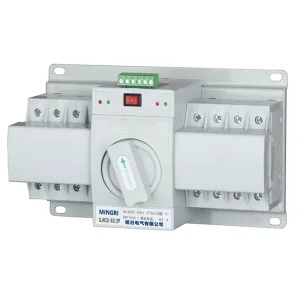
| Commercial & Data Center Facilities | 230V / 400V AC, 63A - 250A | SJKM / SJKQ ATS & FSD Units | High short-circuit withstand (Icf 100kA), fast fuse burnout alarm, rapid dual-source switching. |
Quality Governance, International Compliance & OEM Scalability
Mingri Electric maintains rigorous manufacturing standards in Yueqing, China, combining robotic stamping, CNC machining, and automated quality testing compliant with global standards.
Compliance & Certifications
Every fuse switch disconnector and low-voltage disconnect unit complies strictly with IEC 60947-1, IEC 60947-3, IEC 60269, and GB/T 14048.3. Type-test certificates from authorized national laboratories (such as KEMA and CE-accredited test houses) verify mechanical longevity and dynamic breaking performance.
Tailored Customization (OEM/ODM)
We provide full white-label and customized OEM services: custom terminal bolt sizes (M8/M10/M12), extended copper busbar adapters, custom handle colors, padlocking hasps, transparent visual inspection windows, and integrated auxiliary contacts for remote circuit supervisory monitoring.
Global Logistics & Local Support
With an export portfolio spanning over 50 countries across Southeast Asia, the Middle East, South America, and Europe, Mingri Electric provides complete export packing (moisture-proof, seaworthy crates), multi-lingual technical submittals, single-line diagrams, and round-the-clock remote commissioning support.
Technology Roadmap: The Future of High-Current Protection
How Mingri Electric is evolving switchgear designs to support digital substations and eco-friendly decarbonization initiatives.
Thermoplastic Self-Extinguishing Resins
Transitioning base housings to halogen-free, fiber-reinforced DMC (Dough Moulding Compound) and BMC thermosetting materials to ensure non-flammability up to 960°C glow-wire testing, meeting the highest modern building safety regulations.
Integrated Solid-State Diagnostic Sensors
Implementing embedded temperature sensors inside terminal clamps with Modbus/RS485 and Zigbee wireless transmission protocols to feed thermal readings directly to SCADA systems, preventing unexpected thermal runaway before it can propagate.
Sustainable Eco-Design & Circularity
Eliminating lead coatings from copper blades in favor of pure silver-tin composite electroplating, engineering easily disassembled plastic housings, and using fully recyclable packaging materials to satisfy strict European WEEE and RoHS directives.
Frequently Asked Questions (Technical & Commercial FAQ)
Authoritative answers on fuse switch disconnector selection, utilization categories, and global factory wholesale policies.
What is the primary difference between a Disconnector, a Switch-Disconnector, and a Fuse Switch Disconnector?
Under IEC 60947-3, a Disconnector is an off-load isolating device incapable of breaking normal operating currents. A Switch-Disconnector combines off-load isolation safety with the ability to safely make and break load currents. A Fuse Switch Disconnector integrates fuse links directly onto the moving contact carrier, meaning the fuse itself serves as the moving contact bridge. This design delivers simultaneous visible disconnection and short-circuit interrupt capabilities in a single compact housing.
What does the utilization category (e.g., AC-21B vs. AC-23B) signify when sizing an FSD?
Utilization categories define the operating severity under load. AC-21B is suitable for non-inductive or lightly inductive resistive loads (cos phi ≥ 0.95), such as heating circuits. AC-23B is engineered for switching heavy motor loads or highly inductive equipment with frequent high-current inrushes (cos phi = 0.35 to 0.45). The suffix "B" indicates occasional switching operations (standard for industrial disconnectors), whereas suffix "A" denotes frequent operational cycling.
Can Mingri Electric customize fuse switches for 60mm and 185mm busbar center-to-center systems?
Yes. We supply both traditional baseplate mounting styles (with bottom/top cable gland entries) and modular clip-on designs compatible with standard 60mm center-to-center busbars (popular in industrial MCC cabinets) as well as 185mm vertical grid formats (standard across public electrical distribution substations).
What minimum order quantities (MOQ) and production lead times apply for wholesale orders?
For standard standard configurations (e.g., HR3, HR5, NH00–NH3 frames), our typical MOQ is 50 to 100 units depending on size, with standard lead times between 15 to 25 working days. Custom OEM orders featuring custom branding, specialized terminal extensions, or unique voltage ratings can be scheduled following prototype verification.
How do Fuse Switch Disconnectors coordinate with upstream Air Circuit Breakers (ACBs)?
Fuse switch disconnectors provide exceptional selectivity. Because HRC fuses act within single milliseconds during high fault conditions (I > 10 × In), downstream faults are localized without tripping the upstream main ACB. This eliminates widespread blackout conditions in hospitals, data centers, and multi-line factories.
Advanced Power Distribution Switchgear & Substation Systems
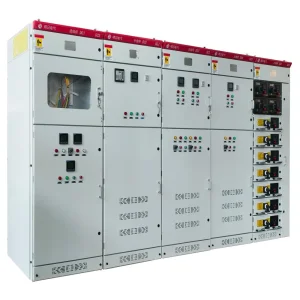
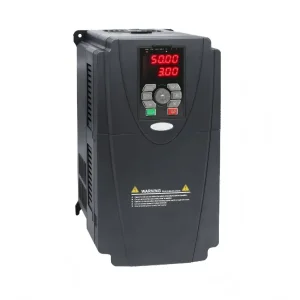
Complete your power distribution line with our factory-integrated withdrawable panels, visible-contact disconnectors, AC contactors, and variable frequency drives.