Engineered Low Voltage & Protection Systems
Certified low-voltage switchgear architectures, digital trip circuit breakers, current-limiting protectors, and critical distribution components ready for utility-scale wholesale deployments.
Macro-Industry Dynamics & Modernization Imperatives
In modern high-density electrical grids, drawout (withdrawable) type low voltage switchgear has transitioned from a specialized operational luxury to an indispensable requirement across mission-critical facilities worldwide.
Continuous Process Reliability
For heavy petrochemical complexes, semiconductor fabs, and continuous chemical synthesis plants, unplanned electrical outages cost upwards of $250,000 per hour. Drawout LV panels allow rapid drawer-module replacement within minutes without cutting off upstream busbar energy, mitigating crippling plant-wide shutoffs.
- Isolate motor starter units instantly
- Eliminate operational exposure to energized copper
- True plug-and-play functional cassettes
Tier III/IV Data Center Resilience
Hyperscale cloud facilities demand fault-tolerant power paths with concurrently maintainable electrical infrastructures. Drawout MCC and power distribution assemblies seamlessly integrate with dual-bus STS/ATS architectures to sustain uninterrupted server operations during maintenance and load shedding routines.
- Form 4b segregation prevents cascading faults
- Modbus-TCP / IEC 61850 protocol native edge telemetry
- Dynamic microsecond transfer integration
Decarbonization & Clean Energy
As microgrids, utility-scale BESS (Battery Energy Storage Systems), and commercial solar inverter skids surge globally, low voltage distribution switchgear must tolerate high harmonic distortions, bi-directional current flows, and severe DC fault components with certified thermo-mechanical integrity.
- High short-circuit withstand up to 100kA rms/1s
- Optimized ventilation for high ambient temperatures
- Customized copper tin/silver electroplating
Drawout vs. Fixed vs. Plug-in Assemblies
Procurement directors and chief electrical engineers evaluate switchgear configurations based on safety, total cost of ownership (TCO), and system uptime. The engineering matrix below details the uncompromising advantages of our drawout low voltage panels.
| Performance Dimension | Mingri Drawout Type (MNS/GCS) | Semi-Drawout / Plug-in Panels | Fixed-Mounted Switchgear (GGD) |
|---|---|---|---|
| Internal Separation (IEC 61439-2) | Form 3b / Form 4a / Form 4b fully partitioned | Form 2b / Form 3a separation | Form 1 / Form 2a basic enclosures |
| Maintenance Downtime (MTTR) | < 15 minutes via hot-swappable drawer replacement | 45 - 90 minutes requiring selective de-energization | 4 - 8 hours; full section shutoff compulsory |
| Operator Arc Flash Safety | Maximum: Automatic safety shutters close over primary stabs | Moderate: Exposed live terminal shields during service | Low: Direct physical contact danger inside wireways |
| Mechanical Position Status | 3 distinct positions: Connected, Test, Disconnected | 2 positions: Inserted, Removed (manual dismount) | Single fixed connection state |
| Rated Operational Current (In) | Up to 6300A main horizontal busbar capacity | Up to 3200A standard applications | Up to 4000A standard applications |
| Lifecycle Capital Expenditure | Higher initial CapEx, lowest long-term OpEx and downtime risk | Balanced initial investment; moderate spare cost | Lowest initial CapEx, severe economic cost per shutdown |
Structural Ergonomics & Patented Safety Interlocks
A true industrial-grade drawout LV switchboard is built from the molecular level up to ensure structural rigidity under violent electromagnetic forces, precise contact alignment, and fool-proof interlocks.
25mm Modular Grid Skeleton
Constructed utilizing imported zinc-aluminum-magnesium coated structural steel or high-tensile 2.0mm E-profile columns with pre-punched 25mm modular mounting hole increments, ensuring complete spatial flexibility for functional units without onsite drilling or welding.
Multi-Stage Mechanical Interlocking
Our proprietary rotary operating mechanism enforces strict physical logic: The drawer cannot be racked in or out while the internal circuit breaker is in the closed ("ON") state. The panel door remains mechanically locked when the module is energized.
Automatic Shutter Isolation
When a drawer is extracted into the "Disconnected" or fully removed state, insulated mechanical shutters drop automatically over the vertical distribution busbar stabs, preventing inadvertent hand contact, tool drops, or vermin intrusion into live conductors.
High-Integrity Secondary Contacts
Control circuits, interlocking signals, and communication links leverage up to 48-pin gold/silver plated secondary disconnector blocks. In the "Test" position, secondary circuits remain operational while primary power contacts are safely disconnected.
Localized Engineering Compliance & Wholesale Delivery
From the industrial hubs of Yueqing, Zhejiang to mega-infrastructure projects across the Middle East, Southeast Asia, Europe, and the Americas, Mingri Electric provides complete lifecycle compliance and turnkey support.
Global Certification Framework
Full type-testing certification under international benchmark standards including IEC 61439-1 / IEC 61439-2, IEC 60947, GB/T 7251, along with ISO 9001, ISO 14001, and ISO 45001 management accreditations for seamless integration in worldwide public tenders.
Bespoke OEM/ODM Customization
We tailor busbar elevations (top or rear), incoming/outgoing cable routing (top/bottom entry), ingress protection ratings from standard IP30/31 up to sealed IP54, and accommodate customer-specified component vendors (Schneider, ABB, Siemens, Chint, or Delixi).
Rigorous FAT & SAT Documentation
Every single drawout switchboard undergoes factory acceptance testing including dielectric withstand tests, clearance/creepage inspection, primary current injection, and digital schematic loop checks. Comprehensive test dossier and CAD/BIM single lines provided.
Regional Application Profiles & Harsh Environment Adaptation
A single panel topology cannot satisfy every environmental extreme. Mingri Electric engineers site-specific thermal, mechanical, and galvanic enhancements tailored to regional installation conditions.
Middle East & Gulf (High Thermal / Arid)
Designed for ambient temperatures exceeding +50°C and pervasive airborne sand. Upgraded with high-capacity labyrinth sand-traps, oversized copper cross-sections to eliminate derating penalties, and forced intelligent thermal exhaust louvers.
Southeast Asia & Coastal (Tropical / C5 Marine)
Tailored for 95%+ relative humidity and saline atmospheric corrosiveness. Sheet metal structural components receive specialized electro-deposition primer coating with anti-fungal epoxy powder coatings and tin/nickel busbar passivation.
Seismic & Heavy Vibration Zones
For nuclear secondary plants, mining conveyor systems, and seismic Zone 4 regions. Engineered with heavy reinforced gusset brackets, triangular bracing frames, and spring-loaded high-pressure secondary locking mechanisms.
Technology Roadmap: Next-Gen Smart Switchgear
The convergence of internet of things (IoT), real-time edge processing, and predictive maintenance is revolutionizing the life cycle of wholesale low voltage switchboards.
Continuous Online Thermography
Integrated wireless SAW (Surface Acoustic Wave) temperature sensors positioned directly on primary jaw disconnects and bus joints to detect resistance anomalies before thermal runaway occurs.
Edge Cloud Telemetry
Embedded gateway modules aggregating power quality metrics, harmonic spectra up to the 63rd order, and operating stroke speeds transmitted natively over MQTT, IEC 61850, or OPC UA.
Predictive Health Indexing
Machine learning models calculate mechanical contact wear, spring relaxation, and remaining contact life cycles, enabling risk-free condition-based servicing rather than rigid calendar maintenance.
Zero-Carbon Architecture
100% recyclable structural plastics, bio-based conductor insulation resins, and life-cycle traceability QR codes integrated directly onto physical drawer facades.
Frequently Asked Questions on Drawout LV Panels
Comprehensive engineering insights clarifying procurement, installation, standards conformance, and mechanical lifecycle maintenance.
What is the structural difference between MNS, GCS, and GCK drawout panels?
MNS panels utilize an advanced 25mm modular skeletal system with complete plastic/metal Form 4b compartmentation, making them ideal for heavy industrial and international EPC tenders. GCS panels feature standardized drawer units with balanced cost efficiency for domestic and municipal commercial setups. GCK panels traditionally separate cable entries and functional compartments with mechanical lever handles suited for standard motor control centers.
How does Form 4b internal separation safeguard maintenance technicians?
Under IEC 61439-2 Form 4b, busbars are separated from functional units, all functional units are separated from each other, and all termination points (cable connections) for functional units are individually segregated from each other and the busbars. If one drawer suffers an internal flashover, the explosion, toxic gases, and copper spatter are strictly contained within that single drawer cassette, shielding adjacent units and personnel.
What is the maintenance lifecycle and contact wear threshold?
The primary power tulip contacts and secondary disconnection pins are rated for a minimum of 1,000 to 2,000 full racking mechanical insertions without contact degradation. We recommend annual non-conductive dielectric grease replenishment on primary male/female stabs and contact pressure spring calibration during scheduled operational downtime.
Can Mingri Electric manufacture panels compliant with both IEC and UL requirements?
Yes. While IEC 61439 is our primary standard for global export, our engineering team regularly designs hybrid and bridging architectures meeting UL 891 (dead-front switchboards) and UL 1558 (metal-enclosed low voltage power circuit breaker switchgear) specifications upon project request, including 65kA/100kA short circuit evaluations.
What documentation must overseas EPC contractors submit for a formal wholesale quote?
To receive an accurate and competitive manufacturing quote within 48 hours, contractors should submit: (1) The electrical Single-Line Diagram (SLD), (2) Incoming/outgoing feeder cable cross-sections and routing direction, (3) Preferred brand tier for primary breakers/contactors, (4) Ingress protection (IP) rating, and (5) Environmental operating limits (ambient temp, altitude, seismic zones).
How do you manage primary busbar thermal dissipation inside sealed IP54 enclosures?
For IP54 rated enclosures where natural louver ventilation is prohibited, we employ high-conductivity T2 electrolytic copper with 105°C rated busbar sleeving, optimize internal air chimney convective circulation paths, and install internal closed-loop industrial heat exchangers or micro-positive pressure air filtering units.
Auxiliary Protection, Switching & Automation Assemblies
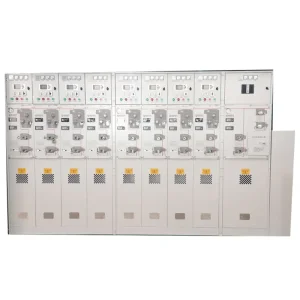
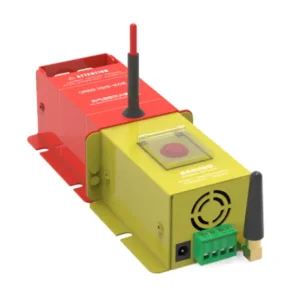
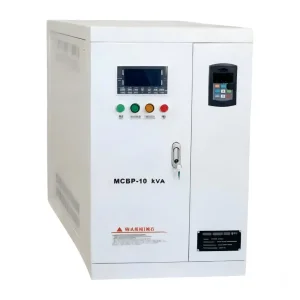
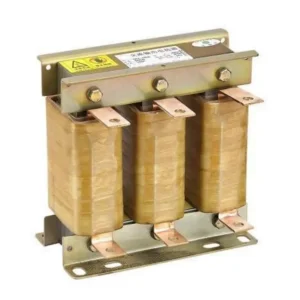
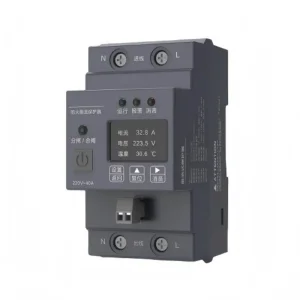
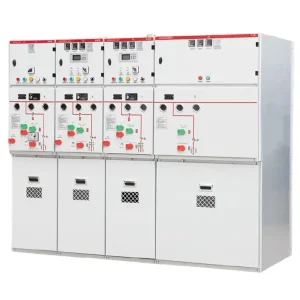
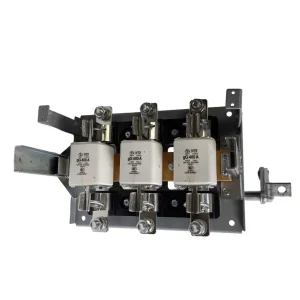
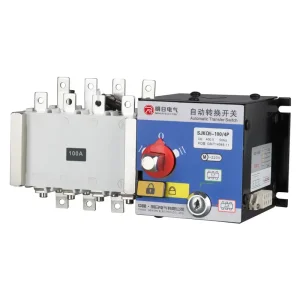
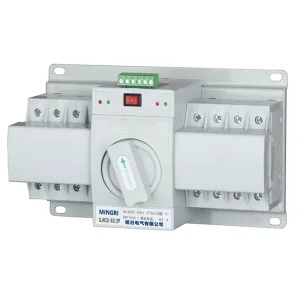
Complete your substation architecture with factory-direct automatic transfer switches, line reactors, fire extinguishing modules, and high-performance medium voltage ring main equipment.
Engineering Procurement & RFP Guideline Checklist
Ensure your project specification leaves no ambiguity. Incorporate this standardized procurement checklist into your equipment tender documents for guaranteed compatibility and lifetime serviceability.
1. Electrical Ratings Scope
Explicitly detail rated insulation voltage (Ui, typically 1000V), operational voltage (Ue, 400V/690V), main busbar nominal current (up to 6300A), and short-time withstand current (Icw 50kA/65kA/80kA/100kA for 1s or 3s duration).
2. Compartmentalization & Safety
Designate internal separation according to IEC 61439-2 (Form 3b, Form 4a, or Form 4b). Mandate automatic safety shutter mechanisms, padlocking in disconnected/test modes, and arc flash resistant internal venting chutes.
3. Control & Communication
Specify auxiliary voltage ratings (220VAC, 110VDC, 24VDC), smart trip unit protocols (Modbus, Profibus, Ethernet IP), and digital current-limiting or electrical fire detection accessories directly integrated into the primary tier.