High-Performance Power Distribution & Conversion Systems
Explore our core engineered low-to-medium voltage switchgear, smart earth leakage breakers, modular compact substations, and multi-tap voltage transformers manufactured under stringent ISO and IEC quality regimes.
Macro Dynamics Driving Modern Power Conversion & Switchgear Architecture
The global shift toward electrification, decentralized generation, microgrid topology, and high-density computing clusters requires an unprecedented standard of thermal management, power density, and continuous fault clearing.
Grid Decoupling & Microgrid Expansion
Modern commercial parks and heavy industrial processing facilities are increasingly moving away from monolithic grid dependency. Bidirectional power conversion systems, coupled with automated transfer mechanisms and modular prefabricated substations, ensure smooth islanding operations during transient brownout anomalies or severe power distribution disturbances.
Wide-Bandgap Semiconductor Integration
Traditional silicon-based rectifiers and converters are rapidly yielding to Silicon Carbide (SiC) and Gallium Nitride (GaN) switching modules. Our OEM power conversion topologies exploit these wide-bandgap properties to dramatically suppress switching thermal losses, enhance power density by over 40%, and achieve operation at switching frequencies previously unattainable.
Dynamic Thermal & Fault Mitigation
High continuous current carrying capacities (up to 6300A in air circuit breakers and 2000A in compact universal switchgear) necessitate active galvanic isolation, magnetic blow-out coils, and rapid de-ionizing arc chute arrangements. Our solutions arrest electrical arcs within 8-12 milliseconds, preserving expensive downstream semiconductor drives and automation logic.
Enterprise Technical Evaluation: Engineering Parameters & Selection Metrics
When selecting OEM power converters, distribution apparatus, and circuit protection systems, multi-national EPC contractors and plant directors balance key mechanical, dielectric, and operational parameters.
| System Category | Key Operational Parameters | Dielectric / Withstand Ratings | Standards Compliance | Primary Industrial Use-Cases |
|---|---|---|---|---|
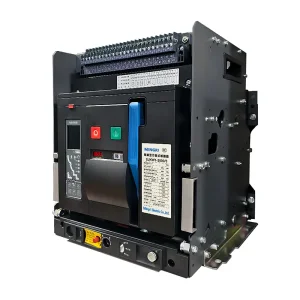
| Intelligent Air Circuit Breakers (ACB) SJKW1 Series |
In: 630A – 6300A Ue: 400V / 690V AC Icu/Ics: 80kA – 120kA |
Ui: 1000V Uimp: 12kV Class II Insulation |
IEC 60947-2 GB/T 14048.2 CE Marked |
Main power intake distribution, commercial building substations, hyperscale transformer low-voltage distribution mains. |
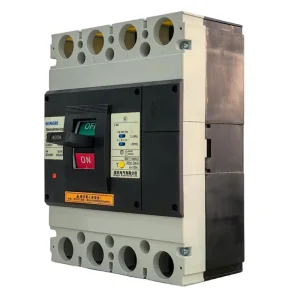
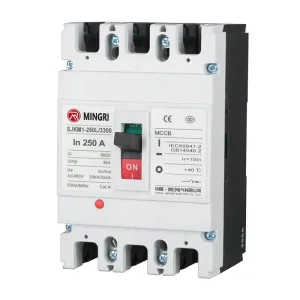
| Moulded Case Breakers (MCCB / ELCB) SJKM1 & SJKM3L |
In: 16A – 800A IΔn: 30mA – 500mA adjustable Tripping: Thermal-Magnetic & Electronic |
Ui: 800V Uimp: 8kV Vibration Proof |
IEC 60947-2 IEC 60755 CCC Certified |
Branch feeder protection, motor control centers (MCC), sub-distribution panels, residual current earth leakage safety. |
| Hybrid Inverters & UPS Systems MCS & MCEX/MCTA Series |
1kW – 12kW modular units Pure Sine Wave THD < 2.5% Efficiency > 98.2% |
Galvanic Isolation 3kV IP20 to IP65 enclosures Overvoltage Cat III |
IEC 62040-1/2/3 IEC 62109-1/2 UL 1741 Compatible |
Data telecommunication shelters, industrial process automation backup, hybrid renewable microgrids with BESS coupling. |
| Prefabricated Intelligent Substations YB & Modular Cabins |
Voltage: 12kV – 40.5kV Step-Down Capacity: 100kVA – 2500kVA Internal Arc Classification IAC-AFLR |
BIL up to 200kV Hermetically Sealed SF6/Eco-Gas or Air insulated compartments |
IEC 62271-200 IEC 62271-202 ISO 9001:2015 |
Utility feeder rings, photovoltaic solar power farms, wind turbine nacelle step-up, modern high-density urban infrastructure. |
| Automatic Voltage Regulators (AVR) TSGC2J & JJW Series |
Single & Three-Phase Variacs Regulating Precision ±1% Response Time < 20ms |
Insulation Class H (180°C) Dielectric test 2500V/min without puncture |
IEC 61558-1 IEC 60076-11 |
Precision medical equipment, clean-room laboratory power stabilization, CNC machining centers, automated test benches. |
End-to-End OEM/ODM Production Lifecycle & Quality Rigor
From initial copper busbar machining to high-speed surface-mount assembly, vacuum potting, automated calibration, and full-load burn-in cycles, our factory operates with micron-level tolerance management.
Precision Sheet Metal & Busbar Fabrication
Automated CNC laser processing, high-tonnage robotic bending, and silver-electroplated oxygen-free T2 copper busbars ensure optimal contact resistance, eliminating thermal hotspots under continuous maximum ampacity loads.
SMT Electronics & Microcontroller Integration
Class-100,000 cleanroom production lines assemble intelligent trip units, digital signal processor (DSP) controllers, and IoT telemetry cards with high-precision optical inspection (AOI) and multi-layer conformal moisture coatings.
Robotic Modular Assembly & Calibration
Mechanical operating linkages, contact assemblies, and vacuum interrupters are calibrated using servo-driven torque controllers. Trip curves are digitally programmed and calibrated across thermal, magnetic, and ground-fault domains.
100% Comprehensive Factory Acceptance (FAT)
Every single unit undergoes rigorous multi-stage qualification: high-voltage dielectric withstand, dynamic temperature-rise runs, contact resistance micro-ohmmeter tests, and short-time withstand current (Icw) validation.
Targeted Macro Solutions for Global Critical Infrastructure
Our power converters, disconnect switches, and prefabricated substations are custom-tailored to conquer complex environmental, electrical, and geographical challenges.
Hyperscale Data Centers & Telecommunications
Mission-critical uptime in modern server farms demands zero millisecond transfer latency and flawless harmonic suppression. We provide integrated power conditioning systems combining high-frequency standby UPS units, JJW precision purified regulators, and intelligent air circuit breakers with Modbus/Ethernet SCADA reporting.
- Total Harmonic Distortion (THD) controlled under 2.5%
- Real-time waveform capture during transient overvoltages
- Redundant dual-feeder automatic transfer switchgear architecture
Utility-Scale Renewable Integration & BESS
Intermittent generation from gigawatt solar photovoltaic arrays and wind energy farms necessitates robust DC-to-AC conversion and medium-voltage step-up substations. Our MCS Hybrid Solar Inverters and modular outdoor cabin substations interface smoothly with regional transmission operators, offering active voltage and frequency support.
- High DC-bus working capability up to 1500V DC
- Outdoor enclosures rated C5-M marine anti-corrosion
- Dynamic reactive power injection (VAR support)
Heavy Industrial Processing & Smart Mining
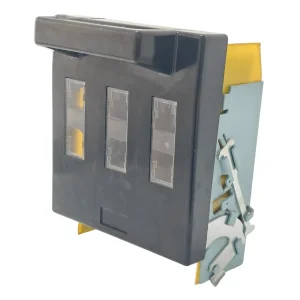
Underground mining rigs, metallurgical furnaces, and petrochemical plants operate in extreme ambient temperatures, vibration, and explosive gas/dust environments. Our heavy-duty HR5 and HR6 knife disconnect switches and SJKM series MCCBs provide positive physical circuit disconnection with visible safety windows.
- High breaking endurance up to 100kA prospective fault current
- Flame-retardant, high-tracking-resistance thermoset housings
- Padlock safety interlocks complying with OSHA LOTO regulations
Urban Underground Distribution & Smart Cities
Where land values are high and aesthetics are paramount, our YBD Landscape-Type Underground Compact Substations deliver concealed medium-to-low voltage transformation. Paired with vacuum breakers and eco-gas ring main units, they blend seamlessly into green municipal parks while delivering uncompromised power reliability.
- Fully submersible, waterproof underground vault enclosures (IP68)
- Surface-level aesthetic distribution kiosk with integrated EV chargers
- Automated remote monitoring for water ingress and temperature rise
Technology Roadmap: Solid-State Power Electronics & Eco-Switchgear
A multi-phase R&D trajectory focused on eliminating greenhouse fluorinated gases, improving semiconductor conduction efficiencies, and deploying AI edge-analytics across all OEM systems.
Solid-State Transformers (SST)
Transitioning from conventional oil-immersed cores to high-frequency solid-state transformers based on modular multilevel converters (MMC). SSTs provide instant reactive power compensation, active voltage sag ride-through, and direct bidirectional DC bus interconnects for next-generation electric mobility charging stations.
SF6-Free Eco-Gas Medium Voltage Switchgear
Aligning with upcoming strict EU and US environmental regulations that phase out Sulfur Hexafluoride (SF6). Our factory has engineered clean-air and fluoronitrile gas-mixture insulated ring main units and vacuum circuit breakers that preserve compact dimensions while yielding a Global Warming Potential (GWP) of less than 1.
AI-Enabled Predictive Diagnostics
Embedding acoustic, high-frequency partial discharge, and micro-thermal infrared sensors directly into switchgear and power converter cabinets. Real-time machine learning algorithms detect insulation degradation, contact erosion, and capacitor drift weeks before a physical breakdown occurs, preventing disastrous outages.
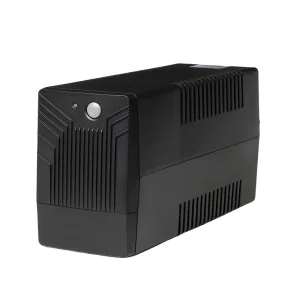
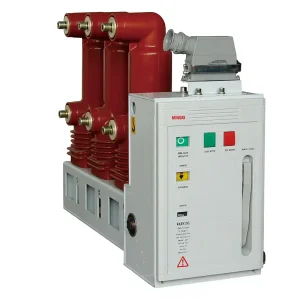
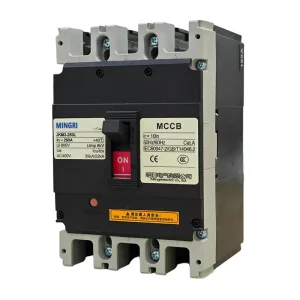
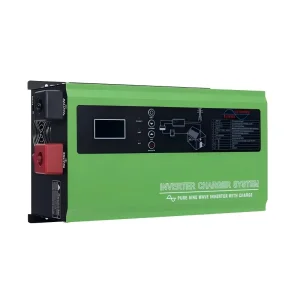
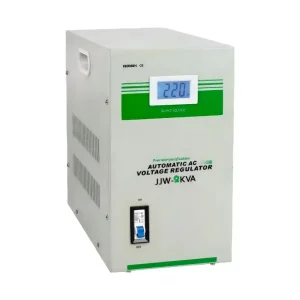
Precision Converters, UPS Systems & Medium-Voltage Breakers
Engineered for high-reliability applications, these units offer verified compliance with international power generation, transmission, and isolation standards.

International Standards Certification & Global Supply Chain Resilience
Every product line leaving our factory floor is backed by documented material traceability, third-party type tests from internationally recognized test laboratories, and localized global field engineering support.
Full Tier-1 Type Test Certification
Our medium and low voltage equipment holds official type-test reports from accredited laboratories (including KEMA, ASTA, and CNAS). Validations include short-time withstand current (Icw), mechanical endurance cycles up to 30,000 operations, internal arc classification (IAC AFLR), and temperature rise limits under harsh atmospheric conditions.
Localized Commissioning & Spare Support
We provide global clients with rapid replacement unit turnaround and localized technical dispatch. Complete technical dossiers, 3D CAD step models, single-line diagrams, and secondary schematic wiring diagrams are furnished during early-stage engineering tender submittals, slashing overall EPC lead time.
Enterprise Dual-Sourcing & Traceability
To insulate overseas supply contracts against raw material shocks, our factory retains strategic safety stocks of electrolytic copper, silicon steel laminations, and core microprocessors. Every finished unit features laser-etched QR code tracing tying it back to exact batch test certificates and raw metallurgical data.
Frequently Asked Questions: Industrial Power Converters & Switchgear OEM
Expert engineering insights regarding technical configuration, protection selectivity, insulation choice, and OEM/ODM factory customization parameters.
What is the technical difference between Air Circuit Breakers (ACB) and Moulded Case Circuit Breakers (MCCB) in power converter distribution panels?
Air Circuit Breakers (such as the SJKW1-2000) are engineered for higher continuous current ratings (typically 630A up to 6300A) and elevated short-time withstand capabilities (Icw), making them ideal for the main power intake of substations. They feature open-air arc chutes, field-replaceable contacts, and advanced micro-processor trip units with selective time delays. Moulded Case Circuit Breakers (such as the SJKM1/SJKM3) feature compact, hermetically sealed thermoset housings rated from 16A to 800A, primarily deployed on secondary distribution feeders where space optimization and lower breaking capacities (Icu 25kA - 50kA) are required.
How does an Earth Leakage Circuit Breaker (ELCB) like the SJKM3L prevent fire and catastrophic equipment breakdown?
The SJKM3L incorporates a zero-sequence current transformer that continuously monitors vector current summation across phase and neutral conductors. When an insulation breakdown occurs, current leaks directly to earth. A standard overcurrent breaker may not trip because leakage currents (often 30mA to 500mA) are significantly lower than motor or system operating loads. The ELCB detects this micro-leakage in under 0.1 seconds, eliminating electric shock hazards to personnel and preventing low-impedance arcing faults that are the leading cause of electrical fires in industrial plants.
When should an engineering team specify a TSGC2J Three-Phase Variac versus a JJW Precision Purified Voltage Regulator?
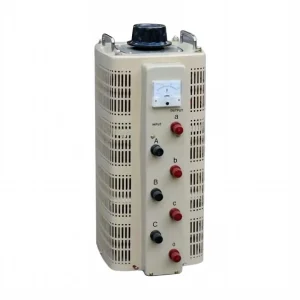
The TSGC2J is a continuously variable autotransformer (Variac) engineered for heavy-duty manual or servo-driven output voltage adjustment without waveform distortion. It is primarily utilized in factory burn-in test benches, motor soft-starting, and laboratory R&D. In contrast, the JJW series is a high-speed static electronic regulator that combines magnetic resonance ferroresonant technology with electronic filtering. It operates automatically to correct high-speed line transients, voltage sags, and harmonic noise, providing pure sinusoidal power (THD < 2%) to critical medical equipment, CNC controllers, and computing centers.
What are the advantages of Prefabricated Cabin Substations over conventional brick-and-mortar masonry substations?
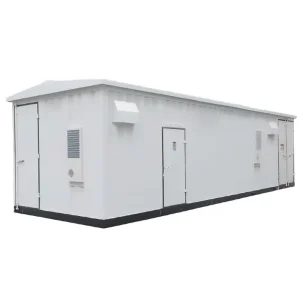
Modular intelligent prefabricated cabin substations reduce civil engineering lead times by up to 70%. The entire assembly—including medium-voltage switchgear (such as the VSB-12 vacuum breaker), step-down oil/dry transformer, and low-voltage switchboard—is fully wired, integrated, and type-tested in a factory-controlled environment. Upon delivery to site, installation is restricted to setting the enclosure onto concrete footings and landing the MV/LV cables. Prefab cabins also feature integrated thermal management, fire suppression, IP54/IP65 weatherproofing, and automated SCADA remote terminal units (RTUs).
How does a visible contact fused knife disconnect switch (HR5/HR6) fit into modern safety regulations?
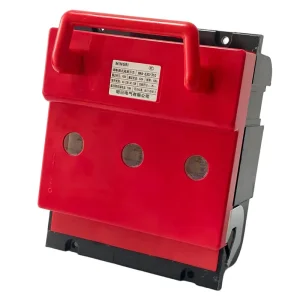
Modern safety standards (such as OSHA 1910.147 and IEC 60947-3) mandate positive visual break verification prior to electrical maintenance personnel servicing heavy machinery or downstream converter banks. While enclosed breakers indicate contact state via internal microswitches, mechanical linkages can fail or weld closed under high inrush currents. The HR5 and HR6 series feature transparent inspection windows and robust knife contacts that physically and visually disengage from the line side, guaranteeing galvanic isolation alongside high-rupturing capacity (HRC) fuse protection up to 630A.
What customization options does your factory provide for OEM/ODM private labeling?
As a full-scope OEM/ODM partner, we provide end-to-end customization across physical and electrical layers. This includes client-specific enclosure dimensions, powder coating color standards (such as RAL 7035 / RAL 7032), silk-screened client branding, customized microcontroller firmware with proprietary Modbus/CAN bus registers, custom busbar terminal punch geometry, and customized packaging compliant with international maritime and air cargo shipping standards.
What information is required to receive a formal equipment configuration and production quotation?
To produce a precise engineering quote and technical single-line diagram (SLD), please supply: 1) Rated operating voltage and frequency (e.g., 400V 50Hz or 480V 60Hz); 2) Nominal operating current and required short-circuit breaking capacity (Icu / Ics); 3) Number of incoming and outgoing feeder pathways; 4) Environmental conditions (ambient temperature ranges, altitude above 1000m, coastal salinity, or indoor cleanroom); and 5) Any specific digital communication protocol requirements (e.g., Modbus-RTU, Profinet, IEC 61850).
How does your factory ensure product longevity and low MTBF across harsh industrial environments?
Longevity is engineered through top-tier raw materials and thorough testing: our conductors are fabricated from electrolytic copper with purity exceeding 99.95%, silver-nickel contact alloys that resist welding during short-circuit making, and mechanical housings made from high-strength, halogen-free, track-resistant polymers (CTI > 600V). Every mass-production run is subjected to thermal cycling between -40°C and +85°C, high-humidity salt-spray testing, and high-frequency shaker table vibration analysis to ensure a minimum expected service life exceeding 20 years.