Flagship Switchgear & Power Regulation Components
Factory-direct industrial power protection modules, MV/LV isolating switches, and precision control units engineered to IEC 61439 and IEC 60076 standards.
-
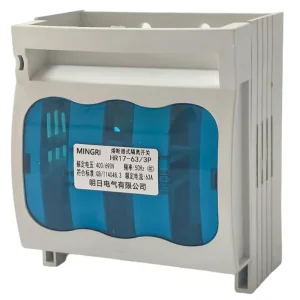
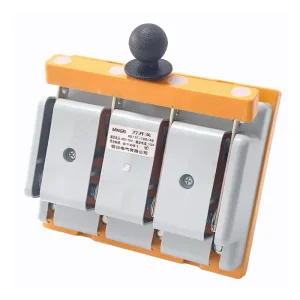
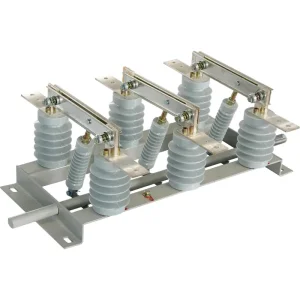
ODM HR17 Fused Isolation Switch For High Current Suppliers, Companies
-
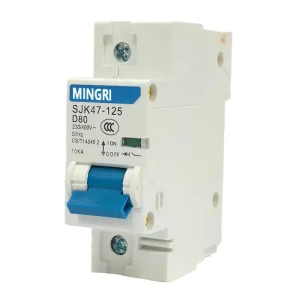
Wholesale SJK47-125 MCB Miniature circuit breaker DIN Rail Mountable Factories, Company
-
-
-
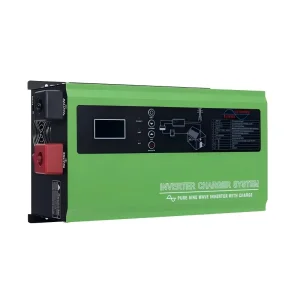
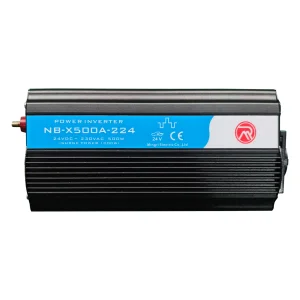
High-Quality MCS Series Hybrid Solar Inverter 1000W-12000W Factories, Factory
-
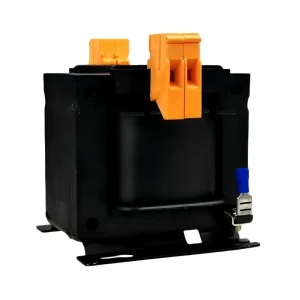
High-Quality JBK5 Series Machine Tool Control Transformer Factories, Companies
-
-
Executive Engineering Overview: The Voltage Quality Imperative
In modern industrial facilities, electrical instability represents a premier cause of unplanned downtime, micro-controller reset, component degradation, and thermal failure across automation lines.
Electrical power distribution across global networks is confronting unprecedented systemic stress. The rapid penetration of intermittent renewable generation (utility-scale photovoltaic arrays, wind turbine farms), paired with non-linear industrial loads such as Variable Frequency Drives (VFDs), computerized numerical control (CNC) equipment, robotics, and high-power electric vehicle (EV) charging depots, has fundamentally disrupted legacy grid balancing. Voltage sags, brownouts, sustained overvoltages, and harmonic distortions are no longer isolated anomalies—they are endemic realities.
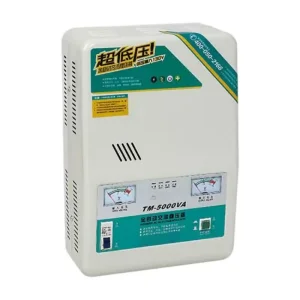
As an authoritative OEM AVR (Automatic Voltage Regulator) AC Voltage Regulator manufacturer, our enterprise approaches voltage stabilization not as a mere commoditized electrical accessory, but as an indispensable frontline defense architecture. Operating from the world-class electrical engineering cluster of Yueqing, Zhejiang, we integrate advanced power electronics, custom toroidal magnetics, DSP-driven microprocessors, and heavy-duty contact assemblies to engineer AC stabilizers that deliver uncompromising reliability under severe continuous operating parameters.
Core Regulator Topologies: Comparative Engineering Analysis
Choosing the correct AVR topology requires balancing capital expenditure, mechanical wear cycles, response latency, and load dynamics.
| Parameter / Feature | Relay-Type Automatic AVR (e.g. TM Series) | Servo-Motor Electromechanical AVR | Solid-State SCR / IGBT Static AVR |
|---|---|---|---|
| Regulating Mechanism | High-speed sealed electromagnetic relays switching transformer taps | High-torque servo motor driving carbon brush on toroidal autotransformer | Thyristor / SCR solid-state electronic matrix tap switching or PWM inverter |
| Response Time | 30 ms – 80 ms (fast tap stepping) | 0.5 s – 1.5 s per 10% voltage excursion | < 10 ms – 20 ms (instantaneous, sub-cycle) |
| Output Precision | ±5% to ±8% (discrete steps) | ±1.0% to ±2.5% (stepless continuous) | ±1.0% to ±1.5% (waveform-synchronized) |
| Waveform Distortion (THD) | Zero added distortion (sinusoidal intact) | Zero added distortion (clean galvanic transfer) | < 1.0% with zero-crossing firing algorithms |
| Maintenance & Wear | Low; sealed relays rated for 100k+ mechanical cycles | Periodic brush inspection & copper track cleaning | Maintenance-free solid-state (zero friction or moving parts) |
| Typical Industrial Sizing | 0.5 kVA – 30 kVA (Single & Three-Phase) | 5 kVA – 2,500 kVA (Heavy Industrial Centralized) | 10 kVA – 1,000 kVA (Mission-Critical / Sensitive) |
| Primary Fitment | Commercial, Telecom, Light Industry | CNC Mills, Large Chillers, Extruders | Data Centers, MRI/CT Scanners, SMT Lines |
Relay-Switched Tap Technology
Ideal for cost-sensitive industrial edge applications and regions prone to severe, wide-band voltage fluctuations (80V–270V). Utilizes zero-crossing triac/relay triggering logic to mitigate arc erosion, ensuring high overload tolerance with minimal circuit complexity.
Servo-Driven Column/Toroidal Stabilizers
Engineered for high-capacity industrial plants requiring high precision (±1%). Features roller carbon brushes, vacuum-impregnated pure copper windings, and micro-stepped servo drives to provide uninterrupted linear regulation without wave chopping.
Static Solid-State SCR Architectures
Zero mechanical movement delivers silent operation, sub-cycle response times, and near-infinite switching endurance. Tailored for semiconductor cleanrooms, healthcare diagnostic suites, and automated logistics centers where delay means lost capital.
Global Enterprise Sourcing Criteria & Technical Mandates
Procurement directors and chief electrical engineers at tier-1 EPCs require rigorous empirical performance verifications before integrating OEM AVR hardware into mission-critical switchgear suites.
Thermal Derating & Insulation Class
Equipment must specify Class F (155°C) or Class H (180°C) insulation. Transformers and reactors undergo vacuum pressure impregnation (VPI) with high-grade epoxy resin to prevent corona discharge and thermal degradation under 50°C ambient desert environments.
Short-Circuit Withstand Capability
Robust dynamic and thermal short-circuit withstand ratings (Icw up to 25 kA / 1s). Integration with magnetic trip circuit breakers (such as our SJKM3 MCCB series) provides coordinated cascading selectivity down to feeder branch circuits.
SCADA & Industrial IoT Telemetry
Modern procurement mandates RS-485 Modbus-RTU, BACnet, or Ethernet/IP communication ports. Microprocessor cards output live telemetry: phase-to-phase voltages, line currents, power factor, winding temperatures, and event timestamp logs.
Maintenance Bypass Systems
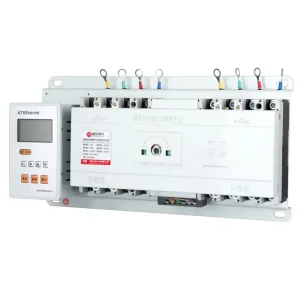
Triple-interlocked mechanical bypass switches (cam-operated or motorized ATS configurations) allow complete galvanic isolation of the AVR core for routine preventative maintenance without dropping downstream enterprise loads.
Mandatory Pre-Shipment Factory Acceptance Testing (FAT) Protocols:
- Dielectric High-Potential Test: 2500V AC RMS at 50/60 Hz for 60 seconds across primary-to-secondary and primary-to-ground circuits without flashover or insulation breakdown (IEC 60076-3).
- Dynamic Step-Load Regulation Recovery: Sudden application of 0% to 100% inductive/resistive load to verify recovery profile, voltage overshoot/undershoot dampening, and loop response.
- Total Harmonic Distortion (THD) Measurement: Verified using class-A power analyzers to confirm negligible voltage waveform distortion (<1%) introduced by solid-state firing circuits.
- Full-Load Temperature Rise Run: Continuous 8-hour heat run at maximum rated ambient (45°C) to confirm winding temperature rise remains strictly within IEC 60076 Class H thermal margins (ΔT ≤ 100K).
China Factory 4.0: Vertical Integration & Supply Chain Resilience
Located in Yueqing, Zhejiang—the global capital of low and medium-voltage electrical manufacturing—our intelligent manufacturing campus delivers unparalleled quality control, cost efficiency, and scale.
Toroidal Core & Copper Winding
We slit, wind, and anneal grain-oriented silicon steel (CRGO) in-house to achieve ultra-low core loss (≤ 0.9 W/kg at 1.7T). CNC automated winding stations deposit 99.99% electrolytic copper wire with uniform tension, maximizing coupling efficiency and eliminating hot-spot nodes.
Surface-Mount PCBA Manufacturing
Microprocessor logic boards are manufactured on high-speed Yamaha SMT placement lines. Automated Optical Inspection (AOI) and conformal coating protect logic boards against corrosive industrial atmospheres, airborne particulate, moisture, and chemical salt spray.
Comprehensive Ecosystem Integration
Because Mingri Electric manufactures medium/low-voltage switchgear (KYN28, SM6, RM6), vacuum circuit breakers, and dry-type transformers, our AVR solutions seamlessly fit directly inside comprehensive turn-key electrical substation lineups.
Traceability Architecture: Every individual voltage regulator assembled in our Yueqing facility is laser-etched with a serialized QR code mapping to its raw-material batch, coil winding operator ID, SMT reflow profile, and full automated factory test report (FAT).
Global Commercial & Industrial Realities: Field Deployments
Grid instability exhibits unique localized behaviors across continents. Our OEM and ODM engineering configurations are customized for specific territorial grid challenges.
Severe Brownouts & Transients
In developing regions, utility lines routinely experience severe voltage dips down to 120V on standard 220V/230V phases, coupled with erratic rolling blackouts. Our heavy-duty servo and relay AVRs feature an extra-wide input swing range (±30% to ±40%) and integrated surge suppression (Class B+C, 40kA) to safeguard automated mills, bottling facilities, and cold storage chains.
Microgrid & DER Harmonic Noise
In advanced industrial zones, the widespread adoption of rooftop commercial solar and bidirectional battery energy storage systems (BESS) creates local over-voltage conditions, rapid tap flicker, and harmonic distortion. Static SCR regulators isolate sensitive robotics and laser cutters from these high-frequency network anomalies.
Mining, Oil & Gas Installations
Operations in deserts, high altitudes (>2000m), and offshore terminals encounter extreme ambient dust, sand, and ambient heat up to 55°C. We supply IP54/NEMA 3R weather-resistant outdoor enclosures with closed-loop forced air exchangers or liquid-to-air cooling options, keeping winding temperatures strictly within safe limits.
Engineering Blueprint: Typical Industrial Main Distribution Integration
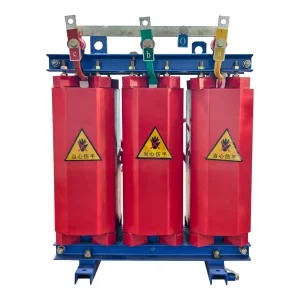
In an optimal single-line diagram (SLD), the industrial three-phase automatic voltage regulator sits downstream of the step-down distribution transformer (e.g., our SC(B)11 10kV dry-type cast resin transformer) and upstream of the main low-voltage switchboard (MNS or GGD panel). By pairing the AVR with a synchronized Automatic Transfer Switch (such as the SJKQ2Z ATS series), facilities achieve instantaneous fail-safe power redundancy:
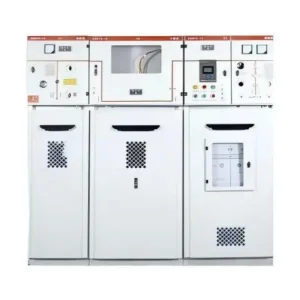
12kV/24kV Medium Voltage Ring Main Unit (RM6 / XGN15) providing fault clearing.
Cast Resin Dry Transformer stepping voltage to 400V / 230V 3-phase 4-wire.
Dynamic stabilization holding line-to-line output to strictly 400V ±1.0%.
Feeder circuits isolated by SJKM3 MCCBs feeding precision automated motor loads.
Frequently Asked Engineering Questions (FAQ)
Technical guidance for electrical consultants, plant engineers, and global procurement officers specifying industrial AC voltage stabilizers.
Integrated Medium & Low-Voltage Power Equipment
Complete your electrical infrastructure with Mingri Electric’s dry transformers, ATS automatic transfer switches, vacuum switches, and molded case circuit breakers.