Engineered Power Distribution Portfolio
Explore our certified range of MV switchgear, distribution transformers, precision voltage regulators, and vacuum interrupter components manufactured under ISO 9001/14001/45001 standards.
-
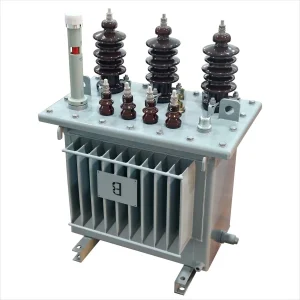 Wholesale S13-M Type 10kV Series Hermetically Sealed Distribution Transformer Supplier, ManufacturerConfigure Unit
-
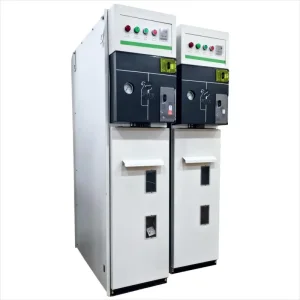 ODM XGN15-24 Medium Voltage Switchgear Sf6 Insulated Ring Main Unit Manufacturers, CompaniesConfigure Unit
-
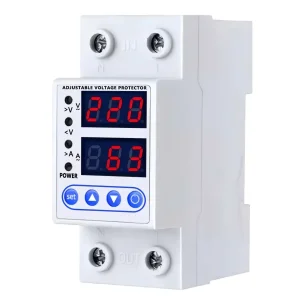 ODM Three-Phase Adjustable Voltage Protector with LED Screen Suppliers, FactoryConfigure Unit
-
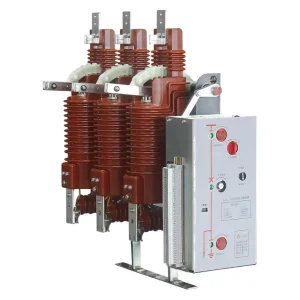 Wholesale Compact VSY2-12GD High Voltage Vacuum Circuit Breaker - China Suppliers & Factory for 12kV Power Distribution Manufacturers, FactoriesConfigure Unit
-
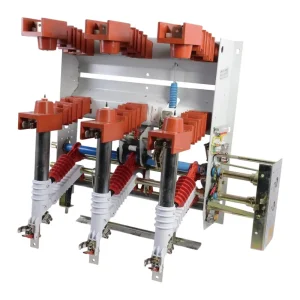 China FK(R)N12-24D High Voltage Load Breaker Switch Factory, CompanyConfigure Unit
-
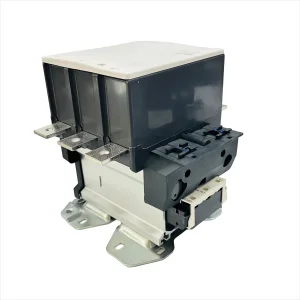 China CJX2-F Series AC Contactor for Motor Control Suppliers, ManufacturerConfigure Unit
-
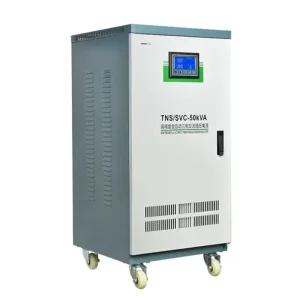 High-Quality TNS 3-Phase Series Fully Automatic Ac Voltage Regulator Supplier, FactoriesConfigure Unit
-
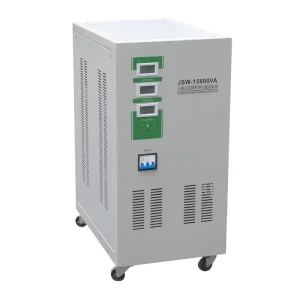 OEM JSW Three Phases Series Precise Purified Voltage Regulator Power Supply Manufacturer, FactoryConfigure Unit
Engineering Taxonomy of the XGN15-24 Ring Main Unit
A comprehensive examination of arc quenching physics, dielectric medium parameters, and mechanical interlocking security within modern 24kV medium-voltage ring switchgear networks.
1. Operational Topology and Functional Modularity
The XGN15-24 Ring Main Unit (RMU) represents a pivotal milestone in medium-voltage (MV) distribution engineering. Built to operate reliably at rated nominal voltages of 20kV to 24kV under 50Hz or 60Hz power frequencies, this switchgear accommodates the accelerating demands of modern urban electrical architectures, large-scale commercial infrastructures, and utility transmission substations. Serving as both a load switching station and feeder protection center, the XGN15-24 incorporates an enclosed metal-clad housing made from high-grade 2.0mm to 3.0mm aluminum-zinc coated steel (Aluzinc) plates or 304 stainless steel, processed via CNC laser precision cutting and multi-fold robotic bending techniques.
Unlike open-air medium-voltage assemblies prone to environmental deterioration, the core switching modules—typically leveraging FLN36-24 or equivalent three-position rotary load break switches (LBS)—are encapsulated within a hermetically sealed, robotic-laser-welded stainless steel gas tank or rugged epoxy resin housing. With relative operating gas pressure maintained between 0.04 MPa and 0.05 MPa (at 20°C), sulfur hexafluoride (SF6) gas provides an exceptional dielectric barrier and superior thermal arc-extinguishing performance, significantly reducing physical clearances between active phases and ground to achieve an ultra-compact footprint.
2. The Five-Anti (5-Proof) Mechanical Interlocking Logic
Operational safety is governed by a fully mechanical, fail-safe interlocking matrix that completely eliminates human error during live field operations. Specifically configured to address stringent safety standards, the XGN15-24 prevents:
1. Inadvertent closing of the load break switch or vacuum circuit breaker while the earthing switch is engaged.
2. Engagement of the earthing switch when the primary contacts are in the closed or energized state.
3. Unauthorized entry into the cable compartment or fuse compartment unless the earthing switch is securely locked in the earth position.
4. Disconnection of isolating contacts or withdrawal of the circuit breaker under energized load current conditions.
5. Accidental energization or closing of the switch when operating personnel have the access door open for maintenance.
Hermetic Gas Enclosure
Fabricated from 3mm austenitic 304 stainless steel via helium-leak tested automatic robotic seam welding. Guarantees less than 0.1% annual gas leakage rate over a 30-year operational design life.
Rotary Double-Break Contacts
Equipped with a three-position rotary contact system (Closed, Open, Earthed). The dynamic blade mechanism drives rapid contact separation, minimizing arcing time to under 12 milliseconds.
IEC 62271-105 Protection
Combines load break switches with high-breaking-capacity current-limiting fuses (DIN 43625). Clears high-energy downstream short circuits within half a cycle, protecting oil and dry-type transformers.
Global Enterprise Demand & Capital Expenditure Optimization
Strategic purchasing managers and EPC engineering leads leverage the XGN15-24 to balance Capex budgets, spatial constraints, and strict grid interconnection compliance.
Macro Driver 1: Rapid Expansion of Commercial & Industrial (C&I) Microgrids
Across North America, Europe, Southeast Asia, and the Middle East, the transition toward decentralized power has accelerated the adoption of automated 24kV ring main units. Commercial data centers, mega-watt scale battery energy storage systems (BESS), and industrial manufacturing facilities can no longer afford supply interruptions caused by single feeder anomalies. By deploying an XGN15-24 closed-loop ring arrangement, utility engineers can quickly isolate downstream faults within 100 milliseconds via automated motorized actuators and digital Feeder Terminal Units (FTUs), immediately restoring power to healthy feeder segments through automated back-feeding.
Macro Driver 2: Utility-Scale Renewable Solar & Wind Interconnection
Modern solar photovoltaic farms and onshore wind turbines frequently generate power that is stepped up from 400V/690V to medium-voltage collection networks (10kV, 20kV, 24kV, or 33kV). The compact footprint of the XGN15-24 switchgear makes it the premier choice for integration inside prefabricated skid substations, compact underground kiosks, and nacelle/tower-base electrical rooms. With its robust resistance to seismic vibration, salt-spray corrosion, and extreme ambient thermal swings (-25°C to +45°C), the unit ensures reliable renewable feed-in with minimal on-site civil construction overhead.
Macro Driver 3: Total Cost of Ownership (TCO) vs. Traditional AIS Switchgear
While traditional Air-Insulated Switchgear (AIS) like KYN28 offers withdrawable breakers, its large dimensions demand substantial real estate and ongoing dust, humidity, and busbar cleaning maintenance. In contrast, the XGN15-24 provides a virtually maintenance-free operational envelope over its 30-year lifecycle. The sealed gas compartment isolates all moving contacts and busbars from ambient atmospheric pollutants, ozone, and sulfur dioxide, yielding an estimated 42% reduction in maintenance lifecycle expenditure (OpEx) for municipal utilities and private substation operators.
Substation Space Savings
Cabinet widths as narrow as 375mm to 500mm per functional bay allow engineers to install complete 4-way or 5-way RMU lineups in ultra-compact footprint substation rooms.
SCADA Automation Ready
Factory-integrated with 24V/48V/110V/220V DC motor operators, auxiliary contacts (2NO+2NC / 4NO+4NC), optical CT/PT sensors, and DTU terminal automation cabinets.
Harsh Environment Resilience
IP67 hermetically sealed active switching chambers completely isolate critical contacts from sand, coastal moisture, airborne saline ions, and industrial sulfur pollution.
Flexible ODM Configurations
Modular bay assemblies allow tailor-made expansion: incoming cable bays (C-module), vacuum circuit breaker feeders (V-module), fuse protection (F-module), and metering units (M-module).
Standard Switch Configurations & Single-Line Modular Schemes
A breakdown of standard modular combinations utilized across utility networks to ensure modular expandability, fault current suppression, and seamless secondary distribution control.
| Module Type | Functional Description | Primary Apparatus | Typical Application Scheme | Standard Rating |
|---|---|---|---|---|
| C - Module | Load Break Switch Bay (Incoming / Outgoing) | FLN36-24 Three-Position SF6 LBS (Closed / Open / Earth) | Ring network feeder tie lines, looping feeder circuits | 630A / 20kA 3s |
| V - Module | Vacuum Circuit Breaker Bay | Embedded Vacuum Interrupter + Disconnector switch | Overcurrent, short-circuit, and zero-sequence feeder protection | 630A / 25kA 3s |
| F - Module | LBS + Fuse Combination Bay | FLN36-24 LBS with mechanical striker-pin trip linkage + MV Fuses | Distribution transformer protection (up to 1600kVA at 24kV) | 125A Fuse Holder |
| M - Module | Revenue Metering Bay | Precision cast-resin Voltage Transformers (VT) & Current Transformers (CT) | Grid tariff metering, energy auditing, power quality monitoring | Class 0.2S / 0.5 |
| D - Module | Direct Cable Connection Bay | Direct copper busbar terminal blocks without switching apparatus | Incoming bus riser, cable entry expansion, sectionalizing | 630A Continuous |
Modular Lineups: From 2-Way to 6-Way Custom Assemblies
A quintessential topology for urban underground cable loops is the standard "CCF" arrangement (Two Load Break Switch incoming/outgoing bays plus one Fuse-Switch transformer feeder). For automated secondary substations requiring higher fault clearance capabilities, the "CCVV" configuration (Two LBS bays and two VCB feeder bays) is widely deployed.
All functional units can be provided as a unified monoblock gas tank (compact, non-extensible unit) or as fully modular extensible bays coupled via screened, touch-proof shielded outer-cone silicone rubber busbar connectors. This modularity allows electrical contractors to scale out existing installations effortlessly as local power demands grow.
Electrical & Physical Specification Benchmark
Rigorous performance criteria comparing the XGN15-24 Ring Main Unit against traditional Air-Insulated Switchgear (AIS) and Gas-Insulated Switchgear (GIS SafeRing/RM6).
| Technical Parameter | XGN15-24 RMU (Modular SF6) | Traditional AIS (KYN28-24) | Fully Sealed GIS (SafeRing 24) |
|---|---|---|---|
| Rated Voltage (Ur) | 24 kV | 24 kV | 24 kV |
| Power Frequency Withstand (1 min) | 50 kV / 65 kV (Across Isolating Distance) | 50 kV | 50 kV / 65 kV |
| Lightning Impulse Withstand (BIL) | 125 kV / 145 kV (Across Isolation) | 125 kV | 125 kV / 145 kV |
| Rated Normal Current (Ir) | 630 A | 630 A - 1250 A - 3150 A | 630 A |
| Rated Short-Time Withstand (Ik) | 20 kA / 25 kA (3s) | 25 kA / 31.5 kA (4s) | 20 kA / 21 kA (3s) |
| Enclosure Protection Class | IP4X (Outer Shell) / IP67 (Gas Tank) | IP4X | IP67 (Hermetic Tank) |
| Average Panel Width (C-Module) | 375 mm - 500 mm | 800 mm - 1000 mm | 325 mm - 350 mm |
| Maintenance Interval | 10 - 15 Years (Zero tank maintenance) | 1 - 2 Years (Dust / contact servicing) | 30 Years Maintenance-Free |
| CapEx Cost Ratio | Optimal / Economic Baseline | +35% to +50% Footprint & Civil Cost | +20% to +35% Equipment Cost |
Key Takeaways on Technical Selection
The XGN15-24 represents the ideal economic and operational sweet spot between heavy, spacious withdrawable switchgear (such as KYN28) and premium-priced, non-modular compact GIS. By offering individual bay flexibility combined with the environmental protection of an SF6 rotary disconnector chamber, it delivers exceptional cost-performance efficiency for power systems up to 24kV.
Decarbonization, F-Gas Phaseout & Digital IoT Switchgear
Anticipating environmental regulatory mandates and digital substation evolution: our engineering roadmap toward SF6-free eco-gas mixtures, solid dielectric insulations, and edge telemetry.
1. The Global F-Gas Transition: Eco-Gas & Solid Dielectric Switchgear (SIS)
With stringent greenhouse gas regulations tightening worldwide—most notably the European Union's amended F-gas Regulation (EU 2024/573) targeting the progressive phaseout of fluorinated greenhouse gases in medium-voltage switchgear—our R&D division has developed progressive replacement paths for standard SF6 units. The technological roadmap unfolds across three parallel tracks:
A. Solid Dielectric Insulation (SIS - GXGN Series): Completely eliminating insulating gases, each phase is encapsulated within robust cycloaliphatic epoxy resin casting, coupled with silicone rubber busbar interfaces. This eliminates pressurized vessels entirely and achieves a zero Global Warming Potential (GWP = 0).
B. Technical Clean Air / Synthetic Air Solutions (HBXGN Series): Using a mixture of purified nitrogen (N2) and oxygen (O2) pressurized at higher levels, paired with advanced vacuum interrupters, achieving complete environmental neutrality with negligible GWP (<1).
C. Fluoronitrile-Based Gas Mixtures (C4-FN / CO2 / O2 blends): Delivering dielectric strength equivalent to SF6 while slashing direct CO2 equivalent emissions by over 95%, allowing utilities to maintain identical compact footprints without redesigning civil cable trenches.
2. Edge IoT Telemetry & Online Health Diagnostics
Modern XGN15-24 installations are increasingly specified as "Smart RMUs" equipped with comprehensive condition monitoring sensors. Integrated digital arrays include:
Wireless Surface Acoustic Wave (SAW) Temperature Sensors: Placed directly on cable connection bushings and primary copper busbar joints to detect thermal runaway caused by loose connections before an arc-flash event occurs.
High-Frequency Current Transformer (HFCT) Partial Discharge (PD) Monitors: Continuously assessing insulation health in real-time, feeding analytical telemetry into centralized predictive maintenance dashboards via Modbus-TCP or IEC 61850 protocol stacks.
Dynamic Optical Gas Density Telemetry: Micro-machined resonant sensors that track temperature-compensated SF6/Clean-Air pressure gradients continuously, pinpointing microscopic seal leaks years before critical alarm thresholds are breached.
Zero SF6 Alternatives
Seamless transition to GXGN-12/24 solid-insulated and HBXGN dry-air systems that mirror XGN15 dimensions, preserving standardized civil footprints.
IEC 61850 Native Support
Intelligent Electronic Devices (IEDs) supporting GOOSE messaging for sub-cycle busbar protection tripping and peer-to-peer interlocking without hardwired control cables.
Digital Twin & Predictive Health
Cloud-synchronized mechanical endurance tracking: contact travel velocity profiling, trip coil current signatures, and dynamic contact wear algorithms.
Harsh Climate Adaptation & Commercial Field Viability
Engineered to operate reliably under extreme geographical conditions, from high-altitude solar plateaus to hyper-saline coastal petrochemical hubs.
1. High-Altitude Dielectric Derating Engineering
When operating medium-voltage switchgear at altitudes exceeding 1,000 meters above sea level, atmospheric air density decreases, resulting in reduced dielectric breakdown resistance across external isolating distances. For installations in highland mining complexes and plateau wind/solar developments (such as the Andes, Central Asian plateaus, or the Rocky Mountains at altitudes up to 3,500m), our ODM engineering modifies the external busbar spacing, upgrades post insulators to high-creepage hydrophobic silicone or cycloaliphatic epoxy resin, and adjusts the power frequency test criteria according to the standard IEC 62271-1 altitude correction factor formula:
Where H is installation altitude in meters and m is the parameter defined by insulation test voltage type (m = 1 for power frequency and lightning impulse). Crucially, because the internal active contacts of the XGN15-24 are hermetically sealed inside an SF6 gas chamber, internal dielectric withstand remains completely unaffected by altitude variations.
2. Marine, Coastal & Tropical Condensation Resistance
In humid tropical zones (Southeast Asia, Latin America, Coastal Africa) and offshore installations where relative humidity consistently reaches 95% to 100%, condensation can trigger destructive surface tracking on conventional open-frame switchboards. To eliminate this vulnerability, the XGN15-24 features an automatic thermostat-regulated PTC anti-condensation heating system in the low-voltage auxiliary and cable compartments, complemented by C5-M rated anti-corrosive powder coating and 304/316L stainless steel fastener hardware.
Seismic Zone 4 Certified
Reinforced cabinet chassis withstands horizontal acceleration up to 0.5g and vertical acceleration up to 0.25g per IEEE 693 dynamic shake-table testing.
Arctic -40°C Low-Temp Gas
Specialized SF6/N2 (60/40) gas blend prevents gas liquefaction in sub-zero climates, maintaining arc-quenching capability down to -40°C.
Submersible Flood Protection
Optional IP68 sealed gas tank withstands temporary continuous submersion under 3 meters of water without dielectric breakdown or moisture ingress.
Dust & Desert Sandstorm Shield
Labyrinth-style ventilation ducts with integrated stainless steel fine-mesh filters block abrasive silica dust from entering auxiliary control compartments.
Factory Certification, Type Testing & Turnkey ODM Support
Mingri Electric’s manufacturing facility adheres to world-class quality control methodologies, delivering comprehensive verification from raw material arrival to FAT and on-site commissioning.
1. Multi-Tiered International Quality Management
Headquartered in the electrical capital of Yueqing, Zhejiang, China, Mingri Electric operates strictly under ISO 9001 (Quality Management), ISO 14001 (Environmental Protection), and ISO 45001 (Occupational Health & Safety) frameworks. Every batch of XGN15-24 medium-voltage switchgear is backed by complete traceability documentation, from metallurgical certificates for electrolytic copper busbars to helium mass-spectrometer leak test logs for every sealed switch chamber.
2. Complete Type Test Reports from Accredited Independent Laboratories
Our medium voltage switchgear portfolio has successfully undergone extensive type testing by globally recognized third-party high-power testing authorities (including CNAS, KEMA, and ASTA affiliated test bodies). Validated test certifications cover:
• Short-time withstand current (25kA / 3s) and peak withstand current (63kA) testing.
• Temperature rise verification at rated continuous operating current (630A / 1250A).
• Internal arc classification tests (IAC AFLR 20kA 1s) confirming operator safety under catastrophic internal flashover.
• Dielectric test verification: Lightning impulse withstand voltage (125kV BIL) and power frequency withstand voltage (50kV / 1min).
• Mechanical endurance testing surpassing 10,000 continuous operating cycles for load switches and vacuum interrupters.
3. Turnkey ODM Customization & Worldwide Engineering Delivery
We work collaboratively with global EPC firms and electrical brand owners to provide bespoke ODM engineering solutions. From adapting front-panel mimic single-line diagrams to match local national grid nomenclature (such as IEEE/ANSI or BS standards), to configuring specific auxiliary contact arrangements, customized CT/VT secondary wiring, and integrating specialized relay brands (e.g., Schneider, ABB, Siemens, or SEL), our engineering team ensures rapid drawing approvals within 48 to 72 hours.
Frequently Asked Technical & Procurement Questions
In-depth insights addressing the core operational, testing, and interface specifications of the XGN15-24 Ring Main Unit.
The XGN15-24 is a compact, fixed-mount ring main unit utilizing an enclosed SF6 rotary load break switch (or vacuum breaker) primarily designed for secondary distribution networks up to 24kV, characterized by a narrow footprint (375-500mm wide) and zero maintenance of active contacts. KYN28-24 is a withdrawable (rack-in/rack-out) metal-clad switchgear designed for primary distribution substations handling currents up to 3150A and 31.5kA, requiring larger dimensions (800-1000mm wide) and regular contact maintenance.
In an F-Module, the load break switch clears rated continuous load current while current-limiting MV fuses handle short-circuit faults. If a single-phase fault occurs, the striker pin inside the blown fuse trips a spring-loaded mechanical latch mechanism on the switch, forcing all three phases of the load switch to open simultaneously within 40 milliseconds, completely preventing single-phase transformer burnout.
Yes. Every standard manual operating mechanism can be fitted with 24V/48V/110V/220V DC motor actuators, electromagnetic release coils, auxiliary position indicator contacts (up to 4NO+4NC), and current/voltage sensors. These seamlessly wire into a secondary terminal compartment communicating with Feeder Terminal Units (FTUs) or RTUs via Modbus, DNP3, or IEC 60870-5-104 protocols.
The relative gas pressure within the laser-welded stainless steel tank is maintained at a modest 0.04 MPa to 0.05 MPa (0.4 to 0.5 bar above atmospheric pressure at 20°C). A temperature-compensated pressure gauge or digital pressure density sensor is permanently mounted on the front panel with green (normal), yellow (warning), and red (alarm/lockout) color-coded zones for instant visual inspection.
The cable compartment features standardized DIN 47636 or EN 50181 Type C (630A, bolted M16 contact pin) bushings situated at an ergonomic working height of 650mm to 800mm above ground level. This spacious compartment accommodates heat-shrink or cold-shrink screened separable elbow connectors for cable cross-sections ranging from 50mm² up to 400mm².
We provide comprehensive overseas client support, including live high-definition video-streamed FAT sessions witnessed by client engineers, third-party inspection agency coordination (SGS, Bureau Veritas, TÜV), full photographic records of internal wiring and nameplates, and express delivery of sealed routine test reports alongside equipment shipments.
Complementary Switchgear, Substations & Protection Devices
Complete your medium- and low-voltage distribution architecture with our full suite of prefabricated compact substations, withdrawable panels, and high-voltage isolating switches.
-
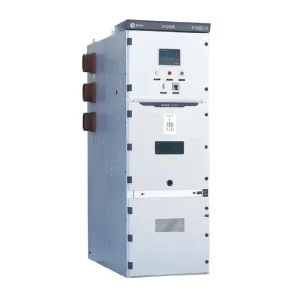 China KYN28-24 Withdrawable Armored Metal-Enclosed Switchgear – Low Current Industrial Grade Manufacturers, CompanyConfigure Unit
-
 OEM YBD Landscape-Type Underground Compact Substation Suppliers, SupplierConfigure Unit
-
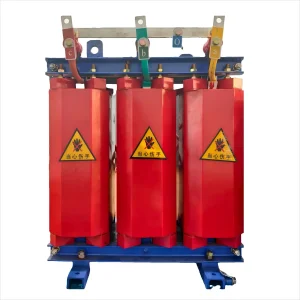 China SC(B)10 Type 10kV Resin Insulation Dry Type Power Transformer - Reliable Solution from China Suppliers and Factory Manufacturers, CompanyConfigure Unit
-
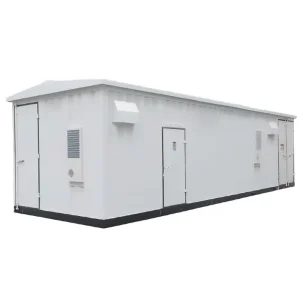 OEM Modular Intelligent Prefabricated Cabin Substation from China Suppliers - Factory-Built Solution for Smart Grids Manufacturers, ManufacturerConfigure Unit
-
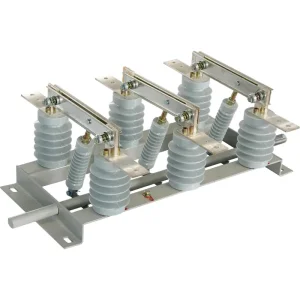 High-Quality GN19-12 Indoor High-Voltage Isolating Switch Factory, CompaniesConfigure Unit
-
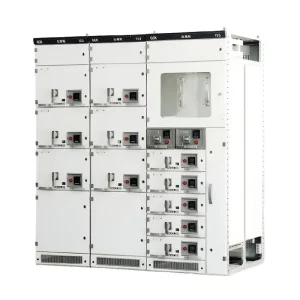 Wholesale GCK Low voltage withdrawable switchgear for Industrial Plants Supplier, FactoriesConfigure Unit
-
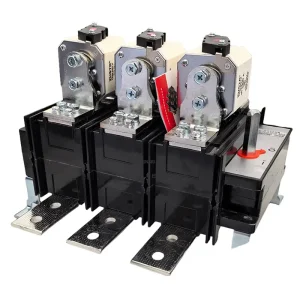 OEM HH15(QSA) Knife Melt Isolation Switch with Fuse - Reliable Circuit Protection from China Suppliers and Factory Factories, FactoryConfigure Unit
-
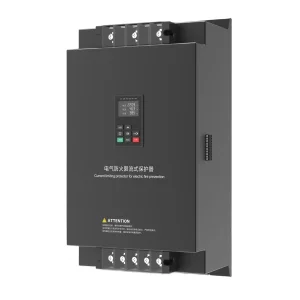 ODM 250A three phase electrical fire prevention current limiting protector Manufacturers, FactoriesConfigure Unit
Initiate Your 24kV Medium Voltage Engineering Consultation
Send your project single-line diagram (SLD), busbar ratings, and protection scheme requirements to our chief electrical engineers. We deliver tailored CAD drawings, complete bill-of-materials (BOM), and factory-direct pricing within 24 hours.